Compare ASUS ROG Azoth X vs Keychron Q5 HE

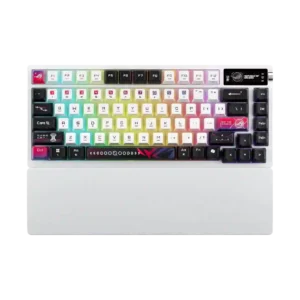
P1 ASUS ROG Azoth X
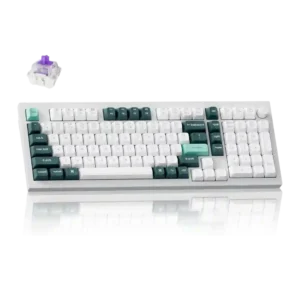
P2 Keychron Q5 HE

Comparison Takeaways

ASUS ROG Azoth X

Where It Has the Edge

  • portability is 4.0 vs 2.6. Portability evidence is limited, but one review connected the long battery life to LAN parties and working on...
  • ease of switch replacement is 4.6 vs 3.4. Switch replacement appears easy, with reviewers citing included pullers, hot-swap sockets, and quick swap experiences.
  • switch options is 4.2 vs 3.0. Switch options include Asus linear Snow V2 and clicky or Storm V2 choices, plus hot-swap support for trying...
  • ergonomics is 4.4 vs 3.4. Ergonomics benefit from adjustable feet and the silicone wrist rest, with reviewers calling the wrist support useful for...

Keychron Q5 HE

Where It Has the Edge

  • rapid trigger support is 4.7 vs 1.0. Rapid trigger is widely supported and praised as useful for fast resets, quick strafing, and competitive play.
  • analog input support is 4.6 vs 1.1. Analog-style control is repeatedly highlighted, including walk/run depth behavior, gamepad-style input, and joystick-like key behavior.
  • value for money is 4.1 vs 2.3. Value is mixed: reviewers like the premium feature set, but the $229-$249 price faces cheaper or faster competitors.
  • durability is 4.8 vs 3.6. Durability is supported by the aluminum chassis, heavy construction, PBT keycaps, and switch lifespan claims.
Average score
Product 1: ASUS ROG Azoth X
4.2
Product 2: Keychron Q5 HE
4.4
acoustics
Product 1: ASUS ROG Azoth X
4.4

Reviewers mostly liked the Azoth X's acoustics, describing good, crisp or creamy sound, though some noted the spacebar or overall tuning was not quite sublime.

Product 2: Keychron Q5 HE
4.7

Acoustics are a standout strength, with reviewers praising the sound as excellent, top-notch, pleasant, and unusually good for a Hall Effect board.

actuation consistency
Product 1: ASUS ROG Azoth X
4.5

Supported reviews describe the switches as consistent across presses or switch-to-switch, with even keystrokes and responsive action.

Product 2: Keychron Q5 HE
4.5

Actuation control is a major strength, with per-key adjustment, fine sensitivity, and dual-rail stability, though one reviewer found the minimum actuation less aggressive than some rivals.

analog input support
Product 1: ASUS ROG Azoth X
1.1

Reviewers consistently treated analog input as a missing feature because the Azoth X uses mechanical switches rather than Hall effect or analog switches.

Product 2: Keychron Q5 HE
4.6

Analog-style control is repeatedly highlighted, including walk/run depth behavior, gamepad-style input, and joystick-like key behavior.

backlight brightness
Product 1: ASUS ROG Azoth X
4.3

Backlight brightness was split: some reviewers found the lighting exceptional and bright, while another felt the effect was underwhelming.

Product 2: Keychron Q5 HE
4.5

Backlight brightness is positively described where mentioned, especially its bright underglow.

battery life
Product 1: ASUS ROG Azoth X
4.8

Battery life drew strong praise, with reviewers citing 1,600-hour claims, multi-week use, and long runtime even with lighting enabled.

Product 2: Keychron Q5 HE
3.9

Battery life is acceptable at up to 100 hours, but reviewers frame it as weaker than some non-Hall Effect Keychron alternatives.

build quality
Product 1: ASUS ROG Azoth X
4.3

Build quality was generally solid, sturdy, or robust, though some reviewers felt the plastic-heavy construction weakened the premium impression.

Product 2: Keychron Q5 HE
4.8

Build quality is one of the Q5 HE’s clearest strengths, with reviewers repeatedly describing it as premium, solid, metal, and exceptionally sturdy.

cable quality
Product 1: ASUS ROG Azoth X
4.2

The included cable was described as braided, sleeved, robust, and useful for charging or wired use, though one reviewer wished it matched the white keyboard.

Product 2: Keychron Q5 HE
4.6

Cable quality is good where mentioned, with braided, sleeved, or premium USB-C cable references.

compatibility
Product 1: ASUS ROG Azoth X
4.6

Compatibility evidence is strong for Mac support, PC/Mac switching, MX-style or aftermarket keycap compatibility, and the south-facing PCB.

Product 2: Keychron Q5 HE
4.7

Compatibility is strong across Windows and macOS, with physical toggles and reviewer use across PCs and Macs.

connectivity
Product 1: ASUS ROG Azoth X
4.7

Connectivity was a clear strength, with repeated support for wired USB-C, Bluetooth, 2.4GHz wireless, and dongle or Omni receiver use.

Product 2: Keychron Q5 HE
4.7

Connectivity is a strength, with wired USB-C, Bluetooth, 2.4GHz wireless, dongles, and multi-device options cited across reviews.

customization options
Product 1: ASUS ROG Azoth X
4.5

Customization is broad, covering key remapping, OLED adjustments, RGB changes, hot-swapping, disassembly, and Gear Link or Armoury Crate configuration.

Product 2: Keychron Q5 HE
4.7

Customization options are extensive, covering actuation, rapid trigger, key maps, macros, RGB, layers, and gaming behaviors.

desk space efficiency
Product 1: ASUS ROG Azoth X
4.5

The compact case was credited with saving desk space and avoiding excessive footprint while still keeping useful keys.

Product 2: Keychron Q5 HE
4.5

Desk space efficiency is better than a full-size board because the layout compresses the numpad and navigation cluster while preserving most functionality.

durability
Product 1: ASUS ROG Azoth X
3.6

Durability evidence is mixed: one review praised PBT wear resistance, while another found the white finish easy to scratch.

Product 2: Keychron Q5 HE
4.8

Durability is supported by the aluminum chassis, heavy construction, PBT keycaps, and switch lifespan claims.

ease of switch replacement
Product 1: ASUS ROG Azoth X
4.6

Switch replacement appears easy, with reviewers citing included pullers, hot-swap sockets, and quick swap experiences.

Product 2: Keychron Q5 HE
3.4

Switch replacement is possible in some contexts, but reviewers emphasize extra cost, proprietary limits, or restricted compatibility.

ergonomics
Product 1: ASUS ROG Azoth X
4.4

Ergonomics benefit from adjustable feet and the silicone wrist rest, with reviewers calling the wrist support useful for comfort.

Product 2: Keychron Q5 HE
3.4

Ergonomics are mixed: the typing angle and comfort receive some praise, but the high-profile case and lack of included wrist rest can be concerns.

extra gaming features
Product 1: ASUS ROG Azoth X
4.1

Speed Tap was the recurring extra gaming feature, but reviewers framed it as situational, controversial, or a workaround rather than a full Hall effect substitute.

Product 2: Keychron Q5 HE
4.6

Extra gaming features are strong, including Last Key Priority, Snap Tap/SOCD behavior, quad actuation, and gamepad-like features.

frame rigidity
Product 1: ASUS ROG Azoth X
4.6

Frame rigidity scored well overall, with reviewers citing no deck flex, no rattle, torsional rigidity, and a solid top plate.

Product 2: Keychron Q5 HE
4.8

Frame rigidity is excellent: reviewers repeatedly mention no movement, zero flex, heavy metal construction, and desk-stable heft.

gaming performance
Product 1: ASUS ROG Azoth X
4.3

Gaming performance was considered responsive and capable for most users, but not the most advanced choice for esports or Hall effect-focused gaming.

Product 2: Keychron Q5 HE
4.5

Gaming performance is strong for most players thanks to responsiveness, rapid trigger, and analog features, but pure esports users may find faster options elsewhere.

hot-swappable switches
Product 1: ASUS ROG Azoth X
4.8

Hot-swap support was repeatedly confirmed through hot-swappable PCBs or sockets that allow switch changes without soldering.

Product 2: Keychron Q5 HE
4.0

Hot-swap flexibility exists but is limited on the Q5 HE to compatible magnetic switch families rather than any standard switch.

keycap quality
Product 1: ASUS ROG Azoth X
4.1

Keycap quality drew broad attention: reviewers liked the PBT, dye-sub, sharp legends, and RGB diffusion, but some disliked the texture or gamer styling.

Product 2: Keychron Q5 HE
4.5

Keycap quality is considered premium, with repeated mentions of double-shot PBT and comfortable OSA-style caps.

key responsiveness
Product 1: ASUS ROG Azoth X
4.5

Key responsiveness was praised across reviews, with switches described as snappy, responsive, quick, and registering commands without delay.

Product 2: Keychron Q5 HE
4.7

Key response is consistently praised as fast and sharp, especially after adjusting actuation points for games or typing.

key spacing
Product 1: ASUS ROG Azoth X
3.9

Key spacing evidence is limited and mixed: one reviewer found movement between keys slightly less accurate, while another noticed smaller-feeling keys.

Product 2: Keychron Q5 HE
3.7

Key spacing is somewhat compact and context-dependent; one review notes the cluster is scrunched, while another mentions fat-fingering the OSA profile during gaming.

key stability
Product 1: ASUS ROG Azoth X
4.6

Key stability was supported by minimal stem wobble, stable large keys, and little wobble or echo during typing.

Product 2: Keychron Q5 HE
4.7

Key stability is strong thanks to the double-rail switch design and near-zero wobble comments.

latency
Product 1: ASUS ROG Azoth X
4.7

Latency evidence was positive, especially for SpeedNova and 2.4GHz wireless, with reviewers noting no lag or ultra-low-latency behavior.

Product 2: Keychron Q5 HE
4.4

Latency is viewed as good in real use, with reviewers reporting lag-free or no-noticeable input lag, but not class-leading against the fastest HE competitors.

layout options
Product 1: ASUS ROG Azoth X
4.4

The 75% layout was described as sensible, compact, and not cramped, with one reviewer calling it the perfect size.

Product 2: Keychron Q5 HE
4.6

The 96% layout is a major advantage for users who want nearly full-size utility with a compacted footprint.

legend visibility
Product 1: ASUS ROG Azoth X
4.2

Legend visibility was mostly positive due to clear labels, front legends, and high contrast, though small OLED icons could be hard to read.

Product 2: Keychron Q5 HE
No score yet
macro customization
Product 1: ASUS ROG Azoth X
4.4

Macro support is present through Armoury Crate, Gear Link, and FN or software customization according to multiple reviewers.

Product 2: Keychron Q5 HE
4.6

Macro customization is strong, with multiple reviews citing up to four actions per key, macro recording, and one-key multiple commands.

materials quality
Product 1: ASUS ROG Azoth X
3.9

Materials quality is mixed: reviewers note aluminum or metal top parts and high-quality materials, but also plastic bases that reduce the premium feel.

Product 2: Keychron Q5 HE
4.8

Materials quality is high, centered on aluminum or all-metal construction, PBT caps, and premium case components.

media controls
Product 1: ASUS ROG Azoth X
4.3

Media controls are a major recurring feature, usually handled through the OLED screen and three-way knob for playback, brightness, and other controls.

Product 2: Keychron Q5 HE
4.4

Media controls are useful through the knob, media shortcuts, and dial/button behavior.

noise level
Product 1: ASUS ROG Azoth X
3.8

Noise level is generally well controlled with little ping or rattle, though some reviewers found the keyboard loud or the spacebar thunky.

Product 2: Keychron Q5 HE
4.6

Noise level is generally office-friendly, with reviewers calling it quiet, not invasive, and free of case rattle or ping.

onboard memory
Product 1: ASUS ROG Azoth X
4.3

Onboard memory has limited but direct support, with one reviewer noting that profiles or settings can be saved after setup.

Product 2: Keychron Q5 HE
4.3

Onboard memory is supported by the ability to save profiles directly onto the keyboard’s internal memory.

per-key lighting control
Product 1: ASUS ROG Azoth X
4.5

Per-key lighting control has limited direct evidence, with one review explicitly listing per-key RGB among the gaming essentials.

Product 2: Keychron Q5 HE
4.4

Per-key lighting control is supported by individual RGB LED references and south-facing RGB, though evidence is more limited than for general RGB customization.

polling rate
Product 1: ASUS ROG Azoth X
3.9

The base polling rate is 1,000Hz, with several reviewers noting optional 8,000Hz support through a separate booster; most considered 1,000Hz adequate.

Product 2: Keychron Q5 HE
3.8

The 1,000Hz polling rate is adequate for most users, but several reviewers point out that some competing magnetic keyboards now offer 8,000Hz.

portability
Product 1: ASUS ROG Azoth X
4.0

Portability evidence is limited, but one review connected the long battery life to LAN parties and working on the go.

Product 2: Keychron Q5 HE
2.6

Portability is weak because reviewers repeatedly emphasize the heavy metal body and desk-bound nature.

profile management
Product 1: ASUS ROG Azoth X
4.0

Profile management evidence is limited to saved profiles or settings through onboard memory after software setup.

Product 2: Keychron Q5 HE
3.7

Profile management exists through profiles and layers, but one non-HE Q5 review found layer handling limiting.

rapid trigger support
Product 1: ASUS ROG Azoth X
1.0

Rapid trigger support is a clear weakness: multiple reviewers note there is no rapid trigger or Hall effect-style hardware feature.

Product 2: Keychron Q5 HE
4.7

Rapid trigger is widely supported and praised as useful for fast resets, quick strafing, and competitive play.

reliability
Product 1: ASUS ROG Azoth X
4.5

Reliability evidence is limited but positive for the wireless connection, with one review reporting no connection interruptions during testing.

Product 2: Keychron Q5 HE
4.6

Reliability is positive in limited evidence, with one reviewer reporting no issues over weeks and another making it a new main keyboard.

RGB customization
Product 1: ASUS ROG Azoth X
4.4

RGB customization is supported through software or OLED controls, but direct evidence is thinner than evidence for lighting quality.

Product 2: Keychron Q5 HE
4.5

RGB customization is flexible, with software-controlled colors, effects, modes, and per-board pattern options.

RGB lighting quality
Product 1: ASUS ROG Azoth X
4.4

RGB lighting quality was widely praised for strong diffusion, bright output, soft glow, and visually distinctive translucent keycaps, though one reviewer found it muted.

Product 2: Keychron Q5 HE
4.5

RGB lighting is described as bright, customizable, and visually strong, though not a primary focus in every review.

size and form factor
Product 1: ASUS ROG Azoth X
4.4

The form factor is consistently described as compact 75%, giving function-row and arrow-key access without a full-size footprint.

Product 2: Keychron Q5 HE
4.6

The size and form factor are useful for numpad users, though its heavy all-metal body limits travel use.

software quality
Product 1: ASUS ROG Azoth X
3.9

Software quality is mixed: Gear Link drew praise for being lightweight and web-based, while Armoury Crate was criticized for updates, weight, crashes, or bloat.

Product 2: Keychron Q5 HE
4.4

Software quality is generally praised for being web-based, powerful, and easy to use, although one reviewer ran into a small actuation-setting bug and another found Q5 layer logic confusing.

sound dampening
Product 1: ASUS ROG Azoth X
4.7

Sound dampening is a strength, with reviewers repeatedly citing multiple foam or damping layers, gasket mounting, and reduced ping or vibration.

Product 2: Keychron Q5 HE
4.6

Sound dampening is strong thanks to gasket design, foam layers, acoustic dampening, and pre-lubed switches.

stabilizer quality
Product 1: ASUS ROG Azoth X
4.3

Stabilizers were mostly praised as lubed, tuned, rattle-free, or stable, though one reviewer disliked the spacebar's clunkier feel.

Product 2: Keychron Q5 HE
4.7

Stabilizers are praised where discussed, especially as excellent, generously lubed, or brilliant out of the box.

switch feel
Product 1: ASUS ROG Azoth X
4.5

Switch feel was widely praised for smooth, pre-lubed linear action, consistent travel, and minimal scratchiness, though one reviewer found the board clunkier than other Asus models.

Product 2: Keychron Q5 HE
4.6

Reviewers generally liked the smooth, pre-lubed magnetic switch feel, though one review noted it lacks the tactile satisfaction of traditional switches.

switch options
Product 1: ASUS ROG Azoth X
4.2

Switch options include Asus linear Snow V2 and clicky or Storm V2 choices, plus hot-swap support for trying other mechanical switches.

Product 2: Keychron Q5 HE
3.0

Switch choice is the most consistent limitation: the Q5 HE uses Keychron/Gateron magnetic switch options, with broader experimentation restricted compared with standard MX boards.

typing comfort
Product 1: ASUS ROG Azoth X
4.6

Typing comfort was strong where mentioned, with reviewers calling it comfortable, pleasant, and suitable for long sessions.

Product 2: Keychron Q5 HE
4.5

Typing comfort is strong overall, with reviewers reporting low fatigue, pleasant bounce, and improved typing or productivity after tuning actuation.

typing feel
Product 1: ASUS ROG Azoth X
4.5

Typing feel was one of the best-supported strengths, with most reviewers calling it smooth, pleasant, satisfying, or fantastic despite a few texture and noise caveats.

Product 2: Keychron Q5 HE
4.7

Typing feel receives broad praise for being smooth, premium, and productivity-friendly, even in reviews focused on gaming.

value for money
Product 1: ASUS ROG Azoth X
2.3

Value for money was the most repeated concern, as reviewers repeatedly pointed to the high price and cheaper or more advanced alternatives.

Product 2: Keychron Q5 HE
4.1

Value is mixed: reviewers like the premium feature set, but the $229-$249 price faces cheaper or faster competitors.

volume control
Product 1: ASUS ROG Azoth X
4.0

Volume control is supported through the OLED/knob interface, though one reviewer wanted more straightforward dedicated multimedia controls.

Product 2: Keychron Q5 HE
4.5

Volume control is a clear strength because multiple reviewers mention the knob or dial controlling volume by default.

wireless performance
Product 1: ASUS ROG Azoth X
4.7

Wireless performance was repeatedly praised as strong, stable, low latency, and drop-free over 2.4GHz or SpeedNova.

Product 2: Keychron Q5 HE
4.7

Wireless performance is consistently positive where tested, with reviewers reporting strong Bluetooth/2.4GHz operation and no noticeable input lag.

wrist rest quality
Product 1: ASUS ROG Azoth X
4.3

The silicone wrist rest was generally welcomed as comfortable, sturdy, and helpful, though several reviewers noted it is not magnetic.

Product 2: Keychron Q5 HE
3.7

Wrist rest evidence is mixed because one review criticizes its absence, while video reviews liked the optional palm rest when supplied.