Reviewers describe the keyboard as quieter than clicky boards, with a short, refined sound rather than a loud clatter.
Sound character is a strong point, with recurring descriptions like muted, premium, thocky, and substantial.
The adjustable actuation and release tuning is repeatedly framed as useful for dialing in consistent response, whether the goal is speed or fewer accidental inputs.
Adjustable Hall effect actuation is a recurring strength, with reviewers describing the keys as consistent and precisely tunable.
The magnetic analog switches are described as reading input across their travel, giving the board true analog-style depth awareness rather than a single fixed trigger point.
Several reviews explicitly mention analog-style behavior, including per-key analog control, variable inputs, and gamepad-like simulation.
Backlighting is described as strong on the main keys, with bold, bright illumination in normal use.
Backlight brightness is mixed. Some reviewers call it bright and attractive, while others find it dim or less useful on non-shine-through caps.
Battery life is a consistent strength, with scored reviews ranging from several days to multiple weeks depending on lighting and usage.
Across reviews, the chassis is consistently described as sturdy, well-built, dense, and rock solid for a slim keyboard.
Build quality is consistently strong, with reviewers describing the board as solid, sturdy, and premium-feeling.
The included cable earns mixed-to-positive feedback: reviewers appreciate the braided or angled design, but several wish it were longer.
One review explicitly lists support for Windows 10/11 PCs and macOS 12 or later.
Compatibility is a strong point, with repeated support for Windows and Mac and positive notes about multi-device use.
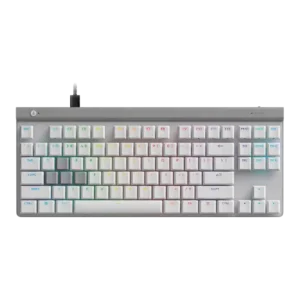
The G515 Rapid TKL is consistently described as wired-only, which helps performance but limits versatility versus wireless alternatives.
Connectivity is broadly praised, with wired, Bluetooth, and 2.4GHz modes repeatedly confirmed.
Customization is one of the keyboard's headline strengths, with repeated praise for per-key actuation tuning, remapping, multi-action inputs, and broader key personalization.
Customization is one of the board’s biggest advantages, especially per-key actuation control and broader remapping or tuning options.
The tenkeyless low-profile design is repeatedly credited with saving desk space and leaving more room for mouse movement.
Reviewers explicitly call out the compact layout for saving desktop space.
Durability is a positive theme, with reviewers pointing to durable switch tech, long-lasting keycaps, and a sturdy overall build.
The scored evidence suggests good durability, with durable keycap construction and at least one reviewer noting the board survived an accidental drop with only minor cosmetic damage.
Switch swapping appears possible with included tools or basic effort, but it is framed more as manageable than effortless.
The low-profile shape and adjustable feet are described as comfortable to use and easier on the wrists over longer sessions.
Ergonomics are mixed. Some reviewers like the typing angle or stable stance, while others report wrist-rest needs or wrist soreness.
Competitive-focused extras such as key priority, SOCD-style behavior, game mode, and other advanced gaming functions are repeatedly highlighted.
Beyond raw speed, the scored reviews repeatedly highlight features like Snap Click, last key prioritization, multiple actuation, and dynamic keystrokes.
A steel top plate and low-flex construction give the board strong rigidity despite its slim profile.
Frame rigidity is a clear strength, with reviewers calling out no deck flex, strong stability, and a rigid feel.
Gaming performance is the product's clearest strength, with reviewers repeatedly calling it fast, precise, and especially good for competitive play.
In actual use, reviewers report strong gaming performance, from FPS play to quicker weapon selection and movement.
The K2 HE supports hot-swapping within its magnetic-switch ecosystem, according to multiple scored reviews.
The keycaps are repeatedly described as premium-feeling PBT caps with good texture and better long-term quality than cheaper alternatives.
The scored evidence points to solid keycap quality, particularly doubleshot PBT construction and quality finishing.
Reviewers consistently describe the keys as quick to react, precise in motion, and strong for fast gaming inputs.
Reviewers repeatedly say inputs register very quickly, with little force needed to trigger a key.
Key spacing gets mixed commentary: some reviewers say the layout does not feel cramped, while others note the tighter spacing can cause occasional missteps.
Key spacing is mixed, with several reviewers needing time to adjust to the smaller, more compressed layout.
Key stability is mostly good, but one reviewer specifically noted minor wobble on some caps during rapid presses.
Key stability scores well, with repeated praise for low wobble and stable double-rail switch behavior.
One review explicitly frames the wired connection as delivering zero latency, no interference, and no input drops.
Gaming latency is described positively in the scored evidence, with one reviewer explicitly reporting no noticeable lag in play.
The scored evidence notes layout variation beyond the base board, including an ISO option tied to layout changes.
Legend visibility is mixed to poor on some keys, with repeated notes about uneven illumination on larger legends and limited local-language backlighting.
Legend visibility is mixed. Reviewers like the clear font, but several note the Special Edition legends are not shine-through.
Macro and multi-step input support is a clear feature, with reviews mentioning recorded macros, personalized macros, and dynamic or multi-action key behavior.
Macro support is present and clearly documented in the scored reviews, including both standard macros and depth-based actions.
Materials quality is generally strong thanks to the steel plate and PBT caps, though one review notes the broader package still feels more plastic than some rivals.
Materials are well regarded, especially the wood, aluminum, and specialty frame elements highlighted in the scored reviews.
Dedicated media controls are a common omission across reviews, with multiple writers calling out the lack of easy-access playback controls.
Media control support is serviceable rather than exceptional, usually handled through the function row instead of dedicated controls.
Noise output is a strength: the board is repeatedly described as quiet, reduced in audible feedback, and free of unwanted echo.
Noise level lands in a comfortable middle ground: quieter than many mechanical boards, but not silent.
Onboard profiles are available, but at least one reviewer notes that accessing and saving them is less direct than it should be.
The keyboard retains settings internally in the scored evidence, including mappings or profiles that persist across devices.
Per-key lighting control is supported, with reviewers specifically mentioning per-key RGB customization and individual-key lighting changes in software.
The board is explicitly described as using a stable 1,000 Hz polling rate, but it is also noted that it does not reach 8,000 Hz.
The K2 HE is repeatedly described as a 1,000Hz board over wired or 2.4GHz, with Bluetooth framed as the slower mode.
Its light weight and slim TKL footprint make it easier to place and carry than bulkier full-height boards.
Portability is limited. The compact format helps, but reviewers still describe the board as fairly heavy or not especially travel-friendly.
Profile support exists, but reviewers report some friction around profile saving, switching, or reliability depending on the setup.
Profile handling is a strength, with stored profiles and easy switching called out in multiple reviews.
Rapid Trigger support is repeatedly highlighted as a major feature and one of the biggest practical gaming benefits of the keyboard.
Rapid Trigger is one of the standout features in the scored reviews and is described as working very well for fast inputs.
General reliability is positive, with reviews describing the board as consistently responsive in use and software that stays stable during operation.
Reliability is generally solid in the scored evidence, with reviewers noting stable everyday use and no major issues, though some wireless behavior elsewhere is less perfect.
RGB customization is broad, with software control over colors, effects, and other lighting behavior receiving positive mention.
RGB settings appear flexible in the scored reviews, with support for static colors, color shifts, and other preset effects.
Lighting quality is generally attractive and vibrant, but multiple reviews also note uneven illumination on larger keys or legends.
RGB presentation is generally liked, with reviewers praising the color and backlight effect, though it is not equally practical on every version.
The keyboard's form factor is a major selling point: it is repeatedly described as a very slim 22 mm low-profile TKL board.
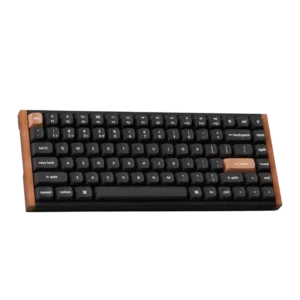
The K2 HE’s 75% footprint is repeatedly framed as compact yet still practical for everyday use.
G Hub is widely seen as powerful and feature-rich, but several reviews also describe it as clunky, less friendly, or awkward in some workflows.
Software is a major plus overall, with reviewers praising the browser-based Launcher as easy, refreshing, and highly usable.
Dampening layers and a sound-dampened chassis help suppress echo and soften impact noise.
Multiple reviews explicitly credit foam, silicone, and other dampening layers for the keyboard’s controlled sound.
At least one review specifically praises the board for feeling free of rattle and for keeping the keys properly stabilized.
Stabilizers are generally viewed positively for reducing wobble, though one scored review still sees room for improvement.
Switch feel is generally praised for being smooth and satisfying, though the softer low-profile character is not ideal for everyone.
Across the scored reviews, the magnetic switches are described as buttery smooth and among the smoothest reviewers have used.
Switch choice is limited. Multiple reviewers note the board only supports Keychron or Gateron double-rail magnetic switches, with a small linear-only selection.
Typing comfort is generally good thanks to the quiet low-profile design and reduced strain over longer sessions.
Typing comfort is strong overall, though not universal; several reviewers say it stays comfortable over long sessions, while one flags the case height.
Typing feel is the main tradeoff: several reviewers call it soft, mushy, hollow, or less satisfying than taller or more tactile alternatives.
Typing feel is a major strength, with reviewers calling it satisfying, enjoyable, and even cloud-like.
Value is divisive. Some reviewers think the specialized performance justifies the price, while others see the wired design and omissions as weak value.
Value is viewed positively overall. Some reviewers note the price is not low, but most still judge the feature set and finish to be worth it.
Volume adjustment exists, but the lack of a dedicated dial or wheel is a recurring complaint.
Volume control is available, but mostly through remapping or Fn-based shortcuts rather than a dedicated knob.
Wireless performance is effectively absent because this model is wired-only, and several reviewers treat that missing convenience as a meaningful downside.
Wireless performance is good overall but not flawless. Some reviewers report seamless behavior or fast wake, while others mention slower Bluetooth or wake quirks.