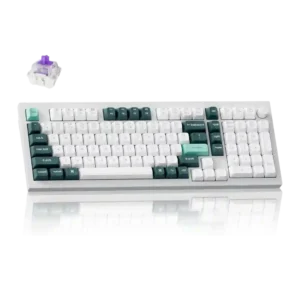
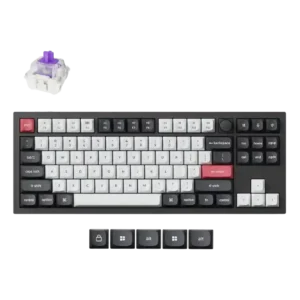
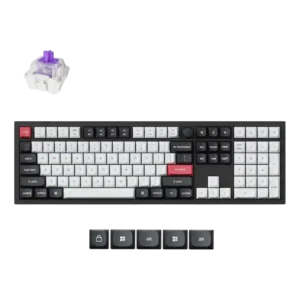
- Better: wireless connectivity and value The Keychron was presented as cheaper and wireless, undercutting the G515 Rapid value case.
Logitech G515 Rapid Review
Bottom Line
Choose the Logitech G515 Rapid if you want a slim TKL board with fast magnetic switches, quiet typing, and deep G Hub tuning. Skip it if you need wireless, dedicated media controls, a numpad, or firmer full-height typing feel.
Best for competitive PC gamers who specifically want a low-profile TKL keyboard with magnetic switches, Rapid Trigger, per-key actuation tuning, and a quiet desk setup.
Not for users who need wireless connectivity, a numpad, dedicated media or volume controls, hot-swap evidence, or a firmer full-height typing feel.
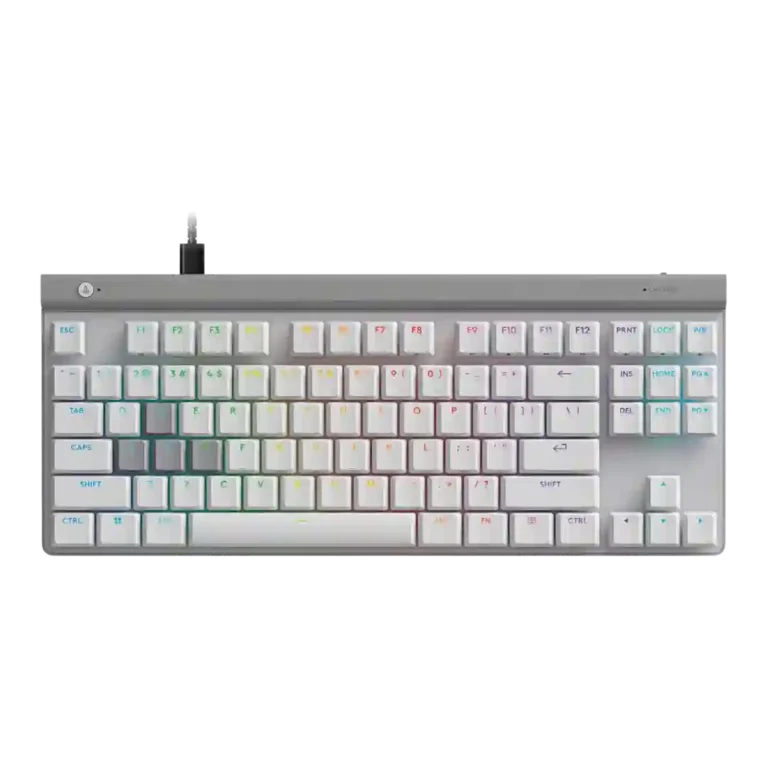
Reviewers frame the Logitech G515 Rapid as a focused low-profile gaming keyboard built around magnetic analog switches, per-key actuation tuning, Rapid Trigger, and a sturdy 22 mm TKL body. The strongest praise goes to its speed, responsive feel, quiet acoustics, PBT keycaps, and slim desk-friendly design. The tradeoff is that its minimalism is real: it is wired-only, lacks a numpad, skips dedicated media and volume controls, and depends heavily on G Hub for its best features. Typing impressions are split, with some reviewers enjoying the smooth, quiet action and others finding the shallow magnetic feel soft, mushy, or hollow. It makes the most sense as a competitive gaming board for low-profile fans rather than as a do-everything productivity keyboard.
Compared in Reviews
Products reviewers directly compared with this model, grouped into quick takeaways.
- Compared: wireless connectivity versus magnetic switches The Rapid TKL gains magnetic-switch performance but loses the wireless versatility of the LIGHTSPEED model.
- Better: rapid trigger performance and price The NuPhy was described as cheaper while offering stronger rapid-trigger-related hardware.
Feature Scorecards
Pros
-
Sound dampening was repeatedly supported through mentions of dampening layers, foam, sound-dampened chassis design, and lack of echo.
-
Responsiveness was one of the strongest themes, with reviewers describing fast, precise, snappy key response in games.
-
Rapid Trigger support was consistently confirmed and praised as a major gaming advantage for repeated inputs and movement.
-
The low-profile TKL form factor was praised as slim, compact, and desk-friendly at about 22 mm tall.
-
Gaming performance was consistently strong, with reviewers reporting smooth, responsive, precise play and meaningful competitive advantages.
-
Keycap quality was a strength, with multiple reviewers praising textured double-shot PBT caps, though one review noted keycap wobble.
-
Acoustics were a highlight, with reviewers describing a quiet, controlled, satisfying sound rather than loud clatter.
-
RGB customization was strong, with G Hub allowing per-key RGB and effects customization.
-
Desk space efficiency was strong thanks to the TKL layout and compact footprint, which reviewers tied to mouse room and clean setups.
-
Durability evidence centered on double-shot legends being part of the plastic rather than printed, suggesting better long-term wear resistance.
-
Frame rigidity was a clear strength thanks to steel/top-plate construction and repeated comments about little to no flex.
-
Noise level was low for a gaming keyboard, with several reviewers emphasizing quiet operation in shared spaces.
-
Ergonomics were a strength, with reviewers citing low wrist posture, height feet, and comfortable long-session positioning.
-
Per-key lighting control was supported through LIGHTSYNC and G Hub, with reviewers noting per-key color or RGB control.
-
Stabilizer quality was praised in one detailed review, which reported no sense of poorly stabilized or mounted keys.
-
Customization options were broad, covering actuation, RGB, key assignments, macros, profiles, and multi-action behavior.
-
Build quality was widely praised as sturdy, dense, and premium-feeling, though one review criticized the plastic chassis versus rivals.
-
Extra gaming features were strong, including SOCD/Snap Tap, key priority, Game Mode, and multi-action behavior.
-
Macro customization was strong through G Hub remapping, macros, multi-action keypresses, and layered inputs.
-
Actuation tuning was broadly praised for per-key control and fast response, though low-profile travel made some dual-step precision harder.
-
Latency evidence was mixed: the wired connection was praised for zero-latency consistency, while one review noted the lack of 8K polling limits latency potential.
-
Reviewers generally found the magnetic switches smooth and satisfying, though a few noted the softer feel could seem hollow or less tactile.
-
Materials quality was generally strong, led by steel/top-plate elements, PBT keycaps, and dampening layers, with some plastic-chassis caveats.
-
Reliability was mostly positive during testing, though one reviewer saw G Hub slowdowns and another praised no crashes or stuttering.
-
Compatibility evidence showed PC support for Windows 10/11 and macOS 12 or later.
-
Portability evidence was limited but positive around weight, with one reviewer noting the 800 gram body.
-
Onboard memory was present, but reviewers differed between praising portable saved settings and criticizing profile-save workflow.
-
Key spacing was mixed: one reviewer said the keys were not cramped, while another found reduced spacing caused occasional missteps.
-
Software quality was powerful but inconsistent, with praise for ease and menus balanced by complaints about clunky behavior, profile issues, and slowdowns.
-
Typing comfort was context-dependent, praised by some for quiet smoothness but criticized by others as uncomfortable over longer work sessions.
-
RGB lighting looked vibrant and attractive, but uneven illumination on larger or longer legends held it back.
-
Value for money was split: some called it fair against competitors, while others felt wired-only plastic hardware was expensive.
-
Backlight brightness was good on main keys, but larger legends and non-English legends were less evenly or fully lit.
Cons
-
Typing feel divided reviewers: some enjoyed smooth low-profile typing, while others called it soft, mushy, or hollow.
-
Profile management was useful but uneven, with onboard/profile support offset by cumbersome saving and unreliable automatic switching.
-
Polling rate support was documented at 1,000 Hz, with one reviewer explicitly noting the keyboard does not support 8,000 Hz polling.
-
Analog-style support exists through magnetic switches and multi-action depth control, but reviewers noted it lacks joystick-like analog features and is limited by short travel.
-
Legend visibility was mixed because main legends were readable, but longer legends and local-language legends had uneven or missing backlighting.
-
Key stability evidence was limited and mixed, with one reviewer reporting minor but definite keycap wobble during rapid presses.
-
Connectivity was the biggest limitation: reviewers repeatedly noted it is wired-only, even if the wire supports consistency.
-
Media controls were a common weakness because reviewers repeatedly noted the lack of dedicated media keys or extra physical controls.
-
Wrist-rest evidence was mixed: the keyboard does not include one, though one reviewer felt the low profile reduced the need for it.
-
Volume control was weak because there is no dedicated volume roller or dial, leaving volume to secondary functions.
-
Wireless performance scored poorly because reviewers repeatedly emphasized that there is no wireless, Bluetooth, or battery-backed mode.
Compared With Category Average
Compared with other Gaming Keyboard, this product is above average in rapid trigger support, below average in wireless performance, volume control, media controls.
| Attribute | This product | Category average | Difference |
|---|---|---|---|
| wireless performance | 1.5 | 3.3 | -1.8 |
| volume control | 2.1 | 3.9 | -1.8 |
| media controls | 2.2 | 3.8 | -1.7 |
| key stability | 2.8 | 4.2 | -1.4 |
| rapid trigger support | 4.6 | 3.4 | +1.2 |
| connectivity | 2.8 | 3.9 | -1.2 |
| typing feel | 3.3 | 4.4 | -1.1 |
| polling rate | 3.2 | 4.2 | -1.0 |
FAQ
Is the Logitech G515 Rapid good for competitive gaming?
Yes. Reviewers repeatedly praised its low-profile magnetic switches, Rapid Trigger, SOCD/Snap Tap features, and responsive movement in shooters.
Is the Logitech G515 Rapid wireless?
No. The reviews consistently describe it as wired-only, with no Bluetooth, wireless mode, or battery charging.
How does it feel for typing?
Typing impressions are split. Some reviewers liked the smooth, quiet low-profile feel, while others found the shallow magnetic switches soft, mushy, or hollow for long work sessions.
Does it support adjustable actuation and Rapid Trigger?
Yes. Reviews describe per-key actuation adjustment from 0.1 mm to 2.5 mm, Rapid Trigger, key priority or SOCD features, and multi-action key behavior.
Does it have dedicated media or volume controls?
No. Multiple reviewers called out the lack of dedicated media keys, a volume dial, or a volume roller, with those functions pushed to secondary controls.
How good is the RGB lighting?
The RGB is customizable and often described as vibrant, with per-key control in G Hub. The main caveat is uneven illumination on larger or longer legends and missing local-language backlighting.
Is G Hub required?
G Hub is central to actuation, RGB, macros, and profile setup. Reviewers found it powerful, but some also called the profile workflow cumbersome or the software clunky.
Consider This Instead
If you want better wireless performance
Choose ASUS ROG Azoth. It scores 4.8 vs 1.5 for wireless performance, with a 4.2 overall score.
If you want better volume control
Choose Keychron Q3 HE. It scores 4.8 vs 2.1 for volume control, with a 4.4 overall score.
If you want better wrist rest quality
Choose Razer BlackWidow V4 Pro. It scores 4.6 vs 2.1 for wrist rest quality, with a 4.0 overall score.
If you want better connectivity
Choose Corsair K65 Plus. It scores 4.9 vs 2.8 for connectivity, with a 4.1 overall score.
Overall Top Gaming Keyboard Alternatives
Best for 8K polling, magnetic-switch gaming control, premium build, and deep web customization. Skip it if you need broad switch compatibility, USB passthrough, a wrist rest, or a portable keyboard.
Pros: latency, polling rate
Cons: portability, switch options
Good if you want a premium full-size Hall Effect keyboard with smooth switches, strong gaming controls, and quiet acoustics. Skip it if you need a portable, budget, or broadly switch-compatible...
Pros: key stability, frame rigidity
Cons: portability, switch options
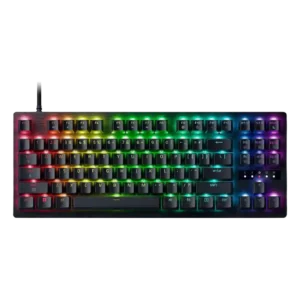
Best for a premium, quiet Hall Effect TKL with strong wireless, software, and gaming features. Skip it if price, switch flexibility, USB passthrough, or an included wrist rest matter most.
Pros: rapid trigger support, typing feel
Cons: switch options, portability
Best for a premium 96% metal keyboard with Hall Effect tuning, strong wireless, and excellent typing feel. Skip it for travel, bargain pricing, or maximum esports specs.
Pros: build quality, frame rigidity
Cons: portability, switch options