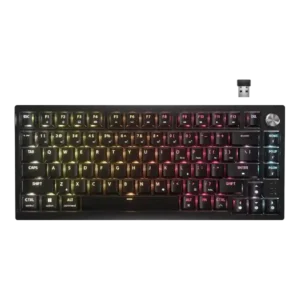
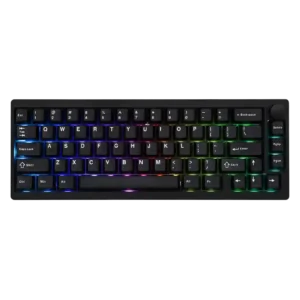
Compare Corsair K65 Plus vs Epomaker P65

P1 Corsair K65 Plus
P2 Epomaker P65

Comparison Takeaways

Corsair K65 Plus

Where It Has the Edge

  • reliability is 4.4 vs 2.4. Reliability evidence was limited but positive, with one reviewer saying the board stayed dependable in hectic gameplay.
  • noise level is 4.6 vs 3.3. Noise was widely praised as quiet, calm, and non-disruptive, making the board suitable for shared or quieter spaces.
  • compatibility is 4.7 vs 3.5. Reviewers liked the broad platform support, including Windows, Mac, mobile devices, consoles, and multiple-device use cases.
  • key stability is 4.4 vs 3.3. Key stability evidence was limited but positive, with reviewers noting little wobble and consistent key behavior.

Epomaker P65

Where It Has the Edge

  • legend visibility is 4.0 vs 2.3. Legends are generally clear and readable, but one reviewer noticed inconsistent stroke thickness and Mac-specific symbols are absent.
  • onboard memory is 5.0 vs 3.7. Customized layouts remain stored on the keyboard, so remaps continue working without VIA running.
  • materials quality is 5.0 vs 3.6. CNC aluminum, PBT caps, a polycarbonate plate and layered internal materials create a premium construction uncommon at this...
  • polling rate is 4.4 vs 3.6. The 1,000Hz wired and 2.4GHz polling rate is viewed as fully adequate for mainstream gaming, even if it...
Average score
Product 1: Corsair K65 Plus
4.2
Product 2: Epomaker P65
4.4
acoustics
Product 1: Corsair K65 Plus
4.4

Most reviewers liked the quieter, fuller sound profile, often crediting the K65 Plus with enthusiast-like acoustics; a few noted average sound or a plasticky spacebar.

Product 2: Epomaker P65
5.0

Reviewers consistently praise the rich, thocky or creamy sound, with the aluminum case, gasket mount and foam producing a refined profile without metallic ping.

actuation consistency
Product 1: Corsair K65 Plus
4.4

Evidence was limited but positive: reviewers described stable, consistent key travel and simultaneous presses registering as expected.

Product 2: Epomaker P65
4.6

Typing feels steady and predictable, with smooth linear travel that avoids unwanted inputs and helps maintain accuracy.

analog input support
Product 1: Corsair K65 Plus
No score yet
Product 2: Epomaker P65
2.0

The P65 is a conventional mechanical board rather than a Hall Effect model, so it lacks adjustable analog-style actuation for competitive play.

backlight brightness
Product 1: Corsair K65 Plus
4.4

Reviewers generally found the lighting bright or visible around the caps, helped by the reflective plate, even though it does not shine through legends.

Product 2: Epomaker P65
3.6

Lighting impressions vary: some reviewers found it bright and attractive, while others said the south-facing glow is muted behind the non-shine-through caps.

battery life
Product 1: Corsair K65 Plus
4.4

Battery life was widely praised, especially with RGB off; reviewers with RGB on reported shorter but still usable runtimes ranging from days to around a week.

Product 2: Epomaker P65
3.9

Battery life ranges from several days with RGB enabled to much longer with lighting off. Most found it acceptable, though one reviewer wanted at least a full week.

build quality
Product 1: Corsair K65 Plus
4.5

Build quality was a consistent strength, with reviewers calling the board sturdy, solid, hefty, and well-built despite its plastic-heavy shell.

Product 2: Epomaker P65
4.9

The heavy CNC-aluminum chassis is the product’s clearest strength, repeatedly described as tank-like, premium and far more substantial than typical plastic boards.

cable quality
Product 1: Corsair K65 Plus
4.4

The included cable received light but positive comments, with reviewers appreciating that it is braided, good-sized, and long enough for charging.

Product 2: Epomaker P65
3.7

The included braided USB-C cable is usually praised as unusually solid and attractive, though one customer reported faulty wiring.

compatibility
Product 1: Corsair K65 Plus
4.7

Reviewers liked the broad platform support, including Windows, Mac, mobile devices, consoles, and multiple-device use cases.

Product 2: Epomaker P65
3.5

Windows and macOS both work, but Mac users do not get dedicated keycaps or an easy hardware layout toggle.

connectivity
Product 1: Corsair K65 Plus
4.7

Connectivity was a major positive: wired, 2.4GHz, and Bluetooth modes were repeatedly described as versatile, smooth, and easy to use.

Product 2: Epomaker P65
4.9

Bluetooth, 2.4GHz wireless and wired USB-C provide flexible everyday use, with convenient external mode switching and dongle storage.

customization options
Product 1: Corsair K65 Plus
4.4

Customization was strongly praised, especially hot-swap support, onboard shortcuts, iCUE controls, remapping, lighting control, and hardware-level adjustments.

Product 2: Epomaker P65
4.5

QMK/VIA support enables extensive remapping, lighting changes, macros and knob reassignment, making the board highly adaptable once configured.

design aesthetics
Product 1: Corsair K65 Plus
4.4

Most reviewers liked the understated two-tone look and cleaner non-gamery styling, though one disliked the keycap color mix.

Product 2: Epomaker P65
4.7

The understated black or retro khaki styling wins praise for looking clean, refined and office-friendly rather than aggressively gamer-focused.

desk space efficiency
Product 1: Corsair K65 Plus
4.6

Reviewers consistently said the 75% layout frees up desk and mouse space while preserving useful keys.

Product 2: Epomaker P65
4.9

The 65% layout frees substantial mouse room while retaining arrow keys and a control knob.

durability
Product 1: Corsair K65 Plus
4.8

Durability evidence was limited, but one reviewer strongly expected the sturdy build to last a long time.

Product 2: Epomaker P65
4.8

The aluminum case, thick PBT keycaps and rated switches suggest strong long-term durability, with reviewers expecting the chassis to last for years.

ease of switch replacement
Product 1: Corsair K65 Plus
4.4

Reviewers generally found switch replacement and disassembly approachable, though one noted some switches required extra force.

Product 2: Epomaker P65
4.4

Hot-swap sockets make replacing or experimenting with switches far easier than soldered boards, though delicate pins can require careful alignment.

ergonomics
Product 1: Corsair K65 Plus
3.6

Ergonomic feedback was mixed: adjustable feet helped some reviewers, but sharper edges and the missing wrist rest hurt long-session comfort for others.

Product 2: Epomaker P65
2.6

The fixed six-degree angle and tall front edge divide opinion. Typing can still be comfortable, but users who want adjustable feet may need a wrist rest or another board.

extra gaming features
Product 1: Corsair K65 Plus
3.2

Gaming extras were mixed: reviewers liked Fn functions and anti-ghosting, but several felt the board lacked standout gaming features such as advanced switches or macro keys.

Product 2: Epomaker P65
4.0

N-key rollover supports simultaneous inputs, but the board omits enthusiast gaming extras such as adjustable actuation and Hall Effect controls.

frame rigidity
Product 1: Corsair K65 Plus
4.5

The frame was usually described as rigid and flex-resistant thanks to internal plates and solid construction, with one reviewer noting some chassis flex.

Product 2: Epomaker P65
5.0

The dense aluminum shell has almost no flex and stays firmly planted during typing or gaming.

gaming performance
Product 1: Corsair K65 Plus
4.5

Gaming performance was mostly praised for smooth, responsive, reliable play, though one reviewer found it merely average and not exceptional.

Product 2: Epomaker P65
4.5

The 1,000Hz mechanical design performs well for casual and even ranked gaming, but serious competitive players may prefer Hall Effect alternatives.

hot-swappable switches
Product 1: Corsair K65 Plus
4.6

Hot-swappable switches were one of the strongest points, repeatedly praised for making the keyboard easy to tailor after purchase.

Product 2: Epomaker P65
4.9

The PCB accepts 3-pin and 5-pin mechanical switches, giving owners broad replacement and tuning flexibility without soldering.

keycap quality
Product 1: Corsair K65 Plus
3.9

Keycap quality was mixed: reviewers liked PBT durability and feel, but several criticized legend alignment, no shine-through, or keycaps holding back the premium impression.

Product 2: Epomaker P65
4.4

Thick double-shot PBT keycaps feel textured, durable and premium, although isolated units arrived scratched and one reviewer noticed inconsistent legend printing.

key responsiveness
Product 1: Corsair K65 Plus
4.3

Most reviewers found response strong or fast, especially for gaming, but a few described responsiveness as average or noted accidental presses.

Product 2: Epomaker P65
4.8

The light linear switches feel snappy and promptly register commands, with no lag noticed in normal gaming.

key spacing
Product 1: Corsair K65 Plus
4.8

Key spacing evidence was limited but very positive, with one reviewer saying the keys felt naturally placed and reduced mis-hits.

Product 2: Epomaker P65
5.0

The key spacing feels consistent and comfortable, helping reduce typing errors despite the compact layout.

key stability
Product 1: Corsair K65 Plus
4.4

Key stability evidence was limited but positive, with reviewers noting little wobble and consistent key behavior.

Product 2: Epomaker P65
3.3

Most keys feel controlled, but a few users noticed wobble or slight misalignment on longer navigation and modifier keys.

latency
Product 1: Corsair K65 Plus
4.8

Wireless latency feedback was very positive, with reviewers reporting no noticeable lag or dropout issues in gaming.

Product 2: Epomaker P65
4.4

Wired and 2.4GHz response is consistently described as fast enough for gaming, with no perceptible input lag in practical tests.

layout options
Product 1: Corsair K65 Plus
4.0

The 75% layout was praised as a productivity-and-gaming compromise, but reviewers also noted missing or awkwardly relocated keys and limited regional layouts.

Product 2: Epomaker P65
3.0

The compact 65% layout saves room but removes the function row, numpad and some dedicated keys, requiring shortcuts or remapping.

legend visibility
Product 1: Corsair K65 Plus
2.3

Legend visibility was a consistent weakness because the opaque keycaps do not shine through, making dark-room typing harder.

Product 2: Epomaker P65
4.0

Legends are generally clear and readable, but one reviewer noticed inconsistent stroke thickness and Mac-specific symbols are absent.

macro customization
Product 1: Corsair K65 Plus
4.3

Macro support was positively reviewed through iCUE and hardware workflows, though one reviewer needed time to rebuild old macros on fewer keys.

Product 2: Epomaker P65
4.9

VIA supports recording and assigning macros, giving the compact layout useful programmable depth.

materials quality
Product 1: Corsair K65 Plus
3.6

Materials drew mixed reactions: reviewers liked the premium feel from the plate and PBT caps but often wished for more metal or less plastic at the price.

Product 2: Epomaker P65
5.0

CNC aluminum, PBT caps, a polycarbonate plate and layered internal materials create a premium construction uncommon at this price.

media controls
Product 1: Corsair K65 Plus
4.2

The control dial was generally liked for volume, scroll, zoom, and brightness, but several reviewers wanted deeper remapping or noted slight wobble.

Product 2: Epomaker P65
4.8

The metal rotary knob provides smooth volume adjustment, mute control and programmable functions with satisfying tactile feedback.

noise level
Product 1: Corsair K65 Plus
4.6

Noise was widely praised as quiet, calm, and non-disruptive, making the board suitable for shared or quieter spaces.

Product 2: Epomaker P65
3.3

The sound is appealing but not truly quiet. Several reviewers warn that its pronounced thock or clack may be distracting in shared workspaces.

onboard memory
Product 1: Corsair K65 Plus
3.7

Onboard profile evidence was mixed: some reviewers liked saved profiles, while others criticized the lack of true hardware-profile behavior.

Product 2: Epomaker P65
5.0

Customized layouts remain stored on the keyboard, so remaps continue working without VIA running.

overall satisfaction
Product 1: Corsair K65 Plus
No score yet
Product 2: Epomaker P65
4.4

Most reviewers strongly recommend the P65 for its premium feel, sound and value, though a small number report setup issues, damaged parts or component failures.

per-key lighting control
Product 1: Corsair K65 Plus
3.5

Per-key lighting control was mixed because wired/iCUE use unlocks stronger customization, while wireless mode limits patterns and layers.

Product 2: Epomaker P65
4.2

South-facing per-key LEDs can be configured through VIA, though the visible glow depends heavily on switch and keycap choice.

polling rate
Product 1: Corsair K65 Plus
3.6

The 1,000Hz polling rate was usually considered fine for casual or average gamers, but reviewers noted it trails high-end competitive boards.

Product 2: Epomaker P65
4.4

The 1,000Hz wired and 2.4GHz polling rate is viewed as fully adequate for mainstream gaming, even if it trails 8K esports-focused boards.

portability
Product 1: Corsair K65 Plus
3.7

Portability was mixed: the compact form and dongle storage help travel, but multiple reviewers noted the board is heavier than expected.

Product 2: Epomaker P65
2.9

The compact footprint fits bags more easily than larger layouts, but the 1.3kg aluminum body makes it a poor choice for frequent travel.

profile management
Product 1: Corsair K65 Plus
3.7

Profile management was useful for switching setups, but opinions were mixed because onboard limits and preset behavior constrain software-free use.

Product 2: Epomaker P65
4.5

VIA layouts can be saved to onboard memory, allowing customized keymaps to persist without background software.

rapid trigger support
Product 1: Corsair K65 Plus
2.4

Rapid trigger support was viewed as a missing or unnecessary advanced feature depending on the reviewer’s gaming needs.

Product 2: Epomaker P65
2.0

Rapid trigger is not included, making the P65 less suitable for players specifically seeking Hall Effect responsiveness.

reliability
Product 1: Corsair K65 Plus
4.4

Reliability evidence was limited but positive, with one reviewer saying the board stayed dependable in hectic gameplay.

Product 2: Epomaker P65
2.4

Most reviewers experienced stable operation, but isolated reports of a failed 2.4GHz dongle, scratched caps and intermittent wiring create some quality-control concern.

RGB customization
Product 1: Corsair K65 Plus
4.1

RGB customization was often praised through iCUE and onboard presets, but reviewers disliked reduced wireless customization and non-shine-through caps.

Product 2: Epomaker P65
4.8

VIA offers adjustable colors, patterns and brightness, with enough control for either subtle static lighting or brighter effects.

RGB lighting quality
Product 1: Corsair K65 Plus
4.4

RGB quality was usually praised as vibrant, tasteful, bright, or stylish despite its mostly aesthetic underglow role.

Product 2: Epomaker P65
4.1

The RGB is usually described as tasteful and even, but brightness and diffuser quality receive mixed comments.

size and form factor
Product 1: Corsair K65 Plus
4.6

The 75% form factor was a major strength, balancing compactness with arrows, function keys, and everyday usability.

Product 2: Epomaker P65
4.9

The compact 65% chassis balances desk efficiency with arrow keys and a knob, though users must accept missing dedicated keys.

software quality
Product 1: Corsair K65 Plus
4.2

Software feedback was mostly positive for iCUE’s options and ease, but reviewers also cited limited dial control, hardware-profile limits, and occasional dependence on software.

Product 2: Epomaker P65
3.8

VIA itself is powerful and clean, but onboarding varies sharply: some reviewers loaded the JSON file in under a minute, while others struggled with recognition and vague instructions.

sound dampening
Product 1: Corsair K65 Plus
4.6

Sound dampening was strongly praised, with reviewers crediting the foam and silicone layers for quieter, smoother, less hollow sound.

Product 2: Epomaker P65
5.0

Five internal dampening layers and gasket mounting effectively suppress resonance, hollowness and metallic ping while preserving a full sound.

stabilizer quality
Product 1: Corsair K65 Plus
4.4

Stabilizers were generally strong, especially the spacebar, though a few reviewers found uneven lube or minor rattle/wobble.

Product 2: Epomaker P65
4.5

Factory-lubed stabilizers are mostly quiet and rattle-free, though a few reviewers found them merely average or heard minor spacebar ting.

switch feel
Product 1: Corsair K65 Plus
4.5

Switch feel was widely praised for smooth, soft, factory-lubed MLX Reds, though a few reviewers wanted tactile alternatives or found them average.

Product 2: Epomaker P65
4.5

Both Zebra and Wisteria linears are smooth and responsive, with Zebra feeling lighter and Wisteria slightly heavier. Stock choice is limited to linear options.

switch options
Product 1: Corsair K65 Plus
3.1

Switch options were a recurring weakness because the base board ships only with linear MLX Reds, even though hot-swap mitigates that limitation.

Product 2: Epomaker P65
3.1

Buyers can choose Zebra or Wisteria linears, but there are no stock tactile, clicky or silent choices; hot-swap support partly offsets that limitation.

typing comfort
Product 1: Corsair K65 Plus
4.5

Typing comfort was mostly praised over long sessions, but some reviewers found the edge angle or lack of wrist rest uncomfortable.

Product 2: Epomaker P65
4.6

The gasket-mounted plate softens bottom-out and supports long work sessions, though the fixed angle may still bother some users.

typing feel
Product 1: Corsair K65 Plus
4.8

Typing feel was one of the strongest themes, with many reviewers calling it smooth, satisfying, premium, or the best Corsair typing experience.

Product 2: Epomaker P65
5.0

Typing is consistently described as smooth, cushioned and satisfying, with several reviewers achieving strong speed and accuracy.

value for money
Product 1: Corsair K65 Plus
4.1

Value sentiment was mostly positive at the launch price, especially versus pricier gaming boards, but some reviewers felt cheaper competitors outclass it.

Product 2: Epomaker P65
4.9

At roughly $120 and often less on sale, the P65 is widely considered exceptional value for a prebuilt aluminum keyboard.

volume control
Product 1: Corsair K65 Plus
4.2

Volume control through the dial was liked and convenient, although reviewers noted mode limits and minor dial tolerance issues.

Product 2: Epomaker P65
5.0

The metal knob is a standout convenience, offering smooth adjustment, tactile steps and a press-to-mute function.

wireless performance
Product 1: Corsair K65 Plus
4.7

Wireless performance was repeatedly praised as stable, lag-free, and reliable over 2.4GHz or Bluetooth in normal use.

Product 2: Epomaker P65
4.1

Bluetooth and 2.4GHz are generally reliable, but one customer reported a failed dongle, so confidence is high rather than flawless.

wrist rest quality
Product 1: Corsair K65 Plus
2.6

Wrist-rest feedback was negative because the keyboard lacks one, which several reviewers felt mattered at the price or for comfort.

Product 2: Epomaker P65
No score yet