Keyboard sound is mixed: one review praised the low case ping, while another found the switch sound less pleasant overall.
Sound is noticeable rather than muted overall: some reviews like the intentional clack and muted tactile note, while others mention rattling and metallic ping.
Reviews describe quick, consistent registration, but the light actuation can also cause accidental double presses until the user adapts.
Several reviews say the adjustable and dual-stage switches can mimic analog-style input, enabling walk-and-run behavior from a single key.
Reviews explicitly note that analog input is absent, and some compare the board unfavorably with analog-equipped rivals.
Brightness is serviceable to strong overall. One review found the RGB less than especially bright, while another said full brightness remained easy to see.
Backlight brightness is easy to adjust from the keyboard, with multiple levels and the option to turn lighting off completely.
Wireless battery life is usually described around 30 to 40 hours, which reviewers treated as usable rather than class-leading, especially given sleep and charging quirks.
Battery life is one of the clearest strengths, with repeated reports of mid-30s to around 100 hours with lighting on and up to 800 to 1000 hours with lighting off.
Build quality is generally solid enough for regular use, but the plastic-heavy shell and occasional squeak or premium-feel complaints keep it from feeling universally luxurious.
Reviewers consistently frame the board as premium, polished, sturdy, and exceptionally well built.
The included USB-C cable is a consistent positive, with multiple reviews calling it braided, sturdy, heavy-duty, or durable.
The included cable is described as long enough for flexible setup and not cheap or flimsy.
One review explicitly confirms support across Windows, PlayStation, Xbox, and Mac, though it also notes not every software feature is available on macOS.
Evidence shows the keyboard working across Windows, Mac, tablets, and secondary devices, though Bluetooth device switching is not always as flexible as some rivals.
Connectivity is broad on the wireless model, with repeated praise for wired, Bluetooth, and 2.4 GHz support, while the wired-only version obviously drops those wireless options.
Tri-mode connectivity is a major strength, with wired, Bluetooth, and Lightspeed support repeatedly praised for easy switching.
Customization is one of the board’s biggest strengths, with repeated mentions of remapping, actuation tuning, lighting changes, dual bindings, and deep software control.
Customization depth stands out thanks to extensive remapping, layered functions, and broad software control over keys and actions.
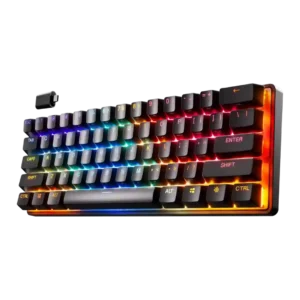
The compact 60% layout consistently frees desk space and shortens hand movement, making it especially appealing for minimalist or gaming-focused setups.
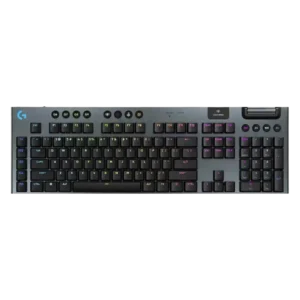
Space efficiency depends on version: TKL coverage highlights a compact footprint, while full-size use takes noticeably more desk room.
Durability is repeatedly framed as a strength thanks to the quoted 100 million keypress lifespan and generally confident long-term expectations.
Durability evidence is positive, with one review reporting the board still worked after water exposure and others emphasizing wear-resistant PBT caps.
Switch replacement or deeper switch-side maintenance is inconvenient because the switches are not hot-swappable and reviewers warn that working on them requires care.
Switch replacement is a weak point because the switches are soldered, and one reviewer describes out-of-warranty replacement as major surgery.
Ergonomics are decent overall thanks to adjustable feet and the compact hand position, though one review notes the raised feet could use rubber tips.
The low-profile design and light actuation help comfort and speed for many users, although angle and layout are not ideal for everyone.
Dual actuation, multi-action keys, and layered gaming functions are standout features, though several reviews also mention a learning curve before they feel natural.
Game mode and dedicated extra keys add useful gaming-specific control, especially for locking keys and assigning shortcuts.
Frame rigidity is better than the plastic-heavy exterior suggests, with several reviews noting little flex in normal use even if some versions show minor flex under pressure.
The chassis is repeatedly described as rigid and stable, with little to no flex in normal use.
Gaming performance is one of the clearest strengths, with reviews describing the board as fast, seamless, and especially compelling for competitive or shooter-focused play.
Gaming performance is consistently strong, with responsive inputs and no meaningful lag called out in actual play.
Hot-swappability is a weakness here because at least one review explicitly states that the switches are not hot-swappable.
Multiple reviews explicitly say the switches are not hot-swappable.
Keycap quality is a broad positive. Reviews repeatedly highlight PBT caps, solid texture, durable feel, and good overall finish.
Double-shot PBT keycaps are broadly viewed as an upgrade for durability and texture, even if not every reviewer loves the feel.
Responsiveness is consistently praised, with reviews citing very fast reaction, fewer missed keystrokes, and an immediate feel in games.
The keys are widely described as snappy, responsive, and quick to register.
The tight 60% spacing can feel cramped at first and may cause adjustment issues or typos until muscle memory catches up.
The roomier spacing on some versions is called helpful for shortcuts and finger placement.
One review specifically calls out little to no switch wiggle, suggesting solid key stability.
Key stability looks improved overall, though one review still notices a minor wobble.
One wireless review explicitly reports no noticeable input lag during play, reinforcing the board’s speed-focused design.
Wireless latency is repeatedly described as very low and close to wired behavior.
The 60% layout uses layered functions intelligently, but the lack of dedicated keys remains a real tradeoff for productivity and adaptation.
Review coverage confirms both full-size and TKL layout options in the lineup.
Legend visibility is mixed. Some reviewers found the function legends easy enough to spot, while others said side legends or secondary markings were hard to read or hidden in use.
Legend visibility is good with lighting on, but some reviews say readability drops when RGB is off or coverage is uneven on certain keys.
Macro support is treated as flexible and useful, especially through SteelSeries GG where reviewers mention assigning macros and secondary actions.
Macro support is a real strength, with dedicated G keys, KEYCONTROL, direct recording, and layered assignment options.
Materials are generally competent, usually mixing plastic outer parts with aluminum or metal structural elements, but not everyone felt the materials justified the premium price.
Brushed aluminum and upgraded PBT caps are repeatedly highlighted as premium material choices.
Media controls are present as secondary functions rather than dedicated buttons, giving access to playback features without adding extra keys.
Dedicated media controls are consistently useful and well executed.
The board is not especially quiet, with reviews describing it as loud, clacky, or on the louder side for typing.
Noise varies by switch and preference, ranging from office-manageable to quite loud during heavy typing.
Onboard memory is useful but not perfect, with reviews mentioning saved profiles or Bluetooth slots alongside at least one lighting-related limitation.
Some settings and profiles can be stored on the device, but richer behavior and complex macros still depend heavily on software.
Per-key lighting control is a clear feature highlight, with reviewers calling out individual-key RGB adjustment and strong lighting flexibility.
Per-key lighting control is clearly supported, with individual key color changes available in software.
Evidence supports a gaming-grade 1000 Hz report rate, but not a class-leading one versus faster rivals.
Portability is strong thanks to the compact size, with reviewers explicitly highlighting bag-friendly travel use.
The slim design helps portability, especially for TKL coverage, but full-size versions are less bag-friendly.
Profile handling is a positive, with reviewers mentioning multiple saved profiles for games, devices, or different actuation preferences.
App-specific and game-specific profile management is supported and repeatedly mentioned as useful.
Reviews explicitly note that rapid trigger support is absent, with some rivals offering it instead.
Reliability trends positive overall, though not flawless: one review reports trouble-free daily use while another notes an initial unit with connection issues.
Day-to-day reliability is positive in the evidence, with reviewers reporting stable use and no meaningful issues.
Lighting customization is a real strength, with reviews citing software-based control, per-key adjustment, preset effects, and the option to shut lighting off when preferred.
RGB customization is deep overall, with broad effect and assignment control, though one review wanted more flexible effect mixing.
RGB presentation is generally praised for looking bold, vivid, and attractive, with smooth gradients or clean shine-through, though not every reviewer considered it especially bright.
Lighting is generally bright and attractive, with only minor complaints about coverage or presentation in some cases.
The tiny 60% form factor is central to the board’s identity and is repeatedly described as very compact and space-saving.
The low-profile, ultra-thin form factor is one of the product's biggest strengths, though full-size versions take more room.
SteelSeries GG is feature-rich and powerful, but several reviews mention bugs, confusing steps, or a learning curve that softens the overall experience.
G Hub offers a lot of power, but the reviews are mixed: some find it clean and easy, while others call it overcomplicated, unintuitive, or unstable.
Sound dampening is only average, with one review specifically noting hollow-sounding impacts rather than a tightly muted profile.
Sound dampening is only moderate because some reviews mention rattling, ping, or a lack of deeper sound tuning.
Stabilizers are decent to good for a mass-produced keyboard, though several reviews still mention some rattle or note that extra tuning would help.
At least one review specifically praises the space bar as solid and stable.
Switch feel is one of the board’s strongest fundamentals, with reviews repeatedly describing the switches as smooth and pleasant to use.
Switch feel is generally satisfying and responsive, though some reviewers mention resistance, mushiness, or adaptation issues.
Adjustable actuation is the signature feature here, with wide per-key tuning ranges repeatedly praised across both written and video reviews.
The lineup consistently offers tactile, linear, and clicky switch options.
Typing comfort is strong once adjusted to the layout, with reviewers noting long-session comfort even if the form factor takes some adaptation.
Typing comfort is good for many users thanks to the low profile, but layout and angle can still hurt comfort for others.
Typing feel is generally positive thanks to smooth switches and solid caps, although linear behavior is not every typist’s favorite.
The typing experience lands well for several reviewers, though it is not universally praised.
Value is the most consistent complaint. Review after review questions the high asking price, especially on the wireless model, even when the feature set is respected.
The feature set is strong, but the premium price keeps value mixed rather than an obvious win.
Volume control is available through layered secondary functions rather than a dedicated wheel or knob.
The volume roller or wheel is one of the most consistently praised physical controls on the board.
Wireless performance is commonly described as stable, responsive, and effectively lag-free, with sleep and wake behavior being the main recurring complaint.
Wireless performance is widely described as stable, fast, and close to wired use, with generally strong range.
Reviews note that no wrist rest or palm rest is included, so support in this area is limited.