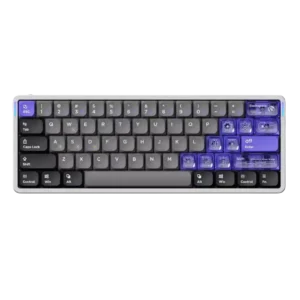
Across reviews, the Air60 HE is repeatedly described as sounding unusually good for a low-profile board, with a deeper and more premium tone than expected.
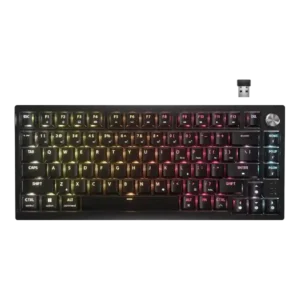
Reviews describe the K65 Plus as acoustically refined, with softer, rounder sound than typical gaming boards.
Reviewers describe the low-profile magnetic switches as stable and predictable, with travel and adjustable actuation behavior that feel consistent in use.
One review says the keys travel smoothly with little variance, supporting generally consistent actuation.
One review explicitly highlights Hall Effect support for analog control in addition to multi-function key behavior.
The south-facing RGB is described as bright and easy to notice, even without relying on shine-through legends.
Backlighting is bright enough to stand out well around the keycaps, even though legends do not shine through.
Battery life is a clear strength, with multiple reviewers getting days to weeks depending on lighting use.
Reviewers generally describe the board as solid and sturdy, with few complaints about the overall chassis construction.
Build quality is repeatedly praised for sturdy construction, hefty feel, and a premium overall impression.
The included USB-C cable is described positively, especially its right-angled design and matching finish.
The included USB-C cable is described as braided, long enough for typical setups, and easy to disconnect.
Reviews mention support across Windows, Mac, and Linux, with one review also calling out Android and iOS compatibility.
Compatibility is broad, with repeated support for Windows, Mac, and multiple console or mobile use cases.
Wired USB-C helps keep performance fast, but the lack of wireless is the most common connectivity complaint.
Connectivity is a major highlight thanks to wired, 2.4GHz, and Bluetooth modes plus easy multi-device switching.
The browser-based configurator gives users broad control over remaps, actuation, layers, and gaming behaviors.
Customization is extensive, covering hot-swap hardware changes, remapping, lighting, and other programmable behaviors.
The compact 60% footprint is repeatedly praised for reclaiming desk space and leaving more room for mouse movement.
The 75% footprint noticeably frees desk space, especially for mouse movement and tighter workstations.
Materials and construction suggest decent longevity, but one reviewer reports scratch-prone caps and underside surfaces.
Durability impressions are strong, with sturdy construction, durable caps, and long switch lifespan claims noted.
Switch changes are possible thanks to the hot-swappable PCB, though the ecosystem is still limited.
Switch replacement is generally easy thanks to hot-swap support and included tools, though sockets can feel tight.
The low profile and adjustable feet help comfort, but convenience is reduced by wired-only use and some foot design complaints.
Ergonomics are mostly positive, especially at lower angles, but comfort can depend on setup and wrist support.
Rapid Trigger, SOCD/LKP-style functions, DKS, HyperTap, and related Hall Effect tools are a major strength of this keyboard.
Gaming extras include full key rollover, anti-ghosting, and lockout shortcuts that help avoid accidental interruptions.
Multiple reviews call the case rigid and sturdy, with no meaningful flex or creaking.
Reviewers describe the frame as rigid and low-flex, with enough heft to stay planted during use.
Across reviews, gaming performance is a standout, with especially strong praise for responsiveness in fast-paced games.
Gaming performance is strong overall, with fast input feel and good control, though one review found it less standout than rivals.
Hot-swap support is present, but reviewers repeatedly note that compatible low-profile magnetic switch choices are scarce.
Hot-swap support is one of the keyboard’s headline features and is praised across multiple reviews.
Keycap impressions are mixed: some reviewers praise the material choice and feel, while others dislike slipperiness, thinness, light bleed, or scratching.
Keycaps earn praise for material and feel, though some reviews note the single-shot, non-shine-through design as a compromise.
Reviews describe the keys as quick and responsive, with fast, accurate behavior once actuation is tuned.
Key response is consistently described as quick, clear, and dependable in both gaming and typing scenarios.
The flat low-profile layout can make mis-hits and typos easier for some users, especially if they rely on key shape for guidance.
The layout feels well spaced for a compact board, keeping keys usable without feeling overly cramped.
Main keys are often described as stable, but the space bar and a few stabilizer-related behaviors draw criticism.
Key stability is good, with low switch wobble and sturdier large keys than many typical gaming keyboards.
Low latency is a recurring positive, with reviewers consistently framing the board as fast and responsive.
Latency is effectively a non-issue in use, with reviewers calling wired and wireless input lag-free or unnoticeable.
The Air60 HE is firmly a compact 60% board, and reviews note limited layout flexibility plus no ISO option.
Layout flexibility is decent, with mention of ANSI/ISO availability and quick Windows or Mac layout switching.
Legend visibility is mixed, with complaints about soft legend clarity, visual busyness, and light bleed on some caps.
Legend visibility is acceptable in good light, but opaque caps make dark-room use noticeably harder.
Macro support appears in the specs and software coverage, but one review reported it missing at the time, so the experience looks mixed across review dates.
Macro support is solid through iCUE, with reviewers noting macro recording, remapping, and other programmable actions.
Reviewers consistently mention the aluminum top frame, ABS bottom, and PBT caps as good material choices for the price.
Material quality is good for the price, though several reviews still call out the plastic shell as a compromise.
Media functions are available through layers rather than dedicated keys or controls.
Media control coverage is good, led by the multifunction dial and secondary media shortcuts on the keyboard.
The Air60 HE is generally described as quieter and more office-friendly than many gaming boards, even if it is not silent.
Noise levels are low for a mechanical board, with several reviewers calling the K65 Plus quiet or subdued.
The board stores a small number of programmed layouts/profiles on-device, but that capacity is limited.
Onboard memory is useful, with reviewers noting stored settings and space for multiple saved profiles.
One review explicitly lists RGB per-key lighting alongside the board’s side lights.
Per-key lighting control exists and can be programmed in software, though one review notes wireless limitations.
High polling is a core part of the Air60 HE’s performance story, with 8,000Hz repeatedly mentioned across reviews.
The 1,000Hz polling rate is viewed as fast enough for most use, but not cutting-edge for competitive buyers.
The board is compact and easy to pack, but wired-only operation reduces some of its natural portability advantages.
Portability is mixed: the compact footprint travels well, but the board’s weight makes it less ideal for constant carry.
The physical switch makes profile changes quick, but the three-profile limit is one of the more common complaints.
Profile management is flexible, with multiple onboard profiles and software-based profile creation or switching.
Rapid Trigger is widely highlighted and reviewers generally describe it as working as expected.
Everyday behavior is mostly described as solid, but one reviewer hit firmware-update bugs before reverting and recalibrating.
Reliability is strong in actual use, with reviewers reporting stable operation and dependable wireless behavior.
Reviews note a healthy range of lighting effects and app-based RGB controls.
RGB customization is broad, with many effects and presets available, though one review calls wireless customization limited.
RGB looks bright and eye-catching, especially with the translucent accent caps, though some reviewers dislike the stock cap look or light bleed.
RGB lighting quality is generally praised for rich color and strong visibility around the keys.
The ultra-compact low-profile 60% form is central to the product’s appeal, even if that shape is not ideal for everyone.
The 75% form factor is widely praised for balancing compact size with useful navigation and function keys.
NuPhy.io is one of the board’s biggest strengths, with repeated praise for being web-based, capable, and easy to use.
iCUE is generally considered capable and easy to use, though some functions remain more limited than enthusiasts may want.
Foam and silicone layers are repeatedly credited with softening the board’s sound and giving it a more muted tone.
Dual sound-dampening layers are repeatedly credited for the quieter, fuller sound signature.
Stabilizers are acceptable overall, but the space bar is repeatedly singled out for wobble, rattle, or weaker sound.
Stabilizers are better than past Corsair efforts, reducing wobble and rattle, though tuning is not flawless everywhere.
The low-profile Jade and Jade Pro switches are widely praised for smoothness and satisfying feel, with Pro switches often preferred for control.
Switch feel is a major strength, with reviewers calling the stock MLX Reds smooth, soft, and satisfying.
Switch choice is narrow right now, with reviewers only pointing to the Jade and Jade Pro low-profile magnetic options.
Stock switch choice is limited because the keyboard ships only with linear MLX Reds unless you swap later.
Many reviewers find the Air60 HE comfortable for long sessions, especially given its low profile and optional wrist-rest support.
Typing comfort is a standout, with several reviewers calling the board comfortable even over long sessions.
Typing is often described as surprisingly enjoyable for a gaming-focused low-profile board, though some reviewers still report tradeoffs in accuracy or excitement.
Typing feel is widely praised for feeling premium, smooth, and enjoyable across work and play.
Most reviews frame the Air60 HE as strong value for its feature set and performance, though a few are less convinced against specific alternatives.
Value is generally good for the feature set, though not every reviewer thinks it clearly beats cheaper alternatives.
Volume control is convenient through the top-right dial, which defaults to volume and mute behavior.
Wireless performance is a clear strength, with stable, lag-free behavior reported across multiple reviews.
The optional wrist rest is described as comfortable, though one reviewer felt the low profile made it nonessential.
Wrist rest quality is the weakest area because reviewers repeatedly note that no wrist rest is included.