2.4GHz connectivity
P1
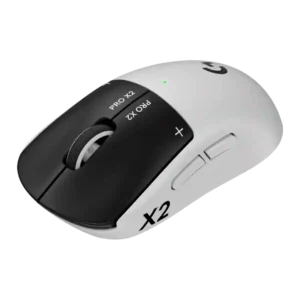
Product 1: Logitech G Pro X2 Superstrike
4.5
The 2.4GHz dongle connection is described as fast and stable, with no lag or drop-outs in the cited review.
P2
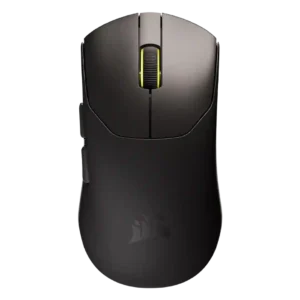
Product 2: Corsair Sabre V2 Pro
2.4
2.4GHz connectivity was stable enough in some testing, yet the cabled receiver/dongle setup was frequently described as cumbersome or strange.
Accuracy and tracking precision
P1
Product 1: Logitech G Pro X2 Superstrike
4.9
Accuracy and precision are a major strength: reviewers repeatedly cite sharp aiming, pixel-level control, precise tracking, and flawless sensor behavior.
P2
Product 2: Corsair Sabre V2 Pro
4.8
Reviewers consistently described the Sabre V2 Pro as smooth, precise, and accurate in games and everyday use, with no repeated tracking complaints.
balance and weight distribution
P1
Product 1: Logitech G Pro X2 Superstrike
2.4
Balance is the clearest handling complaint; several reviewers call the mouse front-heavy or poorly balanced, even when they like the weight.
P2
Product 2: Corsair Sabre V2 Pro
4.4
Balance and weight distribution were praised indirectly through extremely low inertia and stable lateral aim freedom, making the mouse feel easy to control.
battery life
P1
Product 1: Logitech G Pro X2 Superstrike
4.4
Battery life is broadly praised, often landing near Logitech’s high-hour claims, though one reviewer notes stronger haptics can drain it faster.
P2
Product 2: Corsair Sabre V2 Pro
3.1
Battery life was one of the most mixed areas: acceptable at 1000Hz for some, but subpar or frustrating for others and much worse at 8K.
Bluetooth support
P1
Product 1: Logitech G Pro X2 Superstrike
2.0
Bluetooth support is a repeated omission: reviewers note that the mouse is limited to dongle or wired use and see that as disappointing at the price.
P2
Product 2: Corsair Sabre V2 Pro
2.0
Bluetooth support was a repeated drawback; reviewers often understood the weight-saving reason but still found the lack inconvenient for travel or multi-device use.
build quality
P1
Product 1: Logitech G Pro X2 Superstrike
4.6
Build quality is consistently strong, with reviewers describing the shell as solid, flagship-grade, sturdy, or high quality.
P2
Product 2: Corsair Sabre V2 Pro
4.1
Build quality split reviewers sharply: many found the shell sturdy or excellent for the weight, while others reported flex, flimsy feel, or cheap impressions.
button customization
P1
Product 1: Logitech G Pro X2 Superstrike
4.7
Button customization is one of the standout strengths, especially adjustable actuation, haptic strength, and individual left/right click tuning.
P2
Product 2: Corsair Sabre V2 Pro
4.2
Button customization was viewed positively when discussed, with remapping and button mapping available through Web Hub, though the five-button layout limits what can be customized.
button responsiveness
P1
Product 1: Logitech G Pro X2 Superstrike
4.2
Button responsiveness is generally excellent and often described as faster or more immediate, though some reviewers warn about misclicks at aggressive settings.
P2
Product 2: Corsair Sabre V2 Pro
4.0
Button responsiveness was generally usable and easy to spam, but some reviewers noted mushiness, pre-travel, or post-travel that kept it from feeling truly crisp.
cable flexibility
P1Product 1: Logitech G Pro X2 Superstrike
No score yet
P2
Product 2: Corsair Sabre V2 Pro
1.4
Cable flexibility was a clear weakness, with multiple reviewers calling the cable stiff, restrictive, or anchor-like when used wired or charging.
charging convenience
P1
Product 1: Logitech G Pro X2 Superstrike
4.8
Charging convenience scores well thanks to PowerPlay support, USB-C charging, and quick recovery from low battery in reviewer testing.
P2
Product 2: Corsair Sabre V2 Pro
2.1
Charging convenience suffered from the combination of regular charging reminders and a stiff cable that reviewers disliked for wired play.
claw grip comfort
P1
Product 1: Logitech G Pro X2 Superstrike
3.0
Claw grip comfort is only lightly covered, with one reviewer noting they had to adopt more of a claw grip after losing the G502X thumb shelf.
P2
Product 2: Corsair Sabre V2 Pro
4.2
Claw grip comfort had limited but positive evidence, with the shape recommended for medium and small hands using palm or claw.
click latency
P1
Product 1: Logitech G Pro X2 Superstrike
4.8
Click latency is the defining strength: most reviewers report measurable or felt latency gains from short actuation and rapid trigger settings.
P2
Product 2: Corsair Sabre V2 Pro
1.3
Click latency drew the harshest technical criticism because reviewers tied high latency to fixed debounce behavior and called it uncompetitive for high-end gaming.
click noise
P1
Product 1: Logitech G Pro X2 Superstrike
4.6
Click noise is a positive for many reviewers because the haptic clicks are quieter and more muted than conventional mechanical mouse clicks.
P2
Product 2: Corsair Sabre V2 Pro
3.0
Click noise varied: some reviewers disliked elevated, hollow, or noisy feedback, while one saw muted buttons as a benefit for quiet use.
connection stability
P1
Product 1: Logitech G Pro X2 Superstrike
4.4
Connection stability is strong, with reviewers reporting stable 2.4GHz wireless behavior and no meaningful wireless issues.
P2
Product 2: Corsair Sabre V2 Pro
5.0
Connection stability had limited but strong evidence, with one reviewer reporting no wireless issues during testing.
cross-platform compatibility
P1
Product 1: Logitech G Pro X2 Superstrike
2.0
Cross-platform compatibility is limited by software support, with Linux users specifically called out as left out.
P2
Product 2: Corsair Sabre V2 Pro
2.0
Cross-platform compatibility was criticized because firmware updating appeared Windows-only despite the mouse being used across Mac and Linux contexts.
debounce customization
P1
Product 1: Logitech G Pro X2 Superstrike
4.4
Debounce and reset customization is praised through Rapid Trigger, though one reviewer says the differences between levels can feel subtle.
P2
Product 2: Corsair Sabre V2 Pro
1.5
Debounce customization was a clear technical gap because reviewers said the mouse was stuck at an 8 ms debounce or lacked a public adjustment option.
DPI range
P1
Product 1: Logitech G Pro X2 Superstrike
4.5
The DPI range is treated as a premium spec, with one reviewer calling the 44,000 DPI ceiling among the highest they had seen.
P2
Product 2: Corsair Sabre V2 Pro
4.5
The DPI range was praised as impressive and more than enough for most gamers, though broader DPI convenience concerns were covered under profile switching.
durability over time
P1
Product 1: Logitech G Pro X2 Superstrike
2.5
Durability over time is mixed: reviewers appreciate the no-switch concept, but long-term HITS durability and skate wear remain concerns.
P2
Product 2: Corsair Sabre V2 Pro
2.3
Durability over time was a concern in reviews that described the plastic as fragile, delicate, or traded off against weight savings.
ecosystem integration
P1
Product 1: Logitech G Pro X2 Superstrike
4.5
Ecosystem integration is positive where reviewers mention PowerPlay, as it can make charging effectively disappear during use.
P2
Product 2: Corsair Sabre V2 Pro
1.5
Ecosystem integration was weak where discussed, because the Web Hub and iCUE split prevented unified Corsair device management.
ergonomic design
P1
Product 1: Logitech G Pro X2 Superstrike
4.4
Ergonomics are generally strong for the G Pro-style shell, with comfort praised across several reviews despite some shape-specific caveats.
P2
Product 2: Corsair Sabre V2 Pro
3.7
Ergonomics were mixed: some reviewers found it comfortable and credible, while others disliked the large-hand fit or button-height choices.
fingertip grip comfort
P1
Product 1: Logitech G Pro X2 Superstrike
2.5
Fingertip grip is a weak fit in the cited review, which says the shape suits most grips except pure fingertip.
P2
Product 2: Corsair Sabre V2 Pro
4.1
Fingertip grip comfort was supported for larger hands and by one reviewer who found the mouse almost exclusively suited to fingertip grip.
FPS gaming suitability
P1
Product 1: Logitech G Pro X2 Superstrike
4.6
FPS suitability is very strong, with reviewers repeatedly citing faster firing, quick-draw benefits, and competitive shooter advantages.
P2
Product 2: Corsair Sabre V2 Pro
4.6
FPS suitability was very strong overall, with reviewers repeatedly recommending it for competitive shooters and fast twitch movements despite one latency-based objection.
glide smoothness
P1
Product 1: Logitech G Pro X2 Superstrike
3.3
Glide is split: several reviewers praise smooth movement, while others dislike the stock skates on cloth or want aftermarket feet.
P2
Product 2: Corsair Sabre V2 Pro
4.2
Glide smoothness was mostly positive, especially with larger or replacement skates, though some reviewers found the stock feet slower, rougher, or less smooth on glass.
grip texture
P1
Product 1: Logitech G Pro X2 Superstrike
3.8
Grip texture is mostly positive, with praise for grooves, optional grip tape, and control, though one reviewer wanted more grip.
P2
Product 2: Corsair Sabre V2 Pro
3.8
Grip texture was generally usable and grippy, but sweat, dust, slippery plastic, and the need for grip tape created mixed impressions.
left and right click quality
P1
Product 1: Logitech G Pro X2 Superstrike
5.0
Left and right click quality is a standout when tuned, with reviewers praising consistent actuation and feedback across the main buttons.
P2
Product 2: Corsair Sabre V2 Pro
3.8
Left and right clicks were usually considered good or responsive, though a few reviewers criticized softness, hollow sound, or mushiness.
lift-off distance
P1
Product 1: Logitech G Pro X2 Superstrike
3.0
Lift-off distance is configurable, but the cited review criticizes the lack of precise metrics.
P2
Product 2: Corsair Sabre V2 Pro
2.0
Lift-off distance customization was called out as missing, especially by reviewers expecting more advanced tuning options from a performance mouse.
long-session comfort
P1
Product 1: Logitech G Pro X2 Superstrike
4.5
Long-session comfort is praised by the cited reviewer, who found the lightweight design comfortable over extended use.
P2
Product 2: Corsair Sabre V2 Pro
4.7
Long-session comfort was a strength because reviewers linked the extreme lightness and comfortable shape to less fatigue over longer use.
macro support
P1
Product 1: Logitech G Pro X2 Superstrike
3.5
Macro support exists through G Hub, but the cited review notes macros require the software to be installed and running.
P2
Product 2: Corsair Sabre V2 Pro
3.8
Macro support was available and useful in Web Hub, but reviewers also noted that the small button count limits how much macro use makes sense.
materials quality
P1
Product 1: Logitech G Pro X2 Superstrike
4.5
Materials quality is praised in the cited review for textured, high-quality plastics and a satin matte feel.
P2
Product 2: Corsair Sabre V2 Pro
4.1
Materials quality was often described as sturdy or excellent, but one enthusiast review found the plastic soft and less rigid.
motion consistency
P1
Product 1: Logitech G Pro X2 Superstrike
4.7
Motion consistency is strong, with reviewers reporting solid tracking, fast accurate aiming, and no tracking inconsistencies.
P2
Product 2: Corsair Sabre V2 Pro
4.5
Motion consistency was praised in practical and technical testing, with reviewers reporting no stutter and no general tracking issues.
onboard memory
P1
Product 1: Logitech G Pro X2 Superstrike
3.5
Onboard memory is mixed: some reviews praise saved profiles, while another says key settings did not save to the mouse.
P2
Product 2: Corsair Sabre V2 Pro
2.4
Onboard memory was repeatedly criticized because reviewers found only one profile could be stored or carried on the mouse.
palm grip comfort
P1
Product 1: Logitech G Pro X2 Superstrike
4.8
Palm grip comfort is strong in the cited reviews, with the domed shell and arch supporting the palm well.
P2
Product 2: Corsair Sabre V2 Pro
4.2
Palm grip comfort was viable for some medium, small, and even larger-handed reviewers, but it was not the universal best grip style.
polling rate
P1
Product 1: Logitech G Pro X2 Superstrike
4.1
Polling rate is viewed as a pro-level strength, especially wireless 8K, although not every reviewer sees huge practical gains.
P2
Product 2: Corsair Sabre V2 Pro
3.9
The 8K polling rate impressed some reviewers and supported fast play, but several saw it as overkill, battery-hungry, or less stable at higher wireless rates.
portability
P1
Product 1: Logitech G Pro X2 Superstrike
4.0
Portability benefits from onboard dongle storage, which one reviewer says is useful when traveling.
P2
Product 2: Corsair Sabre V2 Pro
1.9
Portability was weak because reviewers linked travel inconvenience to the lack of Bluetooth, cabled dongle, and fragile-feeling ultra-light shell.
premium feel
P1
Product 1: Logitech G Pro X2 Superstrike
4.8
Premium feel is strong, with reviewers describing the mouse as clean, planted, and one of the nicest gaming mice they had used.
P2
Product 2: Corsair Sabre V2 Pro
3.3
Premium feel was polarizing, with some reviewers calling it premium despite the weight and others saying it felt flimsy, cheap, or compromised.
profile switching
P1
Product 1: Logitech G Pro X2 Superstrike
2.9
Profile switching is mixed: software profiles help, but missing physical DPI/profile controls frustrate several reviewers.
P2
Product 2: Corsair Sabre V2 Pro
2.2
Profile switching was a recurring weakness because there is no dedicated profile/DPI button and the shortcut or software workflow was called slow or convoluted.
programmable buttons
P1
Product 1: Logitech G Pro X2 Superstrike
3.0
Programmable buttons are useful through remapping and macros, but the limited button count hurts flexibility at this price.
P2
Product 2: Corsair Sabre V2 Pro
2.3
Programmable-button evidence was limited but negative-to-mixed because reviewers repeatedly framed the mouse as barebones and short on extra buttons.
RGB features
P1
Product 1: Logitech G Pro X2 Superstrike
4.5
RGB is treated positively by reviewers who prefer the cleaner no-RGB look and the battery benefit.
P2
Product 2: Corsair Sabre V2 Pro
2.8
RGB was mostly absent, which some reviewers accepted as part of the weight-saving design while others listed it among missing features.
scroll wheel quality
P1
Product 1: Logitech G Pro X2 Superstrike
4.2
Scroll wheel quality is mostly praised for tactility and precision, though a few reviewers report looseness or click-release issues.
P2
Product 2: Corsair Sabre V2 Pro
3.9
Scroll wheel quality varied by reviewer: some praised smoothness, tactility, or rasterization, while others found it stiff, noisy, or poor as a middle click.
sensor performance
P1
Product 1: Logitech G Pro X2 Superstrike
4.8
Sensor performance is a consistent strength, with the HERO 2 sensor described as great, flawless, responsive, and reliable.
P2
Product 2: Corsair Sabre V2 Pro
4.7
Sensor performance was one of the strongest areas: most reviewers reported flawless, consistent, or top-tier tracking, while one technical review rated it good overall.
shape comfort
P1
Product 1: Logitech G Pro X2 Superstrike
3.4
Shape comfort is mixed: many like the familiar G Pro shell, but others find it too large, boxy, or less supportive than alternatives.
P2
Product 2: Corsair Sabre V2 Pro
4.2
Shape comfort was mostly positive thanks to the safe symmetrical shape, though some reviewers still found the design basic or dependent on hand size.
side button quality
P1
Product 1: Logitech G Pro X2 Superstrike
3.5
Side button quality is adequate to good, with tactile clicks and usable placement, but not all reviewers find them premium.
P2
Product 2: Corsair Sabre V2 Pro
2.9
Side buttons were the most common button-quality complaint, with repeated notes about extra travel, mushiness, or buttons sinking into the shell despite some positive placement feedback.
skate durability
P1
Product 1: Logitech G Pro X2 Superstrike
2.7
Skate durability is mixed to negative; some like glass-pad longevity, but others report flattening, slowing, or immediate replacement.
P2
Product 2: Corsair Sabre V2 Pro
4.1
Skate durability was a minor positive because UPE was described as longer-lasting, even if it trades away some glide speed.
software stability
P1
Product 1: Logitech G Pro X2 Superstrike
3.2
Software stability is mixed: one reviewer saw no bugs, while others report DPI-setting or onboard-save reliability issues.
P2
Product 2: Corsair Sabre V2 Pro
2.9
Software stability was cautiously mixed, with one reviewer saying Web Hub worked fine and another warning that hosted web-driver dependence is not ideal.
software usability
P1
Product 1: Logitech G Pro X2 Superstrike
4.1
Software usability is generally positive because G Hub exposes deep tuning clearly, but a few reviewers still find it inelegant or painful.
P2
Product 2: Corsair Sabre V2 Pro
3.3
Software usability was highly mixed: reviewers liked the clean lightweight web hub, but disliked online dependence, sparse options, iCUE friction, and limited tuning.
surface compatibility
P1
Product 1: Logitech G Pro X2 Superstrike
4.3
Surface compatibility varies by skate preference: tracking works across surfaces, but glide can feel much better on glass than cloth.
P2
Product 2: Corsair Sabre V2 Pro
3.5
Surface compatibility had limited evidence: cloth pads felt good, while glass pads were rougher and louder though still usable.
switch feel
P1
Product 1: Logitech G Pro X2 Superstrike
4.5
Switch feel is widely praised after adjustment, with haptics described as satisfying, tactile, addictive, or better than traditional clicks.
P2
Product 2: Corsair Sabre V2 Pro
3.9
Switch feel was mixed: several reviewers liked the light, spam-friendly switches, while technical and enthusiast reviewers found the main clicks somewhat mushy or not especially crisp.
value for money
P1
Product 1: Logitech G Pro X2 Superstrike
3.3
Value is the most divided area: reviewers respect the innovation but repeatedly cite the premium price and missing features.
P2
Product 2: Corsair Sabre V2 Pro
3.9
Value was divided: many reviewers saw $100 as competitive or attractive for the specs, but technical latency and cheaper rivals hurt the case for others.
weight
P1
Product 1: Logitech G Pro X2 Superstrike
3.8
Weight is mostly positive at roughly 61g, though some ultralight reviewers find it heavy compared with newer sub-45g mice.
P2
Product 2: Corsair Sabre V2 Pro
5.0
Weight was the clearest strength: reviewers repeatedly emphasized the 36g body as astonishingly light, effortless, wrist-friendly, and central to the mouse's appeal.
wireless latency
P1
Product 1: Logitech G Pro X2 Superstrike
4.5
Wireless latency is praised, with reviewers describing lag-free connectivity and responsive wireless performance.
P2
Product 2: Corsair Sabre V2 Pro
3.0
Wireless latency evidence was mixed: one reviewer measured fast results, while others criticized 2.4GHz latency or noted weaker 1000Hz wireless behavior.
wireless performance
P1
Product 1: Logitech G Pro X2 Superstrike
4.8
Wireless performance is consistently strong, with stable LIGHTSPEED behavior and no major connection complaints.
P2
Product 2: Corsair Sabre V2 Pro
3.9
Wireless performance was mostly solid in normal use, but technical testing found missed polls at high wireless polling rates.