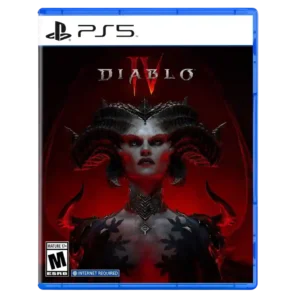
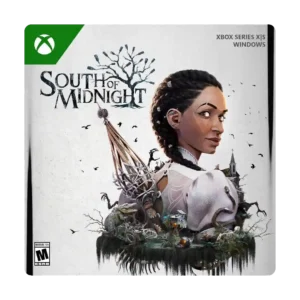
The reviews consistently note robust accessibility support, including visual adjustments, accessibility tools, and options to bypass major gameplay demands.
Age suitability is low because reviewers emphasize gore, demon slaughter, brutal horror, and mature imagery.
Reviews describe abuse, kidnapping, murder, and similarly heavy material, making the game better suited to older teens and adults than younger players.
Animation evidence is mixed-to-negative. One expansion review criticizes cutscene quality and another notes stiff conversation animation, so this attribute scores lower than overall visuals.
The stop-motion-inspired animation is widely praised for giving the game a distinctive, intentionally stylized look.
Art direction is heavily supported and generally strong, especially the darker tone, macabre vistas, painted aesthetic, lighting, and ancient Skovos style. One review criticizes the ugliness as excessive, but still engages with its distinctive look.
Reviewers repeatedly highlight the game’s strong artistic vision and highly stylized presentation as standout strengths.
Atmosphere is a strong point overall, especially the darker tone, grounded horror, and strong sense of place. Some reviews see the self-seriousness as excessive, but the mood is distinctive.
The Deep South setting, folklore, and haunting tone create an atmosphere reviewers found memorable and absorbing.
Battle-pass value remains uncertain or mixed because reviewers often note that the paid pass was not fully active or that its value depends on cosmetic interest.
Boss design is mixed. Several reviewers praise memorable, mechanical, or difficult encounters, while others criticize inconsistency or overly easy/fast kills with strong builds.
Bosses are generally seen as memorable and varied enough to stand out, even by reviewers who were cooler on regular combat.
Bug frequency is mixed. Some reviews report no major bugs, while others cite irritating bugs, licensing issues, progression bugs, or problems that affected enjoyment.
Technical issues exist, but the reviews point to occasional bugs rather than constant problems.
The supported evidence concerns photo-mode-style zoom-outs that show scenes more fully. It is a narrow but positive camera-related point.
Camera issues are a real weakness, with at least one review citing camera glitches and another criticizing lock-on behavior in crowded fights.
Character development is supported mainly through reviews noting fleshed-out characters and distinctive class personalities. The evidence is positive but not as broad as combat or loot.
Hazel’s personal growth lands well in stronger reviews, which describe her coming into her own over the course of the story.
The character roster is a strength, with reviews covering the five launch classes and Lord of Hatred's Warlock and Paladin additions. Class fantasy and replay value are repeatedly supported.
Class balance is mixed. Reviewers praise class viability and standout class fantasy, but also note underpowered or overpowered classes, inconsistent feel, and some imbalance.
Co-op is consistently positive when discussed. Reviews praise playing with friends, scaling, dungeon groups, and the ability to bring friends into challenging content.
Combat is one of the clearest strengths across the reviews. Reviewers praise its tuned, satisfying demon-slaying, tactical chaos, class-specific interactions, and feedback, though a few mention grind or comparisons that temper the enthusiasm.
Combat is functional but divisive: some reviewers enjoyed the late-game flow, while many still found it shallow or merely serviceable.
Community features are positively supported by references to clans, trading, endgame groups, and shared activity around builds and world events.
Crouton adds a useful twist by briefly turning enemies against each other, but companion play is treated as a light supplement rather than a core pillar.
PvP and risk-reward zones are framed as optional, tense, and fun, but the evidence is more about structure than fine competitive balance.
Reviews describe a wide spread of activities: dungeons, side quests, strongholds, events, endgame systems, fishing, Talismans, and expansion activities. The breadth is a recurring strength.
The game offers varied scenery and chapter-to-chapter folklore color, even if its structure stays linear.
The reviews that address controls emphasize precision, strong input feel, and satisfying handling. One review notes the game can demand many precise inputs, but others frame controller play and combat responsiveness positively.
Responsiveness is mixed, with some criticism of sluggishness or delay despite otherwise playable controls.
Reviewers repeatedly describe the loop of killing enemies, looting, leveling, and returning for more as compulsive and effective. A few note that the same loop can feel repetitive or time-consuming, but it remains central to the game's appeal.
The core loop is easy to grasp but becomes repetitive, especially once combat arenas start repeating the same pattern.
Crafting and gear modification are well supported through trait replacement, Codex/aspect systems, the Horadric Cube, transfiguration, and loot refinement. Reviewers generally treat these systems as meaningful ways to shape builds.
The sole crash-specific evidence is negative, citing a persistent crash after a boss. It supports a localized stability issue rather than a broad crash trend.
Crash stability looks solid overall, with reviews mentioning smooth runs and no widespread crash issues.
Cross-play support is positively supported by one review that highlights playing with friends across platform lines.
Cross-save support is positively supported by one review that highlights carrying progress from one console to another.
Dialogue quality trends negative in the scored evidence. Reviewers cite basic conversations, heavy-handed exposition, and characters repeating themes too plainly.
Dialogue is regularly described as natural, conversational, and believable.
Difficulty balance is mixed but mostly functional. Reviews praise boss tension, scaling, Torment tiers, and challenge options, while some expansion and comparison coverage notes frustration, overpowered builds, or post-campaign difficulty concentration.
Difficulty tuning is uneven: some found it fair and forgiving, while others felt combat spikes unless eased on lower settings.
Lord of Hatred value is split. Some reviews call it rewarding, substantial, or worth playing, while others see it as a hard sell or dependent on the buyer's history with Diablo IV.
Lord of Hatred receives several positive emotional-impact scores, with reviewers citing heart-wrenching stakes, resonant story beats, and presentation that gives events weight.
The game’s storytelling and themes hit hard emotionally, with multiple reviewers saying it stirred strong feelings.
Endgame content is a major strength across the dataset. Reviewers praise launch endgame, War Plans, Helltides, Nightmare Dungeons, Paragon, and long-term farming, though a few criticize repetition or lack of compelling loops.
Enemy variety is mixed. Some reviewers complain of repeated enemies or simple mechanics, while others cite new variants, minibosses, and later content adding more variety.
Enemy variety is enough to create some contrast early on, but several reviews say the same enemy sets wear out their welcome.
Environmental detail is a consistent visual strength. Reviews cite finely drawn spaces, a changed Skovos, and new island detail as adding density and place-specific flavor.
Environmental detail is a major strength, with richly dressed spaces and strong place-making throughout Prospero.
Exploration is consistently treated as a strong point when reviewers discuss Sanctuary or Skovos. They highlight discovery, rewarding open-world activities, and new regions as major reasons to keep playing.
Exploration is pleasant for atmosphere and light secrets, but many reviewers found it simple and not especially rewarding.
The only direct evidence is a criticism of lip-syncing and in-game cutscene quality, making facial animation a weak spot in the scored material.
Character faces and expressions are frequently praised for helping cutscenes land emotionally.
Faithfulness is strong. Reviews say Diablo IV honors series history, returns to Diablo 2-style atmosphere, and feels quintessentially Diablo.
Family friendliness is low based on evidence of pervasive death and graphic violence. The game is not presented as a family-oriented title.
Its story regularly deals with trauma, abuse, kidnapping, and murder, so it is not presented as family-friendly entertainment.
The supported evidence is very positive but specific to War Plans, where queued activities warp players directly and reduce map searching.
Frame-rate performance is mixed rather than disastrous, ranging from smooth reports to visible dips on some platforms.
Fun factor is strongly positive in the scored reviews. Reviewers repeatedly say they felt excited, enjoyed combat, or found the game instantly fun, even when criticizing story or systems.
Even with clear flaws, several reviewers still describe the overall experience as enjoyable and easy to recommend to story-minded players.
The supported reviews describe Diablo IV as mechanically strong at its core, with revised systems, ability synergies, and approachable complexity carrying the moment-to-moment experience even when some campaign or expansion structure drew criticism.
The mechanics are competent and readable, but most reviews frame them as familiar rather than inventive.
Graphics quality is one of the strongest visual areas, with reviewers praising stellar graphics, beautiful environments, cutscenes, and technical presentation across base game and expansion.
Visual fidelity is widely praised, especially the lighting, environments, and overall presentation quality.
The supported evidence frames grind as a core hook and compromise, with loot grinding described as sticky and potentially consuming.
One review specifically calls the Steam Deck a perfectly fine place to play, suggesting good handheld suitability.
Horror tension is supported through dark violence, brutal presentation, and unsettling imagery. One review says the extremity can become bland through repetition.
The game sustains a creepy, Southern Gothic unease without leaning entirely into full horror.
HUD clarity is mixed. New overlay, map, and loot filter features are positives, while one Warlock review criticizes the inability to adjust the HP bar color.
Combat readability suffers a bit, with cooldown information criticized for relying on visual indicators without explicit timers.
Strong regional detail and careful environmental touches help the world feel immersive and lived in.
The scored evidence says Diablo IV does not heavily reinvent ARPGs. The score reflects refinement over major originality.
The setting and cultural framing feel fresh, but reviewers are clear that the underlying gameplay systems are not especially groundbreaking.
Learning curve is treated as manageable but real. Reviewers mention complexity, better tooltips or skill charts, and approachable class design that still leaves room for deeper optimization.
The learning curve is moderate, with some early friction but not much severe punishment once systems click.
Level and dungeon design receives mixed-to-positive coverage. Some reviewers praise reduced backtracking, strongholds, dungeons, and replay space, while others criticize repeated structures, static layouts, or sameness.
Level design earns praise for comfort, clarity, and striking spaces, even from reviewers who dislike other parts of the game.
Live-service support is mostly positive as a foundation, with reviewers pointing to seasons, future content, and long-term updates. The caveat is that some seasonal content was unavailable during review.
The only direct support concerns short queues rather than full loading behavior. This suggests limited friction around access in that review, but the attribute is thinly supported.
Loot is one of the best-supported strengths. Reviewers praise drop cadence, build-shaping gear, upgrade paths, legendary aspects, and the way loot feeds continued play, though one review frames the treadmill more fatalistically.
Lore depth is a strength for the reviews that focus on it. Reviewers praise references, explanations, Diablo history, and expansion lore around Mephisto, Skovos, and the wider mythos.
The game’s folklore, notes, and chapter tales give the world satisfying lore density for a compact adventure.
Navigation is supported through easy map use, minimap pathfinding, overlay changes, and related quality-of-life improvements.
Navigation is mixed: guidance tools keep the critical path clear, but at least one reviewer disliked the lack of a map.
The supported evidence praises tooltip behavior and keyword searching, making menu usability a strength for build planning and discovery.
Menus are described as straightforward and easy to understand.
Microtransactions are generally described as cosmetic and not gameplay-breaking, but reviewers still flag high prices, optional shops, and concerns around monetization in a paid game.
Mission design is more mixed. Several reviews criticize objective-marker repetition, waiting on NPCs, or repeated ambush-style mission beats, even as the wider game remains enjoyable.
The supported evidence is positive but narrow, with one review saying instances and supporting content felt unique rather than formulaic.
Chapter-based subplots and folklore arcs give the campaign more mission-to-mission variety than its combat structure suggests.
Monetization fairness is mixed-to-negative. Reviewers repeatedly note cosmetic-only stores and non-pay-to-win claims, but criticize high prices, full-price-game monetization, and battle-pass concerns.
Movement support is generally praised through dodge, dash, teleport, and mobility tools that improve class feel and combat control. The evidence points to a more deliberate but flexible action feel.
Movement generally feels smooth and satisfying during traversal, helping the game maintain momentum between fights.
Multiplayer design is generally positive. Reviews cite easy grouping, shared-world encounters, MMO-lite structure, group play, and strong online integration, while acknowledging tradeoffs.
Narrative quality is the most split major area. Some reviews praise Diablo IV or Lord of Hatred as strong, cinematic, and emotionally engaging, while others call the story weak, predictable, clunky, or poorly paced.
Narrative reception is mixed but positive overall, with strong praise for the main themes offset by complaints about loose connective tissue or unresolved threads.
The evidence is limited but points to accessibility for new players in story context and campaign routing. One review says Diablo lore is explained enough for newcomers, while another warns new players not to skip the earlier campaign.
The onboarding is effective in some reviews thanks to strong tutorial framing, but others felt the game over-explains too much.
Online stability is mixed but often better than feared. Reviews cite smooth access and few hiccups in some cases, but also disconnections, lag, and rare hitches.
The open world is generally praised for scale, player pacing, shared-world elements, and activity density. Some reviews note MMO-lite compromises, but the world structure is usually framed as a successful expansion of Diablo's formula.
The game’s blend of Deep South folklore and modern fairy-tale framing gives it a notably original identity.
The scored evidence is negative and specific to Lord of Hatred's plot pacing, with the review describing abrupt progression, slow sections, and whiplash between exposition and major events.
Pacing is mostly seen as good for a short campaign, though some reviews call out a slow start or abrupt later beats.
Performance evidence is mostly positive, with reviews citing smooth running, 60 FPS, and technical strength. One expansion review reports mild issues, so the overall picture is positive with caveats.
Optimization appears generally sound, with several reviews noting stable play and few major hitches.
Platforming is approachable yet precise enough that jumps, wall-runs, and grapples usually feel reliable.
Polish is generally praised, with reviewers calling the game ready, polished, and well made, especially compared with other ARPGs or AAA launches.
Overall polish is good but not spotless, with strong presentation covering for a handful of rough edges.
Progression is a major strength across the evidence, especially build growth, Renown, Paragon, War Plans, and long-term character optimization. One review finds leveling less exciting in places, but most support strong progression depth.
Progression helps later combat somewhat, but many reviews still frame it as limited rather than transformative.
Evidence is mixed. One review appreciates putting the player at the story center, while another criticizes the hero as lacking personality or development.
Hazel is one of the game’s clearest strengths, regularly praised as likable, charming, and easy to follow.
Puzzle design is one of the weaker areas, with repeated criticism that solutions are too obvious or low challenge.
Quest design varies by review. Some praise multi-part side stories, unique cellars, and well-written side quests, while others call side content one-dimensional, cliched, or slowed by NPC pacing.
Replay value is strongly supported through alt characters, class variety, endgame loops, War Plans, build experimentation, and long-term progression. Some fatigue is possible, but most evidence points to high replayability.
Replay appeal looks limited for most reviewers, who did not view combat or structure as reasons to revisit the whole campaign.
The supported review emphasizes player agency in how much content to pursue and how to spend time in Sanctuary. This suggests meaningful flexibility, though only one review directly supports this attribute.
The only direct support is anticipatory, noting seasonal updates ahead. This is too thin for a strong conclusion but supports future-facing interest.
Server reliability is the main always-online concern. The scored reviews mention log-in risk, queues, lag, and disconnections, though some also say servers performed reasonably well.
The supported review singles out Lorath as a strong side character and compares him favorably to earlier series figures. Coverage is positive but narrow.
Even brief side characters leave an impression thanks to expressive writing and presentation.
Skill trees are heavily discussed and usually praised for flexibility, expanded variants, respec options, and buildcrafting. A few reviewers call parts thin or imperfect, but the overall evidence supports depth and experimentation.
The skill tree is consistently described as small or underwhelming, with limited build depth.
Social features overlap with community support, especially trading, clans, group activities, and player interaction in the shared world.
Sound design is very strong where addressed. Reviewers praise environmental audio, feedback, music integration, and the way sound heightens combat and atmosphere.
Sound design is excellent, with ambient effects and movement cues repeatedly highlighted as part of the game’s identity.
The soundtrack receives strong praise across multiple reviews, with comments on memorable music, majestic scoring, atmospheric tracks, and expansion-specific music elevating story moments.
The soundtrack is one of the game’s biggest draws, earning repeated praise for memorable songs and strong story integration.
The lone supported stealth mention comes from co-op build adjustment, where a Rogue respec used stealth to help revive a teammate during a difficult boss. This supports stealth as situationally useful rather than a broadly evaluated pillar.
Tutorial quality is mixed: one review praises its narrative framing, while another finds the pop-ups overbearing.
The supported reviews praise self-improvement and gear upgrading, including refining or forging gear. The evidence supports Diablo IV as rewarding players who want to keep improving favorite builds and equipment.
Upgrades exist, but several reviews argue they do not evolve combat enough to feel essential.
The supported review praises the UX as highly refined. This is positive but narrow because only one scored review directly supports the attribute.
The UI is praised for being clean, simple, and easy to navigate.
Value is generally positive because reviewers cite breadth of content, long playtime, and strong core design. Monetization concerns and DLC pricing complicate the otherwise high value.
At full price the value feels decent rather than outstanding, with some reviewers specifically steering buyers toward Game Pass.
Visual effects are praised across expansion and base reviews, especially combat spell effects, magical effects, cutscenes, and cinematic spectacle.
Lighting, fog, and other visual flourishes regularly stand out and help scenes feel cinematic.
Voice acting is consistently positive where discussed, with praise for strong performances, consistently good acting, and memorable character work.
Voice acting is a standout, with performances repeatedly singled out as authentic and emotionally effective.
The supported evidence is limited to Barbarian weapon arsenal design, so this score reflects class weapon-system flexibility rather than a full balance evaluation.
World-building is positively supported through reviews describing Diablo's setting as well crafted and atmosphere-rich, with enough lore and environmental context to reward investment.
The world-building around Prospero, its folklore, and its history is one of the game’s biggest strengths.
The strongest evidence points to public events, settlements changing after strongholds, world bosses, and time-limited activities. These interactions make the world feel more reactive than a static dungeon list.
The supported review finds the setting and worldbuilding stronger than the actual plot, calling the plot predictable and the protagonist underdeveloped. This makes writing a clear mixed point.
Writing is one of the better-regarded parts of the package, especially in dialogue and scene construction, even if some larger story beats divide reviewers.