South of Midnight Review
Bottom Line
Choose South of Midnight for its art, music, and folklore-rich storytelling. Skip it if you need deep combat or rewarding exploration.
Players who want a short, story-forward action-platformer with standout art, music, and Deep South folklore. It especially fits anyone willing to trade mechanical depth for mood and presentation.
Players who need challenging combat, meaningful exploration rewards, or highly varied gameplay systems. The repeated arena fights and simple puzzles are the main sticking points.
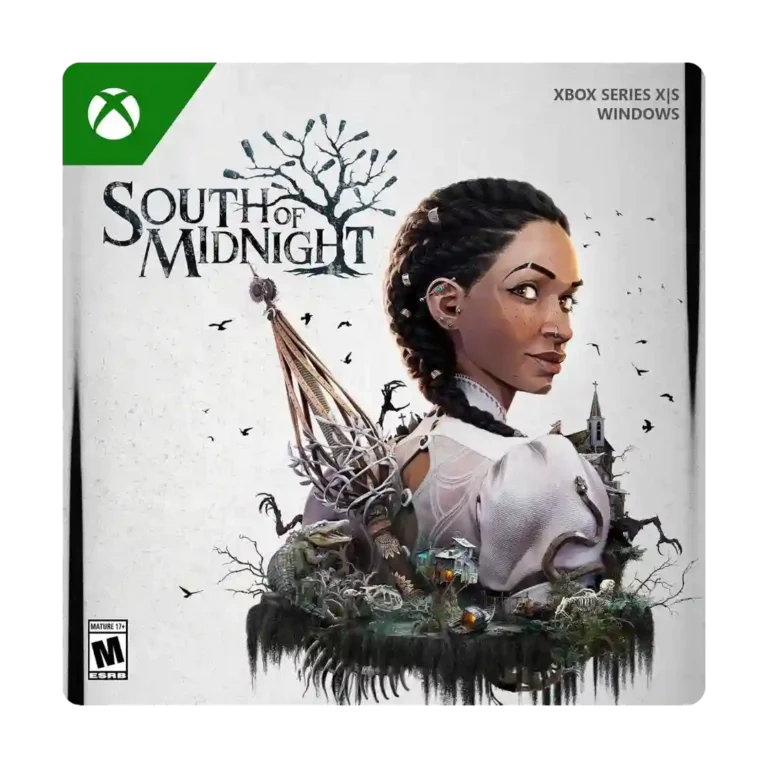
South of Midnight succeeds because its identity is so strong. Across the reviews, the art direction, voice acting, environmental detail, and music do most of the heavy lifting, turning Hazel’s journey through Southern folklore into something memorable even when the mechanics stay familiar. The big tradeoff is that combat, puzzles, and the overall gameplay loop rarely evolve enough to match the presentation. That leaves the game feeling more like a compelling, tightly paced narrative adventure with serviceable action than a mechanically great platformer. For players who value atmosphere, character, and soundtrack over system depth, it lands well.
Scored Features
Pros
-
The Deep South setting, folklore, and haunting tone create an atmosphere reviewers found memorable and absorbing.
-
The game’s storytelling and themes hit hard emotionally, with multiple reviewers saying it stirred strong feelings.
-
The game’s blend of Deep South folklore and modern fairy-tale framing gives it a notably original identity.
-
Sound design is excellent, with ambient effects and movement cues repeatedly highlighted as part of the game’s identity.
-
Voice acting is a standout, with performances repeatedly singled out as authentic and emotionally effective.
-
The soundtrack is one of the game’s biggest draws, earning repeated praise for memorable songs and strong story integration.
-
The reviews consistently note robust accessibility support, including visual adjustments, accessibility tools, and options to bypass major gameplay demands.
-
Reviewers repeatedly highlight the game’s strong artistic vision and highly stylized presentation as standout strengths.
-
Environmental detail is a major strength, with richly dressed spaces and strong place-making throughout Prospero.
-
Visual fidelity is widely praised, especially the lighting, environments, and overall presentation quality.
-
Strong regional detail and careful environmental touches help the world feel immersive and lived in.
-
Hazel is one of the game’s clearest strengths, regularly praised as likable, charming, and easy to follow.
-
The stop-motion-inspired animation is widely praised for giving the game a distinctive, intentionally stylized look.
-
Hazel’s personal growth lands well in stronger reviews, which describe her coming into her own over the course of the story.
-
Dialogue is regularly described as natural, conversational, and believable.
-
Character faces and expressions are frequently praised for helping cutscenes land emotionally.
-
Even with clear flaws, several reviewers still describe the overall experience as enjoyable and easy to recommend to story-minded players.
-
Lighting, fog, and other visual flourishes regularly stand out and help scenes feel cinematic.
-
The world-building around Prospero, its folklore, and its history is one of the game’s biggest strengths.
-
Crash stability looks solid overall, with reviews mentioning smooth runs and no widespread crash issues.
-
Bosses are generally seen as memorable and varied enough to stand out, even by reviewers who were cooler on regular combat.
-
Level design earns praise for comfort, clarity, and striking spaces, even from reviewers who dislike other parts of the game.
-
The game’s folklore, notes, and chapter tales give the world satisfying lore density for a compact adventure.
-
The game sustains a creepy, Southern Gothic unease without leaning entirely into full horror.
-
Menus are described as straightforward and easy to understand.
-
Platforming is approachable yet precise enough that jumps, wall-runs, and grapples usually feel reliable.
-
Even brief side characters leave an impression thanks to expressive writing and presentation.
-
The UI is praised for being clean, simple, and easy to navigate.
-
Writing is one of the better-regarded parts of the package, especially in dialogue and scene construction, even if some larger story beats divide reviewers.
-
The game offers varied scenery and chapter-to-chapter folklore color, even if its structure stays linear.
-
One review specifically calls the Steam Deck a perfectly fine place to play, suggesting good handheld suitability.
-
Chapter-based subplots and folklore arcs give the campaign more mission-to-mission variety than its combat structure suggests.
-
Movement generally feels smooth and satisfying during traversal, helping the game maintain momentum between fights.
-
Optimization appears generally sound, with several reviews noting stable play and few major hitches.
-
Overall polish is good but not spotless, with strong presentation covering for a handful of rough edges.
-
The setting and cultural framing feel fresh, but reviewers are clear that the underlying gameplay systems are not especially groundbreaking.
-
The mechanics are competent and readable, but most reviews frame them as familiar rather than inventive.
-
Pacing is mostly seen as good for a short campaign, though some reviews call out a slow start or abrupt later beats.
-
Narrative reception is mixed but positive overall, with strong praise for the main themes offset by complaints about loose connective tissue or unresolved threads.
-
The onboarding is effective in some reviews thanks to strong tutorial framing, but others felt the game over-explains too much.
-
Tutorial quality is mixed: one review praises its narrative framing, while another finds the pop-ups overbearing.
-
Crouton adds a useful twist by briefly turning enemies against each other, but companion play is treated as a light supplement rather than a core pillar.
Cons
-
Navigation is mixed: guidance tools keep the critical path clear, but at least one reviewer disliked the lack of a map.
-
Difficulty tuning is uneven: some found it fair and forgiving, while others felt combat spikes unless eased on lower settings.
-
Exploration is pleasant for atmosphere and light secrets, but many reviewers found it simple and not especially rewarding.
-
Combat is functional but divisive: some reviewers enjoyed the late-game flow, while many still found it shallow or merely serviceable.
-
At full price the value feels decent rather than outstanding, with some reviewers specifically steering buyers toward Game Pass.
-
Technical issues exist, but the reviews point to occasional bugs rather than constant problems.
-
The learning curve is moderate, with some early friction but not much severe punishment once systems click.
-
Enemy variety is enough to create some contrast early on, but several reviews say the same enemy sets wear out their welcome.
-
Progression helps later combat somewhat, but many reviews still frame it as limited rather than transformative.
-
Responsiveness is mixed, with some criticism of sluggishness or delay despite otherwise playable controls.
-
Frame-rate performance is mixed rather than disastrous, ranging from smooth reports to visible dips on some platforms.
-
Combat readability suffers a bit, with cooldown information criticized for relying on visual indicators without explicit timers.
-
The core loop is easy to grasp but becomes repetitive, especially once combat arenas start repeating the same pattern.
-
The skill tree is consistently described as small or underwhelming, with limited build depth.
-
Upgrades exist, but several reviews argue they do not evolve combat enough to feel essential.
-
Puzzle design is one of the weaker areas, with repeated criticism that solutions are too obvious or low challenge.
-
Reviews describe abuse, kidnapping, murder, and similarly heavy material, making the game better suited to older teens and adults than younger players.
-
Replay appeal looks limited for most reviewers, who did not view combat or structure as reasons to revisit the whole campaign.
-
Camera issues are a real weakness, with at least one review citing camera glitches and another criticizing lock-on behavior in crowded fights.
-
Its story regularly deals with trauma, abuse, kidnapping, and murder, so it is not presented as family-friendly entertainment.
Compared With Category Average
Compared with other Video Games, this product is below average in replay value, core gameplay loop, upgrade system.
| Attribute | This product | Category average | Difference |
|---|---|---|---|
| replay value | 2.2 | 4.4 | -2.2 |
| core gameplay loop | 2.7 | 4.4 | -1.8 |
| upgrade system | 2.5 | 4.2 | -1.7 |
| camera behavior | 2.0 | 3.6 | -1.6 |
| puzzle design | 2.4 | 3.8 | -1.5 |
| combat system | 3.2 | 4.4 | -1.2 |
| skill tree depth | 2.7 | 3.9 | -1.3 |
| controls responsiveness | 2.9 | 4.1 | -1.2 |
FAQ
Is South of Midnight more about story or gameplay?
The reviews overwhelmingly frame it as a story, atmosphere, and presentation-driven game first. Combat and puzzles are usually described as competent at best, while the narrative, music, and art do the real work.
How long is South of Midnight?
Most reviews describe it as a concise single-player campaign of roughly 10 to 12 hours, with some variation based on exploration and collectible cleanup.
Is the combat good?
It is generally seen as functional but limited. A few reviewers enjoyed its flow or late-game improvements, but repetitive arenas and modest enemy variety are common complaints.
Is South of Midnight appropriate for younger players?
The reviews repeatedly mention abuse, kidnapping, murder, and generational trauma. Even though the presentation can be whimsical, the subject matter is fairly heavy.
Expert Reviews We Analyzed
Video Reviews
Article Reviews
Consider This Instead
If you want better replay value
Choose Forza Horizon 6. It scores 4.7 vs 2.2 for replay value, with a 4.3 overall score.
If you want better core gameplay loop
Choose Street Fighter 6. It scores 4.7 vs 2.7 for core gameplay loop, with a 4.1 overall score.
If you want better puzzle design
Choose 007 First Light. It scores 4.4 vs 2.4 for puzzle design, with a 4.1 overall score.
If you want better camera behavior
Choose Invincible VS. It scores 4.0 vs 2.0 for camera behavior, with a 3.9 overall score.
Overall Top Video Games Alternatives
Choose it for inventive turn-based combat, a powerful story, and standout presentation. Skip it if you dislike parry-heavy encounters or want cleaner navigation and UI.
Pros: combat system, boss design, narrative quality, soundtrack quality, monetization fairness, microtransaction impact, atmosphere
Cons: platforming precision, puzzle design, bug frequency, menu usability, HUD clarity, animation quality, map and navigation design
Choose if you want Horizon’s best-looking open world and freer exploration. Skip if twitchy handling and a city that can still feel sparse are dealbreakers.
Pros: exploration quality, open-world design, graphics quality, sandbox freedom, social features, immersion, replay value
Cons: world interactivity, learning curve, originality
Choose Saros if you want elite bullet-hell shooting with smoother roguelite progression. Skip it if abstract storytelling, repetition, or lighter buildcrafting will frustrate you.
Pros: load times, visual effects quality, character development, fast travel convenience, platform-specific feature support, sound design, voice acting
Cons: side character depth, map and navigation design, endgame content, facial animations, menu usability, grind level, user interface design
Choose Lego Batman: Legacy of the Dark Knight for Arkham-style combat, lively Gotham exploration, and family-friendly LEGO charm. Skip it if online co-op or a huge playable roster...
Pros: microtransaction impact, voice acting, protagonist appeal, environmental detail, fun factor, faithfulness to franchise, exploration quality
Cons: multiplayer design, platform-specific feature support