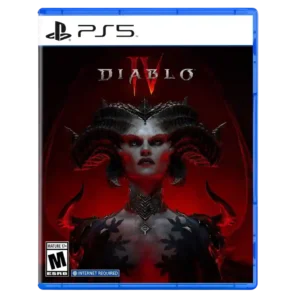
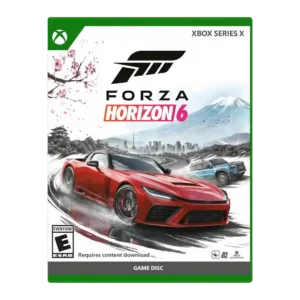
The reviews specifically mention assist-style options such as autosteering that should make Horizon 6 easier for a broader range of players to enjoy.
Age suitability is low because reviewers emphasize gore, demon slaughter, brutal horror, and mature imagery.
Animation evidence is mixed-to-negative. One expansion review criticizes cutscene quality and another notes stiff conversation animation, so this attribute scores lower than overall visuals.
Art direction is heavily supported and generally strong, especially the darker tone, macabre vistas, painted aesthetic, lighting, and ancient Skovos style. One review criticizes the ugliness as excessive, but still engages with its distinctive look.
Reviewers praise the Japanese setting’s visual identity, saying the locales capture iconic aesthetics with real care and precision.
Atmosphere is a strong point overall, especially the darker tone, grounded horror, and strong sense of place. Some reviews see the self-seriousness as excessive, but the mood is distinctive.
The setting is often described as vivid and alive, though one review says Tokyo can still feel too empty in preview footage.
Battle-pass value remains uncertain or mixed because reviewers often note that the paid pass was not fully active or that its value depends on cosmetic interest.
Boss design is mixed. Several reviewers praise memorable, mechanical, or difficult encounters, while others criticize inconsistency or overly easy/fast kills with strong builds.
Bug frequency is mixed. Some reviews report no major bugs, while others cite irritating bugs, licensing issues, progression bugs, or problems that affected enjoyment.
The supported evidence concerns photo-mode-style zoom-outs that show scenes more fully. It is a narrow but positive camera-related point.
Character development is supported mainly through reviews noting fleshed-out characters and distinctive class personalities. The evidence is positive but not as broad as combat or loot.
The character roster is a strength, with reviews covering the five launch classes and Lord of Hatred's Warlock and Paladin additions. Class fantasy and replay value are repeatedly supported.
Class balance is mixed. Reviewers praise class viability and standout class fantasy, but also note underpowered or overpowered classes, inconsistent feel, and some imbalance.
One preview highlights roster rebalancing aimed at making vehicle classes more evenly competitive instead of funneling players into a few dominant builds.
Co-op is consistently positive when discussed. Reviews praise playing with friends, scaling, dungeon groups, and the ability to bring friends into challenging content.
Combat is one of the clearest strengths across the reviews. Reviewers praise its tuned, satisfying demon-slaying, tactical chaos, class-specific interactions, and feedback, though a few mention grind or comparisons that temper the enthusiasm.
Community features are positively supported by references to clans, trading, endgame groups, and shared activity around builds and world events.
Car Meets appear to deepen the car culture angle by letting players browse shared designs and even buy pink slips from appealing builds.
PvP and risk-reward zones are framed as optional, tense, and fun, but the evidence is more about structure than fine competitive balance.
Reviews describe a wide spread of activities: dungeons, side quests, strongholds, events, endgame systems, fishing, Talismans, and expansion activities. The breadth is a recurring strength.
Previews point to a huge roster of cars and a broad mix of things to do beyond standard races, from collecting to open-world activities.
The reviews that address controls emphasize precision, strong input feel, and satisfying handling. One review notes the game can demand many precise inputs, but others frame controller play and combat responsiveness positively.
Wheel impressions say Horizon 6 responds accurately, with steering going where the player expects rather than fighting inputs.
Reviewers repeatedly describe the loop of killing enemies, looting, leveling, and returning for more as compulsive and effective. A few note that the same loop can feel repetitive or time-consuming, but it remains central to the game's appeal.
The loop is still built around driving, exploring, and naturally stumbling into activities instead of focusing only on structured race wins.
Crafting and gear modification are well supported through trait replacement, Codex/aspect systems, the Horadric Cube, transfiguration, and loot refinement. Reviewers generally treat these systems as meaningful ways to shape builds.
The sole crash-specific evidence is negative, citing a persistent crash after a boss. It supports a localized stability issue rather than a broad crash trend.
Cross-play support is positively supported by one review that highlights playing with friends across platform lines.
Cross-save support is positively supported by one review that highlights carrying progress from one console to another.
Dialogue quality trends negative in the scored evidence. Reviewers cite basic conversations, heavy-handed exposition, and characters repeating themes too plainly.
Difficulty balance is mixed but mostly functional. Reviews praise boss tension, scaling, Torment tiers, and challenge options, while some expansion and comparison coverage notes frustration, overpowered builds, or post-campaign difficulty concentration.
Lord of Hatred value is split. Some reviews call it rewarding, substantial, or worth playing, while others see it as a hard sell or dependent on the buyer's history with Diablo IV.
Driving stays approachable and Horizon-like, but at least one preview finds the controller handling twitchy and overly prone to oversteer.
Early hands-on coverage suggests credits come in quickly enough to support experimenting with upgrades and swaps without much friction.
Lord of Hatred receives several positive emotional-impact scores, with reviewers citing heart-wrenching stakes, resonant story beats, and presentation that gives events weight.
Endgame content is a major strength across the dataset. Reviewers praise launch endgame, War Plans, Helltides, Nightmare Dungeons, Paragon, and long-term farming, though a few criticize repetition or lack of compelling loops.
Enemy variety is mixed. Some reviewers complain of repeated enemies or simple mechanics, while others cite new variants, minibosses, and later content adding more variety.
Environmental detail is a consistent visual strength. Reviews cite finely drawn spaces, a changed Skovos, and new island detail as adding density and place-specific flavor.
Japan’s map is repeatedly described as dense and richly detailed, even by critics who still want more city life and traffic.
Exploration is consistently treated as a strong point when reviewers discuss Sanctuary or Skovos. They highlight discovery, rewarding open-world activities, and new regions as major reasons to keep playing.
Exploration is one of the strongest themes in the reviews, with multiple writers saying the world constantly tempts them to keep roaming.
The only direct evidence is a criticism of lip-syncing and in-game cutscene quality, making facial animation a weak spot in the scored material.
Faithfulness is strong. Reviews say Diablo IV honors series history, returns to Diablo 2-style atmosphere, and feels quintessentially Diablo.
At least one outlet frames Horizon 6 as a return to form that preserves Horizon’s identity while improving where Horizon 5 felt weaker.
Family friendliness is low based on evidence of pervasive death and graphic violence. The game is not presented as a family-oriented title.
The supported evidence is very positive but specific to War Plans, where queued activities warp players directly and reduce map searching.
Player houses doubling as fast travel points should make moving around the large map much easier once they are unlocked.
Preview players repeatedly describe the available quality mode as stable and locked in rather than inconsistent.
Fun factor is strongly positive in the scored reviews. Reviewers repeatedly say they felt excited, enjoyed combat, or found the game instantly fun, even when criticizing story or systems.
Across previews, Horizon 6 is repeatedly described as playful, approachable driving fun, especially when the handling and event design line up.
The supported reviews describe Diablo IV as mechanically strong at its core, with revised systems, ability synergies, and approachable complexity carrying the moment-to-moment experience even when some campaign or expansion structure drew criticism.
The underlying mechanics remain rooted in Horizon’s familiar open-world racing formula: explore freely, enter events, and customize cars.
Graphics quality is one of the strongest visual areas, with reviewers praising stellar graphics, beautiful environments, cutscenes, and technical presentation across base game and expansion.
The Japan setting is widely described as the best-looking Horizon yet, with multiple previews calling it a clear visual step up.
The supported evidence frames grind as a core hook and compromise, with loot grinding described as sticky and potentially consuming.
One PC-focused review argues the modest minimum requirements make handheld play on Steam Deck-class devices look plausible.
Horror tension is supported through dark violence, brutal presentation, and unsettling imagery. One review says the extremity can become bland through repetition.
HUD clarity is mixed. New overlay, map, and loot filter features are positives, while one Warlock review criticizes the inability to adjust the HP bar color.
New awareness tools like the proximity radar and optional leaderboard elements are praised for adding information without forcing clutter.
The best previews say the map sells a convincing Japanese driving fantasy, though some footage still feels less lived-in than it should.
The scored evidence says Diablo IV does not heavily reinvent ARPGs. The score reflects refinement over major originality.
Reviewers see meaningful additions such as Time Attack circuits and Car Meets, but not a full reinvention of the Horizon template.
Learning curve is treated as manageable but real. Reviewers mention complexity, better tooltips or skill charts, and approachable class design that still leaves room for deeper optimization.
Sensitive handling and car-specific tuning mean some players will need time to adapt before the driving fully clicks.
Level and dungeon design receives mixed-to-positive coverage. Some reviewers praise reduced backtracking, strongholds, dungeons, and replay space, while others criticize repeated structures, static layouts, or sameness.
Live-service support is mostly positive as a foundation, with reviewers pointing to seasons, future content, and long-term updates. The caveat is that some seasonal content was unavailable during review.
The only direct support concerns short queues rather than full loading behavior. This suggests limited friction around access in that review, but the attribute is thinly supported.
Loot is one of the best-supported strengths. Reviewers praise drop cadence, build-shaping gear, upgrade paths, legendary aspects, and the way loot feeds continued play, though one review frames the treadmill more fatalistically.
Lore depth is a strength for the reviews that focus on it. Reviewers praise references, explanations, Diablo history, and expansion lore around Mephisto, Skovos, and the wider mythos.
Navigation is supported through easy map use, minimap pathfinding, overlay changes, and related quality-of-life improvements.
The GPS and road layout are described as clear and useful, helping the giant map feel easy to traverse instead of cumbersome.
The supported evidence praises tooltip behavior and keyword searching, making menu usability a strength for build planning and discovery.
Microtransactions are generally described as cosmetic and not gameplay-breaking, but reviewers still flag high prices, optional shops, and concerns around monetization in a paid game.
Mission design is more mixed. Several reviews criticize objective-marker repetition, waiting on NPCs, or repeated ambush-style mission beats, even as the wider game remains enjoyable.
The race events sound reliable and on-brand for Horizon, even if previews have not yet shown radically new event structure.
The supported evidence is positive but narrow, with one review saying instances and supporting content felt unique rather than formulaic.
The early build already shows a wide spread of event types, including circuit races, drag races, rally events, stunts, and cross-country play.
Monetization fairness is mixed-to-negative. Reviewers repeatedly note cosmetic-only stores and non-pay-to-win claims, but criticize high prices, full-price-game monetization, and battle-pass concerns.
Movement support is generally praised through dodge, dash, teleport, and mobility tools that improve class feel and combat control. The evidence points to a more deliberate but flexible action feel.
Input feel earns good marks on a wheel, but controller-based handling impressions are more mixed because of the extra twitchiness.
Multiplayer design is generally positive. Reviews cite easy grouping, shared-world encounters, MMO-lite structure, group play, and strong online integration, while acknowledging tradeoffs.
Preview coverage points to flexible social racing options, with events and spaces that support solo play, competitive play, and shared-session activity.
Narrative quality is the most split major area. Some reviews praise Diablo IV or Lord of Hatred as strong, cinematic, and emotionally engaging, while others call the story weak, predictable, clunky, or poorly paced.
The evidence is limited but points to accessibility for new players in story context and campaign routing. One review says Diablo lore is explained enough for newcomers, while another warns new players not to skip the earlier campaign.
The opening tourist setup and guided intro appear welcoming, giving players an easy way into the setting and early progression systems.
Online stability is mixed but often better than feared. Reviews cite smooth access and few hiccups in some cases, but also disconnections, lag, and rare hitches.
The open world is generally praised for scale, player pacing, shared-world elements, and activity density. Some reviews note MMO-lite compromises, but the world structure is usually framed as a successful expansion of Diablo's formula.
The map is the consensus standout, with repeated praise for its size, density, variety, and how rewarding it is to simply drive around.
Japan makes the package feel fresher, but several reviews also say the broader Horizon structure remains very familiar.
The scored evidence is negative and specific to Lord of Hatred's plot pacing, with the review describing abrupt progression, slow sections, and whiplash between exposition and major events.
Reviews praise how travel, exploration, and progression flow together, making even the space between events feel worthwhile.
Performance evidence is mostly positive, with reviews citing smooth running, 60 FPS, and technical strength. One expansion review reports mild issues, so the overall picture is positive with caveats.
Early PC-focused coverage is optimistic that Horizon 6 is being built with strong optimization in mind rather than punishing requirements.
Wheel support receives explicit attention, and early impressions suggest Horizon 6 is taking steering-wheel play more seriously than before.
Polish is generally praised, with reviewers calling the game ready, polished, and well made, especially compared with other ARPGs or AAA launches.
Multiple previews say the overall presentation feels more polished than previous entries, especially visually.
Progression is a major strength across the evidence, especially build growth, Renown, Paragon, War Plans, and long-term character optimization. One review finds leveling less exciting in places, but most support strong progression depth.
The return of gated wristbands and slower unlock pacing is broadly seen as a more purposeful and satisfying progression structure.
Evidence is mixed. One review appreciates putting the player at the story center, while another criticizes the hero as lacking personality or development.
Quest design varies by review. Some praise multi-part side stories, unique cellars, and well-written side quests, while others call side content one-dimensional, cliched, or slowed by NPC pacing.
Replay value is strongly supported through alt characters, class variety, endgame loops, War Plans, build experimentation, and long-term progression. Some fatigue is possible, but most evidence points to high replayability.
Several reviewers kept roaming long after the guided preview content ended, which suggests strong short-term replay pull.
The supported review emphasizes player agency in how much content to pursue and how to spend time in Sanctuary. This suggests meaningful flexibility, though only one review directly supports this attribute.
A major appeal is the freedom to drive almost anywhere, pick your own activities, and set your own pace.
The only direct support is anticipatory, noting seasonal updates ahead. This is too thin for a strong conclusion but supports future-facing interest.
Seasonal changes are described as more dramatic and meaningful than before, especially in Japan’s contrasting regions.
Server reliability is the main always-online concern. The scored reviews mention log-in risk, queues, lag, and disconnections, though some also say servers performed reasonably well.
The supported review singles out Lorath as a strong side character and compares him favorably to earlier series figures. Coverage is positive but narrow.
Skill trees are heavily discussed and usually praised for flexibility, expanded variants, respec options, and buildcrafting. A few reviewers call parts thin or imperfect, but the overall evidence supports depth and experimentation.
Social features overlap with community support, especially trading, clans, group activities, and player interaction in the shared world.
Permanent Car Meets and related shared-world hooks are positioned as stronger social anchors than past Horizon games offered.
Sound design is very strong where addressed. Reviewers praise environmental audio, feedback, music integration, and the way sound heightens combat and atmosphere.
Previews mention improved weather audio, engine sounds, and surface detail that help the world and cars feel more tactile.
The soundtrack receives strong praise across multiple reviews, with comments on memorable music, majestic scoring, atmospheric tracks, and expansion-specific music elevating story moments.
One preview specifically praises the Japanese radio vibe and says the music brings back classic Horizon energy.
The lone supported stealth mention comes from co-op build adjustment, where a Rogue respec used stealth to help revive a teammate during a difficult boss. This supports stealth as situationally useful rather than a broadly evaluated pillar.
The supported reviews praise self-improvement and gear upgrading, including refining or forging gear. The evidence supports Diablo IV as rewarding players who want to keep improving favorite builds and equipment.
Tuning, garage customization, and more impactful upgrades are all highlighted as meaningful parts of the experience.
The supported review praises the UX as highly refined. This is positive but narrow because only one scored review directly supports the attribute.
Reviewers like the cleaner map presentation and the extra control over UI elements such as split times and radar placement.
Value is generally positive because reviewers cite breadth of content, long playtime, and strong core design. Monetization concerns and DLC pricing complicate the otherwise high value.
Visual effects are praised across expansion and base reviews, especially combat spell effects, magical effects, cutscenes, and cinematic spectacle.
Weather, lighting, and screenshot-friendly presentation are repeatedly singled out as strengths.
Voice acting is consistently positive where discussed, with praise for strong performances, consistently good acting, and memorable character work.
The supported evidence is limited to Barbarian weapon arsenal design, so this score reflects class weapon-system flexibility rather than a full balance evaluation.
World-building is positively supported through reviews describing Diablo's setting as well crafted and atmosphere-rich, with enough lore and environmental context to reward investment.
The setting sells a strong sense of place through biomes, landmarks, and a more distinct regional identity than prior maps.
The strongest evidence points to public events, settlements changing after strongholds, world bosses, and time-limited activities. These interactions make the world feel more reactive than a static dungeon list.
This is a recurring weak spot, with reviews noting that traffic and the city still react very little to the player.
The supported review finds the setting and worldbuilding stronger than the actual plot, calling the plot predictable and the protagonist underdeveloped. This makes writing a clear mixed point.