2.4GHz connectivity
P1
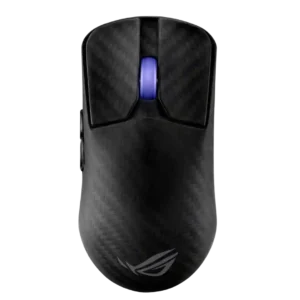
Product 1: ROG Harpe Ace Extreme
3.8
Reviewers liked that 2.4 GHz mode unlocked the mouse’s strongest gaming performance, though one reviewer reported a connection issue.
P2
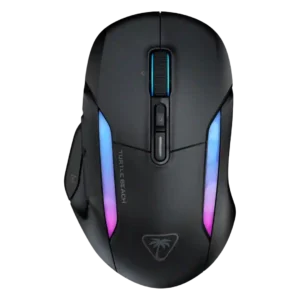
Product 2: Turtle Beach Kone II Air
4.9
2.4GHz connectivity was praised as the preferred low-latency, high-performance wireless mode for gaming.
Accuracy and tracking precision
P1
Product 1: ROG Harpe Ace Extreme
5.0
Tracking precision drew strong praise across tests, with reviewers repeatedly describing accurate, responsive, and reliable movement across games and surfaces.
P2
Product 2: Turtle Beach Kone II Air
4.5
Reviewers generally found tracking accurate and precise, with praise for smooth tracking and pinpoint control, though one noted only modest accuracy and another reported minor jitter.
balance and weight distribution
P1
Product 1: ROG Harpe Ace Extreme
4.7
Balance feedback was consistently positive where mentioned, with reviewers saying the light shell stayed well distributed in hand.
P2
Product 2: Turtle Beach Kone II Air
4.0
Weight distribution was mixed-positive, with praise for balance and low center of gravity but one reviewer finding the rear-heavy feel unbalanced.
battery life
P1
Product 1: ROG Harpe Ace Extreme
3.4
Battery life was mixed: acceptable to strong at lower polling rates, but clearly reduced at 8K and behind some flagship competitors.
P2
Product 2: Turtle Beach Kone II Air
4.7
Battery life was heavily praised across reviews, often lasting a week or more, though one reviewer measured less than the advertised 130 hours.
Bluetooth support
P1
Product 1: ROG Harpe Ace Extreme
4.3
Bluetooth was treated as a useful convenience and notable inclusion on such a lightweight esports-focused mouse.
P2
Product 2: Turtle Beach Kone II Air
4.0
Bluetooth support was useful for versatility and long battery life, but reviewers warned it is not the best mode for competitive performance.
build quality
P1
Product 1: ROG Harpe Ace Extreme
4.6
Build quality was one of the strongest areas, with most reviewers praising the solid carbon-fiber structure and lack of flex, aside from isolated defects.
P2
Product 2: Turtle Beach Kone II Air
4.6
Build quality was consistently praised as sturdy, solid, flex-free, and improved versus older Roccat/Turtle Beach hardware.
button customization
P1
Product 1: ROG Harpe Ace Extreme
4.0
Button remapping and assignment were available and generally treated as straightforward, especially through the lighter Armoury Crate Gear software.
P2
Product 2: Turtle Beach Kone II Air
4.6
Button customization was consistently praised, especially Easy-Shift and profile-based control, though one review wanted more useful default secondary functions.
button responsiveness
P1
Product 1: ROG Harpe Ace Extreme
4.7
Button responsiveness was usually praised as crisp, fast, and immediate, though one reviewer found the switches less spammable.
P2
Product 2: Turtle Beach Kone II Air
4.6
Button responsiveness was widely praised, with reviewers calling clicks quick, responsive, purposeful, soft, and fast enough for gaming.
cable flexibility
P1
Product 1: ROG Harpe Ace Extreme
3.6
Cable impressions were mixed: some found it flexible and lightweight, while others thought it was stiff or simply not very good.
P2
Product 2: Turtle Beach Kone II Air
4.4
Cable flexibility was praised in most evidence, especially for lightweight, flexible charging or wired use, though one reviewer questioned durability and length.
charging convenience
P1
Product 1: ROG Harpe Ace Extreme
3.0
Charging convenience was only lightly discussed, with USB-C charging working but the included cable feeling somewhat stiff to one reviewer.
P2
Product 2: Turtle Beach Kone II Air
4.6
Charging convenience was praised for flexible cables, easy wired charging, and the ability to keep playing while charging.
claw grip comfort
P1
Product 1: ROG Harpe Ace Extreme
3.9
Claw grip comfort was generally good for medium to large hands, but smaller-handed reviewers found some button and hump geometry awkward.
P2
Product 2: Turtle Beach Kone II Air
4.5
Claw grip comfort was positive for medium-to-large hands, with reviewers able to claw it easily despite the large shell.
click latency
P1
Product 1: ROG Harpe Ace Extreme
4.5
Click latency was praised as very low, although high polling gains were often framed as marginal in real-world play.
P2
Product 2: Turtle Beach Kone II Air
4.5
Click latency evidence was positive in one review, where the optical switches were described as quick and responsive during play.
click noise
P1
Product 1: ROG Harpe Ace Extreme
3.0
Click noise was a caveat: reviewers found the switches crisp or pleasant but often not quiet, and sometimes quite loud.
P2
Product 2: Turtle Beach Kone II Air
3.2
Click noise was mixed-low in one review because the clicks were described as hollow sounding.
connection stability
P1
Product 1: ROG Harpe Ace Extreme
4.4
Connection stability was mostly strong, but a few reviewers reported receiver dropouts or 8K-related interruptions.
P2
Product 2: Turtle Beach Kone II Air
4.9
Connection stability was one of the clearest strengths, with reviewers reporting no hitches, no input delay, flawless switching, and no letdowns.
cross-platform compatibility
P1Product 1: ROG Harpe Ace Extreme
No score yet
P2
Product 2: Turtle Beach Kone II Air
2.8
Cross-platform compatibility was limited because full customization was described as Windows-only.
DPI range
P1
Product 1: ROG Harpe Ace Extreme
4.0
DPI/CPI range was technically extreme and often praised, though some reviewers viewed the 42,000 DPI figure as excessive marketing.
P2
Product 2: Turtle Beach Kone II Air
4.6
DPI range was viewed positively because reviewers found the 26K ceiling and fine adjustment easy to tailor, even if extreme DPI was impractical for some.
durability over time
P1
Product 1: ROG Harpe Ace Extreme
4.5
Durability over time was supported mainly by the carbon-fiber shell and secure grip, but long-term skate durability remained more uncertain.
P2
Product 2: Turtle Beach Kone II Air
4.4
Durability over time was positive but limited, with reviewers noting months of sturdy use and reliable scroll wheel behavior.
ecosystem integration
P1
Product 1: ROG Harpe Ace Extreme
4.0
Ecosystem integration was seen as a useful bonus for users already invested in Asus gear, especially shared receiver support.
P2
Product 2: Turtle Beach Kone II Air
4.5
Ecosystem integration was praised in one review for syncing effects across Roccat/Turtle Beach devices.
ergonomic design
P1
Product 1: ROG Harpe Ace Extreme
3.5
Ergonomics split by hand size and preference: some praised prolonged comfort, while others found the elongated hump restrictive.
P2
Product 2: Turtle Beach Kone II Air
4.8
Ergonomic design was a standout strength, repeatedly described as comfortable, supremely ergonomic, and well suited to larger hands.
fingertip grip comfort
P1
Product 1: ROG Harpe Ace Extreme
3.4
Fingertip comfort depended heavily on hand size, with some reviewers finding it workable and others saying the mouse was too large.
P2
Product 2: Turtle Beach Kone II Air
3.9
Fingertip grip comfort was more context-dependent: one reviewer found it maneuverable, while another experienced fatigue with a fingertip/claw hybrid.
FPS gaming suitability
P1
Product 1: ROG Harpe Ace Extreme
4.6
FPS suitability was strong, with reviewers linking its low weight, fast sensor, and responsive inputs to competitive shooter use.
P2
Product 2: Turtle Beach Kone II Air
3.4
FPS gaming suitability was mixed: some reviewers found shooters fine or enjoyable, while others said the size, weight, and performance ceiling hurt faster competitive play.
glide smoothness
P1
Product 1: ROG Harpe Ace Extreme
4.5
Glide was widely praised on PTFE and glass feet, though the very smooth glass feet sometimes required adjustment.
P2
Product 2: Turtle Beach Kone II Air
5.0
Glide smoothness was consistently praised, with reviewers describing smooth, responsive, fluid, and amazing glide on mousepads and other surfaces.
grip texture
P1
Product 1: ROG Harpe Ace Extreme
3.8
Grip texture was mixed: carbon fiber and grooves helped, but some reviewers still found the plastic sides slippery.
P2
Product 2: Turtle Beach Kone II Air
3.9
Grip texture was mixed: the shape and optional tape helped, but several reviewers found the smooth plastic slippery, polarizing, or less grippy than expected.
left and right click quality
P1
Product 1: ROG Harpe Ace Extreme
4.1
Main click quality ranged from exceptional praise to isolated complaints about pre-travel, post-travel, or a defective left click.
P2
Product 2: Turtle Beach Kone II Air
5.0
Left and right clicks were strongly praised for feeling perfect, balanced, fast, and responsive.
lift-off distance
P1
Product 1: ROG Harpe Ace Extreme
3.8
Lift-off distance support was considered useful, but limited setting depth kept it from being universally praised.
P2
Product 2: Turtle Beach Kone II Air
3.0
Lift-off distance customization was mixed because the software offered calibration, but one reviewer disliked that it did not clearly show the resulting distance.
long-session comfort
P1
Product 1: ROG Harpe Ace Extreme
3.5
Long-session comfort depended on use: the shape could support longer play, but the stiff scroll wheel or hump bothered some reviewers.
P2
Product 2: Turtle Beach Kone II Air
4.7
Long-session comfort was strongly positive for larger hands, with reviewers reporting no strain, secure grip, and hours of comfortable use, though one noticed fatigue.
materials quality
P1
Product 1: ROG Harpe Ace Extreme
4.4
Materials quality was generally a highlight because of the carbon fiber shell, though some disliked the plastic side contrast.
P2
Product 2: Turtle Beach Kone II Air
3.2
Materials quality was mixed in limited evidence, with one reviewer saying the plastic finish drew divided reactions.
motion consistency
P1
Product 1: ROG Harpe Ace Extreme
4.5
Motion consistency was praised through consistent tracking, Motion Sync, and stable sensor behavior.
P2
Product 2: Turtle Beach Kone II Air
3.0
Motion consistency was mixed due to one reviewer noticing minor low-speed tracking jitter despite otherwise strong performance.
onboard memory
P1
Product 1: ROG Harpe Ace Extreme
4.5
Onboard memory was appreciated because settings could be saved and the software avoided after setup.
P2
Product 2: Turtle Beach Kone II Air
4.5
Onboard memory was praised in one review for saving settings directly to the mouse for use on other computers.
palm grip comfort
P1
Product 1: ROG Harpe Ace Extreme
3.1
Palm grip comfort was polarizing: large-hand users could find support, while several reviewers found the shape too short, high, or irritating.
P2
Product 2: Turtle Beach Kone II Air
4.8
Palm grip comfort was praised strongly, with reviewers repeatedly saying the large Kone shape suits palm grip especially well.
polling rate
P1
Product 1: ROG Harpe Ace Extreme
4.0
Polling rate was a headline strength, but reviewers often questioned the practical value of 8K versus its battery cost.
P2
Product 2: Turtle Beach Kone II Air
2.5
Polling rate drew criticism: multiple reviewers noted the 1000Hz ceiling or inconsistency as a weak point versus higher-end competitive mice.
portability
P1
Product 1: ROG Harpe Ace Extreme
4.4
Portability was praised because of the included carrying case and travel-focused accessory setup.
P2
Product 2: Turtle Beach Kone II Air
3.8
Portability was mixed: dongle storage, Bluetooth, and profiles helped, but size and an unsecured dongle slot reduced confidence.
premium feel
P1
Product 1: ROG Harpe Ace Extreme
4.5
Premium feel was strong overall, driven by the carbon fiber finish, packaging, accessories, and showpiece presentation.
P2
Product 2: Turtle Beach Kone II Air
4.2
Premium feel was mostly positive, with praise for a more premium chassis and premium mouse feel, but one review preferred the older Kone XP Air's feel.
profile switching
P1
Product 1: ROG Harpe Ace Extreme
4.5
Profile switching was useful because profiles and key settings could be handled on-mouse or saved without keeping software open.
P2
Product 2: Turtle Beach Kone II Air
4.6
Profile switching was praised for five profiles and work/game setups, especially for users who move between games or devices.
programmable buttons
P1
Product 1: ROG Harpe Ace Extreme
2.8
Programmable buttons were functional but limited, with reviewers repeatedly noting the basic five-button layout.
P2
Product 2: Turtle Beach Kone II Air
4.9
Programmable buttons were praised for expanding commands and making the mouse versatile for work, FPS, MMO, and macro-heavy use.
RGB features
P1
Product 1: ROG Harpe Ace Extreme
3.1
RGB was mixed: reviewers liked that lighting remained on an ultralight mouse, but the single scroll-wheel zone was limited or distracting.
P2
Product 2: Turtle Beach Kone II Air
4.3
RGB features were generally liked for sharp, bold, or gorgeous lighting, though a few reviewers wanted more flair or noticed choppy transitions.
scroll wheel quality
P1
Product 1: ROG Harpe Ace Extreme
3.9
Scroll wheel quality varied widely, from precise and well-defined to stiff, small, fatiguing, or underwhelming.
P2
Product 2: Turtle Beach Kone II Air
4.4
The scroll wheel was a major strength overall, with praise for smooth/free-spin usefulness and satisfying feel, balanced by a few complaints about loud clicks or excess play.
sensor performance
P1
Product 1: ROG Harpe Ace Extreme
4.7
Sensor performance was consistently strong, with reviewers calling it top-tier, flawless, responsive, and worry-free.
P2
Product 2: Turtle Beach Kone II Air
4.7
The Owl-Eye sensor was usually praised as excellent, upgraded, and top-tier for most use, though comments focused more on comfort than esports-grade speed.
shape comfort
P1
Product 1: ROG Harpe Ace Extreme
3.6
Shape comfort was one of the most preference-dependent areas, praised as safe and comfortable by some but too long or awkward by others.
P2
Product 2: Turtle Beach Kone II Air
4.5
Shape comfort was one of the strongest themes for medium-to-large hands, though smaller-hand reviewers sometimes found the shape too large to feel natural.
side button quality
P1
Product 1: ROG Harpe Ace Extreme
3.8
Side button quality was highly split, with praise for tactility and implementation but criticism of size, force, and forward placement.
P2
Product 2: Turtle Beach Kone II Air
4.5
Side buttons were usually praised for placement and reachability, although a few reviewers found some Easy-Shift combinations awkward or dependent on hand size.
software stability
P1
Product 1: ROG Harpe Ace Extreme
2.3
Software stability was a repeated weakness, including pop-ups, broken download flow, setup issues, and older software not working.
P2
Product 2: Turtle Beach Kone II Air
5.0
Software stability had limited but strong evidence from one reviewer who reported no crashes or issues.
software usability
P1
Product 1: ROG Harpe Ace Extreme
3.4
Software usability improved with Armoury Crate Gear, but reviewers still found it overkill, basic, or troublesome depending on setup.
P2
Product 2: Turtle Beach Kone II Air
4.6
Software usability was a major strength: SWARM II was repeatedly called clean, intuitive, easy, powerful, and much improved.
surface compatibility
P1
Product 1: ROG Harpe Ace Extreme
4.7
Surface compatibility was strong, with reliable tracking and calibration across several desk, pad, and material types.
P2
Product 2: Turtle Beach Kone II Air
4.5
Surface compatibility had limited but positive evidence from one reviewer who found the sensor tracked easily across different surfaces.
switch durability
P1
Product 1: ROG Harpe Ace Extreme
4.0
Switch durability was supported by the reviewer’s description of durable 100-million-actuation optical switches.
P2
Product 2: Turtle Beach Kone II Air
4.5
Switch durability received positive but limited evidence, with one reviewer saying the mouse felt built to last.
switch feel
P1
Product 1: ROG Harpe Ace Extreme
3.9
Switch feel was mostly positive but not unanimous, with praise for tactile optical clicks alongside complaints about squish or slow rebound.
P2
Product 2: Turtle Beach Kone II Air
4.2
Switch feel was mostly positive for tactile, clicky, snappy presses, though some reviewers found the feel mushier or fatiguing in frantic moments.
value for money
P1
Product 1: ROG Harpe Ace Extreme
2.3
Value for money was the most consistent weakness because reviewers repeatedly questioned the extreme $250 price.
P2
Product 2: Turtle Beach Kone II Air
3.7
Value for money was mixed: reviewers liked the feature set and pricing versus some rivals, but several found it pricey, best on sale, or less compelling than the wired model.
weight
P1
Product 1: ROG Harpe Ace Extreme
4.6
Weight was a major strength, with reviewers praising the roughly 47g body as extremely light for its size and construction.
P2
Product 2: Turtle Beach Kone II Air
3.1
Weight was the most divisive trait: some reviewers accepted or liked the planted feel, while many found 110g heavy, bulky, or less versatile.
wireless latency
P1
Product 1: ROG Harpe Ace Extreme
4.5
Wireless latency was generally praised as very low or responsive, though reviewers questioned how much 8K improves real gameplay.
P2
Product 2: Turtle Beach Kone II Air
4.0
Wireless latency was mixed: some reviewers praised low-latency or lag-free use, while one measured noticeable latency and wavering during quick movement.
wireless performance
P1
Product 1: ROG Harpe Ace Extreme
4.4
Wireless performance was mostly excellent, with strong SpeedNova praise and stable performance, offset by a few connection complaints.
P2
Product 2: Turtle Beach Kone II Air
4.8
Wireless performance was strongly positive overall, with reviewers reporting reliable wireless behavior and favorite-mouse-level performance, though size limited gaming appeal for one.