2.4GHz connectivity
P1
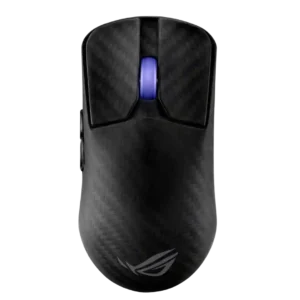
Product 1: ROG Harpe Ace Extreme
3.8
Reviewers liked that 2.4 GHz mode unlocked the mouse’s strongest gaming performance, though one reviewer reported a connection issue.
P2
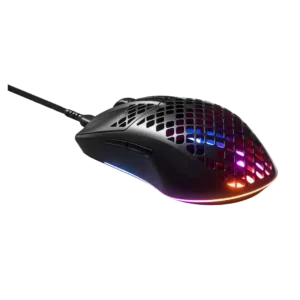
Product 2: SteelSeries Aerox 3
4.5
2.4GHz connectivity contributed positively to avoiding cable dependence in the wireless model.
Accuracy and tracking precision
P1
Product 1: ROG Harpe Ace Extreme
5.0
Tracking precision drew strong praise across tests, with reviewers repeatedly describing accurate, responsive, and reliable movement across games and surfaces.
P2
Product 2: SteelSeries Aerox 3
4.5
Reviewers split sharply: some praised precise, responsive tracking, while one found the sensor-placement concern mostly overblown after adjustment.
balance and weight distribution
P1
Product 1: ROG Harpe Ace Extreme
4.7
Balance feedback was consistently positive where mentioned, with reviewers saying the light shell stayed well distributed in hand.
P2Product 2: SteelSeries Aerox 3
No score yetbattery life
P1
Product 1: ROG Harpe Ace Extreme
3.4
Battery life was mixed: acceptable to strong at lower polling rates, but clearly reduced at 8K and behind some flagship competitors.
P2
Product 2: SteelSeries Aerox 3
4.5
Battery life was viewed positively where the wireless version avoided dramatic battery-life loss despite weight savings.
Bluetooth support
P1
Product 1: ROG Harpe Ace Extreme
4.3
Bluetooth was treated as a useful convenience and notable inclusion on such a lightweight esports-focused mouse.
P2
Product 2: SteelSeries Aerox 3
4.5
Bluetooth support contributed positively to avoiding cable dependence in the wireless model.
build quality
P1
Product 1: ROG Harpe Ace Extreme
4.6
Build quality was one of the strongest areas, with most reviewers praising the solid carbon-fiber structure and lack of flex, aside from isolated defects.
P2
Product 2: SteelSeries Aerox 3
3.3
Build quality was highly divisive, ranging from solid and durable to flexy, creaky, and not great.
button customization
P1
Product 1: ROG Harpe Ace Extreme
4.0
Button remapping and assignment were available and generally treated as straightforward, especially through the lighter Armoury Crate Gear software.
P2
Product 2: SteelSeries Aerox 3
4.5
Button customization was considered valuable through SteelSeries Engine configuration flexibility.
button responsiveness
P1
Product 1: ROG Harpe Ace Extreme
4.7
Button responsiveness was usually praised as crisp, fast, and immediate, though one reviewer found the switches less spammable.
P2
Product 2: SteelSeries Aerox 3
3.4
Responsiveness was mostly praised, but some reviewers reported misclicks or click travel that hurt gaming.
cable flexibility
P1
Product 1: ROG Harpe Ace Extreme
3.6
Cable impressions were mixed: some found it flexible and lightweight, while others thought it was stiff or simply not very good.
P2
Product 2: SteelSeries Aerox 3
2.6
Cable flexibility was a common weakness: one review praised flexibility, but several called the cable basic, stiff, or bad.
claw grip comfort
P1
Product 1: ROG Harpe Ace Extreme
3.9
Claw grip comfort was generally good for medium to large hands, but smaller-handed reviewers found some button and hump geometry awkward.
P2
Product 2: SteelSeries Aerox 3
4.0
Claw grip comfort was generally positive, with reviewers calling the shape suitable or comfortable for claw use.
click latency
P1
Product 1: ROG Harpe Ace Extreme
4.5
Click latency was praised as very low, although high polling gains were often framed as marginal in real-world play.
P2
Product 2: SteelSeries Aerox 3
5.0
One review described the gaming experience as latency-free, supporting a strong click-latency impression.
click noise
P1
Product 1: ROG Harpe Ace Extreme
3.0
Click noise was a caveat: reviewers found the switches crisp or pleasant but often not quiet, and sometimes quite loud.
P2
Product 2: SteelSeries Aerox 3
4.0
Click noise was acceptable to good, with one review saying the clicks were not annoying or overly loud.
connection stability
P1
Product 1: ROG Harpe Ace Extreme
4.4
Connection stability was mostly strong, but a few reviewers reported receiver dropouts or 8K-related interruptions.
P2
Product 2: SteelSeries Aerox 3
4.5
Connection stability was positive where the detachable cable did not disconnect during quick movements.
DPI range
P1
Product 1: ROG Harpe Ace Extreme
4.0
DPI/CPI range was technically extreme and often praised, though some reviewers viewed the 42,000 DPI figure as excessive marketing.
P2
Product 2: SteelSeries Aerox 3
4.5
The DPI range was valued where it translated into fast, precise cursor movement over long distances.
durability over time
P1
Product 1: ROG Harpe Ace Extreme
4.5
Durability over time was supported mainly by the carbon-fiber shell and secure grip, but long-term skate durability remained more uncertain.
P2
Product 2: SteelSeries Aerox 3
4.5
Durability over time was supported by a short-term drop outcome where the mouse held up without visible damage.
ergonomic design
P1
Product 1: ROG Harpe Ace Extreme
3.5
Ergonomics split by hand size and preference: some praised prolonged comfort, while others found the elongated hump restrictive.
P2
Product 2: SteelSeries Aerox 3
5.0
Ergonomic design scored well where comfort over use was directly praised.
fingertip grip comfort
P1
Product 1: ROG Harpe Ace Extreme
3.4
Fingertip comfort depended heavily on hand size, with some reviewers finding it workable and others saying the mouse was too large.
P2
Product 2: SteelSeries Aerox 3
4.0
Fingertip grip comfort was generally positive, with reviewers finding the shape suitable for fingertip users.
firmware reliability
P1
Product 1: ROG Harpe Ace Extreme
2.5
Firmware reliability had limited but important criticism, with one reviewer reporting random shutoffs at 8K despite firmware updates.
P2
Product 2: SteelSeries Aerox 3
2.0
Firmware reliability was criticized when RGB settings reverted after closing the software.
FPS gaming suitability
P1
Product 1: ROG Harpe Ace Extreme
4.6
FPS suitability was strong, with reviewers linking its low weight, fast sensor, and responsive inputs to competitive shooter use.
P2
Product 2: SteelSeries Aerox 3
3.8
FPS suitability was mixed: some called it shooter-ready, while others said sensor or lift-off problems could hurt precise play.
glide smoothness
P1
Product 1: ROG Harpe Ace Extreme
4.5
Glide was widely praised on PTFE and glass feet, though the very smooth glass feet sometimes required adjustment.
P2
Product 2: SteelSeries Aerox 3
4.3
Glide smoothness was broadly praised, though one reviewer found the feet only okay.
grip texture
P1
Product 1: ROG Harpe Ace Extreme
3.8
Grip texture was mixed: carbon fiber and grooves helped, but some reviewers still found the plastic sides slippery.
P2
Product 2: SteelSeries Aerox 3
3.8
Grip texture was split between praise for the coating and criticism of slippery side surfaces.
left and right click quality
P1
Product 1: ROG Harpe Ace Extreme
4.1
Main click quality ranged from exceptional praise to isolated complaints about pre-travel, post-travel, or a defective left click.
P2
Product 2: SteelSeries Aerox 3
2.7
Primary-click quality was mixed: satisfying in one review but criticized elsewhere for wobble, post-travel, and in-game annoyance.
lift-off distance
P1
Product 1: ROG Harpe Ace Extreme
3.8
Lift-off distance support was considered useful, but limited setting depth kept it from being universally praised.
P2
Product 2: SteelSeries Aerox 3
2.8
Lift-off distance was divisive, with one reviewer seeing no issues and two others calling high lift-off or cursor jiggle a real problem.
long-session comfort
P1
Product 1: ROG Harpe Ace Extreme
3.5
Long-session comfort depended on use: the shape could support longer play, but the stiff scroll wheel or hump bothered some reviewers.
P2
Product 2: SteelSeries Aerox 3
4.7
Long-session comfort was a strength, with reviewers praising comfort and reduced fatigue from the low weight.
materials quality
P1
Product 1: ROG Harpe Ace Extreme
4.4
Materials quality was generally a highlight because of the carbon fiber shell, though some disliked the plastic side contrast.
P2
Product 2: SteelSeries Aerox 3
4.3
Materials quality was mostly positive, with praise for the matte finish, coating, and high-quality look.
motion consistency
P1
Product 1: ROG Harpe Ace Extreme
4.5
Motion consistency was praised through consistent tracking, Motion Sync, and stable sensor behavior.
P2
Product 2: SteelSeries Aerox 3
2.8
Motion consistency ranged from spot-on to distracting cursor jiggle that could throw off shots.
onboard memory
P1
Product 1: ROG Harpe Ace Extreme
4.5
Onboard memory was appreciated because settings could be saved and the software avoided after setup.
P2
Product 2: SteelSeries Aerox 3
2.0
Onboard memory drew criticism because one reviewer could not get settings to save to the device.
palm grip comfort
P1
Product 1: ROG Harpe Ace Extreme
3.1
Palm grip comfort was polarizing: large-hand users could find support, while several reviewers found the shape too short, high, or irritating.
P2
Product 2: SteelSeries Aerox 3
1.8
Palm grip comfort was weak in reviews that said the mouse was too small or unsuitable for palm use.
portability
P1
Product 1: ROG Harpe Ace Extreme
4.4
Portability was praised because of the included carrying case and travel-focused accessory setup.
P2
Product 2: SteelSeries Aerox 3
4.0
Portability was praised because the detachable cable helped with travel and laptop use.
premium feel
P1
Product 1: ROG Harpe Ace Extreme
4.5
Premium feel was strong overall, driven by the carbon fiber finish, packaging, accessories, and showpiece presentation.
P2
Product 2: SteelSeries Aerox 3
4.0
Premium feel was positive in some reviews but undermined by critics who expected more from SteelSeries.
programmable buttons
P1
Product 1: ROG Harpe Ace Extreme
2.8
Programmable buttons were functional but limited, with reviewers repeatedly noting the basic five-button layout.
P2
Product 2: SteelSeries Aerox 3
4.0
Programmable buttons were viewed as sufficiently flexible for gaming and everyday use.
RGB features
P1
Product 1: ROG Harpe Ace Extreme
3.1
RGB was mixed: reviewers liked that lighting remained on an ultralight mouse, but the single scroll-wheel zone was limited or distracting.
P2
Product 2: SteelSeries Aerox 3
4.3
RGB was consistently one of the strongest positives, though one review found lighting configuration less intuitive.
scroll wheel quality
P1
Product 1: ROG Harpe Ace Extreme
3.9
Scroll wheel quality varied widely, from precise and well-defined to stiff, small, fatiguing, or underwhelming.
P2
Product 2: SteelSeries Aerox 3
4.3
Scroll-wheel quality received positive remarks for feel and performance when specifically judged.
sensor performance
P1
Product 1: ROG Harpe Ace Extreme
4.7
Sensor performance was consistently strong, with reviewers calling it top-tier, flawless, responsive, and worry-free.
P2
Product 2: SteelSeries Aerox 3
3.8
Sensor impressions ranged from excellent, latency-free tracking to harsh criticism of lift-off behavior and sensor shortcomings.
shape comfort
P1
Product 1: ROG Harpe Ace Extreme
3.6
Shape comfort was one of the most preference-dependent areas, praised as safe and comfortable by some but too long or awkward by others.
P2
Product 2: SteelSeries Aerox 3
4.4
Shape comfort was generally positive, especially for users who liked the Rival-style low profile.
side button quality
P1
Product 1: ROG Harpe Ace Extreme
3.8
Side button quality was highly split, with praise for tactility and implementation but criticism of size, force, and forward placement.
P2
Product 2: SteelSeries Aerox 3
3.3
Side-button feedback ranged from sharp, uncomfortable buttons to comfortable placement with no accidental activation.
skate durability
P1
Product 1: ROG Harpe Ace Extreme
3.1
Skate durability and skate impressions were mixed: PTFE and glass skates felt good, while glass longevity and control raised caveats.
P2
Product 2: SteelSeries Aerox 3
2.7
Skate durability and foot quality were mixed, with concerns about rough-surface wear, sound, and snagging.
software stability
P1
Product 1: ROG Harpe Ace Extreme
2.3
Software stability was a repeated weakness, including pop-ups, broken download flow, setup issues, and older software not working.
P2
Product 2: SteelSeries Aerox 3
2.5
Software stability was criticized where users reported occasional stability problems.
software usability
P1
Product 1: ROG Harpe Ace Extreme
3.4
Software usability improved with Armoury Crate Gear, but reviewers still found it overkill, basic, or troublesome depending on setup.
P2
Product 2: SteelSeries Aerox 3
3.3
Software usability was mixed: some praised SteelSeries Engine, while others found it awkward or missing expected settings.
surface compatibility
P1
Product 1: ROG Harpe Ace Extreme
4.7
Surface compatibility was strong, with reliable tracking and calibration across several desk, pad, and material types.
P2
Product 2: SteelSeries Aerox 3
4.8
Surface compatibility was strong overall, with praise for responsive tracking or smooth glide across surfaces and pads.
switch durability
P1
Product 1: ROG Harpe Ace Extreme
4.0
Switch durability was supported by the reviewer’s description of durable 100-million-actuation optical switches.
P2
Product 2: SteelSeries Aerox 3
5.0
Switch durability was rated strongly where the review emphasized the Aerox 3 switches exceeding average rated click life.
switch feel
P1
Product 1: ROG Harpe Ace Extreme
3.9
Switch feel was mostly positive but not unanimous, with praise for tactile optical clicks alongside complaints about squish or slow rebound.
P2
Product 2: SteelSeries Aerox 3
4.5
Click feel was positively received where the main buttons produced satisfying clicks.
value for money
P1
Product 1: ROG Harpe Ace Extreme
2.3
Value for money was the most consistent weakness because reviewers repeatedly questioned the extreme $250 price.
P2
Product 2: SteelSeries Aerox 3
2.8
Value for money was highly split, from 'great value' praise to strong complaints that the price was not justified.
water and dust resistance
P1Product 1: ROG Harpe Ace Extreme
No score yet
P2
Product 2: SteelSeries Aerox 3
4.0
Water and dust resistance was praised for protection, though one review worried the open shell could collect dust and dirt.
weight
P1
Product 1: ROG Harpe Ace Extreme
4.6
Weight was a major strength, with reviewers praising the roughly 47g body as extremely light for its size and construction.
P2
Product 2: SteelSeries Aerox 3
4.5
The mouse's low weight was repeatedly praised for agility, maneuverability, and quick movements.
wireless latency
P1
Product 1: ROG Harpe Ace Extreme
4.5
Wireless latency was generally praised as very low or responsive, though reviewers questioned how much 8K improves real gameplay.
P2
Product 2: SteelSeries Aerox 3
5.0
Wireless latency was praised in the review that described lossless, latency-free gaming.
wireless performance
P1
Product 1: ROG Harpe Ace Extreme
4.4
Wireless performance was mostly excellent, with strong SpeedNova praise and stable performance, offset by a few connection complaints.
P2
Product 2: SteelSeries Aerox 3
4.5
Wireless performance was positively described where the wireless model avoided cable dependence thanks to connection options.