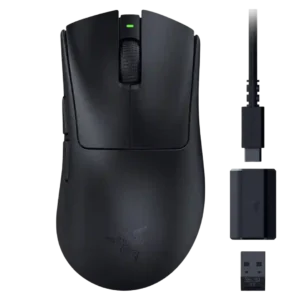
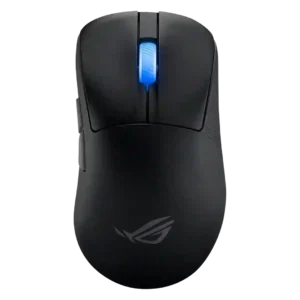
Average score
Razer DeathAdder V3 HyperSpeed
4.3
ASUS ROG Keris II Ace
4.2
Bluetooth support
Razer DeathAdder V3 HyperSpeed
2.0
Bluetooth was a repeated drawback: reviewers liked the wireless performance but noted the lack of Bluetooth reduced multi-device versatility.
ASUS ROG Keris II Ace
4.5
Bluetooth was viewed as a useful convenience for work, travel, and multi-device use, not as the preferred competitive mode.
cable flexibility
Razer DeathAdder V3 HyperSpeed
2.1
The included cable was one of the clearest complaints, described as stiff, short, rubbery, cheap-feeling, or impractical for wired play.
ASUS ROG Keris II Ace
4.5
The cable was usually praised as flexible, free-flowing, and low-friction, with one reviewer calling it a bit stiff.
click noise
Razer DeathAdder V3 HyperSpeed
2.2
Click noise was a drawback in several reviews, especially outside headset gaming, where the primary clicks could sound loud or grating.
ASUS ROG Keris II Ace
4.2
Click noise impressions were mixed, from quiet and pleasant to fairly loud, depending on reviewer and switch comparison.
ecosystem integration
Razer DeathAdder V3 HyperSpeed
2.5
Ecosystem integration was mixed because HyperPolling dongle compatibility and naming created confusion or fragmentation across Razer mice.
ASUS ROG Keris II Ace
4.5
Ecosystem integration was praised where reviewers used the Omni receiver or Aura Sync-style setup without delays.
onboard memory
Razer DeathAdder V3 HyperSpeed
3.2
Onboard memory was mixed: saving settings was useful, but the single onboard profile limited travel or multi-game convenience.
ASUS ROG Keris II Ace
4.8
Onboard control and memory features were praised when reviewers could change settings or avoid software.
software stability
Razer DeathAdder V3 HyperSpeed
2.7
Software stability had mixed evidence: one reviewer found Synapse more reliable, while others called it erratic or resource-heavy.
ASUS ROG Keris II Ace
4.0
Software stability had limited evidence, with Armoury Crate Gear praised for not affecting system performance.
software usability
Razer DeathAdder V3 HyperSpeed
4.2
Software usability was generally useful for DPI, remapping, Dynamic Sensitivity, and rotation tools, though Synapse could feel unwieldy or bloated.
ASUS ROG Keris II Ace
2.9
Software usability was the clearest weakness, with repeated complaints about Armoury Crate being bloated, slow, or needing improvement.
premium feel
Razer DeathAdder V3 HyperSpeed
4.7
Premium feel was stronger than the HyperSpeed label implied, with reviewers saying the mouse felt high-tier, well-built, and close to Razer's pro models.
ASUS ROG Keris II Ace
3.5
Premium feel was mixed: some found the mouse premium, while others felt the coating or hollow shell hurt the premium impression.
value for money
Razer DeathAdder V3 HyperSpeed
4.7
Value for money was one of the strongest consensus points, with reviewers repeatedly calling it a great, competitive, or top-tier value at around $100.
ASUS ROG Keris II Ace
3.6
Value was mixed: reviewers praised the feature set but often called the price expensive or hard to justify.
materials quality
Razer DeathAdder V3 HyperSpeed
3.5
Materials quality was mixed-to-positive: reviewers liked the premium feel but noted grease, grime, fingerprints, or clammy plastic in some conditions.
ASUS ROG Keris II Ace
4.5
Materials quality was scored through reviewer judgments about the nylon/PBT shell, coating, and perceived premium or slippery feel.
side button quality
Razer DeathAdder V3 HyperSpeed
4.7
Side button quality was widely praised for placement, spacing, access, and responsiveness, with a few reviews noting mushiness or preference caveats.
ASUS ROG Keris II Ace
3.8
Side button quality was mixed: several reviewers praised crisp placement, while others found them small, high, or stiff.
RGB features
Razer DeathAdder V3 HyperSpeed
3.5
RGB evidence was mixed: some reviewers liked the performance-first, no-distraction approach, while others missed Razer Chroma or visual flair.
ASUS ROG Keris II Ace
4.4
RGB was generally appreciated as a rare lightweight-mouse touch, though a few reviewers disliked the implementation.
grip texture
Razer DeathAdder V3 HyperSpeed
4.1
Grip texture was polarizing: many liked the smooth-touch coating, but sweaty hands, clamminess, or slipperiness remained concerns in several reviews.
ASUS ROG Keris II Ace
3.4
Grip texture was the most divided attribute, ranging from non-slip praise to strong complaints about slippery coating.
scroll wheel quality
Razer DeathAdder V3 HyperSpeed
4.3
Scroll wheel quality was generally solid and precise, though a few reviewers found middle click awkward or document scrolling tedious.
ASUS ROG Keris II Ace
3.6
Scroll wheel quality was mixed, ranging from excellent and distinct to average, light, or prone to overscrolling.
charging convenience
Razer DeathAdder V3 HyperSpeed
3.2
Charging itself was convenient by USB-C, but the short or unpleasant cable hurt the charging-and-play experience for some reviewers.
ASUS ROG Keris II Ace
3.8
Charging and dongle convenience were mixed: USB-C and cable placement helped, but the booster/dongle setup could feel chunky.
switch feel
Razer DeathAdder V3 HyperSpeed
4.7
Switch feel was strongly positive overall, with reviewers praising crisp, tactile, satisfying, snappy optical switches, despite individual firmness preferences.
ASUS ROG Keris II Ace
4.1
Switch feel was mixed but often positive, with some crisp/punchy praise and some dull or mushy complaints.
left and right click quality
Razer DeathAdder V3 HyperSpeed
4.8
Left and right click quality was strongly praised for tactile, satisfying, crisp, or solid main clicks, with only minor preference-based caveats.
ASUS ROG Keris II Ace
4.2
Left and right click quality was mostly positive, with praise for consistency and similar actuation between sides.
polling rate
Razer DeathAdder V3 HyperSpeed
3.8
Polling-rate evidence was mixed-positive: 1,000Hz was widely considered enough, while the separate HyperPolling dongle was a repeated caveat.
ASUS ROG Keris II Ace
4.4
Polling rate support was widely praised, especially 4K wireless and included booster access, with some debate over 8K usefulness.
wireless latency
Razer DeathAdder V3 HyperSpeed
4.7
Wireless latency was praised as low, imperceptible, or quick enough for competitive gaming, even before optional high-polling upgrades.
ASUS ROG Keris II Ace
4.1
Wireless latency was praised in 2.4GHz mode but Bluetooth was criticized as too latent for competitive gaming.
fingertip grip comfort
Razer DeathAdder V3 HyperSpeed
2.8
Fingertip grip comfort was more limited: some reviewers could make it work, but several advised fingertip users or smaller/larger hand extremes to be careful.
ASUS ROG Keris II Ace
3.3
Fingertip grip comfort was mixed; some found it possible, while others found the ergonomic shell awkward for fingertip use.
click latency
Razer DeathAdder V3 HyperSpeed
5.0
Click latency was praised as extremely low or imperceptible, with measured wireless results supporting fast competitive use.
ASUS ROG Keris II Ace
4.5
Click latency was praised as very low or competitive, including measured or perceived fast response.
profile switching
Razer DeathAdder V3 HyperSpeed
2.8
Profile switching was limited by the single onboard profile, forcing more manual settings changes for different games or PCs.
ASUS ROG Keris II Ace
3.3
Profile switching was mixed, with praise for onboard switching but criticism of the underside DPI/profile button placement.
2.4GHz connectivity
Razer DeathAdder V3 HyperSpeed
5.0
Reviewers who discussed the 2.4GHz link found it responsive, with solid signal behavior and wired-like performance when using the dongle.
ASUS ROG Keris II Ace
4.5
Reviewers discussed the 2.4GHz receiver mainly as part of the broader wireless setup, with praise for low-latency use when paired with the booster.
motion consistency
Razer DeathAdder V3 HyperSpeed
5.0
Motion consistency was praised in testing where movement appeared accurate, smooth, and consistent.
ASUS ROG Keris II Ace
4.5
Motion consistency was praised through comments about precise recognition, consistent tracking, and polling stability.
battery life
Razer DeathAdder V3 HyperSpeed
4.6
Battery life was consistently strong in testing or use, with reviewers saying the 100-hour claim felt believable or that charging was rarely needed.
ASUS ROG Keris II Ace
4.2
Battery life was generally praised as good to excellent, with caveats that high polling rates and active use drain it faster.
build quality
Razer DeathAdder V3 HyperSpeed
4.9
Build quality was a major strength, with reviewers repeatedly reporting a solid shell, little or no flex, and a surprisingly sturdy lightweight chassis.
ASUS ROG Keris II Ace
4.5
Build quality was mostly strong, with repeated praise for rigidity and lack of flex, though one reviewer reported average build with creaking.
Accuracy and tracking precision
Razer DeathAdder V3 HyperSpeed
4.9
Tracking precision drew strong praise, with reviewers reporting pinpoint aiming, better enemy tracking, and accurate gaming-session control.
ASUS ROG Keris II Ace
4.5
Reviewers consistently praised tracking accuracy and precision, with only one reviewer warning that extreme DPI values became irregular.
programmable buttons
Razer DeathAdder V3 HyperSpeed
3.6
Programmable-button evidence was mixed: reviewers valued practical FPS-side-button use, but criticized the claimed button count as essentially standard.
ASUS ROG Keris II Ace
4.0
Programmable buttons were considered competitive and sufficient for this class, though not extensive like MMO mice.
acceleration control
Razer DeathAdder V3 HyperSpeed
4.2
Dynamic Sensitivity was widely treated as useful for low-sensitivity FPS play and quick turns, though a few reviewers called it niche, unnatural, or gimmicky.
ASUS ROG Keris II Ace
4.5
The acceleration spec was only scored where a reviewer connected the 50g capability to confident fast maneuvers in FPS play.
balance and weight distribution
Razer DeathAdder V3 HyperSpeed
5.0
Weight balance was praised as well-centered and controlled, helping the mouse feel nimble rather than unstable despite its low mass.
ASUS ROG Keris II Ace
4.7
Weight distribution was usually praised as well balanced, though one reviewer found the mouse slightly forward-balanced.
lift-off distance
Razer DeathAdder V3 HyperSpeed
3.6
Lift-off distance and smart tracking received useful but narrower praise, especially for maintaining accuracy or surface consistency; one review wanted more advanced tweaks.
ASUS ROG Keris II Ace
3.8
Lift-off distance was mixed: one reviewer liked the low setting, while another found low too low and high too high.
switch durability
Razer DeathAdder V3 HyperSpeed
4.3
Switch durability received limited positive evidence from reviewers who treated optical switches as longer-lasting or suitable for years of use.
ASUS ROG Keris II Ace
4.5
Switch durability was scored where reviewers linked optical switches to double-click prevention, hot-swapping, or durability.
portability
Razer DeathAdder V3 HyperSpeed
4.8
Portability benefited from lightweight design and onboard dongle storage, which reviewers found convenient for travel or switching systems.
ASUS ROG Keris II Ace
4.5
Portability was supported by dongle storage, Bluetooth, and multi-device/travel use.
claw grip comfort
Razer DeathAdder V3 HyperSpeed
4.2
Claw grip comfort was broadly positive for small-to-medium hands, though larger hands or aggressive claw users sometimes found the shape less ideal.
ASUS ROG Keris II Ace
4.4
Claw-grip comfort was generally positive, especially relaxed claw, though hand size affected comfort.
surface compatibility
Razer DeathAdder V3 HyperSpeed
4.8
Surface compatibility was positive where tested, with reviewers reporting smooth feet across multiple mousepads or surfaces.
ASUS ROG Keris II Ace
4.9
Surface compatibility was strongly praised, including glass, mouse pads, tables, and varied surfaces.
palm grip comfort
Razer DeathAdder V3 HyperSpeed
4.3
Palm grip comfort was good for many users, particularly smaller-to-medium hands, though size and side flares made it less universal.
ASUS ROG Keris II Ace
4.2
Palm grip comfort was positive for average or compatible hands, though not universal for larger hands.
button responsiveness
Razer DeathAdder V3 HyperSpeed
4.7
Button responsiveness was praised for fast actuation, rapid firing, and easy operation during play.
ASUS ROG Keris II Ace
4.8
Button responsiveness was praised for snappy, reliable, and fast actuation in several reviews.
ergonomic design
Razer DeathAdder V3 HyperSpeed
4.4
The ergonomic design was generally praised for right-handed support, palm contouring, and comfort, while a few shape-specific caveats remained.
ASUS ROG Keris II Ace
4.5
The ergonomic design was broadly praised for right-handed comfort, while left-handed users were consistently excluded.
button customization
Razer DeathAdder V3 HyperSpeed
4.1
Button customization and rebinding were useful through Synapse, although most of the praise was tied to practical remapping rather than a large button count.
ASUS ROG Keris II Ace
4.0
Customization was considered adequate to strong where reviewers described remapping, DPI, and profile tools as straightforward or sufficient.
weight
Razer DeathAdder V3 HyperSpeed
4.9
Weight was a standout strength, with reviewers repeatedly praising the 53-55g body as featherweight, effortless, nimble, and easy to flick.
ASUS ROG Keris II Ace
4.9
Weight was consistently praised as very light, impressive, and control-friendly.
sensor performance
Razer DeathAdder V3 HyperSpeed
4.8
Sensor performance was a major strength, with the Focus X 26K repeatedly described as flawless, fast, precise, or essentially indistinguishable in real play.
ASUS ROG Keris II Ace
4.9
Sensor performance was one of the best-reviewed areas, repeatedly described as accurate, top-tier, or flawless.
DPI range
Razer DeathAdder V3 HyperSpeed
4.0
The 26K DPI ceiling was considered enough for nearly all gamers, even though some reviewers noted it is lower than flagship sensors or impractical at the top end.
ASUS ROG Keris II Ace
4.0
The DPI ceiling was seen as technically impressive, but one reviewer found very high DPI practically unusable.
shape comfort
Razer DeathAdder V3 HyperSpeed
4.2
Shape comfort was the most context-dependent attribute: many liked the smaller ergonomic shell, while some disliked the front flare, smaller size, or hand-fit tradeoffs.
ASUS ROG Keris II Ace
4.2
Shape comfort was generally praised, especially for right-handed ergonomic users, but hand size and finger length created caveats.
long-session comfort
Razer DeathAdder V3 HyperSpeed
4.8
Long-session comfort was positive, with reviewers citing long play sessions, reduced wrist stress, and comfort over extended gaming or work use.
ASUS ROG Keris II Ace
4.8
Long-session comfort was strongly positive where reviewers mentioned low strain, no hand pain, or reduced fatigue.
FPS gaming suitability
Razer DeathAdder V3 HyperSpeed
4.8
FPS gaming suitability was excellent overall, with reviewers praising flickability, low-latency clicks, accurate tracking, and strong competitive-shooter performance.
ASUS ROG Keris II Ace
4.8
FPS suitability was one of the strongest areas, with repeated praise for competitive aiming, speed, and esports performance.
glide smoothness
Razer DeathAdder V3 HyperSpeed
4.6
Glide smoothness was one of the strongest attributes, with large PTFE feet repeatedly praised for smooth, controlled movement across pads or surfaces.
ASUS ROG Keris II Ace
4.6
Glide smoothness was consistently praised across stock PTFE feet and multiple surfaces.
wireless performance
Razer DeathAdder V3 HyperSpeed
4.8
Wireless performance was consistently positive, with reviewers describing the mouse as free-feeling, reliable, flawless, or strong in gaming.
ASUS ROG Keris II Ace
4.8
Wireless performance was repeatedly praised as low-latency, stable, and responsive.
connection stability
Razer DeathAdder V3 HyperSpeed
5.0
Connection stability was a strength, with reviewers reporting no lag, no signal issues, and stable wireless behavior in gaming.
ASUS ROG Keris II Ace
5.0
Connection stability was strongly praised, with reviewers reporting no dropouts, hiccups, or interference.
handedness options
Razer DeathAdder V3 HyperSpeed
2.0
Handedness options were limited because the shape favors right-handed users, making it unsuitable for left-handed gamers.
ASUS ROG Keris II Ace
2.0
Handedness scored low because reviewers repeatedly noted the right-handed ergonomic shape and lack of a left-handed option.
cross-platform compatibility
Razer DeathAdder V3 HyperSpeedNo score yet
ASUS ROG Keris II Ace
4.8
Cross-platform use was praised through Bluetooth multi-device pairing and easy movement between PCs, laptops, tablets, and handhelds.
durability over time
Razer DeathAdder V3 HyperSpeedNo score yet
ASUS ROG Keris II Ace
4.0
Long-term durability was not directly tested, but switch durability and repairability evidence supported limited durability scoring.
macro support
Razer DeathAdder V3 HyperSpeed
3.4
Macro support was mixed: software allowed macro-style reassignment, but one reviewer criticized the practical usefulness of the bottom button for macros.
ASUS ROG Keris II AceNo score yet
MMO gaming suitability
Razer DeathAdder V3 HyperSpeedNo score yet
ASUS ROG Keris II Ace
4.0
MMO suitability had limited but positive evidence from FFXIV/raid use and button mapping comments.
skate durability
Razer DeathAdder V3 HyperSpeedNo score yet
ASUS ROG Keris II Ace
4.0
Skate durability had limited evidence, but one reviewer said the skates held up well on glass.