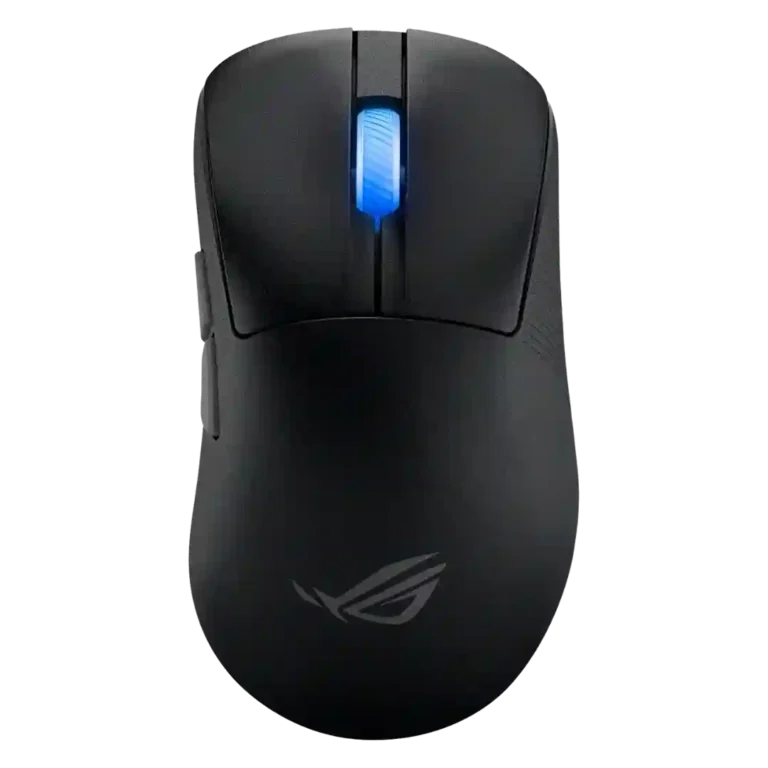
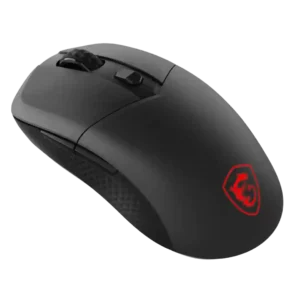
ASUS ROG Keris II Ace

ASUS ROG Keris II Ace Review

Brand: ASUS
Updated: 2 weeks ago
4.2
Consolidated expert score
388
Review insights
56
Scored features
18
Expert reviews

Bottom Line

Choose the Keris II Ace for a 54g ergonomic FPS mouse with excellent sensor performance and 4K wireless polling. Skip it if you need left-handed support, a grippier coating, or a lower price.

Best for

Best for right-handed FPS and esports players who want a very light ergonomic wireless mouse with precise tracking, 4,000Hz wireless polling, Bluetooth for secondary devices, and strong battery life.

Not for

Not for left-handed users, strict fingertip grippers, MMO/MOBA players who need many thumb buttons, or buyers who want a cheaper mouse with a grippier coating and simpler software.

Verdict

The ASUS ROG Keris II Ace earns broad praise for combining a 54g right-handed ergonomic shell, a 42,000 DPI AimPoint Pro sensor, smooth PTFE glide, 4,000Hz wireless polling, and strong battery life in a competitive FPS-focused package. The tradeoff is that its premium spec sheet does not erase every feel issue: reviewers split on the coating, side buttons, scroll wheel, and Armoury Crate experience. It is strongest for players who value light weight, stable 2.4GHz performance, and palm or relaxed claw comfort, while fingertip users, left-handers, and value-focused buyers have clearer reasons to hesitate.

Reviewer Consensus

Strong agreement: Reviewers most consistently agree that the Keris II Ace delivers excellent lightweight FPS performance through its sensor, low weight, smooth glide, and high-polling 2.4GHz wireless mode.

Mixed opinions: Opinions are split on the physical feel: some reviewers love the ergonomic shape and texture, while others find the coating slippery, the side buttons small or stiff, and the scroll wheel merely average.

Common concern: The most repeated caveats are the high price and Armoury Crate/software burden, followed closely by right-handed-only shape and grip/coating concerns.

Evidence coverage
  • 18 expert reviews
  • 47 of 56 scored features show reviewer agreement
  • 8 scored features have limited or less conclusive evidence
  • 1 scored feature shows reviewer disagreement or mixed evidence
  1. Limited review data
  2. Mixed evidence
  3. Moderate consensus
  4. Strong consensus

Compared in Reviews

Products reviewers directly compared with this model, grouped into quick takeaways.

  • Better: wireless polling rate Nookyyy says the Keris II Ace falls behind top-tier competitors that offer 8,000Hz wireless polling.
  • Compared: sensor, workmanship, grip, battery, and wireless polling Basic Tutorials says the ASUS model leads in sensor, workmanship, grip, and battery, while Razer keeps an 8,000Hz wireless polling edge.
  • Compared: wireless polling, sensor, switches, and RGB PCMag says the Keris II Ace trails the Viper V3 Pro on wireless 8,000Hz polling but counters with a higher-resolution sensor, longer switch rating, and RGB.
  • Worse: ergonomic shape preference This reviewer recommends the Keris II Ace over the DeathAdder V3 Pro for buyers seeking an ergonomic shape.
  • Compared: shape, weight, Bluetooth, and RGB Tom's Hardware slightly prefers the DeathAdder V3 Pro shape, while noting the Keris II Ace is lighter and has extra features.

Feature Scorecards

Pros

  • 5.0
    based on 10 reviews
    DPI range: 5.0, based on 10 reviews
    The 42,000 DPI ceiling is repeatedly highlighted as class-leading, though reviewers often note most players will never use the upper range.
  • 5.0
    based on 13 reviews
    weight: 5.0, based on 13 reviews
    Weight is a clear strength, with nearly every review emphasizing the 54g or 1.9-ounce design as exceptionally light for an ergonomic wireless mouse.
  • 5.0
    based on 7 reviews
    switch durability: 5.0, based on 7 reviews
    Switch durability is excellent on paper and in reviewer discussion thanks to ROG optical switches rated for 100 million clicks and reduced double-click risk.
  • 4.8
    based on 2 reviews
    click latency: 4.8, based on 2 reviews
    Measured and reported click latency is very low, with reviewers citing roughly 1ms or sub-millisecond behavior depending on mode.
  • 4.8
    based on 5 reviews
    wireless performance: 4.8, based on 5 reviews
    Wireless performance is excellent overall, with stable 4,000Hz operation, no dropouts, and strong sensor performance frequently reported.
  • 4.7
    based on 16 reviews
    polling rate: 4.7, based on 16 reviews
    Polling rate support is one of the main selling points: 4,000Hz wireless and 8,000Hz wired are repeatedly highlighted, but 8,000Hz is not wireless.
  • 4.7
    based on 9 reviews
    sensor performance: 4.7, based on 9 reviews
    Sensor performance is a standout strength, with the AimPoint Pro repeatedly described as accurate, high-spec, smooth, and reliable.
  • 4.7
    based on 7 reviews
    FPS gaming suitability: 4.7, based on 7 reviews
    FPS suitability is excellent, with reviewers repeatedly tying the mouse to esports, Valorant, Counter-Strike, and high-speed competitive aim.
  • 4.7
    based on 8 reviews
    connection stability: 4.7, based on 8 reviews
    Connection stability is a major strength, with reviewers repeatedly reporting no dropouts, no stutters, no hiccups, and stable high-polling wireless use.
  • 4.7
    based on 8 reviews
    wireless latency: 4.7, based on 8 reviews
    Wireless latency is treated as excellent over 2.4GHz with high polling, while Bluetooth is repeatedly framed as a convenience mode rather than a competitive mode.
  • 4.7
    based on 2 reviews
    durability over time: 4.7, based on 2 reviews
    Durability evidence centers on optical switches, double-click resistance, consistent performance over time, and serviceability such as hot-swappable switches.
  • 4.6
    based on 8 reviews
    surface compatibility: 4.6, based on 8 reviews
    Surface compatibility is excellent, with reviewers citing glass tracking, surface calibration, and reliable behavior across mouse pads, tables, and other surfaces.
  • 4.6
    based on 3 reviews
    cross-platform compatibility: 4.6, based on 3 reviews
    Multi-device support is a meaningful advantage because Bluetooth can pair with several devices and the mouse is described as useful across PC, laptop, console, or travel setups.
  • 4.6
    based on 11 reviews
    Accuracy and tracking precision: 4.6, based on 11 reviews
    Tracking is one of the strongest consensus wins: reviewers describe precise, smooth, accurate movement across games and surfaces, though one noted very high DPI becomes impractical.
  • 4.6
    based on 6 reviews
    2.4GHz connectivity: 4.6, based on 6 reviews
    Reviewers consistently find the tri-mode setup useful, with 2.4GHz wireless treated as the main gaming connection and Bluetooth/USB adding flexibility.
  • 4.6
    based on 4 reviews
    ergonomic design: 4.6, based on 4 reviews
    The right-handed ergonomic design is a core strength, frequently described as comfortable, esports-focused, and well-shaped for palm or relaxed claw use.
  • 4.6
    based on 8 reviews
    button responsiveness: 4.6, based on 8 reviews
    Button responsiveness is broadly positive, with reviewers calling clicks snappy, low-latency, precise, or consistent, even when switch feel is debated.
  • 4.6
    based on 5 reviews
    acceleration control: 4.6, based on 5 reviews
    The sensor's 50g acceleration rating is repeatedly cited as part of its top-tier performance spec, with no practical complaints about acceleration handling.
  • 4.6
    based on 6 reviews
    balance and weight distribution: 4.6, based on 6 reviews
    Most reviewers praise the balance as centered and easy to control, but one detailed teardown-style review found a slight forward bias.
  • 4.5
    based on 13 reviews
    glide smoothness: 4.5, based on 13 reviews
    Glide is consistently praised thanks to smooth PTFE feet, spare feet, and strong performance on cloth, glass, and other surfaces.
  • 4.5
    based on 14 reviews
    shape comfort: 4.5, based on 14 reviews
    Shape comfort is broadly positive, especially for small-to-medium ergonomic users, but fit varies by hand size and grip preference.
  • 4.5
    based on 12 reviews
    Bluetooth support: 4.5, based on 12 reviews
    Bluetooth is a well-liked convenience feature, especially for multi-device and non-gaming use, while reviewers still favor 2.4GHz for competitive play.
  • 4.4
    based on 5 reviews
    palm grip comfort: 4.4, based on 5 reviews
    Palm grip comfort is a major strength for small-to-medium or relaxed palm users, though very large hands may prefer bigger ergonomic mice.
  • 4.4
    based on 4 reviews
    ecosystem integration: 4.4, based on 4 reviews
    Ecosystem integration is positive through Aura Sync, Windows Dynamic Lighting mentions, and the ROG Omni Receiver's ability to pair with other ROG peripherals.
  • 4.4
    based on 3 reviews
    programmable buttons: 4.4, based on 3 reviews
    Programmable button coverage is solid for an FPS mouse, typically five or six physical buttons plus scroll directions through software.
  • 4.4
    based on 1 review
    skate durability: 4.4, based on 1 review
    Skate durability evidence is limited but positive, with one reviewer reporting the stock skates held up well and no dust or grinding on glass.
  • 4.4
    based on 11 reviews
    build quality: 4.4, based on 11 reviews
    Build quality is mostly praised as rigid and solid for a 54g mouse, with only a few unit-level notes about creaking, rattle, or average feel.
  • 4.4
    based on 8 reviews
    left and right click quality: 4.4, based on 8 reviews
    Left/right click quality is generally strong, with PBT or optical construction and consistent feel praised, though a few reviewers criticized travel or hollow feel.
  • 4.3
    based on 9 reviews
    cable flexibility: 4.3, based on 9 reviews
    The included cable is usually described as flexible, light, or low-drag, though one reviewer found it somewhat stiff and another called it only medium.
  • 4.3
    based on 6 reviews
    long-session comfort: 4.3, based on 6 reviews
    Long-session comfort is mostly strong due to low weight and ergonomic support, though some hand sizes reported cramps or fit issues.
  • 4.3
    based on 4 reviews
    materials quality: 4.3, based on 4 reviews
    Materials quality is mixed-positive: the nylon/PBT construction supports low weight and rigidity, but coating feel and premium texture divide reviewers.
  • 4.3
    based on 3 reviews
    charging convenience: 4.3, based on 3 reviews
    Charging convenience is positive overall thanks to USB-C, an included cable, and a universally sized port, though charging was not a major focus of most reviews.
  • 4.3
    based on 8 reviews
    button customization: 4.3, based on 8 reviews
    Button remapping and control customization are well supported through Armoury Crate or onboard controls, including DPI, polling, and command assignment.
  • 4.3
    based on 5 reviews
    onboard memory: 4.3, based on 5 reviews
    Onboard memory and onboard controls are meaningful positives, with reviewers citing hardware profiles, on-device controls, and software-free settings changes.
  • 4.3
    based on 3 reviews
    portability: 4.3, based on 3 reviews
    Portability is helped by Bluetooth, dongle storage, multi-device use, and travel-friendly wireless operation, even if the booster setup can be bulky.
  • 4.3
    based on 14 reviews
    battery life: 4.3, based on 14 reviews
    Battery life is generally considered strong at normal wireless settings, though several reviewers note high polling rates and RGB reduce runtime.
  • 4.2
    based on 7 reviews
    claw grip comfort: 4.2, based on 7 reviews
    Claw comfort is generally good for relaxed claw users and smaller-to-medium hands, but not every reviewer found the shape ideal for aggressive or large-hand claw use.
  • 4.2
    based on 2 reviews
    macro support: 4.2, based on 2 reviews
    Macro support exists through Armoury Crate, but it is not a headline strength and onboard macro behavior is more limited.
  • 4.2
    based on 6 reviews
    RGB features: 4.2, based on 6 reviews
    RGB is limited to the scroll wheel but appreciated because many ultralight esports mice omit lighting entirely; some reviewers dislike the execution.
  • 4.1
    based on 4 reviews
    premium feel: 4.1, based on 4 reviews
    Premium feel is mixed: many call the mouse solid or feature-rich, but coating, price, and button feel stop some reviewers from calling it universally premium.
  • 4.0
    based on 10 reviews
    switch feel: 4.0, based on 10 reviews
    Switch feel is mixed-positive: many like the crisp optical clicks, but some find them mushy, hollow, heavier, or less satisfying than mechanical alternatives.
  • 4.0
    based on 1 review
    software stability: 4.0, based on 1 review
    Software stability is acceptable in the lighter Armoury Crate Gear experience, but broader Armoury Crate concerns remain around bloat and background processes.
  • 3.9
    based on 6 reviews
    lift-off distance: 3.9, based on 6 reviews
    Lift-off distance is adjustable but not universally loved; reviewers liked having the control, while some found the low/high choices too limited.
  • 3.8
    based on 6 reviews
    profile switching: 3.8, based on 6 reviews
    Profile switching is supported through profiles and button combinations, but the underside DPI/profile button placement is sometimes criticized.
  • 3.8
    based on 13 reviews
    side button quality: 3.8, based on 13 reviews
    Side button quality is one of the more mixed areas, with praise for crispness and placement offset by repeated complaints about small size, stiffness, or high placement.
  • 3.8
    based on 3 reviews
    motion consistency: 3.8, based on 3 reviews
    Motion consistency is strong in practice through smooth high-polling movement and stable tracking, but MotionSync and ripple controls are not fully configurable.
  • 3.8
    based on 16 reviews
    value for money: 3.8, based on 16 reviews
    Value is context-dependent: reviewers agree it is expensive, but several justify the price for competitive FPS users while others recommend cheaper alternatives.
  • 3.7
    based on 11 reviews
    scroll wheel quality: 3.7, based on 11 reviews
    Scroll wheel quality is mixed: several reviewers praise tactile, quiet, or smooth behavior, while others report average tactility, light resistance, or overscrolling.
  • 3.6
    based on 14 reviews
    grip texture: 3.6, based on 14 reviews
    Grip texture is the most disputed physical trait: some like the ridges or roughened surface, while others call the coating slippery and dependent on grip tape.
  • 3.6
    based on 4 reviews
    click noise: 3.6, based on 4 reviews
    Click noise is divisive: some reviewers found it quiet and pleasant, while others said the optical switches are louder, hollow, or not suited to silent-click preferences.

Cons

  • 3.2
    based on 2 reviews
    MMO gaming suitability: 3.2, based on 2 reviews
    Evidence for MMO use is limited but mildly positive where reviewers mention Final Fantasy XIV, Diablo IV, or mapping side buttons for raids; it is not an MMO-first mouse.
  • 3.0
    based on 12 reviews
    software usability: 3.0, based on 12 reviews
    Software usability is mixed-to-negative: it exposes deep settings, but many reviewers call Armoury Crate bloated, slow, heavy, or inconvenient.
  • 2.8
    based on 6 reviews
    fingertip grip comfort: 2.8, based on 6 reviews
    Fingertip comfort is mixed: a few reviewers could use it or liked the control, but several said the ergonomic shell is awkward or not recommended for fingertip.
  • 2.8
    based on 1 review
    firmware reliability: 2.8, based on 1 review
    Firmware reliability is a minor concern because at least one review described updates as inconvenient and limiting software reconfiguration until completed.
  • 2.3
    based on 2 reviews
    handedness options: 2.3, based on 2 reviews
    Handedness is a clear limitation because the shape is right-handed, with left-handed and ambidextrous users directed elsewhere.
  • 2.2
    based on 1 review
    debounce customization: 2.2, based on 1 review
    Debounce customization is weak because the available evidence says there is no debounce setting or that debounce is not adjustable.

Compared With Category Average

Compared with other Gaming Mouse, this product is above average in Bluetooth support, RGB features, weight, below average in debounce customization, software usability, fingertip grip comfort.

Attribute This product Category average Difference
Bluetooth support 4.5 3.2 +1.3
debounce customization 2.2 3.6 -1.4
RGB features 4.2 3.1 +1.1
software usability 3.0 3.9 -0.9
weight 5.0 4.1 +0.9
fingertip grip comfort 2.8 3.7 -0.9
cable flexibility 4.3 3.6 +0.8
polling rate 4.7 4.2 +0.5

FAQ

Is the ASUS ROG Keris II Ace good for FPS games?

Yes. Reviewers repeatedly tie its light 54g body, precise sensor, low-latency wireless, and high polling rates to strong FPS and esports performance.

Can the Keris II Ace reach 8,000Hz wirelessly?

No. The review evidence consistently describes 4,000Hz over 2.4GHz wireless and 8,000Hz only in wired mode with the polling-rate booster.

How is the grip and coating?

This is one of the most mixed areas. Some reviewers like the ridged or roughened texture, while others call the coating slippery and recommend using grip tape.

Is it comfortable for palm, claw, and fingertip grip?

Palm and relaxed claw get the strongest support. Fingertip is much more divisive because several reviewers found the ergonomic shell awkward for that style.

How good is battery life?

Battery life is generally strong at normal 2.4GHz settings, with many reviews citing about 107 hours with RGB off. Higher polling rates and RGB reduce runtime.

Does Armoury Crate hurt the experience?

It can. Reviewers like the depth of customization, but many criticize Armoury Crate as bloated, slow, or inconvenient compared with onboard controls or lighter software.

Is the Keris II Ace worth the price?

It depends on priorities. Reviewers often justify the price for competitive FPS users, but value-focused buyers are repeatedly pointed toward cheaper alternatives.

Consider This Instead

If you want better debounce customization

Choose Glorious Model D3. It scores 4.9 vs 2.2 for debounce customization, with a 4.4 overall score.

Compare

If you want better software usability

Choose ASUS ROG Harpe II Ace. It scores 4.7 vs 3.0 for software usability, with a 4.4 overall score.

Compare

Overall Top Gaming Mouse Alternatives

#1 LAMZU Maya X
4.5
10 reviews

Best for a 47g, high-performance 8K wireless mouse with excellent shape, skates, clicks, and web controls. Skip it if stiff side buttons, shorter high-polling battery life, or app/cable quirks would...

Pros: Accuracy and tracking precision, sensor performance

Cons: cable flexibility

#2 Razer Basilisk V3 Pro 35K
4.5
20 reviews

Choose it if you want a comfortable, feature-rich wireless mouse for mixed gaming and productivity. Skip it if you need ultralight FPS speed, left-handed support, or better value than discounted...

Pros: programmable buttons, Bluetooth support

Cons: handedness options, firmware reliability

#3 ASUS ROG Harpe II Ace
4.4
13 reviews

Good if you want an ultra-light esports mouse with 8K wireless, precise tracking, and web setup. Skip it if you need MMO buttons, onboard memory, large-hand palm support, or the...

Pros: polling rate, click latency

Cons: onboard memory, tilt gesture controls

#4 Glorious Model D3
4.4
6 reviews

Good if you want ergonomic wireless gaming with hot-swappable batteries and strong tuning. Skip it if price, dock clutter, or short 8K battery life matters most.

Pros: switch durability, DPI range

Cons: grip texture, portability