2.4GHz connectivity
P1
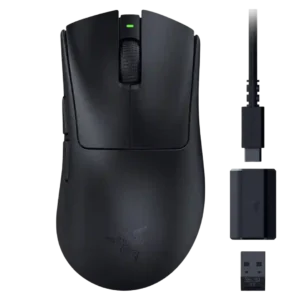
Product 1: Razer DeathAdder V3 HyperSpeed
5.0
Reviewers who discussed the 2.4GHz link found it responsive, with solid signal behavior and wired-like performance when using the dongle.
P2
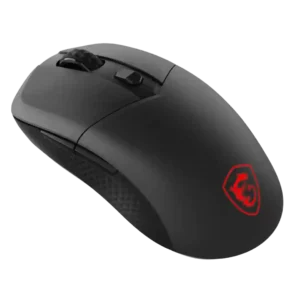
Product 2: MSI Versa 300 Wireless 8K
5.0
The 2.4GHz link is consistently described as fast and dependable, including at high polling rates. Several testers said it behaved much like a wired connection.
acceleration control
P1
Product 1: Razer DeathAdder V3 HyperSpeed
4.2
Dynamic Sensitivity was widely treated as useful for low-sensitivity FPS play and quick turns, though a few reviewers called it niche, unnatural, or gimmicky.
P2
Product 2: MSI Versa 300 Wireless 8K
5.0
Raw aiming felt clean, with no unwanted acceleration, smoothing, or jitter reported during gaming.
Accuracy and tracking precision
P1
Product 1: Razer DeathAdder V3 HyperSpeed
4.9
Tracking precision drew strong praise, with reviewers reporting pinpoint aiming, better enemy tracking, and accurate gaming-session control.
P2
Product 2: MSI Versa 300 Wireless 8K
5.0
Tracking is one of the strongest parts of the mouse. Reviewers found the PAW3395 precise and consistent for both small corrections and fast flicks.
balance and weight distribution
P1
Product 1: Razer DeathAdder V3 HyperSpeed
5.0
Weight balance was praised as well-centered and controlled, helping the mouse feel nimble rather than unstable despite its low mass.
P2
Product 2: MSI Versa 300 Wireless 8K
3.0
Opinions on balance differ. One reviewer found the 66g chassis reasonably distributed, while another felt the rear-heavy bias could make the mouse tilt during lift-offs.
battery life
P1
Product 1: Razer DeathAdder V3 HyperSpeed
4.6
Battery life was consistently strong in testing or use, with reviewers saying the 100-hour claim felt believable or that charging was rarely needed.
P2
Product 2: MSI Versa 300 Wireless 8K
4.4
Battery endurance is strong at standard polling rates and remains respectable around 75–80 hours at 8K. The main tradeoff is the predictable drop in runtime when high polling and RGB are enabled.
Bluetooth support
P1
Product 1: Razer DeathAdder V3 HyperSpeed
2.0
Bluetooth was a repeated drawback: reviewers liked the wireless performance but noted the lack of Bluetooth reduced multi-device versatility.
P2
Product 2: MSI Versa 300 Wireless 8K
4.8
Bluetooth adds useful laptop, phone, and multi-device flexibility, and testers generally found it stable. It is best suited to everyday use rather than maximum polling performance.
build quality
P1
Product 1: Razer DeathAdder V3 HyperSpeed
4.9
Build quality was a major strength, with reviewers repeatedly reporting a solid shell, little or no flex, and a surprisingly sturdy lightweight chassis.
P2
Product 2: MSI Versa 300 Wireless 8K
4.8
Despite its modest price and plain shell, the chassis feels dense and solid. Reviewers reported no notable flex, rattling, or creaking.
button customization
P1
Product 1: Razer DeathAdder V3 HyperSpeed
4.1
Button customization and rebinding were useful through Synapse, although most of the praise was tied to practical remapping rather than a large button count.
P2
Product 2: MSI Versa 300 Wireless 8K
3.8
Basic remapping is easy and covers common shortcuts, media controls, and macros. Power users may find the available functions and split software approach limiting.
button responsiveness
P1
Product 1: Razer DeathAdder V3 HyperSpeed
4.7
Button responsiveness was praised for fast actuation, rapid firing, and easy operation during play.
P2
Product 2: MSI Versa 300 Wireless 8K
4.0
Responsiveness ranges from excellent to merely adequate. Some testers praised razor-sharp activation, while others found the main clicks heavier and less immediate than optical rivals.
cable flexibility
P1
Product 1: Razer DeathAdder V3 HyperSpeed
2.1
The included cable was one of the clearest complaints, described as stiff, short, rubbery, cheap-feeling, or impractical for wired play.
P2
Product 2: MSI Versa 300 Wireless 8K
4.5
The braided USB cable is unusually soft and light, with little desk drag. Wired use feels close to wireless, though one reviewer still noticed a small amount of resistance.
claw grip comfort
P1
Product 1: Razer DeathAdder V3 HyperSpeed
4.2
Claw grip comfort was broadly positive for small-to-medium hands, though larger hands or aggressive claw users sometimes found the shape less ideal.
P2
Product 2: MSI Versa 300 Wireless 8K
4.0
The symmetrical shape generally accommodates claw grip, though larger hands may find the body a little narrow.
click latency
P1
Product 1: Razer DeathAdder V3 HyperSpeed
5.0
Click latency was praised as extremely low or imperceptible, with measured wireless results supporting fast competitive use.
P2
Product 2: MSI Versa 300 Wireless 8K
5.0
Click response is effectively immediate in testing, with reviewers describing latency as imperceptible during play.
click noise
P1
Product 1: Razer DeathAdder V3 HyperSpeed
2.2
Click noise was a drawback in several reviews, especially outside headset gaming, where the primary clicks could sound loud or grating.
P2
Product 2: MSI Versa 300 Wireless 8K
3.0
The main switches have a clear, tactile sound, but they are louder than some reviewers prefer.
connection stability
P1
Product 1: Razer DeathAdder V3 HyperSpeed
5.0
Connection stability was a strength, with reviewers reporting no lag, no signal issues, and stable wireless behavior in gaming.
P2
Product 2: MSI Versa 300 Wireless 8K
4.9
Wireless reliability is a consistent strength. Testers reported stable Bluetooth and 2.4GHz operation without dropouts or signal instability.
cross-platform compatibility
P1Product 1: Razer DeathAdder V3 HyperSpeed
No score yet
P2
Product 2: MSI Versa 300 Wireless 8K
4.5
Bluetooth and the web-based controls make the mouse practical across Windows, macOS, and other supported systems. Portal X broadens access, although its reliability and feature parity need improvement.
DPI range
P1
Product 1: Razer DeathAdder V3 HyperSpeed
4.0
The 26K DPI ceiling was considered enough for nearly all gamers, even though some reviewers noted it is lower than flagship sensors or impractical at the top end.
P2
Product 2: MSI Versa 300 Wireless 8K
4.8
The 100–26,000 DPI range provides ample tuning headroom, even though most reviewers preferred much lower settings for practical aiming.
durability over time
P1Product 1: Razer DeathAdder V3 HyperSpeed
No score yet
P2
Product 2: MSI Versa 300 Wireless 8K
2.5
The permanent textured side grips may wear from sweat and friction, and unlike replaceable grip tape, they cannot be refreshed easily.
ecosystem integration
P1
Product 1: Razer DeathAdder V3 HyperSpeed
2.5
Ecosystem integration was mixed because HyperPolling dongle compatibility and naming created confusion or fragmentation across Razer mice.
P2
Product 2: MSI Versa 300 Wireless 8K
4.8
MSI Center is convenient for users who already manage other MSI components there. Those outside the ecosystem may find the broader application unnecessarily cluttered.
ergonomic design
P1
Product 1: Razer DeathAdder V3 HyperSpeed
4.4
The ergonomic design was generally praised for right-handed support, palm contouring, and comfort, while a few shape-specific caveats remained.
P2
Product 2: MSI Versa 300 Wireless 8K
3.8
The central hump and symmetrical outline are broadly comfortable after a short adjustment period. Larger hands and users sensitive to the aggressive side texture may be less satisfied.
fingertip grip comfort
P1
Product 1: Razer DeathAdder V3 HyperSpeed
2.8
Fingertip grip comfort was more limited: some reviewers could make it work, but several advised fingertip users or smaller/larger hand extremes to be careful.
P2
Product 2: MSI Versa 300 Wireless 8K
4.0
The light, symmetrical shell supports fingertip use, though its slim width may not suit every larger hand.
FPS gaming suitability
P1
Product 1: Razer DeathAdder V3 HyperSpeed
4.8
FPS gaming suitability was excellent overall, with reviewers praising flickability, low-latency clicks, accurate tracking, and strong competitive-shooter performance.
P2
Product 2: MSI Versa 300 Wireless 8K
4.8
The mouse is highly capable for FPS play thanks to precise tracking, low latency, light weight, and up to 8K polling. The main competitive caveat is that some testers found the clicks heavier than elite alternatives.
glide smoothness
P1
Product 1: Razer DeathAdder V3 HyperSpeed
4.6
Glide smoothness was one of the strongest attributes, with large PTFE feet repeatedly praised for smooth, controlled movement across pads or surfaces.
P2
Product 2: MSI Versa 300 Wireless 8K
4.8
The PTFE feet glide quickly and with very little effort, even though the skate area is smaller than on some premium mice.
grip texture
P1
Product 1: Razer DeathAdder V3 HyperSpeed
4.1
Grip texture was polarizing: many liked the smooth-touch coating, but sweaty hands, clamminess, or slipperiness remained concerns in several reviews.
P2
Product 2: MSI Versa 300 Wireless 8K
4.2
The diamond-patterned sides divide opinion. Many reviewers liked the secure control, especially with sweaty hands, while others found the texture distracting or abrasive during long sessions.
handedness options
P1
Product 1: Razer DeathAdder V3 HyperSpeed
2.0
Handedness options were limited because the shape favors right-handed users, making it unsuitable for left-handed gamers.
P2
Product 2: MSI Versa 300 Wireless 8K
3.3
The shell shape works for either hand, but the left-side thumb buttons make it only partially ambidextrous. Left-handed users may struggle to access those controls comfortably.
left and right click quality
P1
Product 1: Razer DeathAdder V3 HyperSpeed
4.8
Left and right click quality was strongly praised for tactile, satisfying, crisp, or solid main clicks, with only minor preference-based caveats.
P2
Product 2: MSI Versa 300 Wireless 8K
3.8
Main-click quality varies by preference: one tester found the clicks razor sharp, while others thought they were firm, long-travel, and less snappy than optical competitors.
lift-off distance
P1
Product 1: Razer DeathAdder V3 HyperSpeed
3.6
Lift-off distance and smart tracking received useful but narrower praise, especially for maintaining accuracy or surface consistency; one review wanted more advanced tweaks.
P2
Product 2: MSI Versa 300 Wireless 8K
3.0
Lift-off distance is adjustable, but the controls are limited. MSI Center offers only low and high settings, and Portal X may omit the option altogether.
long-session comfort
P1
Product 1: Razer DeathAdder V3 HyperSpeed
4.8
Long-session comfort was positive, with reviewers citing long play sessions, reduced wrist stress, and comfort over extended gaming or work use.
P2
Product 2: MSI Versa 300 Wireless 8K
3.7
Low weight and a supportive shape help reduce fatigue, but the aggressive side and wheel textures can become distracting over several hours.
macro support
P1
Product 1: Razer DeathAdder V3 HyperSpeed
3.4
Macro support was mixed: software allowed macro-style reassignment, but one reviewer criticized the practical usefulness of the bottom button for macros.
P2
Product 2: MSI Versa 300 Wireless 8K
4.0
Simple and multi-stage macros are available and easy to assign. The tools are sufficient for everyday shortcuts but not especially deep.
materials quality
P1
Product 1: Razer DeathAdder V3 HyperSpeed
3.5
Materials quality was mixed-to-positive: reviewers liked the premium feel but noted grease, grime, fingerprints, or clammy plastic in some conditions.
P2
Product 2: MSI Versa 300 Wireless 8K
4.5
The matte plastic feels dense, smooth, and more upscale than the price suggests. The finish is practical, though the overall design remains visually plain.
motion consistency
P1
Product 1: Razer DeathAdder V3 HyperSpeed
5.0
Motion consistency was praised in testing where movement appeared accurate, smooth, and consistent.
P2
Product 2: MSI Versa 300 Wireless 8K
5.0
Tracking remained consistent through fast flicks and slower corrections, with no skipping, spinouts, or meaningful jitter at sensible settings.
onboard memory
P1
Product 1: Razer DeathAdder V3 HyperSpeed
3.2
Onboard memory was mixed: saving settings was useful, but the single onboard profile limited travel or multi-game convenience.
P2
Product 2: MSI Versa 300 Wireless 8K
5.0
Settings save directly to the mouse, allowing the same configuration to carry over without repeated setup.
palm grip comfort
P1
Product 1: Razer DeathAdder V3 HyperSpeed
4.3
Palm grip comfort was good for many users, particularly smaller-to-medium hands, though size and side flares made it less universal.
P2
Product 2: MSI Versa 300 Wireless 8K
5.0
Palm-grip users generally found the hump supportive and the controls easy to reach. The fit was especially positive for right-handed testers.
polling rate
P1
Product 1: Razer DeathAdder V3 HyperSpeed
3.8
Polling-rate evidence was mixed-positive: 1,000Hz was widely considered enough, while the separate HyperPolling dongle was a repeated caveat.
P2
Product 2: MSI Versa 300 Wireless 8K
4.7
Wireless 8K polling is the standout specification and works as advertised. It improves responsiveness, but many users may prefer 1K–4K to preserve battery life and reduce CPU load.
portability
P1
Product 1: Razer DeathAdder V3 HyperSpeed
4.8
Portability benefited from lightweight design and onboard dongle storage, which reviewers found convenient for travel or switching systems.
P2
Product 2: MSI Versa 300 Wireless 8K
5.0
At 66g with onboard receiver storage and Bluetooth, the mouse is easy to carry between a desktop and laptop.
premium feel
P1
Product 1: Razer DeathAdder V3 HyperSpeed
4.7
Premium feel was stronger than the HyperSpeed label implied, with reviewers saying the mouse felt high-tier, well-built, and close to Razer's pro models.
P2
Product 2: MSI Versa 300 Wireless 8K
3.6
The dense shell and smooth finish feel better than the price implies, but the generic styling, dim RGB, and fragmented software keep it from feeling truly premium.
profile switching
P1
Product 1: Razer DeathAdder V3 HyperSpeed
2.8
Profile switching was limited by the single onboard profile, forcing more manual settings changes for different games or PCs.
P2
Product 2: MSI Versa 300 Wireless 8K
2.0
Portal X lacks profile switching, which is a notable limitation for users who change layouts between games or tasks.
programmable buttons
P1
Product 1: Razer DeathAdder V3 HyperSpeed
3.6
Programmable-button evidence was mixed: reviewers valued practical FPS-side-button use, but criticized the claimed button count as essentially standard.
P2
Product 2: MSI Versa 300 Wireless 8K
4.5
The available buttons can be reassigned for gaming or productivity shortcuts. The implementation is straightforward, though not as extensive as stronger rival suites.
RGB features
P1
Product 1: Razer DeathAdder V3 HyperSpeed
3.5
RGB evidence was mixed: some reviewers liked the performance-first, no-distraction approach, while others missed Razer Chroma or visual flair.
P2
Product 2: MSI Versa 300 Wireless 8K
2.8
The single-logo RGB is subtle and restrained, which some reviewers liked. Others found it too dim, hard to appreciate, and inconvenient because lighting control may require a separate tool.
scroll wheel quality
P1
Product 1: Razer DeathAdder V3 HyperSpeed
4.3
Scroll wheel quality was generally solid and precise, though a few reviewers found middle click awkward or document scrolling tedious.
P2
Product 2: MSI Versa 300 Wireless 8K
2.8
The wheel offers good grip and a satisfying middle click, but its light notches and aggressive texture drew criticism. Individual steps can feel poorly defined.
sensor performance
P1
Product 1: Razer DeathAdder V3 HyperSpeed
4.8
Sensor performance was a major strength, with the Focus X 26K repeatedly described as flawless, fast, precise, or essentially indistinguishable in real play.
P2
Product 2: MSI Versa 300 Wireless 8K
4.9
The PAW3395 sensor is a major strength, delivering fast, accurate, and consistent tracking without spinouts. Reviewers considered it competitive with significantly pricier mice.
shape comfort
P1
Product 1: Razer DeathAdder V3 HyperSpeed
4.2
Shape comfort was the most context-dependent attribute: many liked the smaller ergonomic shell, while some disliked the front flare, smaller size, or hand-fit tradeoffs.
P2
Product 2: MSI Versa 300 Wireless 8K
4.4
Most reviewers found the safe, symmetrical shape comfortable and easy to adapt to. The slimmer width, central hump, and side texture may not suit every hand.
side button quality
P1
Product 1: Razer DeathAdder V3 HyperSpeed
4.7
Side button quality was widely praised for placement, spacing, access, and responsiveness, with a few reviews noting mushiness or preference caveats.
P2
Product 2: MSI Versa 300 Wireless 8K
3.0
Side buttons actuate quickly, but noticeable travel gives them a slightly mushy feel after the initial click.
software stability
P1
Product 1: Razer DeathAdder V3 HyperSpeed
2.7
Software stability had mixed evidence: one reviewer found Synapse more reliable, while others called it erratic or resource-heavy.
P2
Product 2: MSI Versa 300 Wireless 8K
1.5
Portal X was temperamental during one test and sometimes failed to connect or configure lighting unless the mouse was wired.
software usability
P1
Product 1: Razer DeathAdder V3 HyperSpeed
4.2
Software usability was generally useful for DPI, remapping, Dynamic Sensitivity, and rotation tools, though Synapse could feel unwieldy or bloated.
P2
Product 2: MSI Versa 300 Wireless 8K
3.6
The controls are generally clear and responsive, but the experience is fragmented between MSI Center and Portal X. Missing features, inconsistent connectivity, and separate RGB handling reduce polish.
surface compatibility
P1
Product 1: Razer DeathAdder V3 HyperSpeed
4.8
Surface compatibility was positive where tested, with reviewers reporting smooth feet across multiple mousepads or surfaces.
P2
Product 2: MSI Versa 300 Wireless 8K
5.0
The feet moved easily across padded mouse surfaces, making the mouse well suited to common cloth-style pads.
switch durability
P1
Product 1: Razer DeathAdder V3 HyperSpeed
4.3
Switch durability received limited positive evidence from reviewers who treated optical switches as longer-lasting or suitable for years of use.
P2
Product 2: MSI Versa 300 Wireless 8K
5.0
The Omron switches are rated for 60 million clicks and were repeatedly described as durable and resistant to double-clicking.
switch feel
P1
Product 1: Razer DeathAdder V3 HyperSpeed
4.7
Switch feel was strongly positive overall, with reviewers praising crisp, tactile, satisfying, snappy optical switches, despite individual firmness preferences.
P2
Product 2: MSI Versa 300 Wireless 8K
3.9
The switches provide firm, tactile feedback, but opinions differ on speed. Some reviewers liked the crisp actuation, while others found the travel heavy and dated beside optical rivals.
value for money
P1
Product 1: Razer DeathAdder V3 HyperSpeed
4.7
Value for money was one of the strongest consensus points, with reviewers repeatedly calling it a great, competitive, or top-tier value at around $100.
P2
Product 2: MSI Versa 300 Wireless 8K
5.0
Value is the clearest consensus strength. The mouse combines a PAW3395 sensor, wireless 8K polling, tri-mode connectivity, and solid battery life for far less than many comparable models.
weight
P1
Product 1: Razer DeathAdder V3 HyperSpeed
4.9
Weight was a standout strength, with reviewers repeatedly praising the 53-55g body as featherweight, effortless, nimble, and easy to flick.
P2
Product 2: MSI Versa 300 Wireless 8K
4.6
At 66g, the mouse feels light and quick without sacrificing structural solidity. It is not class-leadingly ultralight, but most reviewers considered the weight ideal for fast movement.
wireless latency
P1
Product 1: Razer DeathAdder V3 HyperSpeed
4.7
Wireless latency was praised as low, imperceptible, or quick enough for competitive gaming, even before optional high-polling upgrades.
P2
Product 2: MSI Versa 300 Wireless 8K
5.0
The 2.4GHz connection delivers little to no noticeable latency, including at high polling rates. Reviewers considered it suitable for competitive shooters.
wireless performance
P1
Product 1: Razer DeathAdder V3 HyperSpeed
4.8
Wireless performance was consistently positive, with reviewers describing the mouse as free-feeling, reliable, flawless, or strong in gaming.
P2
Product 2: MSI Versa 300 Wireless 8K
4.9
Wireless performance is fast, stable, and broadly comparable to wired use. Bluetooth adds convenience, while 2.4GHz provides the best gaming response.