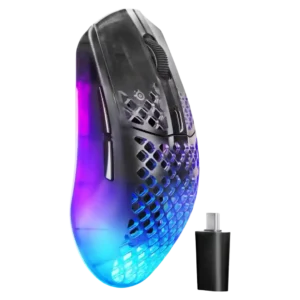
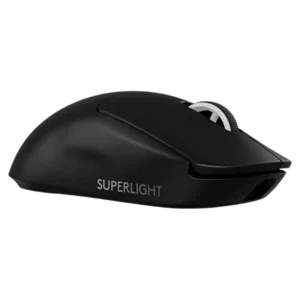
2.4GHz connectivity
P1
Product 1: SteelSeries Aerox 3 Wireless Gen...
4.6
2.4GHz connectivity was praised for enabling the best polling experience and for reliable dongle placement close to the mouse.
P2
Product 2: Logitech G PRO X Superlight...
5.0
The 2.4GHz connection was praised through an instant, fast connection experience with the included dongle.
acceleration control
P1
Product 1: SteelSeries Aerox 3 Wireless Gen...
4.3
Acceleration and precision controls were viewed as useful advanced tuning options, especially for players who want movement behavior matched to their style.
P2
Product 2: Logitech G PRO X Superlight...
4.5
Acceleration feel received direct praise in one review, where the reviewer enjoyed its smoothness in Diablo IV.
Accuracy and tracking precision
P1
Product 1: SteelSeries Aerox 3 Wireless Gen...
4.7
Reviewers repeatedly praised accurate tracking, precise headshots, and clean fast-flick behavior, with only high-DPI settings sometimes needing adjustment.
P2
Product 2: Logitech G PRO X Superlight...
4.9
Reviewers consistently described the mouse as accurate in games, with especially strong praise for tracking, pointer accuracy, and shot control.
balance and weight distribution
P1
Product 1: SteelSeries Aerox 3 Wireless Gen...
3.4
Balance impressions were split: one reviewer found it spot-on, while another felt the internals made the mouse rear-weighted.
P2
Product 2: Logitech G PRO X Superlight...
4.5
Weight distribution received positive evidence from a reviewer who specifically praised the balance.
battery life
P1
Product 1: SteelSeries Aerox 3 Wireless Gen...
4.2
Battery life was broadly strong at 1K/Bluetooth, but reviewers consistently noted the 4K polling and RGB tradeoff.
P2
Product 2: Logitech G PRO X Superlight...
4.7
Battery life was generally praised as long-lasting, though reviewers noted it drops with higher polling rates.
build quality
P1
Product 1: SteelSeries Aerox 3 Wireless Gen...
4.5
Build quality was generally praised for fit, finish, solid shell feel, no creaking, and improved construction.
P2
Product 2: Logitech G PRO X Superlight...
4.8
Build quality was repeatedly praised as solid, squeak-free, well put together, and elite despite the light shell.
button customization
P1
Product 1: SteelSeries Aerox 3 Wireless Gen...
4.6
Button customization was praised through GG software, free configuration, remapping options, and practical use of side buttons in daily workflows.
P2
Product 2: Logitech G PRO X Superlight...
4.7
Customization drew positive comments for granular controls and strong software-hardware integration, though it still depends heavily on G Hub.
button responsiveness
P1
Product 1: SteelSeries Aerox 3 Wireless Gen...
4.6
Button responsiveness was generally strong, with reviewers describing the buttons as clicky, responsive, crisp, and easy to press.
P2
Product 2: Logitech G PRO X Superlight...
4.0
Button responsiveness was mostly praised for tactile, responsive clicks, though one reviewer disliked the heavier actuation for spam clicking.
cable flexibility
P1
Product 1: SteelSeries Aerox 3 Wireless Gen...
4.6
Cable flexibility was praised for the Super Mesh or braided cable, with reviewers finding it smooth, flexible, and useful on the desk.
P2
Product 2: Logitech G PRO X Superlight...
2.0
Cable quality was a recurring complaint, with reviewers criticizing drag, resistance, and the dated rubber cable.
charging convenience
P1
Product 1: SteelSeries Aerox 3 Wireless Gen...
4.2
Charging convenience was positive overall thanks to wired-use charging and long cables, though peak-performance polling requires more frequent charging.
P2
Product 2: Logitech G PRO X Superlight...
4.6
Charging convenience was praised for USB-C, faster charging, and fewer desk cables.
claw grip comfort
P1
Product 1: SteelSeries Aerox 3 Wireless Gen...
4.1
Claw grip comfort was the strongest grip-style fit, with several reviewers saying the shape comes alive or works best in claw grip.
P2
Product 2: Logitech G PRO X Superlight...
4.6
Claw grip comfort was broadly positive, with reviewers calling the mouse comfortable or easy to use for claw grip.
click latency
P1
Product 1: SteelSeries Aerox 3 Wireless Gen...
4.8
One reviewer specifically praised the click response as hair-trigger fast, supporting a strong click-latency score.
P2
Product 2: Logitech G PRO X Superlight...
4.2
Click latency was praised as very low by some reviewers, though one technical reviewer found it merely good rather than flagship-leading.
click noise
P1
Product 1: SteelSeries Aerox 3 Wireless Gen...
4.1
Click noise drew mixed but mostly positive comments: one reviewer loved the sound, another found switches loud, and one noted a quieter scroll wheel.
P2
Product 2: Logitech G PRO X Superlight...
3.3
Click noise was mixed: some liked the satisfying click sound, while others found it loud or high-pitched.
connection stability
P1
Product 1: SteelSeries Aerox 3 Wireless Gen...
4.8
Connection stability was positive in the limited direct evidence, with reviewers reporting stable modes and reliable connection behavior.
P2
Product 2: Logitech G PRO X Superlight...
5.0
Connection stability was praised in one review for not faltering even in a difficult RF environment.
cross-platform compatibility
P1
Product 1: SteelSeries Aerox 3 Wireless Gen...
4.5
Cross-platform evidence was positive but limited, tied to easy device connectivity and onboard profiles that simplify software-free use.
P2
Product 2: Logitech G PRO X Superlight...
4.5
Cross-platform compatibility was praised through G Hub support for both Windows and macOS.
DPI range
P1
Product 1: SteelSeries Aerox 3 Wireless Gen...
4.0
The 26K DPI range was valued for flexibility and on-the-fly tuning, though several reviewers said extreme DPI levels could feel jumpy or unnecessary.
P2
Product 2: Logitech G PRO X Superlight...
3.7
DPI coverage was seen as technically strong and granular, but one reviewer felt the extreme ceiling is more marketing than everyday value.
durability over time
P1
Product 1: SteelSeries Aerox 3 Wireless Gen...
4.5
Durability was praised through drop resistance, rugged shell impressions, travel toughness, and confidence in daily abuse.
P2
Product 2: Logitech G PRO X Superlight...
4.5
Durability over time had limited but positive evidence from a longer-use reviewer whose unit remained rock solid.
ecosystem integration
P1
Product 1: SteelSeries Aerox 3 Wireless Gen...
4.4
Ecosystem integration was positive where discussed, especially GG suite integration and coordinated SteelSeries setup styling.
P2
Product 2: Logitech G PRO X Superlight...
4.5
Ecosystem integration was praised for Logitech presets, backward compatibility, and community/profile support.
ergonomic design
P1
Product 1: SteelSeries Aerox 3 Wireless Gen...
4.4
Ergonomic design was praised by reviewers with smaller hands and those who liked the flat symmetrical shape, but it is not universal.
P2
Product 2: Logitech G PRO X Superlight...
4.0
Ergonomics were generally positive for comfort and contouring, but one review noted large hands may find the shape less ergonomic.
fingertip grip comfort
P1
Product 1: SteelSeries Aerox 3 Wireless Gen...
3.2
Fingertip comfort was divisive, with some reviewers grouping it with claw-friendly use and others finding the flared rear awkward.
P2
Product 2: Logitech G PRO X Superlight...
5.0
Fingertip grip comfort was praised by reviewers who found the shape comfortable for fingertip use.
FPS gaming suitability
P1
Product 1: SteelSeries Aerox 3 Wireless Gen...
4.7
FPS suitability was a standout strength, with reviewers repeatedly praising shooter responsiveness, tracking, and competitive capability.
P2
Product 2: Logitech G PRO X Superlight...
5.0
FPS suitability was one of the strongest areas, with repeated praise for speed, responsiveness, and competitive first-person shooter use.
glide smoothness
P1
Product 1: SteelSeries Aerox 3 Wireless Gen...
4.5
Glide smoothness was consistently praised on mousepads and desks, with PTFE feet described as smooth, snag-free, and reliable.
P2
Product 2: Logitech G PRO X Superlight...
3.5
Glide smoothness was highly mixed: some reviewers praised effortless glide, while others disliked stock-skate drag or control-heavy movement.
grip texture
P1
Product 1: SteelSeries Aerox 3 Wireless Gen...
3.6
Grip texture was split: some found the rougher texture grippy and improved, while others found the sides slippery or not grippy enough.
P2
Product 2: Logitech G PRO X Superlight...
4.4
Grip texture was well received, with reviewers praising the grippy surface, recessed sides, or usefulness for clammy hands.
left and right click quality
P1
Product 1: SteelSeries Aerox 3 Wireless Gen...
4.5
Main click quality was praised by reviewers who found the left/right clicks satisfying, solid, and consistent.
P2
Product 2: Logitech G PRO X Superlight...
4.8
Left and right clicks were praised for satisfying tactility, light rapid tapping, and improved main-button feel.
long-session comfort
P1
Product 1: SteelSeries Aerox 3 Wireless Gen...
4.3
Long-session comfort was generally positive due to low weight and comfort, though at least one reviewer reported hand or pinky discomfort.
P2
Product 2: Logitech G PRO X Superlight...
5.0
Long-session comfort was strongly positive in one review that reported almost no hand fatigue after long sessions.
macro support
P1
Product 1: SteelSeries Aerox 3 Wireless Gen...
4.4
Macro support was only clearly evaluated in one review, where automatic game profiles applying macros was treated as useful.
P2
Product 2: Logitech G PRO X Superlight...
5.0
Macro support was praised for an easy-to-use macro tool that guides users through setup.
materials quality
P1
Product 1: SteelSeries Aerox 3 Wireless Gen...
4.6
Materials quality was positive where discussed, with reviewers calling out quality plastics and carefully assembled elements.
P2
Product 2: Logitech G PRO X Superlight...
4.5
Materials quality was praised for a cool, soft matte plastic feel.
motion consistency
P1
Product 1: SteelSeries Aerox 3 Wireless Gen...
4.8
Motion consistency was praised in gaming and daily use, with reviewers reporting smooth movement and no missed tracking.
P2
Product 2: Logitech G PRO X Superlight...
4.8
Motion consistency was described positively, with reviewers calling motion smooth, sharp, and accurate.
onboard memory
P1
Product 1: SteelSeries Aerox 3 Wireless Gen...
4.3
Onboard memory was seen as practical because saved profiles can make settings easier to carry across systems without software.
P2
Product 2: Logitech G PRO X Superlight...
4.0
Onboard memory was supported by the ability to save multiple profiles, though evidence was more about usefulness than enthusiasm.
palm grip comfort
P1
Product 1: SteelSeries Aerox 3 Wireless Gen...
3.0
Palm grip comfort was mixed-to-negative overall; smaller-hand palm use worked for one reviewer, but several said larger palm-grip users should look elsewhere.
P2
Product 2: Logitech G PRO X Superlight...
2.5
Palm grip comfort was limited by one review saying palm-grip players may be better served elsewhere.
polling rate
P1
Product 1: SteelSeries Aerox 3 Wireless Gen...
4.5
The 4K polling rate was widely treated as a major performance upgrade, especially for competitive play, though a few reviewers called it a nice-to-have for casual use.
P2
Product 2: Logitech G PRO X Superlight...
4.1
Polling-rate opinions were mixed: several reviewers felt clear responsiveness gains, while others saw 2,000Hz as fine but not industry-leading.
portability
P1
Product 1: SteelSeries Aerox 3 Wireless Gen...
4.1
Portability was strong for travel durability and Bluetooth use, but lack of onboard dongle storage hurt tournament/travel convenience.
P2
Product 2: Logitech G PRO X Superlight...
4.5
Portability was supported by the dongle-storage cover, which one reviewer framed as essential for esports travel.
premium feel
P1
Product 1: SteelSeries Aerox 3 Wireless Gen...
4.2
Premium feel was mostly positive, with reviewers citing excellent updates, solid feel, and a premium impression, while one called it only decent.
P2
Product 2: Logitech G PRO X Superlight...
4.5
Premium feel was positive overall, with reviewers saying the mouse feels sturdy, premium, and high quality.
profile switching
P1
Product 1: SteelSeries Aerox 3 Wireless Gen...
4.5
Profile switching was praised for game-specific saved settings and automatic profile changes that adjust DPI, macros, and polling behavior.
P2
Product 2: Logitech G PRO X Superlight...
3.0
Profile behavior was mixed: app-linked settings were useful, but onboard-profile handling was described as confusing in G Hub.
programmable buttons
P1
Product 1: SteelSeries Aerox 3 Wireless Gen...
4.4
Programmable-button evidence was limited but positive, tied to useful side-button configuration for daily workflows.
P2
Product 2: Logitech G PRO X Superlight...
4.5
Programmable side buttons were useful to one reviewer for DPI adjustment, especially because the mouse lacks a dedicated DPI button.
RGB features
P1
Product 1: SteelSeries Aerox 3 Wireless Gen...
4.4
RGB impressions were mostly positive for brightness, zones, style, and customization, though one reviewer found active lighting distracting.
P2
Product 2: Logitech G PRO X Superlight...
4.3
The lack of RGB was generally accepted as a worthwhile tradeoff for battery life, weight, and the mouse’s clean look.
scroll wheel quality
P1
Product 1: SteelSeries Aerox 3 Wireless Gen...
4.4
Scroll wheel feedback was broadly positive, with reviewers praising tactile bumps, grippier texture, responsiveness, and quieter operation.
P2
Product 2: Logitech G PRO X Superlight...
3.0
Scroll wheel feedback was mixed, with some praise for tactility but repeated criticism that it felt stiff, mushy, vague, or less precise.
sensor performance
P1
Product 1: SteelSeries Aerox 3 Wireless Gen...
4.7
Sensor feedback was strongly positive: reviewers described the TrueMove 26K as precise, snappy, reliable, and consistently strong in games.
P2
Product 2: Logitech G PRO X Superlight...
4.9
The HERO 2 sensor was widely praised as crisp, precise, fast, and close to flawless, though some reviewers framed the higher specs as incremental.
shape comfort
P1
Product 1: SteelSeries Aerox 3 Wireless Gen...
4.2
Shape comfort was polarizing, ranging from favorite-shape praise to criticism of the flared rear and grip-specific comfort issues.
P2
Product 2: Logitech G PRO X Superlight...
4.4
Shape comfort was broadly praised as safe, familiar, and very comfortable, though a few reviewers disliked the rounded shape personally.
side button quality
P1
Product 1: SteelSeries Aerox 3 Wireless Gen...
3.9
Side button feedback was mixed: several reviewers liked the improved feel and reach, while others found them too long or easy to hit accidentally.
P2
Product 2: Logitech G PRO X Superlight...
2.6
Side button quality was the most contested control area, ranging from well-placed and improved to repeatedly described as mushy.
skate durability
P1Product 1: SteelSeries Aerox 3 Wireless Gen...
No score yet
P2
Product 2: Logitech G PRO X Superlight...
2.0
Skate durability was a repeated concern, with reviewers calling the PTFE feet thin, meh, or unlikely to last long.
software usability
P1
Product 1: SteelSeries Aerox 3 Wireless Gen...
4.5
SteelSeries GG software was strongly praised for clean usability, sensitivity tools, customization depth, and practical profile/game tuning.
P2
Product 2: Logitech G PRO X Superlight...
3.9
Software usability was split sharply: some reviewers found G Hub easy and powerful, while others called it unintuitive or frustrating.
surface compatibility
P1
Product 1: SteelSeries Aerox 3 Wireless Gen...
4.1
Surface compatibility was mostly good across mousepads, desks, and mats, but one reviewer noted possible edge scratching under hard pressure.
P2
Product 2: Logitech G PRO X Superlight...
3.8
Surface compatibility was mixed, with good results across many surfaces but complaints on softer pads and warnings to tune surface modes.
switch durability
P1
Product 1: SteelSeries Aerox 3 Wireless Gen...
4.5
Switch durability evidence was positive, with one reviewer noting consistent clicks over heavy use and another valuing the 80-million-click rating.
P2
Product 2: Logitech G PRO X Superlight...
4.7
Switch durability evidence centered on optical-switch reliability and reduced double-click concerns, with reviewers treating it as a meaningful benefit.
switch feel
P1
Product 1: SteelSeries Aerox 3 Wireless Gen...
4.4
Switch feel was mostly praised as tactile, crisp, clicky, and satisfying, although some reviewers noted a louder or heavier mechanical character.
P2
Product 2: Logitech G PRO X Superlight...
4.2
Switch feel split reviewers: many loved the crisp, tactile Lightforce feel, while others found the clicks heavier or too tactile.
value for money
P1
Product 1: SteelSeries Aerox 3 Wireless Gen...
4.1
Value was mixed-positive: many reviewers saw competitive mid-range pricing, while a few thought cheaper or lighter rivals make it harder to recommend.
P2
Product 2: Logitech G PRO X Superlight...
3.1
Value was mixed: reviewers praised the performance tier but often questioned the price and upgrade value from the original Superlight.
water and dust resistance
P1
Product 1: SteelSeries Aerox 3 Wireless Gen...
4.5
Water and dust resistance was praised as genuinely useful, especially for spill protection, IP54 protection, and the dunk-test survival evidence.
P2Product 2: Logitech G PRO X Superlight...
No score yetweight
P1
Product 1: SteelSeries Aerox 3 Wireless Gen...
4.2
Most reviewers liked the light 68g-class weight, but a few considered it heavier or less competitive by current ultralight standards.
P2
Product 2: Logitech G PRO X Superlight...
4.7
Reviewers strongly praised the low weight, calling it excellent, effortless, and well balanced for the mouse size.
wireless latency
P1
Product 1: SteelSeries Aerox 3 Wireless Gen...
4.6
Wireless latency was praised as low or unnoticeable at 2.4GHz/4K, although one reviewer personally could not feel the difference from 1K.
P2
Product 2: Logitech G PRO X Superlight...
5.0
Wireless latency was praised directly, with reviewers reporting no latency issues or seemingly no latency at all.
wireless performance
P1
Product 1: SteelSeries Aerox 3 Wireless Gen...
4.7
Wireless performance was one of the strongest areas, with reviewers describing fast, responsive, reliable, smooth, and stutter-free behavior.
P2
Product 2: Logitech G PRO X Superlight...
5.0
Wireless performance was praised as seamless and flawless, with no cable-related compromise in use.