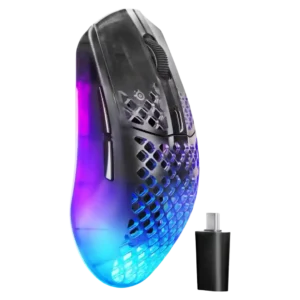
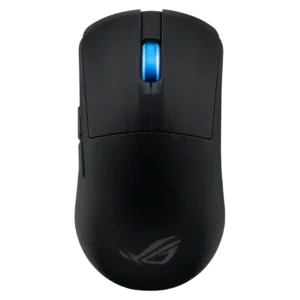
2.4 GHz connectivity is well supported through the bundled dongle or receiver, with reviewers tying it to full 4K polling and better gaming performance.
2.4GHz support is consistently described as a core connection mode, usually through the included receiver or dongle. Several reviewers also tied the 2.4GHz mode to low-latency or higher-performance use, with only the optional high-polling booster adding a caveat.
Acceleration control is supported mainly through software-level acceleration and precision settings plus the sensor specification of 40G acceleration.
Acceleration-related evidence is positive where tested or specified: reviewers noted mouse acceleration being off in testing, a 50G acceleration spec, and zero acceleration or jitter in use.
Tracking precision is repeatedly described as accurate, one-to-one, and reliable, with several reviews tying that precision to flicks, aiming, and high-speed movement.
Accuracy is one of the strongest areas. Reviewers repeatedly described the mouse as fast, precise, pixel-perfect, or smooth-tracking, though one test noted rattling at very high DPI.
Balance feedback is mixed and limited: one reviewer found the balance spot-on, while another felt weight was biased toward the middle and rear.
Balance evidence is mixed but mostly positive. One reviewer found it a little weighted at the back, while another said the balance felt spot on.
Battery life is generally strong at Bluetooth or 1,000 Hz 2.4 GHz settings, but several reviews note a sharp drop at 4,000 Hz and high RGB brightness.
Battery life is a major strength across reviews, with quoted runtimes up to 105-139 hours depending on mode and repeated real-use praise for lasting days or weeks.
Bluetooth support is widely documented and valued for laptops, tablets, travel, and non-competitive use, though some advanced features require 2.4 GHz or wired mode.
Bluetooth is well supported as part of the mouse's tri-mode connectivity. Reviewers described pairing, Bluetooth use, and switching as convenient, simple, or painless.
Build quality is mostly strong, with praise for fit, finish, shell integrity, lack of flex, and improved creaking or mushiness concerns.
Build quality is generally praised as solid, sturdy, and well built. A few durability/material caveats appear elsewhere, but the shell and structural feel are usually rated positively.
Button customization is supported through freely configurable side buttons, remapping, app controls, and profile-based settings changes.
Button and control customization is broadly supported through Armoury Crate or Armoury Crate Gear, with reviewers citing remapping, DPI controls, RGB settings, profiles, and other tuning options.
Button responsiveness is generally strong, with reviewers describing clicky, snappy, responsive buttons and few complaints about missed inputs.
Button responsiveness is praised in the reviews that discuss it, with descriptions such as satisfying, tactile, responsive, bouncy, and precise.
Cable flexibility is supported by repeated praise for the included mesh, braided, or fabric USB-C cable and its smooth movement on a desk.
Cable evidence is limited but positive. Reviewers described the included paracord or braided cable as flexible, thin, high quality, and minimally intrusive.
Charging convenience is supported by USB-C charging, wired-while-charging use, quick charging comments, and included adapters or cables.
Charging convenience is supported by USB-C charging and fast charging mentions. Reviewers liked the front USB-C port and quick top-up language where discussed.
Claw grip comfort is one of the clearest ergonomic strengths, with multiple reviewers saying the rear flare and compact shape suit claw grip users.
Claw grip comfort is a consistent strength. Multiple reviewers identify the mouse as built or optimized for claw grip, especially for small-hand and esports users.
Click latency evidence is limited but positive, with two reviews citing the 1.2 ms response figure tied to the higher-performance internals.
Click latency is supported by NVIDIA Reflex mention, optical switch comments, and reviewer statements about low or lowest possible latency. The evidence is strongest for click speed rather than formal latency testing.
Click noise is mixed: some reviewers liked the click sound or quieter scroll wheel, while others found the switches loud.
Connection stability is mostly positive, with stable Bluetooth and 2.4 GHz experiences plus dongle placement or hub evidence for stronger signal.
Connection stability is praised across wireless modes. Reviewers described easy mode switching, lag-free connectivity, no issues across modes, and extender/receiver placement that can reduce signal dropouts.
Cross-platform compatibility is supported by Bluetooth, multi-device use, smartphone or MacBook mentions, and settings saved for use across different systems.
Cross-platform evidence is narrower but positive. Reviewers used or positioned the mouse across Windows, MacBook, work, gaming, and mobile setups, mainly through Bluetooth and tri-mode connectivity.
Debounce customization is a weakness where directly discussed. One reviewer said the software does not allow adjusting debounce settings because of the optical switches.
The 26,000 DPI ceiling is widely documented, with reviewers treating it as more range than most users need but useful for sensitivity flexibility.
DPI range is a standout specification. Reviewers repeatedly cite the 42,000 DPI/CPI ceiling and app or onboard controls for preset or fine-tuned DPI settings.
Durability evidence is strong, covering IP54 protection, tough shell behavior, drop or spill resistance, and general resistance to daily travel abuse.
Durability evidence is mixed. Optical switches are rated for very high click counts, but one travel-use review reported exterior scuffing after repeated bag use.
Ecosystem integration is supported through SteelSeries GG, SteelSeries accessory integration, and coordinated setups with other SteelSeries gear.
Ecosystem integration is a clear ASUS advantage. Reviewers mention the ROG Omni receiver, multi-device ROG support, Aura Sync, and compatibility with other ROG peripherals.
Ergonomic design is praised by some for the flat symmetrical shape and small-hand fit, but one review criticizes the overall comfort compared with alternatives.
Ergonomics are strong for small and medium hands, but not universal. Reviewers praised comfort and contouring while cautioning that larger hands may struggle or need a different grip.
Fingertip grip comfort is mixed: some reviews include fingertip users in the target audience, while others found the flared rear awkward for fingertip control.
Fingertip grip support is explicitly positive in reviews that mention it, with the small low-profile shape described as accommodating fingertip users.
FPS suitability is strongly supported, with repeated Counter-Strike, shooter, and competitive gaming evidence tied to low latency, tracking, and 4K polling.
FPS and esports suitability is a major theme. Reviewers cite competitive play, Counter Strike 2, pro-FPS positioning, and fast accurate control as key strengths.
Glide smoothness is mostly positive, with PTFE feet described as smooth across mouse pads, desks, and cloth surfaces.
Glide smoothness is highly praised. Reviewers cite PTFE feet, smooth glide, easy mousepad movement, and slick slide pads.
Grip texture is polarizing, with some reviewers finding the texture grippy and others saying the sides or plastic finish feel slippery.
Grip texture is a strength. Reviewers mention ridged sides, grippy coating, matte texture, rubber grips, and anti-slip treatment.
Handedness evidence points to a right-handed practical layout despite the symmetrical shell, because the side buttons are only on one side.
Handedness options are limited. Although the shell is sometimes described as symmetrical or ambidextrous, the side buttons favor right-handed use and left-handed users are repeatedly warned away.
Main click quality is mostly praised for satisfying, clicky feedback, with evidence focused on left/right click feel rather than unusual customization.
Main click quality is strong. Reviewers describe the left and right clicks as satisfying, tactile, clear, precise, comfortable, and well implemented.
Lift-off distance is repeatedly supported as an adjustable software setting, usually mentioned alongside DPI, polling, and other advanced tuning controls.
Lift-off distance is configurable in the sources that discuss it, with High/Low options and software customization noted.
Long-session comfort is generally positive for smaller hands, light use, and fatigue reduction, though one reviewer reported hand cramps with the smaller shape.
Long-session comfort is supported mainly for smaller-hand users and claw/fingertip grips, including explicit extended-session comfort language.
Macro support appears in software-focused reviews, with explicit evidence that custom macros and game profile macros can be configured.
Macro support exists, but one reviewer said full macro options require the heavier Armoury Crate suite rather than only the lighter Gear version.
Materials quality trends positive for plastics and shell construction, though one review criticizes the finish for lacking grip.
Materials quality is mostly positive but not spotless. Reviewers mention bio-based nylon, a grippy coating, and premium feel, while some note smudging, scuffs, or skepticism about the material.
MMO suitability is only lightly supported. One review says the sensor and responsiveness make the mouse ideal for MMORPG play, but the limited button count keeps this from being a major strength.
MOBA suitability is lightly but directly supported by one review, which links the mouse's accuracy and responsiveness to MOBA use.
Motion consistency is described positively through smooth aiming, reliable tracking, fluid movement, and the lack of missed tracking during gameplay.
Motion consistency is strong in several tests, with crisp, consistent responsiveness and little wavering, but one review saw rattling at 6400 DPI.
Onboard memory is supported by references to storable profiles and settings saved directly to the mouse for use beyond one system.
Onboard memory/control support is positive where mentioned, with reviewers citing onboard controls, ready-on-the-go memory profiles, and direct setting adjustment.
Palm grip comfort is mixed to weak overall, with smaller-hand praise offset by repeated comments that larger palm-grip users may prefer the Aerox 5 or another shape.
Palm grip comfort is usable for some smaller-hand users, but larger-hand palm users receive repeated cautions. Scores therefore vary by hand size.
The move from 1,000 Hz to 4,000 Hz polling is a major upgrade across the reviews, improving responsiveness most clearly in competitive and high-refresh-rate play.
Polling rate support is capable but caveated. Reviews cite 1000Hz out of the box and up to 8000Hz with the optional booster, which several consider a downside at the price.
Portability is mostly favorable because of durability, Bluetooth, compact size, and travel use, but one review criticizes the lack of onboard dongle storage.
Portability is a recurring strength because of the compact shape, light weight, dongle storage, and travel-friendly use cases.
Premium feel is supported by solid construction, low-weight feel that does not seem compromised, and descriptions of a more premium mouse experience.
Premium feel is praised in several reviews through comments about premium impression, masterful feel, and solid execution, despite material caveats elsewhere.
Profile switching evidence is narrower but clear, with game-based saved settings and automatic profile switching described in the reviews.
Profile switching is supported through up to five profiles and onboard/software switching. The evidence also includes criticism that some profile switching controls are clunky.
Programmable button support is well supported through evidence for remapping, six programmable buttons, and software-controlled button behavior.
Programmable buttons are supported by multiple reviews citing side buttons, six programmable buttons, remapping, and five programmable buttons.
RGB support is broad, with reviews mentioning three-zone lighting, Prism controls, presets, effects, and the battery impact of brighter lighting.
RGB is intentionally minimal. Reviewers repeatedly note the scroll-wheel-only lighting and customization options, which suits subdued setups but not buyers wanting major flair.
Scroll wheel quality is generally positive, with reviewers noting responsive scrolling, tactile feedback, and in some cases quieter or grippier revisions.
Scroll wheel quality is mixed. Some reviewers liked its resistance or light actuation, while others found it stiff, soft, or tighter than prior models.
The TrueMove 26K sensor is one of the most consistently supported strengths, with reviews describing smooth tracking, no missed beats, and strong gaming performance.
Sensor performance is a major strength. Reviews repeatedly cite the AimPoint Pro sensor, high DPI ceiling, precision, reliability, and rock-solid tracking.
Shape comfort is divisive: many reviewers liked the familiar Aerox shape, while others found the flared rear uncomfortable or polarizing.
Shape comfort is one of the strongest areas for smaller hands. Reviewers praised the fit, compact shape, and mini proportions, while noting limits for larger hands.
Side button feedback is mixed: several reviewers found them easier to reach or improved, while others found the long shape easy to hit accidentally.
Side button quality is generally positive, with praise for placement, feel, and responsiveness, though the right-handed placement limits left-handed use.
Skate durability/coverage is supported by PTFE feet, replacement feet, and extra skates in the box. Direct long-term wear evidence is limited, so scores lean positive but not absolute.
Software stability is a weakness where directly discussed. One reviewer reported connection and setting-change errors and restarts needed to get the software working.
Software usability is one of the strongest repeated positives, especially SteelSeries GG, sensitivity tools, aim trainer features, live previews, and accessible customization.
Software usability is mixed. Some reviewers found Armoury Crate Gear clean, intuitive, or lightweight, while others found Armoury Crate clunky, hard to locate, large, outdated, or difficult to navigate.
Surface compatibility evidence is positive but narrower, with reviews noting smooth movement on pads and usable performance on desks or different surfaces.
Surface compatibility is strong. Reviewers cite surface calibration, almost-all-surface tracking, glass use, and different mousepad/material support.
Switch durability is mostly supported by the 80 million click rating, with one review also noting consistent clicks after extended testing.
Switch durability is a clear strength due to repeated 100-million-click optical switch claims and comments about double-click avoidance.
Switch feel trends positive, with tactile, crisp, clicky feedback noted by several reviewers, though the feel remains more traditional mechanical than optical.
Switch feel is positive overall, with reviewers describing tactile, responsive, snappy, precise, and comfortable switch behavior.
Value is mixed-to-positive: reviewers often call the price competitive or reasonable, but several note strong competition around the same or lower price.
Value is mixed. Several reviewers think the price is reasonable versus competitors or sales, while others call it high or note cheaper accurate wireless mice exist.
The 68 g weight is often praised as light and agile, though a few reviewers note it is heavier or less competitive by current ultralight standards.
Weight is a major strength, with almost every review emphasizing the roughly 49g ultralight design.
Wireless latency is consistently favorable where tested, with low latency, no noticeable lag, and near-zero delay tied to 2.4 GHz or 4K operation.
Wireless latency evidence is very positive for low-latency 2.4GHz and SpeedNova use, though the highest polling/latency-reduction path may need an extra booster.
Wireless performance is a major strength, with reviews praising 4K wireless, reliable tracking, stable use, and no stutters or delays in several tests.
Wireless performance is broadly praised through reliable 2.4GHz operation, lag-free connectivity, SpeedNova precision, and long wireless battery life.