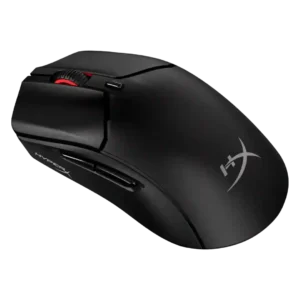
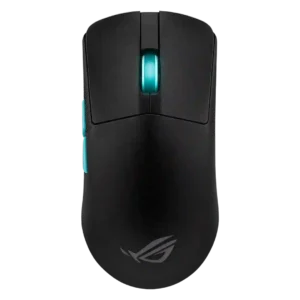
Wireless reviews repeatedly cite 2.4GHz dongle support, usually paired with Bluetooth. Some reviewers describe it as easy or reliable, while one reported wireless interference and tracking issues.
2.4GHz connectivity is widely supported through RF, Wi-Fi, Omni Receiver, and SpeedNova references. Reviewers generally present it as the preferred wireless gaming mode.
Specs-focused reviews identify 50G acceleration support. The transcripts discuss the capability rather than deep tuning, so the evidence supports acceleration capacity more than advanced control.
Acceleration and angle behavior are configurable in several reviews through angle snapping, angle tuning, acceleration settings, or Aim Lab recommendations. Hardware acceleration tolerance is also cited, making this a defensible tuning strength.
Most gameplay-focused reviewers found the mouse accurate, with several calling out precise target acquisition or dependable aiming. One review noted it was not clearly more accurate than other ultralight mice.
Across the scored reviews, tracking and accuracy are strong, with several reviewers calling the mouse fast, precise, or responsive. A few Aim Lab results were more mixed, so the evidence favors strong hardware accuracy more than guaranteed skill improvement.
The video reviews that discuss weight balance are positive, describing the mouse as well balanced and evenly distributed during grip or movement.
Balance and weight distribution receive mixed evidence. Reviewers praise the low weight, but one notes front-leaning weight distribution and others describe the shell/hump as noticeable.
Battery life is one of the clearest strengths in wireless reviews. Multiple reviewers cite the 100-hour claim, and several say they used it for a week or more without charging.
Battery life is consistently strong, with many reviews citing about 90 hours or multi-week practical use. RGB use can reduce runtime, but reviewers still found endurance competitive.
Bluetooth support is broadly confirmed across wireless reviews and often framed as useful for switching between work, gaming, console, or secondary-device setups.
Bluetooth support is repeatedly confirmed. Reviewers appreciate it for multi-device or dongle-free use, while still treating 2.4GHz or wired modes as preferable for gaming.
Build quality is mostly praised as solid, sturdy, or high quality, though one long-term review says the mouse can still feel cheap because of the plastic finish.
Build quality is generally strong. Reviewers cite solid shells, no creaking, durable construction, and sturdy materials, with one caveat that lightweight plastic can feel cheaper to some users.
Customization is consistently supported through NGENUITY, with reviewers noting remappable buttons, DPI changes, polling-rate settings, RGB changes, and profile or preset management.
Button customization is widely supported through Armoury Crate, hardware controls, and profile commands. The main limitation is that the sparse button layout leaves fewer physical inputs to customize.
Main button response is generally viewed as quick and positive, though one reviewer reported initial missed clicks because the switches required more force.
Button responsiveness is generally praised. Reviewers cite reactive clicks, minimal pre-travel, fast response, and clean actuation, with the main caveats tied to stiffness or hand-fit rather than missed inputs.
Wired reviews and charging-use cases describe the cable as soft, flexible, lightweight, or paracord-like. One wireless reviewer wished the charging cable exited at an upward angle to reduce drag.
Cable flexibility is praised wherever it is discussed. The included cable or paracord is described as light, flexible, braided, and unlikely to get in the way.
Wireless reviews support convenient charging through USB-C or wired play while charging. Several reviewers note that switching to wired mode avoids disruption when the battery runs low.
Charging convenience is positive where tested. Reviewers cite USB-C charging, quick top-ups, battery-status alerts, and in one case under-30-minute charging.
Claw grip support is a repeated strength. Several reviewers call the low-profile symmetrical shape especially good for claw grip, while one notes larger hands may need claw grip.
Claw grip comfort is generally workable, especially for upright claw users, but not universal. Shape length and the rear hump bothered some smaller-hand or specific-claw reviewers.
Latency evidence is mixed. Some reviewers found latency fine or unnoticeable, while critical long-term reviews mention click or motion latency concerns, especially around wireless behavior or software.
Click latency is supported indirectly through responsiveness comments and click-speed testing language. Reviews describe click response as quick or responsive, but the transcripts do not provide a dedicated measured click-latency benchmark.
Click sound is commonly described as loud, sharp, clicky, audible, or meaty. That gives satisfying feedback for some reviewers but may bother people in shared workspaces.
Click noise is mixed and lightly covered. Reviewers mention deeper sound signatures or less-audible clicks, so the mouse is not described as silent but does not appear unusually loud across the evidence.
Connection stability ranges from easy and interruption-free to problematic. Several reviewers had no connection complaints, while others cite software dropouts, interference, or firmware-related wireless issues.
Connection stability is mostly good but not flawless. Several reviews cite stable low-latency connectivity, while some report interference, software hiccups, or wake-up delays.
Compatibility evidence includes direct mentions of console support across PS4, PS5, Xbox One, Xbox Series X|S, and broader Windows support, depending on connection mode.
Cross-platform compatibility is supported through Bluetooth, wired, laptop/desktop/phone use, and Windows notes. The strongest caveat is a Windows 10 recognition issue in one review.
DPI range is strongly supported. Multiple reviews cite a 26,000 DPI ceiling or describe the sensor as capable of very high sensitivity, with software adjustment available.
The DPI range is one of the clearest strengths. Multiple reviews cite the 36,000 DPI class capability, though some reviewers note that very high DPI settings are not practical for every user.
Only limited long-term durability evidence appears. One reviewer notes uncertainty about extended use, so the attribute is supported weakly rather than as a proven strength.
Durability over time is inferred from sturdy construction, no creaking, 70-million-click switches, and replaceable skates. The transcripts support expected durability more than long-term aging evidence.
Ecosystem support appears in reviews that discuss HyperX ecosystem use, app-linked presets, and multi-platform gaming setup compatibility.
Ecosystem integration is strong through Aim Lab, Armoury Crate, ROG Omni Receiver, Aura-style lighting, and shared ROG receiver comments. The main caveat is software friction.
Ergonomics are divisive. Several reviewers like the natural feel, but others find the ambidextrous low-profile design less ergonomic than shaped alternatives.
Ergonomics are strong for many competitive users but not universal. Reviews praise comfort and FPS fit, while negative comments mostly come from hand-size or hump-placement mismatches.
Fingertip grip is supported but more dependent on hand size. Several reviews say the mouse can work for fingertip grip, especially because of its light weight and low profile.
Fingertip grip comfort is supported by the light weight and symmetrical shell, with reviewers saying fingertip use works. A few comments still warn that the rear hump can interfere with micro-adjustments.
Firmware reliability is a recurring weakness in critical reviews. Reviewers mention firmware updates, sensor issues after updating, or even a bricked mouse after an update.
Firmware reliability is mixed and mostly tied to update handling. Reviews confirm firmware-update support but criticize annoying update requirements and software limitations around updates.
The mouse is frequently framed as esports or FPS-friendly thanks to low weight, quick movement, high polling on wired models, and accurate tracking in shooters.
FPS gaming suitability is one of the strongest use-case fits. Reviews repeatedly frame the mouse as an esports or FPS-focused device with speed, precision, low weight, and Aim Lab integration.
Glide is widely praised. Reviewers describe low friction, smooth skates, floating movement, and improved micro-corrections, though surface choice can matter.
Glide smoothness is a clear strength. Reviews repeatedly mention PTFE feet, smooth motion, low friction, and easy movement across pads or surfaces.
Grip texture is mixed. Some praise the matte coating or included grip tape, while others note the sides are not textured or the plastic can feel slippery.
Grip texture is mostly positive thanks to textured sides, matte surfaces, and optional grip tape. A small number of reviews found the sides slippery or the tape styling unattractive.
The symmetrical shell helps with handedness, but the side buttons remain left-side only. Reviewers describe it as leftie-friendly or pseudo-ambidextrous with practical caveats.
Handedness is mixed. The shell is repeatedly described as ambidextrous or symmetrical, but several reviews note that side-button placement still favors right-handed thumb use.
Left and right click quality is mostly praised for tactile, crisp, responsive, or satisfying feel, though some reviewers note firmness or lateral movement under frantic clicking.
Left and right click quality is consistently framed as responsive and tactile. Reviewers highlight consistent click feel, though some comments suggest the click weight may not suit every preference.
Lift-off distance is adjustable in software in cited reviews, typically with low and high options or a 1mm default.
Lift-off distance is well supported through Armoury Crate, Aim Lab, and hardware-control references. Reviews show that it can be adjusted or included in optimization, though the depth of control varies by reviewer.
Long-session comfort is supported by the light weight and relaxed movement. Positive reviews mention low fatigue and longer play sessions, while one review notes finger-room limitations.
Long-session comfort is positive in reviews that fit the shape, with comments about relaxed fingers and comfort over longer play. Shape mismatches keep this from being universally ideal.
Macro support is present through NGENUITY, with reviewers specifically mentioning macro assignment or a built-in macro recorder.
Macro support appears in software-focused reviews, which describe macro activation or macros in Armoury Crate. The evidence confirms support but does not emphasize advanced macro workflows.
Materials feedback ranges from sturdy lightweight plastic and high-quality components to complaints about scratchy or slippery plastic on the wireless model.
Materials quality is supported by repeated nylon and bio-based shell references. Reviewers usually frame the material as light and sturdy, though one describes the plastic feel as somewhat cheap.
MMO suitability is weak because the mouse uses a simple six-button layout. Reviews asking for more buttons support a lower score for complex button-heavy games.
MMO suitability is weak. The main direct evidence says the streamlined button layout is less attractive for input-heavy MMOs and similar games.
MOBA suitability is similarly limited by the sparse button layout. The transcripts support basic remapping, but not a feature-rich button setup for complex genres.
Motion consistency is mixed. Many reviewers report fluid, stutter-free tracking, while a few long-term or wireless-focused reviews mention stutter, buggy sensor behavior, or tracking jumps.
Motion consistency is supported by reviewers who described stable tracking, less miss-hitting, no unwanted jolts, or no apparent jittering. The strongest evidence comes from gameplay and mouse-tester comments rather than a standardized lab benchmark.
Onboard memory is limited. Reviews say the mouse lacks multiple onboard profiles or onboard storage, though one wired review says it can remember one programmed profile.
Onboard memory is supported by reviews noting onboard profile storage and programmable onboard profiles. The feature lets configured settings travel with the mouse after setup.
Palm grip comfort depends on hand size and model. Some reviewers found palm grip comfortable, while others say the low profile or flatter body makes palm grip less ideal.
Palm grip comfort is mixed. Some reviewers found palm grip comfortable, but others said the hump, narrowness, or hand size made palm grip less ideal.
Polling rate evidence is strong but model-dependent: wired reviews cite up to 8,000Hz, while wireless reviews usually cite 1,000Hz and still often find it sufficient.
Polling-rate evidence centers on a 1,000Hz ceiling. Reviewers generally considered it adequate for competitive use, but several noted that higher-rate competitors exist and that 1,000Hz is not class-leading.
Portability is supported by low weight, dongle storage, laptop-bag use, and wireless flexibility. It is a good fit for users moving between setups.
Portability is strong because reviewers mention the low weight, dongle storage, pouch, and multi-device travel setups. The mouse is repeatedly framed as easy to carry or use across devices.
Premium feel is mixed. Several reviewers call it high quality or more premium, while critical reviews say the finish can feel cheap for the price.
Premium feel is generally positive. Reviewers cite high-end specs, premium-feeling plastic, build quality, and strong feature density, though the minimal appearance is not flashy.
Profile switching is limited. NGENUITY can store presets or app-linked profiles, but reviewers note missing onboard profile switching or multiple onboard profiles.
Profile switching is supported through DPI/profile references and onboard profile controls. Reviewers praise the existence of multiple profiles but often criticize the underside DPI/profile controls for convenience.
Programmable buttons are consistently present, usually as six total buttons or five remappable controls depending on how reviewers count left/right click.
Programmable-button coverage is modest because the mouse has a streamlined five-button layout. Reviewers confirm programmable buttons, but several also note the limited number of inputs.
RGB is present but minimal. Most reviews describe a single scroll-wheel zone, which some appreciate for simplicity and others see as underwhelming.
RGB is limited mainly to the scroll wheel. Reviewers appreciate customization and battery/status signaling, but the narrow lighting zone keeps this from being a major visual feature.
Scroll wheel quality is mixed. Some reviewers find it well tensioned or pleasantly stepped, while others call the click mushy, small, light, or merely okay.
Scroll wheel quality receives mixed-to-good feedback. Some reviewers call it tactile and easy to control, while others criticize its resistance, basic feel, or minor wobble.
Sensor performance is broadly praised for the 26K or 3395-class upgrade and strong gameplay tracking, though a few reviewers report implementation or firmware problems.
Reviewers repeatedly highlight the ROG AimPoint sensor and its high-end behavior. The sensor is described as fast, accurate, responsive, and precise, with only isolated caveats tied to testing method or shape rather than sensor hardware.
Shape comfort is one of the strongest repeated positives, especially for users who like low-profile symmetrical shapes. Several reviewers say shape determines whether it is a good fit.
Shape comfort is polarizing. Many reviewers like the symmetrical esports shape, while others find the hump, length, or narrow body uncomfortable depending on hand size and grip style.
Side button quality varies sharply. Some reviewers call the side buttons improved, crisp, or decent, while others criticize post-travel, mushiness, or awkward reach.
Side button quality is mixed. Several reviews found the side buttons reachable or tactile, while others described them as small, centered awkwardly, or slightly mushy.
Skate durability is supported mainly by included replacement PTFE feet rather than long-term wear testing. The evidence suggests maintainability and easy replacement.
Software stability is a weakness in multiple reviews. NGENUITY is described as freezing a PC, losing connection, being finicky, or failing after updates.
Software stability is one of the weaker areas. Several reviewers report Armoury Crate problems, update friction, Windows 10 recognition trouble, or general software hiccups.
Software usability is mixed: reviewers praise basic, easy controls and useful remapping, but others call NGENUITY unintuitive, light on features, or finicky.
Software usability is mixed. Armoury Crate and Aim Lab expose many useful settings, but reviewers also complain about resource use, loading, update prompts, and weaker premium features.
Surface compatibility matters. Reviewers report better results on certain pads, problems on leatherette, and positive performance on glass or cloth depending on the setup.
Surface compatibility is supported through smooth performance on surfaces and software calibration. The strongest evidence comes from reviews describing surface or mousepad calibration features.
Switch durability is well supported by repeated 100-million-click ratings for HyperX switches, though that is a rated lifespan rather than long-term test proof.
Switch durability is strongly supported by repeated 70-million-click lifespan references. No transcript reports long-term switch failure, so the evidence supports high expected durability rather than proven multi-year endurance.
Switch feel is divisive but generally tactile. Reviews describe satisfying, crisp, clicky, firm, or resistant clicks, with some preferring older lighter switches.
Switch feel is usually positive, especially for tactile, consistent, purposeful, or crisp clicking. Some reviewers found the switches slightly stiff or heavier than preferred, so the score is strong but not universally perfect.
Value depends on expectations. Many reviewers call it affordable or strong for the money, while critical reviews argue there are better options at or near its price.
Value depends on price sensitivity. Reviewers often justify the premium with specs, weight, and wireless features, while casual users or feature-seekers may find the price high.
Weight is a major strength across wired and wireless versions. Reviewers repeatedly cite 53g wired or roughly 60-61g wireless figures and describe it as feather-light.
Weight is the product's most repeated strength. Nearly every scored review emphasizes the 54g-class shell or unusually light feel, with the benefit tied to quick movements and reduced fatigue.
Wireless latency evidence is mixed. Several reviewers find no noticeable lag, while critical reviewers cite meh latency, wireless interference, or tracking issues.
Wireless latency is generally low in the evidence. Most reviews report little or no lag, while a few mention brief input lag, slight jitter, or wake-from-sleep delay.
Wireless performance is mostly positive for casual and gaming use, but several specialist reviews raise concerns around wireless sensor implementation, interference, or firmware behavior.
Wireless performance is a major strength overall. Reviewers praise SpeedNova, 2.4GHz performance, and parity with wired use, though one review reports minor lag or interference.