2.4GHz connectivity
P1
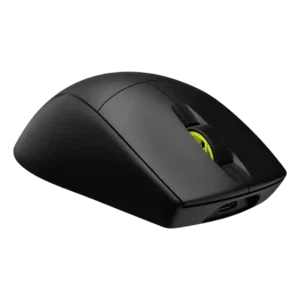
Product 1: Corsair M75 AIR Wireless
4.1
2.4GHz connectivity is usually praised for fast, stable, low-latency use, though one review had setup trouble.
P2
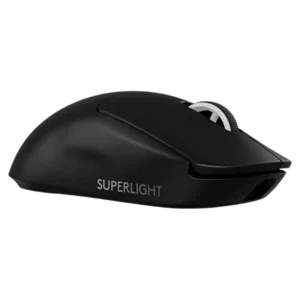
Product 2: Logitech G PRO X Superlight...
5.0
The 2.4GHz connection was praised through an instant, fast connection experience with the included dongle.
Accuracy and tracking precision
P1
Product 1: Corsair M75 AIR Wireless
4.8
Accuracy evidence is strongly positive, with reviewers describing precise tracking, better in-game control, and pinpoint responses across competitive use.
P2
Product 2: Logitech G PRO X Superlight...
4.9
Reviewers consistently described the mouse as accurate in games, with especially strong praise for tracking, pointer accuracy, and shot control.
balance and weight distribution
P1
Product 1: Corsair M75 AIR Wireless
4.5
Weight balance has limited but positive support from one reviewer who says balance felt great in-game.
P2
Product 2: Logitech G PRO X Superlight...
4.5
Weight distribution received positive evidence from a reviewer who specifically praised the balance.
battery life
P1
Product 1: Corsair M75 AIR Wireless
3.8
Battery life is adequate to good but not class-leading, with praise for long enough use and criticism around 34-hour wireless estimates.
P2
Product 2: Logitech G PRO X Superlight...
4.7
Battery life was generally praised as long-lasting, though reviewers noted it drops with higher polling rates.
build quality
P1
Product 1: Corsair M75 AIR Wireless
4.1
Build quality is divided, with several reviewers calling it solid and others criticizing rattles, plastic feel, or robustness.
P2
Product 2: Logitech G PRO X Superlight...
4.8
Build quality was repeatedly praised as solid, squeak-free, well put together, and elite despite the light shell.
button customization
P1
Product 1: Corsair M75 AIR Wireless
3.5
Button customization is mixed: software remapping is useful, but reviewers criticize limits and reliance on iCUE.
P2
Product 2: Logitech G PRO X Superlight...
4.7
Customization drew positive comments for granular controls and strong software-hardware integration, though it still depends heavily on G Hub.
button responsiveness
P1
Product 1: Corsair M75 AIR Wireless
3.6
Button responsiveness is split: some reviewers call the buttons quick and tactile, while others report false clicks or mushy post-travel.
P2
Product 2: Logitech G PRO X Superlight...
4.0
Button responsiveness was mostly praised for tactile, responsive clicks, though one reviewer disliked the heavier actuation for spam clicking.
cable flexibility
P1
Product 1: Corsair M75 AIR Wireless
3.3
Cable flexibility is mixed; one review criticizes stiffness, while others find the cord usable or decent.
P2
Product 2: Logitech G PRO X Superlight...
2.0
Cable quality was a recurring complaint, with reviewers criticizing drag, resistance, and the dated rubber cable.
charging convenience
P1
Product 1: Corsair M75 AIR Wireless
4.2
Charging convenience is generally positive, helped by USB-C, around-75-minute recharge comments, and usable wired operation.
P2
Product 2: Logitech G PRO X Superlight...
4.6
Charging convenience was praised for USB-C, faster charging, and fewer desk cables.
claw grip comfort
P1
Product 1: Corsair M75 AIR Wireless
3.9
Claw grip comfort is context-dependent, ranging from highly natural to too long or finicky for some hands.
P2
Product 2: Logitech G PRO X Superlight...
4.6
Claw grip comfort was broadly positive, with reviewers calling the mouse comfortable or easy to use for claw grip.
click latency
P1
Product 1: Corsair M75 AIR Wireless
5.0
Click latency evidence is excellent, with reviewers repeatedly describing instant, unnoticeable, or near-wired response.
P2
Product 2: Logitech G PRO X Superlight...
4.2
Click latency was praised as very low by some reviewers, though one technical reviewer found it merely good rather than flagship-leading.
click noise
P1
Product 1: Corsair M75 AIR Wireless
3.3
Click noise is mixed, ranging from quiet or acceptable to noisy buttons and louder scrolling.
P2
Product 2: Logitech G PRO X Superlight...
3.3
Click noise was mixed: some liked the satisfying click sound, while others found it loud or high-pitched.
connection stability
P1
Product 1: Corsair M75 AIR Wireless
3.7
Connection stability is mixed: several reviewers report stable connections, while a few describe setup or wireless-operation trouble.
P2
Product 2: Logitech G PRO X Superlight...
5.0
Connection stability was praised in one review for not faltering even in a difficult RF environment.
cross-platform compatibility
P1
Product 1: Corsair M75 AIR Wireless
5.0
Cross-platform compatibility has limited but strong support from one review praising Windows and macOS usefulness.
P2
Product 2: Logitech G PRO X Superlight...
4.5
Cross-platform compatibility was praised through G Hub support for both Windows and macOS.
DPI range
P1
Product 1: Corsair M75 AIR Wireless
4.2
The DPI range is viewed as generous and precise, though reviewers often pair that praise with frustration over hardware DPI switching.
P2
Product 2: Logitech G PRO X Superlight...
3.7
DPI coverage was seen as technically strong and granular, but one reviewer felt the extreme ceiling is more marketing than everyday value.
durability over time
P1
Product 1: Corsair M75 AIR Wireless
5.0
Durability over time has limited positive support from the 100M-click optical switch expectation.
P2
Product 2: Logitech G PRO X Superlight...
4.5
Durability over time had limited but positive evidence from a longer-use reviewer whose unit remained rock solid.
ecosystem integration
P1
Product 1: Corsair M75 AIR Wireless
3.8
Ecosystem integration is modestly positive for users already invested in iCUE or Corsair wireless devices.
P2
Product 2: Logitech G PRO X Superlight...
4.5
Ecosystem integration was praised for Logitech presets, backward compatibility, and community/profile support.
ergonomic design
P1
Product 1: Corsair M75 AIR Wireless
4.4
Ergonomic design is praised for its symmetry, tapering, and broadly usable form despite the minimalist design.
P2
Product 2: Logitech G PRO X Superlight...
4.0
Ergonomics were generally positive for comfort and contouring, but one review noted large hands may find the shape less ergonomic.
fingertip grip comfort
P1
Product 1: Corsair M75 AIR Wireless
5.0
Fingertip grip comfort has limited but very positive support from reviewers who found it ideal or comfortable.
P2
Product 2: Logitech G PRO X Superlight...
5.0
Fingertip grip comfort was praised by reviewers who found the shape comfortable for fingertip use.
FPS gaming suitability
P1
Product 1: Corsair M75 AIR Wireless
4.6
FPS gaming suitability is one of the strongest conclusions, with reviewers repeatedly calling it fast, precise, and well-suited for competitive shooters.
P2
Product 2: Logitech G PRO X Superlight...
5.0
FPS suitability was one of the strongest areas, with repeated praise for speed, responsiveness, and competitive first-person shooter use.
glide smoothness
P1
Product 1: Corsair M75 AIR Wireless
4.3
Glide smoothness is a major strength in most reviews, although a few criticize the stock skates as slow or only okay.
P2
Product 2: Logitech G PRO X Superlight...
3.5
Glide smoothness was highly mixed: some reviewers praised effortless glide, while others disliked stock-skate drag or control-heavy movement.
grip texture
P1
Product 1: Corsair M75 AIR Wireless
3.8
Grip texture is mixed-positive: many praise the matte or grippy surface, while others find it slippery, coarse, or lacking grip tape.
P2
Product 2: Logitech G PRO X Superlight...
4.4
Grip texture was well received, with reviewers praising the grippy surface, recessed sides, or usefulness for clammy hands.
handedness options
P1
Product 1: Corsair M75 AIR Wireless
2.0
Handedness options are a weakness because reviewers repeatedly say the side-button layout makes it poor for left-handed use.
P2
Product 2: Logitech G PRO X Superlight...
3.5
Handedness support was mixed because the symmetrical shape helps lefties, but the side buttons remain left-side only.
left and right click quality
P1
Product 1: Corsair M75 AIR Wireless
3.2
Left and right click quality is mixed, ranging from spacious and crisp to accidental actuation, pre-travel, or mushy implementation.
P2
Product 2: Logitech G PRO X Superlight...
4.8
Left and right clicks were praised for satisfying tactility, light rapid tapping, and improved main-button feel.
lift-off distance
P1
Product 1: Corsair M75 AIR Wireless
3.7
Lift-off distance earns modestly positive evidence because reviewers value iCUE adjustment and calibration, though it is not a major focus.
P2
Product 2: Logitech G PRO X Superlight...
4.2
Lift-off distance control was viewed as useful and noticeably adjustable, especially for players who fine-tune mouse behavior.
long-session comfort
P1
Product 1: Corsair M75 AIR Wireless
4.6
Long-session comfort is positive where discussed, with reviewers noting all-day comfort, no wrist aggravation, or work-and-play suitability.
P2
Product 2: Logitech G PRO X Superlight...
5.0
Long-session comfort was strongly positive in one review that reported almost no hand fatigue after long sessions.
macro support
P1
Product 1: Corsair M75 AIR Wireless
3.5
Macro support has limited evidence; one reviewer notes macros can be set up, but the small button layout limits practical use.
P2
Product 2: Logitech G PRO X Superlight...
5.0
Macro support was praised for an easy-to-use macro tool that guides users through setup.
materials quality
P1
Product 1: Corsair M75 AIR Wireless
3.0
Materials quality is mixed, ranging from convincing workmanship to complaints about cheap plastic and flex.
P2
Product 2: Logitech G PRO X Superlight...
4.5
Materials quality was praised for a cool, soft matte plastic feel.
MOBA gaming suitability
P1
Product 1: Corsair M75 AIR Wireless
2.0
MOBA gaming suitability is weak in the available evidence because one review says MOBA players usually benefit from more buttons.
P2
Product 2: Logitech G PRO X Superlight...
2.5
MOBA suitability was weaker because one reviewer found the heavier clicks worse for spam-click games.
motion consistency
P1
Product 1: Corsair M75 AIR Wireless
4.8
Motion consistency is praised in the few reviews that discuss it, especially for lag-free movement and stable skate placement.
P2
Product 2: Logitech G PRO X Superlight...
4.8
Motion consistency was described positively, with reviewers calling motion smooth, sharp, and accurate.
onboard memory
P1
Product 1: Corsair M75 AIR Wireless
3.8
Onboard memory is useful but limited, with reviewers liking saved hardware settings while noting only one profile in one review.
P2
Product 2: Logitech G PRO X Superlight...
4.0
Onboard memory was supported by the ability to save multiple profiles, though evidence was more about usefulness than enthusiasm.
palm grip comfort
P1
Product 1: Corsair M75 AIR Wireless
4.3
Palm grip comfort is positive overall, especially for users whose hands match the raised hump and curvature.
P2
Product 2: Logitech G PRO X Superlight...
2.5
Palm grip comfort was limited by one review saying palm-grip players may be better served elsewhere.
polling rate
P1
Product 1: Corsair M75 AIR Wireless
3.7
Polling-rate impressions are mixed: several reviewers like or verify the 2,000Hz option, while others say it is hard to notice or failed their tests.
P2
Product 2: Logitech G PRO X Superlight...
4.1
Polling-rate opinions were mixed: several reviewers felt clear responsiveness gains, while others saw 2,000Hz as fine but not industry-leading.
portability
P1
Product 1: Corsair M75 AIR Wireless
4.0
Portability is modestly positive due to dongle storage and multi-device convenience.
P2
Product 2: Logitech G PRO X Superlight...
4.5
Portability was supported by the dongle-storage cover, which one reviewer framed as essential for esports travel.
premium feel
P1
Product 1: Corsair M75 AIR Wireless
2.8
Premium feel is split: one review says it feels premium, but several call the plastic shell cheap for the price.
P2
Product 2: Logitech G PRO X Superlight...
4.5
Premium feel was positive overall, with reviewers saying the mouse feels sturdy, premium, and high quality.
profile switching
P1
Product 1: Corsair M75 AIR Wireless
2.2
Profile switching is the clearest repeated weakness, driven by the missing hardware DPI/profile switch and dependence on software.
P2
Product 2: Logitech G PRO X Superlight...
3.0
Profile behavior was mixed: app-linked settings were useful, but onboard-profile handling was described as confusing in G Hub.
programmable buttons
P1
Product 1: Corsair M75 AIR Wireless
2.4
Programmable-button evidence is mostly negative because reviewers repeatedly find the button count too sparse for the price.
P2
Product 2: Logitech G PRO X Superlight...
4.5
Programmable side buttons were useful to one reviewer for DPI adjustment, especially because the mouse lacks a dedicated DPI button.
RGB features
P1
Product 1: Corsair M75 AIR Wireless
4.0
RGB evidence depends on preference: some reviewers like the no-RGB minimalism and battery benefit, while one says the design needed lighting.
P2
Product 2: Logitech G PRO X Superlight...
4.3
The lack of RGB was generally accepted as a worthwhile tradeoff for battery life, weight, and the mouse’s clean look.
scroll wheel quality
P1
Product 1: Corsair M75 AIR Wireless
4.0
Scroll wheel quality is generally acceptable to good, with praise for feel and resistance but some complaints about noise or looseness.
P2
Product 2: Logitech G PRO X Superlight...
3.0
Scroll wheel feedback was mixed, with some praise for tactility but repeated criticism that it felt stiff, mushy, vague, or less precise.
sensor performance
P1
Product 1: Corsair M75 AIR Wireless
4.7
Sensor performance is consistently praised for fast, precise, responsive movement, with only minor dissent tied to the broader mouse implementation rather than the sensor itself.
P2
Product 2: Logitech G PRO X Superlight...
4.9
The HERO 2 sensor was widely praised as crisp, precise, fast, and close to flawless, though some reviewers framed the higher specs as incremental.
shape comfort
P1
Product 1: Corsair M75 AIR Wireless
4.0
Shape comfort is mostly positive across hand sizes and grip styles, though a few reviewers find it cramped or unremarkable.
P2
Product 2: Logitech G PRO X Superlight...
4.4
Shape comfort was broadly praised as safe, familiar, and very comfortable, though a few reviewers disliked the rounded shape personally.
side button quality
P1
Product 1: Corsair M75 AIR Wireless
3.9
Side button quality is mixed-positive: placement is often praised, but reviewers also complain about low-key, recessed, flush, or slippery buttons.
P2
Product 2: Logitech G PRO X Superlight...
2.6
Side button quality was the most contested control area, ranging from well-placed and improved to repeatedly described as mushy.
skate durability
P1
Product 1: Corsair M75 AIR Wireless
1.8
Skate durability is weak, with reviewers reporting scratches or poor stock skate quality.
P2
Product 2: Logitech G PRO X Superlight...
2.0
Skate durability was a repeated concern, with reviewers calling the PTFE feet thin, meh, or unlikely to last long.
software usability
P1
Product 1: Corsair M75 AIR Wireless
3.4
Software usability is mixed: iCUE is praised as easier or straightforward by some and criticized as annoying or required by others.
P2
Product 2: Logitech G PRO X Superlight...
3.9
Software usability was split sharply: some reviewers found G Hub easy and powerful, while others called it unintuitive or frustrating.
surface compatibility
P1
Product 1: Corsair M75 AIR Wireless
4.0
Surface compatibility is positive overall through smooth movement and calibration, with one caveat about metal surfaces.
P2
Product 2: Logitech G PRO X Superlight...
3.8
Surface compatibility was mixed, with good results across many surfaces but complaints on softer pads and warnings to tune surface modes.
switch durability
P1
Product 1: Corsair M75 AIR Wireless
4.5
Switch durability gets positive but limited support from reviewers who value optical switches and long click-life expectations.
P2
Product 2: Logitech G PRO X Superlight...
4.7
Switch durability evidence centered on optical-switch reliability and reduced double-click concerns, with reviewers treating it as a meaningful benefit.
switch feel
P1
Product 1: Corsair M75 AIR Wireless
4.3
Switch feel trends positive, with reviewers liking the crisp, thocky, or satisfying optical-click feel, though not every click implementation is perfect.
P2
Product 2: Logitech G PRO X Superlight...
4.2
Switch feel split reviewers: many loved the crisp, tactile Lightforce feel, while others found the clicks heavier or too tactile.
value for money
P1
Product 1: Corsair M75 AIR Wireless
2.9
Value for money is highly disputed and leans negative because many reviewers think the price is high for the sparse feature set.
P2
Product 2: Logitech G PRO X Superlight...
3.1
Value was mixed: reviewers praised the performance tier but often questioned the price and upgrade value from the original Superlight.
weight
P1
Product 1: Corsair M75 AIR Wireless
4.7
Weight is one of the strongest attributes, with broad praise for the 60g feel and only isolated criticism that it is not the very lightest.
P2
Product 2: Logitech G PRO X Superlight...
4.7
Reviewers strongly praised the low weight, calling it excellent, effortless, and well balanced for the mouse size.
weight tuning
P1
Product 1: Corsair M75 AIR Wireless
2.0
Weight tuning is criticized in limited evidence because the mouse does not offer adjustable weights.
P2
Product 2: Logitech G PRO X Superlight...
2.0
Weight tuning was weakly received because the swappable cover options were seen as features most people would not find useful.
wireless latency
P1
Product 1: Corsair M75 AIR Wireless
5.0
Wireless latency is consistently praised, with reviewers describing near-zero, no-lag, or wired-like responsiveness.
P2
Product 2: Logitech G PRO X Superlight...
5.0
Wireless latency was praised directly, with reviewers reporting no latency issues or seemingly no latency at all.
wireless performance
P1
Product 1: Corsair M75 AIR Wireless
4.6
Wireless performance is generally strong, with reviewers reporting expected, responsive, or interruption-free wireless use.
P2
Product 2: Logitech G PRO X Superlight...
5.0
Wireless performance was praised as seamless and flawless, with no cable-related compromise in use.