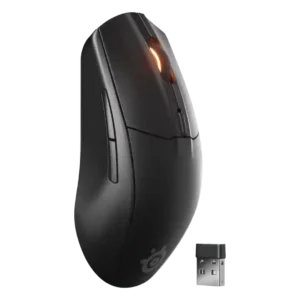
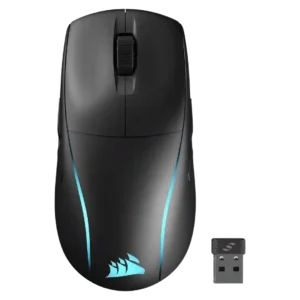
Compare SteelSeries Rival 3 Gen 2 Wireless vs Corsair M75 Wireless

P1 SteelSeries Rival 3 Gen 2 Wireless
P2 Corsair M75 Wireless

Comparison Takeaways

SteelSeries Rival 3 Gen 2 Wireless

Where It Has the Edge

  • fingertip grip comfort is 4.3 vs 2.1. Fingertip grip users generally had positive experiences, including no fatigue during extended use.
  • grip texture is 4.4 vs 3.1. Reviewers liked the matte, textured plastic for grip, comfort, and avoiding slippery or sweaty feel.
  • programmable buttons is 4.1 vs 3.0. Reviewers valued the remappable side buttons and macro-capable controls, especially for a budget mouse.
  • click noise is 4.0 vs 2.9. Click sound was mixed, ranging from barely audible or satisfying to loud, echoey, and cheap when pressed hard.

Corsair M75 Wireless

Where It Has the Edge

  • handedness options is 4.7 vs 2.2. Handedness options were a core strength, with reviewers repeatedly praising true ambidextrous support and left-handed usefulness.
  • lift-off distance is 4.5 vs 2.5. Lift-off behavior received positive remarks, with reviewers noting strong lift and a nice low-distance feel.
  • MOBA gaming suitability is 4.6 vs 2.8. MOBA gaming suitability was positive in one review, which found it delightful and responsive for League of Legends.
  • palm grip comfort is 4.3 vs 3.0. Palm grip support was mostly strong thanks to the high back and hand-filling body, with one reviewer finding...
Average score
Product 1: SteelSeries Rival 3 Gen 2...
3.9
Product 2: Corsair M75 Wireless
3.9
2.4GHz connectivity
Product 1: SteelSeries Rival 3 Gen 2...
4.4

Reviewers generally found the 2.4GHz mode reliable, low-latency, and best for gaming, with occasional notes that dongle placement or switches could affect ease.

Product 2: Corsair M75 Wireless
4.4

2.4GHz connectivity was praised for speed, responsiveness, and practical wireless switching.

acceleration control
Product 1: SteelSeries Rival 3 Gen 2...
4.2

SteelSeries GG was praised for offering unusually broad tuning, including acceleration and deceleration controls, especially for a budget mouse.

Product 2: Corsair M75 Wireless
4.4

Acceleration handling was judged more than sufficient, with reviewers saying rapid movements were tracked accurately.

Accuracy and tracking precision
Product 1: SteelSeries Rival 3 Gen 2...
4.2

Most reviewers said aiming and tracking felt precise enough for casual gaming and daily use, though some noted limits for high-level competitive play.

Product 2: Corsair M75 Wireless
4.7

Reviewers repeatedly praised accurate tracking and precise aiming, including smooth shot lining and strong control over 2.4GHz and Bluetooth.

balance and weight distribution
Product 1: SteelSeries Rival 3 Gen 2...
2.6

Several reviewers criticized the rear-biased battery weight, saying it created drag or made fine adjustments require extra effort.

Product 2: Corsair M75 Wireless
2.6

Weight distribution was a concern for some reviewers, especially imbalance toward the front or back, though one liked the added control for sniping.

battery life
Product 1: SteelSeries Rival 3 Gen 2...
4.5

Battery life drew some of the strongest praise, with reviewers highlighting hundreds of hours of use, rechargeable AAA compatibility, and strong endurance despite a few cost caveats.

Product 2: Corsair M75 Wireless
4.4

Battery life was one of the strongest consensus positives, with many reviewers reporting impressive or accurate endurance.

Bluetooth support
Product 1: SteelSeries Rival 3 Gen 2...
4.2

Bluetooth was widely valued for device switching, travel, and battery savings, but one reviewer had pairing problems and others treated it as less suitable for serious gaming.

Product 2: Corsair M75 Wireless
4.0

Bluetooth support was useful for battery life and device switching, but it was also described as slower than 2.4GHz.

build quality
Product 1: SteelSeries Rival 3 Gen 2...
4.6

Build quality was consistently praised as sturdy, solid, and better than the budget price suggests, with little flex or creaking reported.

Product 2: Corsair M75 Wireless
3.9

Build quality leaned positive for solidity and finish, but several reviewers noted looseness, cheap feel, or disappointment.

button customization
Product 1: SteelSeries Rival 3 Gen 2...
4.3

Reviewers liked the ability to remap buttons and adjust controls in SteelSeries GG, although Bluetooth mode and profile switching added some limitations.

Product 2: Corsair M75 Wireless
4.6

Button customization was consistently praised for flexible remapping and personalized layouts.

button responsiveness
Product 1: SteelSeries Rival 3 Gen 2...
4.2

Main inputs were generally described as responsive and satisfying, with little complaint about missed inputs or delay in normal use.

Product 2: Corsair M75 Wireless
4.5

Button responsiveness was a strength, with reviewers reporting responsive switches, solid performance, and no missed clicks.

cable flexibility
Product 1: SteelSeries Rival 3 Gen 2...
No score yet
Product 2: Corsair M75 Wireless
3.6

Cable flexibility was mixed: one reviewer liked the braided cable, while another reported cable drag during charging.

charging convenience
Product 1: SteelSeries Rival 3 Gen 2...
3.0

Opinions were mixed: reviewers liked avoiding charging cables and using rechargeable AAAs, but disliked being dependent on replacement batteries when they die.

Product 2: Corsair M75 Wireless
4.3

Charging convenience was positive thanks to fast recharge and easy USB-C top-ups.

claw grip comfort
Product 1: SteelSeries Rival 3 Gen 2...
4.2

The low, symmetrical shape was consistently described as comfortable or well-suited for claw grip users.

Product 2: Corsair M75 Wireless
4.5

Claw grip comfort was praised by reviewers who found the hump and control well-suited to that grip.

click latency
Product 1: SteelSeries Rival 3 Gen 2...
4.2

Click latency was generally seen as low enough not to be noticeable and suitable for casual or even some competitive play.

Product 2: Corsair M75 Wireless
4.5

Click latency was usually praised as essentially instant, although one reviewer felt longer travel slightly slowed actuation.

click noise
Product 1: SteelSeries Rival 3 Gen 2...
4.0

Click sound was mixed, ranging from barely audible or satisfying to loud, echoey, and cheap when pressed hard.

Product 2: Corsair M75 Wireless
2.9

Click noise was a drawback in multiple reviews, with louder or noisier clicks than expected.

connection stability
Product 1: SteelSeries Rival 3 Gen 2...
3.6

Most reviewers had stable wireless connections, but several noted wake-up delays, Bluetooth setup trouble, or interference/dropout issues in some setups.

Product 2: Corsair M75 Wireless
4.0

Connection stability was mostly reliable, but one review reported update-time spikes that undercut confidence.

cross-platform compatibility
Product 1: SteelSeries Rival 3 Gen 2...
4.4

Reviewers valued quick switching across PC, consoles, tablets, phones, and other devices, especially when using Bluetooth alongside the dongle.

Product 2: Corsair M75 Wireless
No score yet
DPI range
Product 1: SteelSeries Rival 3 Gen 2...
4.1

The 18,000 DPI range was considered more than enough for most users, with several reviewers noting that very high DPI numbers matter less outside pro-level play.

Product 2: Corsair M75 Wireless
3.9

The DPI ceiling was considered strong for most players, though one reviewer noted it is not the highest available.

durability over time
Product 1: SteelSeries Rival 3 Gen 2...
4.2

One review linked the redesigned click mechanism to better longevity, but long-term durability evidence was otherwise limited.

Product 2: Corsair M75 Wireless
4.1

Durability over time had limited but positive short-term evidence from one reviewer saying it still looked new after days of use.

ecosystem integration
Product 1: SteelSeries Rival 3 Gen 2...
4.0

One reviewer called it a strong option for users already invested in SteelSeries gear and software.

Product 2: Corsair M75 Wireless
4.2

Ecosystem integration was supported by Corsair lighting-link syncing across multiple Corsair devices.

ergonomic design
Product 1: SteelSeries Rival 3 Gen 2...
4.5

One reviewer praised the shape for fitting naturally without forcing the hand into an awkward twist.

Product 2: Corsair M75 Wireless
4.7

Ergonomic design was praised for comfort, control, and avoiding awkward wrist or hand angles.

fingertip grip comfort
Product 1: SteelSeries Rival 3 Gen 2...
4.3

Fingertip grip users generally had positive experiences, including no fatigue during extended use.

Product 2: Corsair M75 Wireless
2.1

Fingertip grip comfort was weak, with reviewers describing the mouse as unwieldy or stiff in fingertip use.

firmware reliability
Product 1: SteelSeries Rival 3 Gen 2...
No score yet
Product 2: Corsair M75 Wireless
4.2

Firmware reliability received a positive mention for seamless firmware updates.

FPS gaming suitability
Product 1: SteelSeries Rival 3 Gen 2...
3.8

The mouse handled casual FPS and general shooters well, but reviewers repeatedly warned that weight and sensor limits make it less ideal for competitive esports.

Product 2: Corsair M75 Wireless
3.8

FPS gaming suitability was mixed: casual and general FPS play worked well, but pure competitive or solo FPS users may prefer lighter/faster mice.

glide smoothness
Product 1: SteelSeries Rival 3 Gen 2...
4.3

The PTFE feet were widely praised for smooth, effortless glide across mousepads, desks, and other surfaces.

Product 2: Corsair M75 Wireless
4.2

Glide smoothness was broadly praised due to PTFE feet, though some reviewers felt weight or skate slipperiness held it back.

grip texture
Product 1: SteelSeries Rival 3 Gen 2...
4.4

Reviewers liked the matte, textured plastic for grip, comfort, and avoiding slippery or sweaty feel.

Product 2: Corsair M75 Wireless
3.1

Grip texture was mixed: the coating handled marks well, but the smooth sides caused grip problems or finger discomfort for some.

handedness options
Product 1: SteelSeries Rival 3 Gen 2...
2.2

Reviewers criticized the lack of a true left-handed version, despite the mostly symmetrical shell.

Product 2: Corsair M75 Wireless
4.7

Handedness options were a core strength, with reviewers repeatedly praising true ambidextrous support and left-handed usefulness.

left and right click quality
Product 1: SteelSeries Rival 3 Gen 2...
4.4

Primary clicks were usually praised as snappy, responsive, tactile, bouncy, or satisfying for the price.

Product 2: Corsair M75 Wireless
4.0

Main click quality was mostly praised for tactile feedback and responsiveness, though one reviewer found the feel cheap or off.

lift-off distance
Product 1: SteelSeries Rival 3 Gen 2...
2.5

Reviewers considered the fixed lift-off distance a drawback compared with newer sensors that allow finer adjustment.

Product 2: Corsair M75 Wireless
4.5

Lift-off behavior received positive remarks, with reviewers noting strong lift and a nice low-distance feel.

long-session comfort
Product 1: SteelSeries Rival 3 Gen 2...
4.5

Several reviewers reported comfort across long workdays, gaming sessions, or extended use without hand or wrist fatigue.

Product 2: Corsair M75 Wireless
4.5

Long-session comfort was positive, with reviewers citing low fatigue and extended-session comfort.

macro support
Product 1: SteelSeries Rival 3 Gen 2...
4.3

Macro setup was generally praised as simple, useful, and available through SteelSeries GG or Engine.

Product 2: Corsair M75 Wireless
4.3

Macro support was viewed positively where mentioned, with iCUE allowing shortcuts, media controls, app launches, and macros.

materials quality
Product 1: SteelSeries Rival 3 Gen 2...
4.4

Reviewers praised the plastic and polymer materials as high-quality, durable, and pleasant for the price.

Product 2: Corsair M75 Wireless
3.8

Materials quality was mixed, with plastic feeling sturdy in one review but RGB-frame gaps and dust concerns in another.

MMO gaming suitability
Product 1: SteelSeries Rival 3 Gen 2...
2.8

The beginner-focused review found the mouse usable for many games but too basic for serious MMO players who need more buttons and customization.

Product 2: Corsair M75 Wireless
3.0

MMO gaming suitability was limited by button count, despite one reviewer saying it could work across varied titles.

MOBA gaming suitability
Product 1: SteelSeries Rival 3 Gen 2...
2.8

The beginner-focused review treated it as serviceable for MOBAs, but said serious players would likely want more buttons and customization.

Product 2: Corsair M75 Wireless
4.6

MOBA gaming suitability was positive in one review, which found it delightful and responsive for League of Legends.

motion consistency
Product 1: SteelSeries Rival 3 Gen 2...
3.6

Tracking consistency was mostly good in ordinary use, but a few reviewers noted jitter or tracking deviation at higher expectations.

Product 2: Corsair M75 Wireless
4.6

Motion consistency was praised for responding naturally to hand movement and keeping up with both micro-movements and frantic play.

onboard memory
Product 1: SteelSeries Rival 3 Gen 2...
4.4

Reviewers liked that settings or DPI profiles could be saved to the mouse and carried between devices.

Product 2: Corsair M75 Wireless
4.1

Onboard memory was appreciated because settings could be saved and iCUE avoided after setup, though only one profile was noted.

palm grip comfort
Product 1: SteelSeries Rival 3 Gen 2...
3.0

Palm grip comfort was weaker than claw or fingertip comfort, with multiple reviewers calling the mouse too low, short, narrow, or awkward for full palm support.

Product 2: Corsair M75 Wireless
4.3

Palm grip support was mostly strong thanks to the high back and hand-filling body, with one reviewer finding it less natural than claw grip.

polling rate
Product 1: SteelSeries Rival 3 Gen 2...
3.8

The 1,000Hz cap was considered perfectly fine for most casual players, though below the 4,000Hz or 8,000Hz modes found in pricier mice.

Product 2: Corsair M75 Wireless
3.6

Polling rate was viewed as adequate for most gamers, but several reviewers criticized it for lagging behind 4,000Hz and 8,000Hz rivals.

portability
Product 1: SteelSeries Rival 3 Gen 2...
4.2

Reviewers liked the travel potential from the compact body, dongle storage, Bluetooth, and the ability to avoid carrying a charging cable.

Product 2: Corsair M75 Wireless
4.4

Portability was helped by the dongle storage slot, which one reviewer called a nice touch.

premium feel
Product 1: SteelSeries Rival 3 Gen 2...
4.0

Many reviewers said the mouse felt better or more premium than its price, though side buttons and other cheaper-feeling parts tempered that praise.

Product 2: Corsair M75 Wireless
3.1

Premium feel was divided between an elegant, measured design and complaints that the mouse felt cheap.

profile switching
Product 1: SteelSeries Rival 3 Gen 2...
3.0

Profile handling was seen as limited because switching configurations depends on software or requires remapping a button.

Product 2: Corsair M75 Wireless
2.7

Profile and DPI switching drew mixed reactions: one reviewer liked on-device tuning, but several disliked the underside DPI control or missing automatic profile switching.

programmable buttons
Product 1: SteelSeries Rival 3 Gen 2...
4.1

Reviewers valued the remappable side buttons and macro-capable controls, especially for a budget mouse.

Product 2: Corsair M75 Wireless
3.0

Reviewers found the programmable button count limiting for a gaming mouse, especially at the price.

RGB features
Product 1: SteelSeries Rival 3 Gen 2...
2.5

Reviewers mostly saw the wireless RGB as limited or absent, with only indicator lighting, though some accepted the tradeoff for longer battery life.

Product 2: Corsair M75 Wireless
3.3

RGB features were highly mixed: customization and desktop style were praised, but hidden zones, weak underglow, and battery drain drew criticism.

scroll wheel quality
Product 1: SteelSeries Rival 3 Gen 2...
3.4

Scroll wheel feedback was split: some found it responsive or nicely notched, while others reported looseness, mushiness, cheap feel, or squeaking.

Product 2: Corsair M75 Wireless
3.7

Scroll wheel quality was mixed, ranging from tactile and pleasant to too stiff, sluggish, or loud.

sensor performance
Product 1: SteelSeries Rival 3 Gen 2...
3.9

The sensor was usually judged good enough and responsive for casual gaming, but several reviewers called it older, average, or behind higher-end sensors.

Product 2: Corsair M75 Wireless
4.6

The Marksman sensor was broadly described as reliable, responsive, and precise, with only isolated surface-related reservations.

shape comfort
Product 1: SteelSeries Rival 3 Gen 2...
4.3

The shell was broadly praised as comfortable, simple, and effective, especially for smaller hands or non-palm grips.

Product 2: Corsair M75 Wireless
4.0

Shape comfort was generally positive for palm/claw and larger hands, but a few reviewers found the shape generic, uncomfortable, or not ideal.

side button quality
Product 1: SteelSeries Rival 3 Gen 2...
2.8

Side buttons were the most repeated control complaint, often described as thin, finicky, hard to hit, or easy to mis-click, though one reviewer found them improved.

Product 2: Corsair M75 Wireless
3.4

Side button quality was the most divided area: some praised easy swapping and placement, while many criticized looseness, low profiles, and fiddly use.

skate durability
Product 1: SteelSeries Rival 3 Gen 2...
4.0

Evidence was limited but positive, with reviewers noting durable PTFE feet and removable skates that could be handled without damage.

Product 2: Corsair M75 Wireless
4.2

Skate durability received one positive mention for resisting dust and fluff on mouse mats.

software stability
Product 1: SteelSeries Rival 3 Gen 2...
No score yet
Product 2: Corsair M75 Wireless
2.0

Software stability had one clear negative report: iCUE reset Windows mouse settings when launched.

software usability
Product 1: SteelSeries Rival 3 Gen 2...
4.1

SteelSeries GG was often considered useful and straightforward for mouse settings, though some reviewers found it cluttered, dated, or less intuitive than rivals.

Product 2: Corsair M75 Wireless
4.2

Software usability was generally positive for iCUE customization and layout, though Bluetooth limitations and learning curve were noted.

surface compatibility
Product 1: SteelSeries Rival 3 Gen 2...
3.6

Surface performance was generally solid across common materials, but reviewers noted missing glass support and one failure on faux leather.

Product 2: Corsair M75 Wireless
3.9

Surface compatibility was mostly positive across varied surfaces, but one reviewer noticed hitching on imperfect surfaces.

switch durability
Product 1: SteelSeries Rival 3 Gen 2...
3.8

Switch durability was mostly praised through 60-million-click ratings, but one reviewer reported a switch issue during disassembly testing.

Product 2: Corsair M75 Wireless
No score yet
switch feel
Product 1: SteelSeries Rival 3 Gen 2...
4.1

Switch feel was generally crisp, clicky, and satisfying, though a few reviewers wanted a crisper or less dampened response.

Product 2: Corsair M75 Wireless
4.6

Switch feel was praised for tactile, premium, crisp, and fast feedback.

tilt gesture controls
Product 1: SteelSeries Rival 3 Gen 2...
No score yet
Product 2: Corsair M75 Wireless
1.5

Tilt gesture controls were a weakness because one reviewer specifically expressed disappointment that tilt controls were absent.

value for money
Product 1: SteelSeries Rival 3 Gen 2...
4.4

Reviewers strongly agreed the mouse offers good budget value, especially on sale, while some argued similar money can buy lighter or higher-performance alternatives.

Product 2: Corsair M75 Wireless
3.3

Value for money was sharply split, with praise at discounted prices or for lefties but criticism at full premium pricing.

weight
Product 1: SteelSeries Rival 3 Gen 2...
2.9

Weight was the most common complaint: some found it manageable or even comfortable, but many called it heavy for modern wireless gaming.

Product 2: Corsair M75 Wireless
3.2

Weight was polarizing, with some calling it lightweight enough and others finding it chunky, sluggish, or too heavy for FPS-first play.

weight tuning
Product 1: SteelSeries Rival 3 Gen 2...
4.1

Reviewers liked the ability to use one or two AAA batteries to trade weight against battery life.

Product 2: Corsair M75 Wireless
No score yet
wireless latency
Product 1: SteelSeries Rival 3 Gen 2...
4.5

Wireless latency was generally described as negligible, low-latency, or effectively indistinguishable from wired use in normal play.

Product 2: Corsair M75 Wireless
4.6

Wireless latency was praised where tested, especially the sub-millisecond 2.4GHz response.

wireless performance
Product 1: SteelSeries Rival 3 Gen 2...
4.3

Overall wireless performance was widely seen as reliable and strong for the price, though not ideal for every competitive or battery-sensitive user.

Product 2: Corsair M75 Wireless
4.2

Wireless performance was usually praised as responsive and dependable, though one reviewer found Corsair's connection less flawless than Razer's.