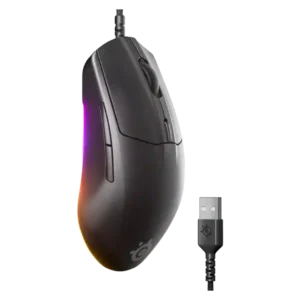
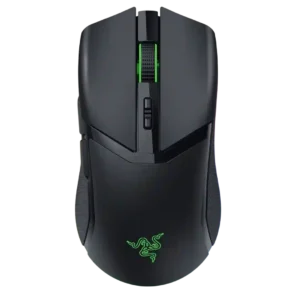
Compare SteelSeries Rival 3 Gen 2 Wired vs Razer Cobra Pro

P1 SteelSeries Rival 3 Gen 2 Wired
P2 Razer Cobra Pro

Comparison Takeaways

SteelSeries Rival 3 Gen 2 Wired

Where It Has the Edge

  • software stability is 3.9 vs 2.5. Software stability is acceptable, with reviewers saying it is not resource-heavy and functions at its core despite clutter.
  • handedness options is 4.0 vs 2.8. The mouse uses a symmetrical, ambidextrous-style shell, but side-button placement means its practical handedness support is not fully...
  • weight is 4.3 vs 3.3. At 77 grams, the wired Rival 3 is light enough for quick movement without requiring an extreme ultralight...
  • cable flexibility is 4.5 vs 3.5. The upgraded braided/paracord-style cable is one of the wired model's best-reviewed improvements because it avoids drag and desk...

Razer Cobra Pro

Where It Has the Edge

  • 2.4GHz connectivity is 4.9 vs 1.0. Reviewers consistently cite flexible 2.4GHz wireless or HyperSpeed use alongside wired and Bluetooth modes, treating the low-latency dongle...
  • Bluetooth support is 3.7 vs 1.0. Bluetooth is widely supported and useful for travel or productivity, though reviewers often warn it adds latency compared...
  • palm grip comfort is 3.5 vs 2.2. Palm grip comfort is limited to smaller hands; reviewers commonly say claw and fingertip fit better, while palm...
  • sensor performance is 4.9 vs 4.1. Sensor performance is outstanding across reviews, centered on the Focus Pro 30K sensor, high resolution, high speed, and...
Average score
Product 1: SteelSeries Rival 3 Gen 2...
4.0
Product 2: Razer Cobra Pro
4.0
2.4GHz connectivity
Product 1: SteelSeries Rival 3 Gen 2...
1.0

The wired Rival 3 does not provide 2.4GHz connectivity; reviewers describe that functionality as belonging to the wireless model, not the wired one.

Product 2: Razer Cobra Pro
4.9

Reviewers consistently cite flexible 2.4GHz wireless or HyperSpeed use alongside wired and Bluetooth modes, treating the low-latency dongle mode as the main gaming connection.

acceleration control
Product 1: SteelSeries Rival 3 Gen 2...
4.0

SteelSeries GG exposes acceleration-related settings alongside DPI, angle snapping, and button assignment controls.

Product 2: Razer Cobra Pro
4.5

Sensor specs and testing repeatedly point to high acceleration handling, usually framed around the Focus Pro sensor’s 70G capability rather than user-tunable acceleration controls.

Accuracy and tracking precision
Product 1: SteelSeries Rival 3 Gen 2...
4.6

Reviewers consistently found aim and tracking dependable, including clean flicks, confident shots, and precise movement control.

Product 2: Razer Cobra Pro
4.7

Tracking precision is one of the strongest areas, with reviewers describing accurate tracking, precision-shooter suitability, and reliable movement across demanding game and surface tests.

balance and weight distribution
Product 1: SteelSeries Rival 3 Gen 2...
No score yet
Product 2: Razer Cobra Pro
3.3

Weight balance is mixed: some reviewers found the added mass helpful for control, while others called the mouse back-heavy or unusually weighted.

battery life
Product 1: SteelSeries Rival 3 Gen 2...
No score yet
Product 2: Razer Cobra Pro
4.1

Battery life is generally usable to strong, but reviewers repeatedly note that RGB brightness, high polling, and HyperPolling can cut runtime far below headline claims.

Bluetooth support
Product 1: SteelSeries Rival 3 Gen 2...
1.0

Bluetooth is not part of the wired Rival 3 experience; the evidence frames wireless features as absent from this version.

Product 2: Razer Cobra Pro
3.7

Bluetooth is widely supported and useful for travel or productivity, though reviewers often warn it adds latency compared with 2.4GHz wireless.

build quality
Product 1: SteelSeries Rival 3 Gen 2...
4.2

Build quality is a clear strength for the price, with reviewers describing a solid shell and no creaking or flexibility.

Product 2: Razer Cobra Pro
4.3

Build quality is broadly praised, with reviewers describing solid construction, no rattles, and sturdy materials, though a few critical reviews still question the overall product direction.

button customization
Product 1: SteelSeries Rival 3 Gen 2...
4.2

Button customization is well covered through SteelSeries GG, including remapping, side button customization, and different software-assigned functions.

Product 2: Razer Cobra Pro
4.3

Button customization is a major strength through Synapse, with reviewers noting remapping, extra functions, profiles, and secondary-function options.

button responsiveness
Product 1: SteelSeries Rival 3 Gen 2...
4.4

Inputs and click actions are repeatedly described as responsive, with direct movement translation and no meaningful delay in normal use.

Product 2: Razer Cobra Pro
4.7

Button responsiveness is praised where discussed, especially fast primary-switch triggering and solid in-game button feel.

cable flexibility
Product 1: SteelSeries Rival 3 Gen 2...
4.5

The upgraded braided/paracord-style cable is one of the wired model's best-reviewed improvements because it avoids drag and desk friction.

Product 2: Razer Cobra Pro
3.5

Cable feedback is mixed: some reviewers liked the flexible braided cable, while others found it stiff or prone to pull when used wired.

charging convenience
Product 1: SteelSeries Rival 3 Gen 2...
No score yet
Product 2: Razer Cobra Pro
4.2

Charging convenience is strong because the mouse can charge over USB-C while in use and can add magnetic wireless charging through optional accessories.

claw grip comfort
Product 1: SteelSeries Rival 3 Gen 2...
4.4

The shape works especially well for claw grip users, with multiple reviews calling claw use comfortable or ideal.

Product 2: Razer Cobra Pro
4.1

Claw grip comfort is well supported, especially for small to medium hands, though a few reviewers with larger hands found the small body less comfortable over time.

click latency
Product 1: SteelSeries Rival 3 Gen 2...
4.4

Click and input latency are treated as strong for a budget wired mouse, with cited response times around 1ms to 1.35ms.

Product 2: Razer Cobra Pro
4.8

Click latency is rated highly, with optical switches, low-latency wired behavior, and no debounce delay cited as performance advantages.

click noise
Product 1: SteelSeries Rival 3 Gen 2...
4.2

Click noise is controlled: the switches are clicky and tactile without being described as overly loud or heavy.

Product 2: Razer Cobra Pro
3.8

Click noise is mixed but mostly acceptable: some reviewers found the clicks pronounced or loud, while others described the sound as pleasant.

connection stability
Product 1: SteelSeries Rival 3 Gen 2...
5.0

The wired setup is praised for stable, consistent use without wireless drops or battery-related interruptions.

Product 2: Razer Cobra Pro
4.9

Connection stability is mostly strong, with several reviewers reporting no lag, no reliability issues, or no connectivity problems in wireless use.

cross-platform compatibility
Product 1: SteelSeries Rival 3 Gen 2...
4.0

Software support is directly stated for Windows 10 and macOS 11 or higher, giving the wired model basic cross-platform configuration coverage.

Product 2: Razer Cobra Pro
4.2

Cross-platform use is supported mainly through Bluetooth, dongle, and wired modes across computers, laptops, tablets, phones, and multiple devices.

dock compatibility
Product 1: SteelSeries Rival 3 Gen 2...
No score yet
Product 2: Razer Cobra Pro
4.1

Dock compatibility is present but accessory-dependent, with reviewers noting Mouse Dock Pro support and separate-purchase limitations.

DPI range
Product 1: SteelSeries Rival 3 Gen 2...
3.9

The wired model's 8,500 DPI ceiling is lower than premium mice but repeatedly judged enough for budget gaming and practical use.

Product 2: Razer Cobra Pro
4.6

The DPI range is very strong on paper and in software, with many reviewers referencing the 30,000 DPI sensor and adjustable DPI stages.

durability over time
Product 1: SteelSeries Rival 3 Gen 2...
4.1

Durability evidence centers on solid construction, 60-million-click switch ratings, and consistent long-term click performance.

Product 2: Razer Cobra Pro
4.5

Durability over time is supported mainly through switch life claims and reviewer confidence in long-term clicking, not through extended multi-year wear testing.

ecosystem integration
Product 1: SteelSeries Rival 3 Gen 2...
No score yet
Product 2: Razer Cobra Pro
4.2

Ecosystem integration is a clear Razer strength, including Chroma lighting, Synapse, HyperSpeed multi-device pairing, dock support, and single-dongle setups.

ergonomic design
Product 1: SteelSeries Rival 3 Gen 2...
4.3

The wired Rival 3 is repeatedly described as ergonomic or improved in shape, especially for users who do not need a high palm-filling hump.

Product 2: Razer Cobra Pro
3.8

Ergonomic impressions are mixed: many liked the compact symmetrical feel, while others said it lacks the comfort of larger ergonomic mice.

fingertip grip comfort
Product 1: SteelSeries Rival 3 Gen 2...
4.4

Fingertip users are strongly served by the low-profile shape, with reviewers finding fingertip and claw grips comfortable.

Product 2: Razer Cobra Pro
4.3

Fingertip grip comfort is consistently strong because the compact, low-profile shape suits fingertip use for many hand sizes.

firmware reliability
Product 1: SteelSeries Rival 3 Gen 2...
No score yet
Product 2: Razer Cobra Pro
2.5

Firmware reliability has limited negative evidence, with one reviewer reporting inconsistent DPI behavior between Bluetooth and wireless modes.

FPS gaming suitability
Product 1: SteelSeries Rival 3 Gen 2...
4.4

FPS suitability is strong for the price, with reviewers testing it in shooters and finding flicks, recoil control, and ranked-play basics dependable.

Product 2: Razer Cobra Pro
4.1

FPS suitability is mixed-positive: the sensor and clicks suit shooters, but the weight and compact body make it less ideal for strict ultralight esports users.

glide smoothness
Product 1: SteelSeries Rival 3 Gen 2...
4.6

Glide performance is consistently positive thanks to PTFE feet that move smoothly across mousepads, desks, and general surfaces.

Product 2: Razer Cobra Pro
4.5

Glide smoothness is a major strength, with PTFE skates repeatedly described as smooth, consistent, controlled, or effortless.

grip texture
Product 1: SteelSeries Rival 3 Gen 2...
4.1

Grip texture is generally positive, with matte/textured plastic helping control, though one reviewer wanted deeper side grooves.

Product 2: Razer Cobra Pro
3.7

Grip texture is divisive: reviewers praise the rubberized sides for control, but critics warn they wear down, feel slippery, or cannot be removed.

handedness options
Product 1: SteelSeries Rival 3 Gen 2...
4.0

The mouse uses a symmetrical, ambidextrous-style shell, but side-button placement means its practical handedness support is not fully neutral.

Product 2: Razer Cobra Pro
2.8

Handedness is limited despite the symmetrical body because side buttons are on the left; right-handers benefit most and left-handers face compromises.

left and right click quality
Product 1: SteelSeries Rival 3 Gen 2...
4.5

Primary click quality is a strength, with reviewers calling the left and right clicks firm, responsive, balanced, and good for rapid tapping.

Product 2: Razer Cobra Pro
4.3

Left and right click quality is generally positive, with reviewers calling the clicks tactile, expected for Razer, or nicely implemented.

lift-off distance
Product 1: SteelSeries Rival 3 Gen 2...
No score yet
Product 2: Razer Cobra Pro
4.3

Lift-off distance and tracking-distance options are supported through Synapse calibration, adjustable cut-off, and reviewer comments on liftoff settings.

long-session comfort
Product 1: SteelSeries Rival 3 Gen 2...
4.4

Long-session comfort is good for the right grip style, helped by light weight, prolonged-use comfort, and reduced wrist fatigue.

Product 2: Razer Cobra Pro
4.1

Long-session comfort is mixed: some reviewers reported fatigue-free or long-term comfort, while others found the small body or weight tiring.

macro support
Product 1: SteelSeries Rival 3 Gen 2...
4.2

Macro support is available through SteelSeries GG for the side buttons, giving the budget mouse useful extra flexibility.

Product 2: Razer Cobra Pro
3.9

Macro support is mixed-positive: several reviewers cite macros and Synapse functions, but one notes the mouse is not fully macro-programmable in the broadest sense.

materials quality
Product 1: SteelSeries Rival 3 Gen 2...
4.2

Materials are budget-conscious but well received, especially the matte ABS plastic shell and thick, subtly textured surface.

Product 2: Razer Cobra Pro
4.4

Materials quality is usually praised through sturdy plastic, matte finishes, rubberized grips, and solid feel, though grip material durability raises concerns.

MMO gaming suitability
Product 1: SteelSeries Rival 3 Gen 2...
No score yet
Product 2: Razer Cobra Pro
2.5

MMO suitability is weak because reviewers repeatedly say the Cobra Pro lacks the extra inputs expected from MMO-focused mice.

MOBA gaming suitability
Product 1: SteelSeries Rival 3 Gen 2...
No score yet
Product 2: Razer Cobra Pro
2.3

MOBA suitability is also weak-to-mixed, with reviewers saying it lacks the extra keys common for MOBA/MMO play despite being usable as an all-rounder.

motion consistency
Product 1: SteelSeries Rival 3 Gen 2...
4.4

Motion consistency is strong, with reviewers describing predictable responses, natural recoil control, and stable aim tracking.

Product 2: Razer Cobra Pro
3.8

Motion consistency is mostly strong thanks to smooth tracking and strong sensor performance, though one reviewer noticed jitter at very high DPI.

onboard memory
Product 1: SteelSeries Rival 3 Gen 2...
4.5

Onboard memory is supported for saving game-specific profiles directly to the mouse.

Product 2: Razer Cobra Pro
4.4

Onboard memory is a strength, with repeated evidence of five stored profiles and software-free profile use after setup.

palm grip comfort
Product 1: SteelSeries Rival 3 Gen 2...
2.2

Palm grip is a weak fit because the low, smaller body leaves space under the hand and can feel too small.

Product 2: Razer Cobra Pro
3.5

Palm grip comfort is limited to smaller hands; reviewers commonly say claw and fingertip fit better, while palm grip can feel cramped.

polling rate
Product 1: SteelSeries Rival 3 Gen 2...
3.9

The 1,000Hz polling rate is standard and acceptable for budget gaming, though reviewers note higher-end mice go beyond it.

Product 2: Razer Cobra Pro
4.3

Polling rate support is strong but accessory-dependent: 1,000Hz is standard, while 4,000Hz or 8,000Hz requires optional Razer hardware.

portability
Product 1: SteelSeries Rival 3 Gen 2...
4.0

Portability is decent due to the compact size, but the wired connection keeps this from being a top travel-first mouse.

Product 2: Razer Cobra Pro
4.5

Portability is strong thanks to compact size, Bluetooth, dongle storage, and laptop-bag usefulness.

premium feel
Product 1: SteelSeries Rival 3 Gen 2...
3.4

Premium feel is mixed: the mouse feels sturdy and capable, but reviewers note cheaper side buttons and less high-end flair than pricier models.

Product 2: Razer Cobra Pro
3.9

Premium feel is generally positive, with reviewers citing refined feel, premium finish, and well-engineered construction, though one negative review disputed the modern premium impression.

profile switching
Product 1: SteelSeries Rival 3 Gen 2...
4.0

Profile switching is possible through software remapping, though there is no default dedicated button for it.

Product 2: Razer Cobra Pro
3.7

Profile switching is supported through onboard profiles and a bottom profile button, though some reviewers question the placement or usefulness.

programmable buttons
Product 1: SteelSeries Rival 3 Gen 2...
4.3

The six-button layout gives the wired Rival 3 enough programmable control for everyday gaming without becoming complex.

Product 2: Razer Cobra Pro
4.0

Programmable buttons are a core feature, usually advertised as 10 controls, though reviewers sometimes count fewer practical top-side buttons.

RGB features
Product 1: SteelSeries Rival 3 Gen 2...
4.1

RGB is a clear wired-model advantage, with base underglow and software-customizable zones adding tasteful visual flair.

Product 2: Razer Cobra Pro
4.6

RGB features are one of the most praised differentiators, with reviewers highlighting underglow, Chroma zones, bright lighting, and customization.

scroll wheel quality
Product 1: SteelSeries Rival 3 Gen 2...
4.2

The scroll wheel is simple but effective, with distinct notches, smooth scrolling, and a usable wheel click.

Product 2: Razer Cobra Pro
4.0

Scroll wheel quality is mixed-positive: most found it tactile and stable, while some disliked the fixed wheel or lack of advanced wheel settings.

sensor performance
Product 1: SteelSeries Rival 3 Gen 2...
4.1

Sensor performance is strong for budget play, with reviewers finding the TrueMove/Core optical sensor responsive despite lower flagship specs.

Product 2: Razer Cobra Pro
4.9

Sensor performance is outstanding across reviews, centered on the Focus Pro 30K sensor, high resolution, high speed, and accurate tracking.

shape comfort
Product 1: SteelSeries Rival 3 Gen 2...
3.9

Shape comfort is broadly good for claw and fingertip users, though reviewers found it less hand-filling and less contoured than premium mice.

Product 2: Razer Cobra Pro
4.2

Shape comfort is broadly positive for small and medium hands, but reviewers with larger hands or Viper Mini expectations were less convinced.

side button quality
Product 1: SteelSeries Rival 3 Gen 2...
3.7

Side button quality is mixed: some reviews found them accessible and useful, while others said they felt thin, less distinct, or less premium.

Product 2: Razer Cobra Pro
4.2

Side button quality is generally positive, with reviewers praising access, resistance, minimal travel, and tactility despite limited left-side-only placement.

software stability
Product 1: SteelSeries Rival 3 Gen 2...
3.9

Software stability is acceptable, with reviewers saying it is not resource-heavy and functions at its core despite clutter.

Product 2: Razer Cobra Pro
2.5

Software stability has limited negative evidence, mainly one reviewer describing Synapse as less stable than before.

software usability
Product 1: SteelSeries Rival 3 Gen 2...
3.7

Software usability is mixed-to-positive: SteelSeries GG is powerful and clear for basics but criticized for clutter and navigation.

Product 2: Razer Cobra Pro
3.7

Software usability is mixed: Synapse offers deep control, but reviewers also complain that it is unpleasant, bloated, or requires extra apps.

surface compatibility
Product 1: SteelSeries Rival 3 Gen 2...
4.5

Surface compatibility is strong, with reviewers noting smooth movement across both desks and mousepads.

Product 2: Razer Cobra Pro
5.0

Surface compatibility is excellent, with multiple reviewers noting tracking on glass and other surfaces.

switch durability
Product 1: SteelSeries Rival 3 Gen 2...
4.1

Switch durability is backed by repeated 60-million-click/actuation ratings and comments about consistent performance.

Product 2: Razer Cobra Pro
4.9

Switch durability is very strong on paper, with repeated references to Gen-3 optical switches rated for 90 million clicks.

switch feel
Product 1: SteelSeries Rival 3 Gen 2...
4.4

Switch feel is a highlight, with firm, bouncy, crisp, and balanced feedback across reviews.

Product 2: Razer Cobra Pro
4.4

Switch feel is generally positive, described as tactile, clicky, precise, satisfying, or nicely implemented, though a few reviewers found them heavier.

tilt gesture controls
Product 1: SteelSeries Rival 3 Gen 2...
No score yet
Product 2: Razer Cobra Pro
1.0

Tilt controls are essentially absent; reviewers explicitly note there is no tilt wheel or left/right scroll-wheel push.

value for money
Product 1: SteelSeries Rival 3 Gen 2...
4.6

Value for money is one of the strongest themes, with reviewers repeatedly calling it a budget mouse that performs above its price.

Product 2: Razer Cobra Pro
3.7

Value for money is split: many reviewers justify the price through features and performance, while others call the base price and accessory costs high.

weight
Product 1: SteelSeries Rival 3 Gen 2...
4.3

At 77 grams, the wired Rival 3 is light enough for quick movement without requiring an extreme ultralight design.

Product 2: Razer Cobra Pro
3.3

Weight is one of the most divisive attributes: 77g feels manageable or even balanced to some, but too heavy for ultralight-focused reviewers.

weight tuning
Product 1: SteelSeries Rival 3 Gen 2...
No score yet
Product 2: Razer Cobra Pro
2.5

Weight tuning is very limited, with one reviewer only noting a small 2g reduction by removing the underside cover.

wireless latency
Product 1: SteelSeries Rival 3 Gen 2...
No score yet
Product 2: Razer Cobra Pro
4.7

Wireless latency is mostly excellent in 2.4GHz mode, with reviewers reporting no perceptible latency or seamless response; Bluetooth is slower.

wireless performance
Product 1: SteelSeries Rival 3 Gen 2...
No score yet
Product 2: Razer Cobra Pro
4.6

Wireless performance is a major strength in HyperSpeed/2.4GHz mode, with reviewers describing responsive, stable, low-latency wireless behavior.