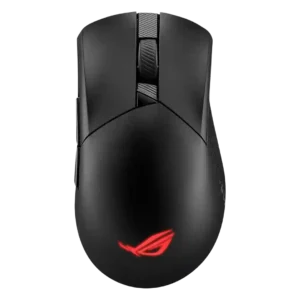
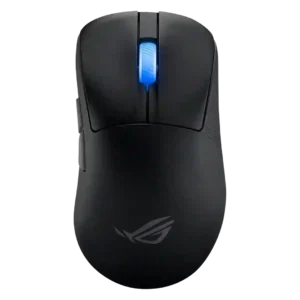
2.4GHz connectivity is a core strength, repeatedly described as a gaming-focused RF option alongside Bluetooth and wired USB.
Reviews that discussed wireless modes consistently describe 2.4GHz connectivity as a core option alongside Bluetooth and wired use. The evidence supports strong coverage for 2.4GHz operation, including receiver storage, tri-mode connectivity, and pairing through the main wireless receiver.
Acceleration-related sensor capability is repeatedly supported by 50G acceleration references and software features such as angle snapping or button response tuning.
Sensor acceleration specs were consistently described as high-end, with reviewers citing 50G acceleration alongside 750 IPS speed. The evidence supports strong acceleration capability, though it is presented as sensor performance rather than a separate user-facing tuning feature.
Tracking accuracy is one of the stronger repeated findings: reviewers describe precise sensor behavior, accurate DPI response, and reliable control in gaming and general use.
Tracking precision was repeatedly praised. Reviewers described near-perfect accuracy, high precision, accurate tracking, and jitter-free performance, with only one review noting high-DPI irregularity at extreme settings.
Weight balance has limited direct evidence, with one reviewer emphasizing that the mouse feels lightweight and manageable in hand.
Most reviewers who discussed balance found the mouse light and well balanced. One teardown-style review noted a slightly forward balance point, but the broader evidence describes the mouse as comfortable to move without obvious front or rear weight bias.
Battery life is broadly positive, especially in Bluetooth or RGB-off modes; real-world results range from a few days to about a week or more depending on lighting and connection.
Battery life is generally strong, with many reviews citing 107 hours at 2.4GHz with lighting off or strong real-world endurance. Higher polling rates and RGB reduce runtime, and one review measured lower Wi-Fi runtime with default lighting.
Bluetooth support is consistently documented as part of the tri-mode design and is useful for multi-device or lower-power use.
Bluetooth support is widely confirmed and treated as a useful convenience feature. Reviews describe Bluetooth pairing, multi-device Bluetooth use, and longer battery life in Bluetooth mode, while noting that it is not the low-latency competitive mode.
Build quality is mixed: several reviewers praise sturdiness and manufacturing, while others criticize thin plastic, flex, hollowness, or a cheaper feel.
Build quality is mostly positive, with reviewers describing a sturdy, solid shell and little flex or creaking. A few reviewers found the build merely average or noted minor rattle, so the evidence is strong but not flawless.
Button customization is a major software strength, with reviewers describing remapping, DPI-button behavior, button reassignment, and broader Armoury Crate control.
Button customization is well supported through Armoury Crate or onboard controls. Reviewers cite remapping inputs, assigning commands, programmable controls, and hardware-based adjustments for key settings.
Button responsiveness is mostly positive, with reviewers praising quick switch response, tactile clicks, and solid side-button or main-button action, though some note heavier actuation.
Button responsiveness is consistently praised. Reviewers cite snappy registration, lightning-quick actuation, responsive clicks, and short-travel optical buttons that support fast inputs.
Cable experience is generally positive where discussed, with reviewers citing paracord, soft, flexible, light, or braided USB-C cables; one review warns the cable is thin.
Cable flexibility is a strength overall. Several reviewers praised the paracord as flexible, tangle-free, or drag-reducing, though one reviewer found it long enough but somewhat stiff while charging.
Charging convenience is strong because reviewers repeatedly mention USB-C charging and the ability to keep using the mouse wired while it charges.
Charging and setup convenience are mixed. One review says USB-C charging is quick and painless, while another liked the adapter/booster setup but noted the connection stack could feel loose.
Claw-grip comfort is also well supported, with reviewers who use claw grip reporting a good fit or describing the shape as suitable for claw use.
Claw grip comfort is supported for many hand sizes. Reviews mention all-grip compatibility, relaxed claw comfort, and claw grip usefulness, though one detailed review cautions that fit depends on hand size.
Click latency is viewed positively where tested or discussed, with reviewers describing zero-click, near-instant, or low key-registration latency.
Click latency is a clear strength. Reviews cite latency reduction from high polling, measured low click latency, no latency issues, and low wireless click latency measurements.
Click noise is mixed: some reviewers describe quiet or crisp clicks, while others call the sound louder, clicky, or cheap.
Click noise is mixed but generally acceptable. Some reviews described the switches as quiet or quieter than competitors, while another found the optical clicks loud.
Connection stability is mostly positive, with reviews reporting stable Bluetooth or RF use and no noticeable drops, though one Bluetooth test showed some latency.
Connection stability is strong across the reviews that tested it. Reviewers mention tri-mode connectivity, no delays, no hiccups, no dropouts, and stable Bluetooth or wireless switching.
Cross-platform and multi-device use is a strength, with reviewers mentioning multiple Bluetooth devices, Mac/iPad pairing, phones/tablets, or versatile setup switching.
Cross-device use is supported mainly through Bluetooth and multi-device pairing. Reviewers cite simultaneous pairing with multiple devices, multi-device setup versatility, and the ability to pair up to three devices.
Debounce customization is weak. The available evidence says debounce was 0ms and not adjustable, and another review states there was no debounce setting in the software.
Dongle/dock handling is useful: reviewers mention magnetic dongle storage, receiver adapters, extension docks, and keeping the receiver close to the mouse.
The DPI range is widely covered and generally praised, especially the 26,000 to 36,000 DPI ceiling; several reviewers also note that such high settings are more than most users need.
The DPI range is one of the clearest strengths. Reviewers repeatedly cite 42,000 DPI or CPI and describe it as unusually high, although some note that most users will not need the upper end.
Durability over time is a standout theme because hot-swappable switches, replaceable feet, included spares, and repair-friendly design appear repeatedly.
Durability over time is supported mainly through switch behavior. One review specifically links optical switches to consistent long-term performance and reduced double-click risk.
Ecosystem integration is supported through Aura Sync, ASUS component syncing, Armoury Crate integration, and NVIDIA Reflex references.
Ecosystem integration is present through Aura Sync and the ROG Omni receiver. Reviewers cite lighting sync with compatible devices and using one receiver for multiple ROG peripherals.
Ergonomics are broadly praised, especially the asymmetrical right-handed form and high hump that help the hand rest naturally.
The design is clearly ergonomic and right-handed. Reviews describe the curved or ergonomic shape, often tying it to right-handed comfort and ultra-light wireless use.
Fingertip-grip support is present but less universal, with reviews saying the mouse can work for fingertip grip while also noting size or shape limitations for some users.
Fingertip grip comfort is limited and hand-size dependent. One review says the light weight makes fingertip use possible with grip tape, while another does not recommend fingertip gripping the ergonomic shell.
Firmware reliability is mixed: some reviews note firmware update support or notifications, while one reviewer reports being stuck on a repeated wireless update.
FPS suitability is strong, with reviewers specifically mentioning shooters, fast-paced games, flick shots, Fortnite, Doom, or low-latency gaming.
FPS and esports suitability are consistently strong. Reviewers repeatedly frame the mouse around hard-core gameplay, competitive esports, FPS use, high polling, and precision aiming.
Glide smoothness is a recurring positive, with PTFE feet and smooth or effortless movement praised across multiple reviews.
Glide smoothness is broadly praised. Reviewers cite PTFE feet, smooth glide, controlled movement, and good stock skates, including use on glass in some tests.
Grip texture is generally positive, with grooves, textured sides, grip tape, ridges, or side patterns improving hold, though surface finish concerns appear in a few reviews.
Grip texture is the most divisive physical trait. Some reviewers liked the non-slip or textured surface and grip tape, while others found the coating slippery or not secure enough without aftermarket grips.
Handedness is a clear limitation: reviews repeatedly say the mouse is designed for right-handed users and is not a good option for left-handed buyers.
Handedness is limited. Evidence shows the mouse is comfortable for right-handers but not suited for lefties or users wanting an ambidextrous shape.
Left and right click quality is generally good, with reviewers citing minimal play, low travel, zero-gap design, and satisfying main-button action; a few note firmer or post-travel behavior.
Left and right click quality is generally strong, with snappy, tactile, consistent, or solid click feedback across many reviews. Some detailed reviewers still criticized slipperiness or travel on the main buttons.
Lift-off distance is a configurable software feature in several reviews, and reviewers generally frame the available adjustment as useful for tuning control.
Lift-off distance support is present through software or onboard controls, but not universally flexible. Reviews mention lift-off adjustment, low/high LOD options, and 1mm/2mm LOD limits.
Long-session comfort is generally strong due to low weight, palm/claw comfort, and reduced fatigue, though sweat, dirt, and fit concerns appear in a few reviews.
Long-session comfort is strong where discussed. Reviewers cite no hand pain, low fatigue, and zero strain over prolonged play, helped by the low weight.
Macro support is directly supported in software-focused reviews that mention assigning macros through Armoury Crate.
Macro support is available through Armoury Crate. Reviews cite macro recording and saved macros in the software workflow.
Materials quality is mixed-to-good, with praise for PBT, rubberized sides, strong plastic, and matte surfaces, balanced by some concerns about slippy or basic plastic.
Materials quality is generally positive, with evidence for PBT buttons, bio-based nylon, rigid shell feel, and textured surfaces. Some reviewers still found the shell feel less premium than rubberized coatings.
MMO suitability is limited: programmable buttons help, but reviewers note it lacks the button count of a true MMO mouse.
MMO suitability is only lightly supported. One review used the mouse in Final Fantasy XIV raids and inventory management, but the review evidence does not present it as a dedicated MMO mouse.
MOBA suitability has limited support, mainly from one review connecting the mouse to real-time strategy and MMO-style gaming plus configurable buttons.
Motion consistency is supported by tests and play impressions that describe smooth movement, accurate surface behavior, and stable flicking in games.
Motion consistency is strong in gameplay, with reviewers citing smooth tracking, granular accuracy, and micro-adjustment precision. MotionSync is present but not configurable in one technical review.
Onboard memory is well supported through repeated references to saved profiles, local DPI/RGB settings, and multi-profile storage.
Onboard memory/profile support is present, with reviews citing hardware-based profiles, onboard controls, and profile switching without needing to keep the software open.
Palm-grip comfort is one of the clearest fit strengths, with multiple reviewers describing the hump, size, and hand support as comfortable for palm use.
Palm grip comfort is positive but not universal. Reviews describe comfortable palm or relaxed palm use, while hand size and the smaller ergonomic shape affect fit.
Polling-rate support is treated as gaming-ready, with multiple reviews citing 1,000Hz support or software control over polling-rate settings.
Polling rate is a headline strength across nearly every review. Evidence repeatedly confirms 4,000Hz wireless polling and 8,000Hz wired polling through the included booster.
Portability has limited but positive support from the extensive bundle and carrying/storage-related accessories included with the mouse.
Portability is supported through bundled accessories, dongle storage, and multi-device use. Reviewers mention grip tape, extra feet, and using one mouse across multiple devices or on the go.
Premium feel is mixed: some reviewers call it premium or well-finished, while others say plastic feel, flex, or a lack of standout features lowers the impression.
Premium feel is present but not unanimous. Some reviewers found the chassis premium and the mouse solid, while others criticized coating and click feel as less premium for the price.
Profile switching is supported by bottom-button or software profile controls, with several reviews noting on-the-fly profile changes.
Profile switching is supported but placement is sometimes criticized. Reviewers cite scenario profiles, saved profiles, and button-combination profile switching, while some dislike the underside DPI/profile control.
Programmable-button coverage is clear: reviews repeatedly mention six buttons or software-remappable controls, though the layout is not meant to replace a dedicated MMO mouse.
Programmable button coverage is solid for an esports mouse. Reviews cite five or six programmable buttons and programmable controls including scroll functions.
RGB support is common but not always central: reviewers mention illuminated logos, multiple zones or effects, Aura Sync, and battery tradeoffs when lighting is enabled.
RGB features are modest but useful. Reviews focus on the single scroll-wheel RGB zone, customization, battery notifications, and keeping RGB without losing the low weight.
Scroll-wheel feedback is mostly praised for distinct steps and grip, though a few reviews mention missing adjustable resistance or a cheap/rattly sound.
Scroll wheel quality is mixed. Some reviewers praised tactile, quiet, or excellent scrolling, while others wanted clearer steps, adjustable resistance, or a more controlled encoder.
Sensor performance is consistently presented as a strength, with reviewers citing high-end AimPoint or optical sensors, accurate behavior, and strong gaming capability.
Sensor performance is excellent overall. Reviewers cite an accurate high-end sensor, no tracking issue, top-tier performance, glass tracking, and no spinouts or jitter in normal testing.
Shape comfort is a recurring strength, especially for users who like a higher, ergonomic, right-handed shell, though some reviewers with different hand sizes found it less ideal.
Shape comfort is a major strength for many reviewers, especially for relaxed claw, palm, and small-to-medium ergonomic preferences. A few reviewers reported hand-size mismatch or cramps.
Side buttons are usually described as reachable and responsive, with positive comments on placement, thumb access, and click feel.
Side button quality is mixed. Some reviewers loved their placement and crispness, while others found them small, stiff, high, heavy, or less accessible for larger hands.
Skate durability is supported by replacement feet included in the box, giving users a direct path to replace worn glides.
Skate durability is only moderately supported. One review points to replaceable feet if they wear out, and another describes the stock skates as standard PTFE rather than emphasizing long-term durability.
Software stability has negative evidence from update and Armoury Crate problems, especially when software blocks reconfiguration or fails to work properly.
Software stability is a weakness. Reviews describe Armoury Crate as bloated, resource-heavy, and unwieldy, even though some settings can be handled without keeping it open.
Software usability is mixed: Armoury Crate offers deep customization, but some reviewers call it bloated, unintuitive, or awkward when updates are required.
Software usability is mixed. Some reviewers found configuration simple or the lighter Armoury Crate Gear easier, while others called the software slow, terrible, bloated, or in need of improvement.
Surface compatibility is supported through surface calibration, mousepad/glass/books calibration references, and reports of consistent movement across surfaces.
Surface compatibility is very strong. Reviews describe calibration for surfaces, tracking on glass, and reliable tracking across many surfaces or mouse pads.
Switch durability is strongly supported by repeated 70-million-click references and compatibility with replaceable 3-pin or 5-pin switches.
Switch durability is a clear strength. Multiple reviews cite the ROG Optical Micro Switches and their 100-million-click rating.
Switch feel is a customizable strength: reviewers describe mechanical and optical switch options, different click feels, and the ability to choose the preferred response.
Switch feel is divisive. Some reviewers praised crisp, consistent, punchy switches, while others described dull, mushy, hollow, or travel-heavy click feel.
Value for money is divided. Positive reviews justify the price through features and accessories, while critical reviews say competition or basic features weaken the value.
Value is mixed because the performance is high but the price is premium. Several reviewers called it expensive or pricey, while others still found the package justified or worth the money.
Weight is generally viewed as light enough for wireless gaming, especially around 79g on AimPoint versions, though the older 89g version is considered heavier than some rivals.
Weight is a standout strength. Reviewers repeatedly cite 54g or about 1.9 ounces and praise the control and low fatigue that come from the ultra-light build.
Wireless latency is one of the better-supported strengths, with multiple reviews reporting low latency, zero-delay behavior, or no noticeable lag.
Wireless latency is strong in the 2.4GHz mode. Reviewers cite low-latency wireless, low measured wireless click latency, high-polling responsiveness, and no obvious latency problems.
Wireless performance is generally strong, with reviewers citing RF performance, SpeedNova, low-latency operation, and solid gaming use.
Wireless performance is consistently strong. Reviewers report good wireless connectivity, no drop in tracking, no hiccups, no stutters, and no dropouts during use.