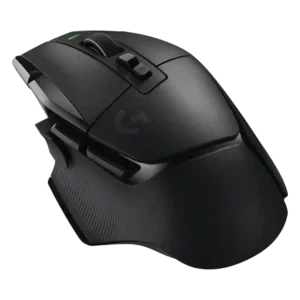
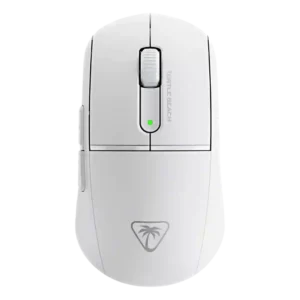
The reviews that mention the receiver describe 2.4GHz operation through the included wireless dongle and report solid PC connection behavior.
2.4GHz is repeatedly supported as a gaming-focused wireless mode, often paired with Bluetooth and wired use. Reviews connect it to low latency, strong signal, and flexible device setup.
Sensor-focused comments consistently point to clean movement handling, with reviewers calling out zero acceleration, no jitter, and no unwanted filtering or smoothing.
Tracking precision is treated as a strength: reviewers cite exact hand tracking, 1:1 tracking, and submicron movement tracking.
Accuracy and tracking precision were praised across game, sensor, and surface testing. Reviewers described precise movement, impressive accuracy, no faltering, and issue-free tracking.
Balance evidence was direct but limited. Reviewers who discussed it found the center of mass well placed and the mouse evenly balanced in hand.
Battery life is one of the clearest strengths, with multiple reviews citing 140-hour expectations or testing and another review still calling battery life solid.
Battery life was generally strong, especially in Bluetooth mode. The 2.4GHz runtime around 40 hours was usable but occasionally framed as a tradeoff versus competitors.
The only direct Bluetooth evidence says the mouse does not include Bluetooth connectivity, so this scores as a missing feature rather than a strength.
Bluetooth support is clearly present and useful for flexibility, portability, and longer battery life. Several reviewers treated Bluetooth as less gaming-focused than 2.4GHz.
Build impressions are split: one review found loose-feeling construction, while others reported robust build quality, no drop-test damage, and sturdy assembly.
Build quality is mixed. Some reviews found the shell solid for its weight, while others reported cheap feel, side flex, or durability concerns.
Customization is well supported through remappable buttons, swappable or repositionable controls, DPI adjustment, and G Hub assignment options.
Button customization is strong through Swarm II, with programmable controls, custom button functions, remapping, and saved profiles. The limited button count remains a constraint.
Button responsiveness is generally positive, with reviewers reporting reliable buttons, responsive clicks, and satisfying response during use.
Button responsiveness was mostly praised through crisp, precise, and meaningful clicks. One review noted the buttons were somewhat stiffer.
Cable flexibility has limited evidence, but the one direct review describes the included rubber cable as soft and supple.
The included cable was usually praised as flexible, soft, light, or malleable. One reviewer still felt wired use added some resistance compared with wireless.
Charging convenience scores well because reviewers repeatedly highlight USB-C charging, included USB-C cabling, and easy charging between sessions.
Charging is convenient overall, with quick charging, play-while-charging, common USB-C charging, and wired fallback all supported in reviews.
Claw grip has limited but direct support from one review that found claw use felt good.
Claw grip comfort is generally good, especially because of the rear hump and light body. Some reviewers found shape preferences could affect claw comfort.
Click latency is scored highly from repeated claims of instant click registration, faster response rate, optical actuation, and reduced click latency.
Click latency support comes from optical switch speed and low-latency language. Reviewers described quick response, optical-speed feel, and light-speed detection.
Click noise is mixed: one review criticized cheap, echoey click sound, while another described the switches as producing a satisfying click sound.
Click noise is noticeable. Reviewers described clicky, lower-pitched, sharp, or loud clicks, with some users likely preferring quieter switches.
Connection stability is strong where directly discussed, with reviews reporting no lag, no dropped connections, and no issues with the 2.4GHz connection.
Connection stability was a strength, with instant recognition, no issues, no dropouts, seamless switching, and no lag or skipping reported.
Cross-platform or multi-machine use is mixed: onboard profiles help across machines, but one review reported a MacBook Air detection failure.
Cross-platform compatibility is supported by broad connectivity and direct Windows, Mac, and Android use without driver installation in one review.
Debounce customization is well supported in Swarm II through debounce controls, sliders, and zero-millisecond testing.
Charging-mat and PowerPlay evidence supports dock-style compatibility, with multiple reviews mentioning PowerPlay or wireless charging mat support.
DPI support is consistently strong, with reviews citing on-the-fly DPI adjustment and maximum ranges around 25,600 DPI.
DPI range is broad, with repeated support for 26K DPI and several reviews confirming 50-to-26,000 DPI adjustment.
Durability evidence is positive but not extensive, with one review reporting no drop-test damage and switch design intended to reduce mechanical wear.
Durability over time is mixed. Switch ratings are strong, but some reviewers raised shell flex or long-term abuse concerns.
Ecosystem integration is a recurring advantage through shared Lightspeed receivers, Logitech keyboard pairing, and syncable lighting or audio profiles.
Ecosystem integration centers on Swarm II, ROCCAT continuity, Turtle Beach peripherals, migrated settings, and Easy Shift-style layering.
The ergonomic design is generally praised through references to thumb support, ergonomic contours, and grip-style adaptability.
Ergonomic design was praised through palm fit, symmetrical shape, ergonomic button placement, and comfortable speedy handling.
Fingertip comfort has limited direct evidence, but the available review says fingertip grip felt good.
Fingertip comfort was positive, with reviewers calling it a strong option and noting the lightweight smaller shape suits fingertip users.
Firmware reliability is mixed-positive. Updates were seamless or easy for some, while one review reported bugs resolved by firmware update.
FPS suitability is divided: several reviewers enjoyed aim control and low latency, while others found the weight and extra buttons less ideal for FPS players.
FPS suitability is one of the strongest themes, with reviewers tying the light body, sensor, and flick-shot control to competitive shooters and FPS games.
Glide is mostly positive, with reviewers citing PTFE feet, smooth movement on mats, and slick desk movement, though one review called stock skates merely fine.
Glide smoothness was widely praised. Reviews described effortless, smooth, topnotch, and surface-friendly glide with useful skate options.
Grip texture is a strength where mentioned, with reviewers noting textured rubber grips, grippy side lines, and rubberized thumb areas.
Grip texture is mixed. The smooth shell and sweat/slip concerns are offset by grip tape and some positive texture comments.
Handedness options are weak because the direct evidence describes the mouse as made for right-handed users.
Handedness is limited ambidextrous: the shape is symmetrical and usable either way, but side buttons and wording favor right-handed users.
Main click quality is mixed: reviews praised easy rapid clicking and reduced pre-travel, while broader click impressions included some premium-feel reservations.
Left and right click quality was strong overall, with tactile, deeper, snappy, and satisfying primary clicks, though one sample had uneven pre-travel.
Lift-off distance is supported through DCU and lift-off calibration, with reviewers mentioning adjustable or low/very-low settings.
Long-session comfort is strong, with reviewers citing no hand fatigue, little hand adjustment, and comfortable hold during longer use.
Long-session comfort is supported by daily-driver comments, pleasant sessions, ergonomic fit, and light weight that reduces effort.
Macro support is clearly present through G Hub, with reviews describing program-specific macros and assigning macros to customizable buttons.
Macro support is available through Swarm II, with macro adjustment, built-in macros, keyboard-command mapping, and Easy Shift-style layers.
Materials quality is mixed: soft-touch plastic and low fingerprinting are praised, while glossy areas and untextured smooth plastic draw criticism.
Materials quality is mixed, ranging from pleasant satin plastic and solid shell comments to cheap, hollow, slippery, or thin-feeling plastic.
MMO suitability is one of the better-supported use cases because several reviews highlight many buttons and MMO-focused control flexibility.
MMO suitability is limited because reviewers repeatedly point to few remappable buttons and a simple layout rather than button-heavy control.
MOBA suitability has limited direct support, but one review says MOBA players should have no trouble because the extra buttons remain unobtrusive.
MOBA suitability has limited direct support from League of Legends testing, but reviews do not deeply evaluate MOBA-specific needs.
Motion consistency is supported by direct testing that found no jittering or phantom movements.
Motion consistency was strong, with little variation, no spin-out, no skipping, and motion sync or angle snapping options discussed.
Onboard memory is consistently supported by repeated mentions of five onboard profiles and settings saved to onboard profiles.
Onboard memory is clearly supported by five onboard profiles or storage for profiles in multiple reviews.
Palm grip comfort is generally positive because reviewers repeatedly associate the shape with palm grip comfort, though reach issues remain for some hands.
Palm grip comfort is generally good but not universal. Several reviews found palm use comfortable or viable, with some shape caveats.
Polling-rate evidence is limited and mixed: 1000Hz is considered enough by one reviewer, but also behind newer higher-polling competitors.
Polling rate is a repeated caveat. The mouse supports up to 1,000Hz with lower settings, but several reviewers wanted higher polling options.
Portability is helped by onboard dongle storage, magnetic storage covers, and reviews that call the mouse a good portable option.
Portability is helped by low weight, Bluetooth, dongle storage, and easy device movement.
Premium feel is mixed: some reviewers mention stylish finish, but others criticize plastic feel, glossy wear, and high-end expectations not fully met.
Premium feel is mixed: some reviews praised solid construction, while others found the shell hollow, cheap, or lacking premium extras.
Profile switching is a strength, with reviews describing easy switching, five profile support, and built-in profiles.
Profile switching is supported through up to five DPI or saved profiles and multiple profile setup in Swarm II.
Programmable button support is one of the most repeated strengths, with reviews citing 11 to 13 programmable controls and many extra buttons.
Programmable buttons are present through six or seven configurable inputs, but the layout is not button-rich.
RGB is a mixed feature because it exists mainly on the Plus variant, costs extra, and can reduce battery life or add weight.
RGB features are weak by design. Reviews repeatedly state there is no RGB beyond small indicator LEDs.
Scroll wheel quality is highly polarized: reviewers praise free-scroll usefulness and hyperfast scrolling, but several criticize ratcheted feel, sound, or looseness.
Scroll wheel quality is mostly good but basic, with distinct notches and secure actuation alongside comments that it is standard or too small.
Sensor performance is consistently positive through Hero 25K references, strong tracking, and zero smoothing or acceleration claims.
Sensor performance was widely praised through the Owl-Eye 26K sensor, 650 IPS tracking, accurate behavior, and flawless tests.
Shape comfort is broadly positive, especially for larger hands and thumb-rest users, though a few comparisons and reach issues keep it from being perfect.
Shape comfort is mostly positive but subjective, with praise for natural fit and some caveats around size, rear shape, and grip preference.
Side button quality is mixed because reviewers like the modular sniper button but repeatedly mention reach problems and accidental fat-fingering.
Side button quality was generally positive, with good thumb alignment, easy reach, clicky action, and clear separation.
Software stability is a weakness in the evidence, with reviews describing G Hub behavior going haywire or the mouse not being recognized.
Software stability is mixed: Swarm II was reliable for some reviewers but buggy for another before firmware updates.
Software usability is mixed: G Hub offers DPI, macros, and profiles, but several reviewers could not access it, could not customize fully, or called it bad.
Software usability is mostly positive but not universal. Some reviews praised clear/simple controls, while others found platform or UI issues.
Surface compatibility is modestly positive, with reviewers reporting acceptable or smooth movement on desks and mouse mats.
Surface compatibility was positive where tested, including any or almost any surface and multiple mousepads.
Switch durability is supported by optical-mechanical switch design claims, reduced wear, double-click prevention, and wear-and-tear resilience.
Switch durability is strongly supported by the repeated 100 million click optical switch rating.
Switch feel is mostly positive for crispness and responsiveness, though one review found the clicks not especially tactile.
Switch feel was a highlight, with tactile, snappy, satisfying, optical click feel across many reviews.
Value is mixed and price-sensitive: some reviews found acceptable sale pricing, while others called MSRP pricey or a worse deal against newer rivals.
Value for money was mixed-positive, with several reviewers seeing fair pricing or savings while others noted stripped-down features.
Weight is a recurring caveat: reviewers note reductions from older versions, but also repeatedly call it heavy or not especially light by current standards.
Weight is the defining strength. Reviews repeatedly emphasized 47g or sub-47g weight as unusually light for a mainstream wireless mouse.
Weight tuning is weak because the direct evidence says this version lacks additional weights.
Wireless latency is strong where tested or discussed, with reviewers reporting no spikes, low-latency Lightspeed, and wired-like response.
Wireless latency was strong on 2.4GHz, with lag-free or no-perceivable-latency comments. Bluetooth was more often treated as a convenience mode.
Wireless performance is consistently strong, with reviews citing excellent wireless behavior, instant response, fast connectivity, and Logitech wireless confidence.
Wireless performance was reliable overall, with strong connection, flexible dual connectivity, device switching, and no dropouts.