Reviews repeatedly support 2.4GHz wireless as the main gaming connection, with dongles, Quantum wireless, USB-C receiver setups, and low-latency wireless mode mentioned across many tests.
Direct connection evidence is limited, but the Nookyyy transcript states that the mouse can run over wired USB or wireless 2.4GHz. No reviewer raised a specific 2.4GHz reliability complaint.
The reviews that discuss acceleration describe adjustable acceleration or 40G capability, with one review also noting the sensor avoided unwanted acceleration or anomalies.
Tracking accuracy is consistently praised. Reviewers describe accurate sensor behavior, one-to-one movement, pixel-perfect tracking, and smooth response in gaming tests.
Tracking precision is described as excellent across several reviews: ProSettings saw no anomalies at 8000 Hz, Tom's Guide found movements predictable and stable, Nookyyy cited superior tracking performance, and Wasabi reported consistently good tracking on mouse pads.
Weight balance received limited direct evidence, with one review noting the low weight is slightly concentrated toward the back and helps control, especially in palm grip.
The weight and shape are repeatedly described as controlled and stable. ProSettings praised the pinched middle for finer control, Boardzy called the weight balance on point, Wasabi found it planted and stable, and another reviewer felt locked in immediately.
Battery life is the most mixed theme. Some reviews confirm strong runtime or multiple sessions, while others report poor real-world results when using RGB, high polling, or heavier daily use.
Battery life is a mixed strength. Reviewers cite up to roughly 70-80 hours around 1K polling, but several note that higher polling rates drain the mouse faster and can require charging every few days.
Bluetooth support is widely confirmed and useful for flexibility, pairing other devices, and saving battery, but several reviews treat it as less ideal for demanding gaming than 2.4GHz.
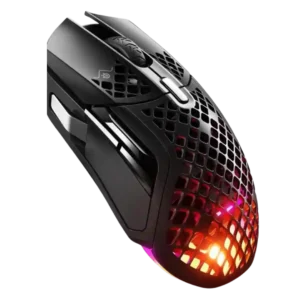
Build quality is generally strong. Reviewers mention sturdy honeycomb construction, little flex, IP54 or AquaBarrier protection, and solid hardware despite the perforated shell.
Build quality is generally strong, with several reviews calling the shell rigid, solid, or premium. One YouTube review reported a small side creak, so the overall picture is high quality with a possible unit-level QC caveat.
Button customization is one of the strongest supported features, with reviewers describing reassignment, remapping, full software configuration, and flexible controls through SteelSeries GG.
Button customization is supported through the software/web interface. Reviews mention online button configuration, full key rebinding, bottom DPI-button programmability, and button mapping.
Button responsiveness is mostly positive. Reviewers praise crisp, tactile, precise, responsive clicks, though some side-button implementations are criticized separately.
Button responsiveness is a major positive. Reviewers repeatedly describe the clicks as light, spammable, fast, responsive, or precise, although one review felt its particular switch implementation lacked character.
The included cable is often treated as flexible and useful for charging or dongle extension, though some reviewers dislike the long adapter-cable setup on certain desks.
Cable flexibility is a weak point. Tom's Guide and multiple YouTube reviews describe the included USB-C cable as stiff or draggy enough to interfere with wired use.
Charging convenience is supported by quick-charge claims and experiences, USB-C charging, and wired use while charging, though battery level reporting and charging frequency vary.
Charging convenience is mixed. The mouse can be used while plugged in and one reviewer liked the larger USB-C port fit, but Tom's Guide found the charging cable awkward and another reviewer avoided it because of stiffness.
Claw grip comfort is generally supported for larger or suitable hands, with several reviews saying the shape works for claw grip, though a few note reach issues for some buttons.
Claw grip support is one of the clearest strengths. Multiple reviewers with claw or aggressive claw grips found the shape comfortable, controlled, and well suited to relaxed or regular claw positions.
Click latency has direct positive support from one review that found clicks and side-button inputs acted instantly without missed inputs during competitive play.
The click-latency evidence comes from Nookyyy's specification section, which lists 0 ms click latency. Other reviews also describe the clicks as fast and responsive, but only Nookyyy provides a direct value.
Click noise has limited but positive evidence, with one review calling the button action precise and quiet.
Noise evidence is limited and mixed. ProSettings said the wheel gets louder when scrolling quickly, while another reviewer found the side-click sound loud and unpleasant.
Connection stability is generally strong over 2.4GHz and often good over Bluetooth, though dongle design and Bluetooth performance limitations are noted by some reviewers.
Connection stability is supported mainly by performance testing language. ProSettings saw no anomalies even at 8000 Hz, and Wasabi reported the sensor/wireless use working properly during review.
Cross-platform compatibility has limited but clear evidence from a review that tested the mouse successfully on Xbox, alongside broader wireless modes.
Cross-platform support is partial. Nookyyy says the mouse works with most USB 2.0-and-newer systems, but also notes that customization is not yet supported on macOS.
Debounce customization is weak because one review specifically criticized the lack of adjustable debounce as a missing high-end feature.
Debounce customization is well supported through the configuration tools. Reviewers mention adjustable debounce time, and one software walkthrough shows debounce time set to 0 ms by default.
DPI or CPI range is well supported, with reviewers repeatedly citing 18,000 CPI/DPI and adjustable presets as sufficient or generous, though some wanted higher flagship numbers.
DPI range is strong on paper and configurable in software. Reviews identify the PAW3950/30,000 CPI or 30,000 DPI capability and mention DPI adjustment in the web interface.
Durability over time is supported by AquaBarrier protection, durability language, and switch or shell construction claims, but long-term wear testing is limited.
Durability evidence is favorable but not long-term definitive. Reviews cite durable design, strong build, no decay after weeks of use, and one reviewer felt it would hold out longer; one coating-wear caveat remains.
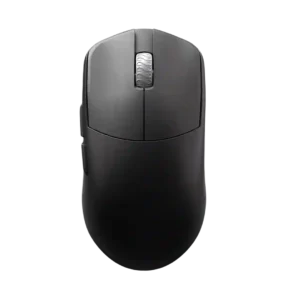
Ergonomic design is generally positive for right-handed users, with reviewers describing a comfortable, lightly ergonomic or all-round shape rather than an aggressive sculpt.
Ergonomics are praised across grip styles. Reviewers describe a comfortable symmetrical design, support for different grips, hand-rest comfort, and finger placement that helps the mouse feel controlled.
Fingertip comfort is mixed. One review says fingertip grippers should avoid it, while others with small hands or broad grip claims found it usable.
Fingertip grip is only conditionally recommended. Several reviewers suggest the smaller Maya or another large-fingertip option unless the user has medium-to-large hands or specifically wants a larger mouse.
Firmware reliability evidence is mixed and limited, with one review noting settings reset after reboot and another reporting pairing trouble that persisted despite firmware updates.
Firmware reliability is positive in the limited evidence available. Hard-Gamer notes firmware updates are handled online, and another reviewer says an early battery-indicator issue was quickly fixed by firmware.
FPS suitability is mixed. The mouse is light, responsive, and accurate enough for casual or fast FPS play, but some reviewers found its size, side buttons, or performance ceiling less ideal for competitive specialists.
FPS suitability is strong. Reviews discuss Valorant, Fortnite, competitive gaming, and aim-trainer performance, with the mouse's low weight, responsive clicks, and high polling rate supporting competitive play.
Glide smoothness is one of the most consistently praised areas, with PTFE skates described as effortless, smooth, floaty, and effective on desks and mousepads.
Glide smoothness is a consistent highlight. Reviewers repeatedly praise the stock feet as smooth, fast, low-friction, or among the best they have tried, with no need to replace them immediately.
Grip texture receives mixed but mostly positive support. The rough matte or honeycomb finish can improve hold, but some reviewers found it slippery or distracting depending on hand position.
Grip texture is generally good but not perfect. Several reviewers call the coating grippy or improved, while others mention moisture pickup, smudges, or possible wear/cleaning challenges for sweaty users.
Handedness options are weak because reviewers repeatedly identify it as a right-handed mouse and one reviewer specifically lamented the lack of a left-handed or ambidextrous model.
Handedness evidence describes an ambidextrous or symmetrical shape, though one source calls it right-handed symmetrical. The score reflects a broadly symmetrical shape rather than true left-side-button parity.
Left and right click quality is strongly positive where discussed, with reviewers praising crisp, tactile primary clicks and comfortable grooved button surfaces.
Main-click quality is repeatedly praised. Reviews describe the main clicks as implemented well, responsive, crisp, loved, or superior to competing clicks.
Lift-off distance support is negative or limited, with reviewers pointing to missing adjustability or a higher default lift-off distance rather than praising the feature.
Lift-off distance is configurable and competitive. Reviews cite 0.7 mm support, LOD adjustment in software, and multiple lift-off options.
Long-session comfort is positive. Reviewers cite comfortable long-period use, no noticeable fatigue, and reduced fatigue from the light body and smooth glide.
Long-session evidence is positive but indirect. Nookyyy emphasizes extended gaming sessions through battery life, while Wasabi calls the mouse comfortable as a daily driver for general computer use.
Macro support is well supported through SteelSeries GG, with reviewers describing macro assignment, macro recording, and gaming or productivity shortcut use.
Macro support is supported in the software. ProSettings, Tom's Guide, and another software walkthrough mention macro recording or macro controls.
Materials quality is generally praised, with high-quality ABS plastic, sturdy construction, and premium-feeling components mentioned in supported reviews.
Materials quality is generally good. Reviewers point to pure PTFE feet, a good-feeling plastic case, strong shell materials, and thickness that contributes to solidity.
MMO suitability is positive for moderate MMO use thanks to extra buttons and mapping, but one reviewer says serious MMORPG players may prefer the Aerox 9.
MOBA suitability is supported by League of Legends, DOTA 2, and MOBA macro mentions, with the extra side controls viewed as useful for genre flexibility.
MOBA suitability is supported by Tom's Guide testing in League of Legends, where the reviewer said the mouse worked very well in ranked matches.
Motion consistency is positive where tested, with reviewers describing lightning-fast responsiveness, smooth tracking, and registered rapid movements without skipping.
Motion consistency is a strength in testing and configuration. Reviews cite no anomalies at 8000 Hz, stable predictable movement, motion-sync controls, and strong sensor consistency.
Onboard memory is supported by specification and software evidence, though one Bluetooth-mode review says some stored settings do not carry over in Bluetooth mode.
Onboard memory evidence is limited to the transcript's MCU/profile discussion. It supports stored profiles and CPI settings, but reviews do not deeply test onboard storage behavior.
Palm grip comfort is broadly supported, with many reviewers saying the taller shape, palm support, and hand-filling design work well for palm grip users.
Palm grip comfort is mixed by hand size and preference. One reviewer says palm grip feels good on the larger Maya X, while others recommend different options for users wanting a very full palm or using larger hands.
Polling rate support is mixed. 1000Hz is confirmed in wired or 2.4GHz modes, while Bluetooth or efficiency modes drop to 125Hz and limit performance.
Polling-rate support is a standout feature. Every major source that discussed specs points to 8K wireless polling or broad polling-rate options, often with the 8K receiver included.
Portability is mixed. One reviewer found the slippery wireless body less ideal for travel, while another liked the lightweight form for taking away from the desk.
Portability is supported by the low weight and included pouch/spare-feet package. The mouse is easy to carry, though the evidence is more about accessories than travel testing.
Premium feel is positive in the limited direct evidence, with reviewers describing exceptional quality, performance, and a premium look and feel.
Premium feel is mostly positive. Reviews call the unboxing premium, the mouse premium-feeling, exceptional, or close to its price in perceived quality.
Profile switching is supported by two reviews that mention customized profiles, profile creation, switching, and storage through the software.
Profile switching is only lightly supported by review text. The strongest direct evidence is the web-software mention of setting up profiles; deeper profile-switching behavior is not tested.
Programmable buttons are a major strength. Reviews repeatedly cite the nine-button layout and extra side inputs as a core reason the mouse works across genres.
Programmable buttons are supported through software. Reviews mention full rebinding and six programmable buttons, including the main buttons, wheel click, side buttons, and DPI button.
RGB features are mixed. Several reviewers like the three zones and customization, but many say lighting is hidden under the palm, underwhelming, or less useful during play.
Scroll wheel quality is mixed to positive. Some praise texture, resistance, or consistency, while one review finds the wheel underwhelming or less tactile than the rest of the mouse.
Scroll-wheel quality is generally good. Reviewers describe it as tensioned correctly, light, tactile, distinct, and easy to click, with one dust/open-bottom caveat in ProSettings.
Sensor performance is consistently strong in most reviews, with TrueMove Air described as accurate, responsive, reliable, and problem-free in real gameplay.
Sensor performance is consistently praised. Reviews identify the PAW/PixArt 3950 and describe stellar performance, superior tracking, perfect operation, or elite wireless sensor implementation.
Shape comfort is a broad strength. Reviewers often call the mouse comfortable, pleasant, or great in the hand, though size and button reach can hurt smaller hands.
Shape comfort is a core strength. Most reviewers liked the larger Maya X shape, especially for medium-to-large hands and claw or relaxed claw grip, though a few preferred the smaller Maya or noted edge/size preferences.
Side button quality is the most frequent ergonomic complaint. Reviewers like the extra inputs, but many criticize the front button or rocker for being hard to reach or actuate quickly.
Side-button quality is the most uneven button area. Some reviewers found them crisp and accessible, but several reported stiffness, mushiness, or excess travel, especially on the top/front side button.
Skate durability has moderate support. Reviews mention spare feet for wear, smoothness after nearly four weeks, and stock skates that remained worth keeping, but there is no long-term months-long test.
Software stability is mixed to weak. Windows functionality is broad, but reviews mention bloated software, clunky behavior, macOS limitations, bugs, and pairing problems.
Software stability is mixed. ProSettings and Wasabi found it working or loading fine, while Tom's Guide had slow, laggy app trouble and another review simply said the web driver gets the job done.
Software usability is mostly positive once inside the mouse settings, with reviewers praising clear controls, easy customization, and rich options despite some bloat or clunkiness.
Software usability varies by implementation. Web-based setup is praised for convenience and simplicity, but Tom's Guide criticized the companion app as slow, laggy, and ugly.
Surface compatibility is positive where discussed, with reviewers testing or describing good movement on desks, mousepads, natural wood, and rough control-focused pads.
Surface compatibility is strong. Reviewers mention use across a variety of surfaces, any mouse pad, textured pads, and consistent tracking on mouse pads.
Switch durability is supported by IP54 switch language, wear-and-tear protection, and 80-million-click durability claims, though long-term user testing is not extensive.
Switch durability is supported by the Omron optical switch rating evidence. Direct long-term switch testing is not provided, but the quoted rating is high.
Switch feel has limited positive support through tactile, satisfying button feel in hands-on use.
Switch feel is widely praised. Most reviewers describe the Omron optical switches as crispy, springy, light, fast, or precise, although one reviewer found the feel somewhat lackluster.
Value for money is divided. Many reviews question the original wireless price, while others find value better at sale prices, current discounts, or versus similarly featured competitors.
Value is rated positively at around $120. Reviewers cite strong specs, included accessories, competitive pricing versus big-brand alternatives, and a premium package, while noting cheaper budget mice exist.
Weight is a major positive but not class-leading. Reviewers repeatedly cite 74 grams, lightweight movement, and low fatigue, while some note newer rivals are lighter.
Weight is a major strength. Multiple reviewers measured or cited roughly 47-48 g and described the weight as excellent, amazing, or impressive for the larger shell.
Wireless latency is generally praised over 2.4GHz, with multiple reviewers reporting little, no, or irrelevant latency; Bluetooth is treated as slower for gaming.
Wireless latency is supported indirectly through click-latency, high polling, and responsiveness evidence. Reviews describe lightning-fast response and responsive button behavior in wireless/high-performance contexts.
Wireless performance is positive overall, with reviewers describing solid, responsive, lag-free, or problem-free wireless use across gaming and productivity.
Wireless performance is consistently strong. Reviewers describe true 8K wireless operation, elite wireless implementation, and wireless performance that feels great or among the best.