Compare Corsair Scimitar RGB Elite Wired vs ASUS ROG Harpe Ace Aim Lab
2.4GHz connectivity is widely supported through RF, Wi-Fi, Omni Receiver, and SpeedNova references. Reviewers generally present it as the preferred wireless gaming mode.
The acceleration evidence was limited to one technical test, where the reviewer could not make a precise acceleration measurement but found the behavior within range.
Acceleration and angle behavior are configurable in several reviews through angle snapping, angle tuning, acceleration settings, or Aim Lab recommendations. Hardware acceleration tolerance is also cited, making this a defensible tuning strength.
Reviewers consistently described tracking as accurate, precise, and smooth, with no major tracking complaints in the supporting reviews.
Across the scored reviews, tracking and accuracy are strong, with several reviewers calling the mouse fast, precise, or responsive. A few Aim Lab results were more mixed, so the evidence favors strong hardware accuracy more than guaranteed skill improvement.
Balance was praised despite the mouse's size, with reviewers describing it as well balanced or immaculately balanced.
Balance and weight distribution receive mixed evidence. Reviewers praise the low weight, but one notes front-leaning weight distribution and others describe the shell/hump as noticeable.
Battery life is consistently strong, with many reviews citing about 90 hours or multi-week practical use. RGB use can reduce runtime, but reviewers still found endurance competitive.
Bluetooth support is repeatedly confirmed. Reviewers appreciate it for multi-device or dongle-free use, while still treating 2.4GHz or wired modes as preferable for gaming.
Build quality was widely praised, with reviewers calling the mouse solid, stout, reinforced, sturdy, or finished to a high standard.
Build quality is generally strong. Reviewers cite solid shells, no creaking, durable construction, and sturdy materials, with one caveat that lightweight plastic can feel cheaper to some users.
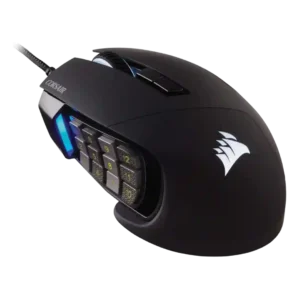
Button customization was a core strength because the side keypad can slide forward or backward and button functions can be configured in software.
Button customization is widely supported through Armoury Crate, hardware controls, and profile commands. The main limitation is that the sparse button layout leaves fewer physical inputs to customize.
Button responsiveness evidence was positive, with reviewers reporting instant ability triggers and responsive mechanical side buttons.
Button responsiveness is generally praised. Reviewers cite reactive clicks, minimal pre-travel, fast response, and clean actuation, with the main caveats tied to stiffness or hand-fit rather than missed inputs.
Cable flexibility was mixed: some reviewers praised the braided cable as flexible, while others found it stiff, hard, or bungee-worthy.
Cable flexibility is praised wherever it is discussed. The included cable or paracord is described as light, flexible, braided, and unlikely to get in the way.
Charging convenience is positive where tested. Reviewers cite USB-C charging, quick top-ups, battery-status alerts, and in one case under-30-minute charging.
Claw grip comfort was mixed: some reviewers with suitable hands liked it, while others said the design mainly favors palm grip rather than claw.
Claw grip comfort is generally workable, especially for upright claw users, but not universal. Shape length and the rear hump bothered some smaller-hand or specific-claw reviewers.
Latency evidence was positive where tested, with reviewers noting no noticeable delay or no real difference compared with reference hardware.
Click latency is supported indirectly through responsiveness comments and click-speed testing language. Reviews describe click response as quick or responsive, but the transcripts do not provide a dedicated measured click-latency benchmark.
Click noise evidence was limited but positive, with one technical reviewer saying the main clicks were quieter than other mice.
Click noise is mixed and lightly covered. Reviewers mention deeper sound signatures or less-audible clicks, so the mouse is not described as silent but does not appear unusually loud across the evidence.
Connection stability is mostly good but not flawless. Several reviews cite stable low-latency connectivity, while some report interference, software hiccups, or wake-up delays.
Cross-platform compatibility is supported through Bluetooth, wired, laptop/desktop/phone use, and Windows notes. The strongest caveat is a Windows 10 recognition issue in one review.
Reviewers repeatedly cited the high DPI ceiling, usually 18,000 DPI on the Elite, as a major spec even when noting most players will use far lower settings.
The DPI range is one of the clearest strengths. Multiple reviews cite the 36,000 DPI class capability, though some reviewers note that very high DPI settings are not practical for every user.
Durability over time was mixed: switch ratings and multi-month or multi-year use were positive, but scroll-wheel and wear concerns appeared in long-term reviews.
Durability over time is inferred from sturdy construction, no creaking, 70-million-click switches, and replaceable skates. The transcripts support expected durability more than long-term aging evidence.
Ecosystem integration was supported by iCUE syncing with other Corsair parts and Corsair-device lighting/profile control.
Ecosystem integration is strong through Aim Lab, Armoury Crate, ROG Omni Receiver, Aura-style lighting, and shared ROG receiver comments. The main caveat is software friction.
Ergonomic design was praised for the contoured body, ring/pinky rest, and comfort, though some reviewers noted limits for small hands or non-palm styles.
Ergonomics are strong for many competitive users but not universal. Reviews praise comfort and FPS fit, while negative comments mostly come from hand-size or hump-placement mismatches.
Fingertip grip comfort was weak because reviewers associated fingertip use with fatigue, large-hand requirements, or poor fit for the mouse's size.
Fingertip grip comfort is supported by the light weight and symmetrical shell, with reviewers saying fingertip use works. A few comments still warn that the rear hump can interfere with micro-adjustments.
Firmware reliability is mixed and mostly tied to update handling. Reviews confirm firmware-update support but criticize annoying update requirements and software limitations around updates.
FPS gaming suitability was mixed to negative: some reviewers found it serviceable, but many said weight, shape, and side buttons make it less ideal for shooters.
FPS gaming suitability is one of the strongest use-case fits. Reviews repeatedly frame the mouse as an esports or FPS-focused device with speed, precision, low weight, and Aim Lab integration.
Glide smoothness was generally positive, with multiple reviewers describing smooth gliding, low resistance, or good feet, though one called the glides unremarkable.
Glide smoothness is a clear strength. Reviews repeatedly mention PTFE feet, smooth motion, low friction, and easy movement across pads or surfaces.
Grip texture was a strength, with repeated praise for rubberized rests, textured rows, and tactile surfaces that help grip and orientation.
Grip texture is mostly positive thanks to textured sides, matte surfaces, and optional grip tape. A small number of reviews found the sides slippery or the tape styling unattractive.
Handedness was a clear limitation because reviewers consistently described the mouse as right-handed only and unsuitable for left-handed use.
Handedness is mixed. The shell is repeatedly described as ambidextrous or symmetrical, but several reviews note that side-button placement still favors right-handed thumb use.
Left and right click quality was mostly positive, with light, solid, and smooth clicks, though one reviewer wanted a snappier and crisper feel.
Left and right click quality is consistently framed as responsive and tactile. Reviewers highlight consistent click feel, though some comments suggest the click weight may not suit every preference.
Lift-off distance received generally positive or acceptable notes, including iCUE lift-height control and testing that found the behavior normal or impressive.
Lift-off distance is well supported through Armoury Crate, Aim Lab, and hardware-control references. Reviews show that it can be adjusted or included in optimization, though the depth of control varies by reviewer.
Long-session comfort was positive where discussed, with reviewers reporting comfortable long sessions or no hand aches during extended play.
Long-session comfort is positive in reviews that fit the shape, with comments about relaxed fingers and comfort over longer play. Shape mismatches keep this from being universally ideal.
Macro support was a major strength, with reviewers describing custom macros, full keybinds, shortcut assignments, and MMO ability mapping.
Macro support appears in software-focused reviews, which describe macro activation or macros in Armoury Crate. The evidence confirms support but does not emphasize advanced macro workflows.
Materials quality was mostly positive because reviewers liked the matte/soft-touch finish and premium materials, though some noted gloss or coating wear concerns.
Materials quality is supported by repeated nylon and bio-based shell references. Reviewers usually frame the material as light and sturdy, though one describes the plastic feel as somewhat cheap.
MMO gaming suitability was the product's clearest strength, with reviewers repeatedly describing it as excellent, easier, or highly recommended for MMO play.
MMO suitability is weak. The main direct evidence says the streamlined button layout is less attractive for input-heavy MMOs and similar games.
MOBA gaming suitability was also strong, with reviewers connecting the macro keypad and responsive sensor to Dota, League-style, or general MOBA use.
Motion consistency was praised in technical testing, including no jitter, no angle snapping or skipping, and no concern about precision or consistency.
Motion consistency is supported by reviewers who described stable tracking, less miss-hitting, no unwanted jolts, or no apparent jittering. The strongest evidence comes from gameplay and mouse-tester comments rather than a standardized lab benchmark.
Onboard memory was supported by repeated mentions of three onboard profiles or storage for settings and hardware playback.
Onboard memory is supported by reviews noting onboard profile storage and programmable onboard profiles. The feature lets configured settings travel with the mouse after setup.
Palm grip comfort was one of the strongest comfort themes, with reviewers repeatedly saying the mouse naturally favors or excels in palm grip.
Palm grip comfort is mixed. Some reviewers found palm grip comfortable, but others said the hump, narrowness, or hand size made palm grip less ideal.
Polling-rate evidence was consistently positive, with reviewers citing up to 1,000Hz operation and responsive reporting for gaming.
Polling-rate evidence centers on a 1,000Hz ceiling. Reviewers generally considered it adequate for competitive use, but several noted that higher-rate competitors exist and that 1,000Hz is not class-leading.
Portability evidence was narrow and centered on settings portability: onboard profiles let users take personal settings to another PC.
Portability is strong because reviewers mention the low weight, dongle storage, pouch, and multi-device travel setups. The mouse is repeatedly framed as easy to carry or use across devices.
Premium feel was supported by repeated praise for premium build, sturdy construction, and comfortable or high-quality physical feel.
Premium feel is generally positive. Reviewers cite high-end specs, premium-feeling plastic, build quality, and strong feature density, though the minimal appearance is not flashy.
Profile switching was supported by hardware profile buttons, iCUE profile controls, and reviewers noting different game or app profiles.
Profile switching is supported through DPI/profile references and onboard profile controls. Reviewers praise the existence of multiple profiles but often criticize the underside DPI/profile controls for convenience.
Programmable-button coverage was very strong, with reviewers repeatedly citing 12 side buttons and 17 total programmable/customizable buttons.
Programmable-button coverage is modest because the mouse has a streamlined five-button layout. Reviewers confirm programmable buttons, but several also note the limited number of inputs.
RGB features were consistently described as customizable, with four lighting zones, profile/DPI indicators, and iCUE lighting controls.
RGB is limited mainly to the scroll wheel. Reviewers appreciate customization and battery/status signaling, but the narrow lighting zone keeps this from being a major visual feature.
Scroll wheel quality was mixed: reviewers praised tactility, texture, and smooth steps, while others called it average or reported middle-button failure over time.
Scroll wheel quality receives mixed-to-good feedback. Some reviewers call it tactile and easy to control, while others criticize its resistance, basic feel, or minor wobble.
The sensor was one of the mouse's strongest areas, with reviewers praising the PixArt sensor, upgraded sensor hardware, and responsive behavior.
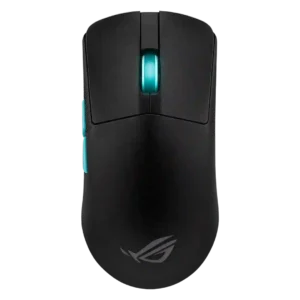
Reviewers repeatedly highlight the ROG AimPoint sensor and its high-end behavior. The sensor is described as fast, accurate, responsive, and precise, with only isolated caveats tied to testing method or shape rather than sensor hardware.
Shape comfort was generally positive for the intended grip and hand sizes, though the wide, specialized body is not universally comfortable.
Shape comfort is polarizing. Many reviewers like the symmetrical esports shape, while others find the hump, length, or narrow body uncomfortable depending on hand size and grip style.
Side button quality was mixed: reviewers liked the tactile/textured design and responsiveness, but several found the buttons small, crowded, or easier to mis-hit.
Side button quality is mixed. Several reviews found the side buttons reachable or tactile, while others described them as small, centered awkwardly, or slightly mushy.
Skate durability had limited but useful evidence: one reviewer saw little wear after weeks, while a long-term owner noted the feet were worn but not through.
Skate durability is supported mainly by included replacement PTFE feet rather than long-term wear testing. The evidence suggests maintainability and easy replacement.
Software stability was mixed, with one reviewer calling iCUE stable while a long-term user described buggy behavior and crashes.
Software stability is one of the weaker areas. Several reviewers report Armoury Crate problems, update friction, Windows 10 recognition trouble, or general software hiccups.
Software usability was sharply mixed: iCUE was praised as powerful and easy by some reviewers but criticized as clunky, unintuitive, or a hassle by others.
Software usability is mixed. Armoury Crate and Aim Lab expose many useful settings, but reviewers also complain about resource use, loading, update prompts, and weaker premium features.
Surface compatibility was supported by iCUE surface calibration and testing on different pad types, with reviewers noting calibration or successful hard/soft pad tracking.
Surface compatibility is supported through smooth performance on surfaces and software calibration. The strongest evidence comes from reviews describing surface or mousepad calibration features.
Switch durability was supported mainly by the Omron 50-million-click rating and mentions of upgraded switches, rather than long-term lab durability testing.
Switch durability is strongly supported by repeated 70-million-click lifespan references. No transcript reports long-term switch failure, so the evidence supports high expected durability rather than proven multi-year endurance.
Switch feel was generally positive, with reviewers describing satisfying, distinct, clicky, or nice-feeling clicks.
Switch feel is usually positive, especially for tactile, consistent, purposeful, or crisp clicking. Some reviewers found the switches slightly stiff or heavier than preferred, so the score is strong but not universally perfect.
Value depended on use case: reviewers found it worth the price for MMO/MOBA or macro-heavy use, but less compelling for buyers who will not use the side keypad.
Value depends on price sensitivity. Reviewers often justify the premium with specs, weight, and wireless features, while casual users or feature-seekers may find the price high.
Weight was a common drawback: most reviewers described the mouse as heavy, bulky, or hefty, though one reviewer coming from a G502 found it a little light.
Weight is the product's most repeated strength. Nearly every scored review emphasizes the 54g-class shell or unusually light feel, with the benefit tied to quick movements and reduced fatigue.
Weight tuning was a weakness because reviewers explicitly wished for adjustable weights or a degree of weight customization.
Wireless latency is generally low in the evidence. Most reviews report little or no lag, while a few mention brief input lag, slight jitter, or wake-from-sleep delay.
Wireless performance is a major strength overall. Reviewers praise SpeedNova, 2.4GHz performance, and parity with wired use, though one review reports minor lag or interference.