2.4GHz connectivity
P1
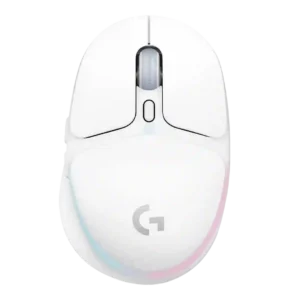
Product 1: Logitech G705
4.8
Reviewers praised LIGHTSPEED/2.4GHz as fast, snappy, and seamless, with several recommending the dongle for gaming over Bluetooth.
P2
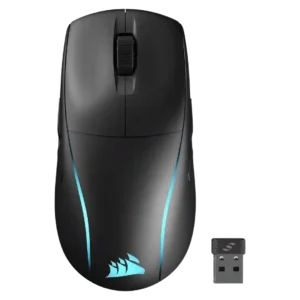
Product 2: Corsair M75 Wireless
4.4
2.4GHz connectivity was praised for speed, responsiveness, and practical wireless switching.
Accuracy and tracking precision
P1
Product 1: Logitech G705
3.8
Tracking was generally described as precise and responsive, though multiple reviewers said the 8,200 DPI ceiling reduced peak precision versus higher-end mice.
P2
Product 2: Corsair M75 Wireless
4.7
Reviewers repeatedly praised accurate tracking and precise aiming, including smooth shot lining and strong control over 2.4GHz and Bluetooth.
balance and weight distribution
P1
Product 1: Logitech G705
2.9
Weight balance split reviewers: one liked its stopping power for aiming, while others felt the balance or lightness reduced control.
P2
Product 2: Corsair M75 Wireless
2.6
Weight distribution was a concern for some reviewers, especially imbalance toward the front or back, though one liked the added control for sniping.
battery life
P1
Product 1: Logitech G705
3.5
Battery life was polarizing: some reviewers found a weekly charge acceptable or strong, while others called 40 hours with RGB disappointing beside competitors.
P2
Product 2: Corsair M75 Wireless
4.4
Battery life was one of the strongest consensus positives, with many reviewers reporting impressive or accurate endurance.
Bluetooth support
P1
Product 1: Logitech G705
3.8
Bluetooth was useful and often flawless, but a few reviewers hit setup confusion or lower polling-rate limitations compared with the dongle.
P2
Product 2: Corsair M75 Wireless
4.0
Bluetooth support was useful for battery life and device switching, but it was also described as slower than 2.4GHz.
build quality
P1
Product 1: Logitech G705
4.5
Build quality drew strong praise for solid construction, robust workmanship, and a tank-like shell, with only minor seam/dirt caveats elsewhere.
P2
Product 2: Corsair M75 Wireless
3.9
Build quality leaned positive for solidity and finish, but several reviewers noted looseness, cheap feel, or disappointment.
button customization
P1
Product 1: Logitech G705
4.3
Button customization was viewed positively through G Hub remapping and macro assignment, though some praise was tied to the software experience rather than the hardware alone.
P2
Product 2: Corsair M75 Wireless
4.6
Button customization was consistently praised for flexible remapping and personalized layouts.
button responsiveness
P1
Product 1: Logitech G705
4.4
Buttons were consistently described as easy to reach, responsive, and satisfying, especially for the intended small-hand audience.
P2
Product 2: Corsair M75 Wireless
4.5
Button responsiveness was a strength, with reviewers reporting responsive switches, solid performance, and no missed clicks.
cable flexibility
P1
Product 1: Logitech G705
2.0
The included cable received a clear complaint for rigidity, especially given the small, portable mouse body.
P2
Product 2: Corsair M75 Wireless
3.6
Cable flexibility was mixed: one reviewer liked the braided cable, while another reported cable drag during charging.
charging convenience
P1
Product 1: Logitech G705
4.3
Charging convenience was well received thanks to USB-C, fast recharge mentions, and the ability to keep using the mouse while charging.
P2
Product 2: Corsair M75 Wireless
4.3
Charging convenience was positive thanks to fast recharge and easy USB-C top-ups.
claw grip comfort
P1
Product 1: Logitech G705
4.2
Claw grip comfort was one of the better-supported grip styles, especially for small-to-medium hands, although it depended strongly on hand size.
P2
Product 2: Corsair M75 Wireless
4.5
Claw grip comfort was praised by reviewers who found the hump and control well-suited to that grip.
click latency
P1
Product 1: Logitech G705
4.5
Click latency evidence was limited but positive, with one reviewer calling the clicks precise and fast during play.
P2
Product 2: Corsair M75 Wireless
4.5
Click latency was usually praised as essentially instant, although one reviewer felt longer travel slightly slowed actuation.
click noise
P1
Product 1: Logitech G705
4.5
Click noise had limited evidence, but the scroll-wheel click was praised as quiet and non-disruptive.
P2
Product 2: Corsair M75 Wireless
2.9
Click noise was a drawback in multiple reviews, with louder or noisier clicks than expected.
connection stability
P1
Product 1: Logitech G705
4.7
Connection stability was a strength, with reviewers reporting seamless switching, parity across modes, and no connectivity issues.
P2
Product 2: Corsair M75 Wireless
4.0
Connection stability was mostly reliable, but one review reported update-time spikes that undercut confidence.
cross-platform compatibility
P1
Product 1: Logitech G705
4.2
Cross-platform use was a plus, especially Bluetooth use with phones/tablets/iPad, though Ars wanted better multi-Bluetooth profile support.
P2Product 2: Corsair M75 Wireless
No score yetDPI range
P1
Product 1: Logitech G705
3.4
DPI range was mixed: everyday users found 8,200 DPI adequate, while competitive or spec-focused reviewers found it low for the price.
P2
Product 2: Corsair M75 Wireless
3.9
The DPI ceiling was considered strong for most players, though one reviewer noted it is not the highest available.
durability over time
P1
Product 1: Logitech G705
3.7
Durability evidence was mixed, with robust workmanship and long-life confidence offset by concern about seams collecting dust over time.
P2
Product 2: Corsair M75 Wireless
4.1
Durability over time had limited but positive short-term evidence from one reviewer saying it still looked new after days of use.
ecosystem integration
P1
Product 1: Logitech G705
4.3
Ecosystem integration was praised when the G705 could share Aurora/Logitech receivers or pair with another LIGHTSPEED device on one dongle.
P2
Product 2: Corsair M75 Wireless
4.2
Ecosystem integration was supported by Corsair lighting-link syncing across multiple Corsair devices.
ergonomic design
P1
Product 1: Logitech G705
4.4
Ergonomics were strong for small hands, with praise for thumb support and contouring, but reviewers repeatedly warned larger hands may struggle.
P2
Product 2: Corsair M75 Wireless
4.7
Ergonomic design was praised for comfort, control, and avoiding awkward wrist or hand angles.
fingertip grip comfort
P1
Product 1: Logitech G705
4.2
Fingertip grip could work because of the small, light body, though evidence was less extensive than for claw grip.
P2
Product 2: Corsair M75 Wireless
2.1
Fingertip grip comfort was weak, with reviewers describing the mouse as unwieldy or stiff in fingertip use.
FPS gaming suitability
P1
Product 1: Logitech G705
3.8
FPS suitability was mixed: some reviewers played shooters comfortably, while competitive-focused reviewers criticized weight, sensor ceiling, or tournament readiness.
P2
Product 2: Corsair M75 Wireless
3.8
FPS gaming suitability was mixed: casual and general FPS play worked well, but pure competitive or solo FPS users may prefer lighter/faster mice.
glide smoothness
P1
Product 1: Logitech G705
4.5
Glide smoothness was consistently praised, with large feet/skates helping the mouse move smoothly across mats and other surfaces.
P2
Product 2: Corsair M75 Wireless
4.2
Glide smoothness was broadly praised due to PTFE feet, though some reviewers felt weight or skate slipperiness held it back.
grip texture
P1
Product 1: Logitech G705
4.4
Grip texture evidence was positive but limited, centered on the matte plastic giving enough grip and feeling pleasant to touch.
P2
Product 2: Corsair M75 Wireless
3.1
Grip texture was mixed: the coating handled marks well, but the smooth sides caused grip problems or finger discomfort for some.
handedness options
P1
Product 1: Logitech G705
2.1
Handedness was a recurring weakness because the contoured shape clearly favors right-handed users, with no true left-handed version.
P2
Product 2: Corsair M75 Wireless
4.7
Handedness options were a core strength, with reviewers repeatedly praising true ambidextrous support and left-handed usefulness.
left and right click quality
P1
Product 1: Logitech G705
4.4
Left/right click quality was praised for light actuation, tactile feel, and easy clicking.
P2
Product 2: Corsair M75 Wireless
4.0
Main click quality was mostly praised for tactile feedback and responsiveness, though one reviewer found the feel cheap or off.
lift-off distance
P1
Product 1: Logitech G705
4.5
Lift-off distance had limited but positive evidence, contributing to good gaming and work performance.
P2
Product 2: Corsair M75 Wireless
4.5
Lift-off behavior received positive remarks, with reviewers noting strong lift and a nice low-distance feel.
long-session comfort
P1
Product 1: Logitech G705
3.8
Long-session comfort depended heavily on hand size: small-hand reviewers praised it, while larger-hand reviewers reported wrist ache or inadequate support.
P2
Product 2: Corsair M75 Wireless
4.5
Long-session comfort was positive, with reviewers citing low fatigue and extended-session comfort.
macro support
P1
Product 1: Logitech G705
4.4
Macro support was positively tied to G Hub, with reviewers noting commands, macros, and media controls could be assigned to buttons.
P2
Product 2: Corsair M75 Wireless
4.3
Macro support was viewed positively where mentioned, with iCUE allowing shortcuts, media controls, app launches, and macros.
materials quality
P1
Product 1: Logitech G705
4.0
Materials quality was mostly positive for pleasant plastics and finish, though one reviewer warned the small seams may collect grime.
P2
Product 2: Corsair M75 Wireless
3.8
Materials quality was mixed, with plastic feeling sturdy in one review but RGB-frame gaps and dust concerns in another.
MMO gaming suitability
P1
Product 1: Logitech G705
2.3
MMO suitability was weak because the six-button layout was considered insufficient for MMO-heavy use.
P2
Product 2: Corsair M75 Wireless
3.0
MMO gaming suitability was limited by button count, despite one reviewer saying it could work across varied titles.
MOBA gaming suitability
P1
Product 1: Logitech G705
2.4
MOBA suitability was weak for the same reason: reviewers wanted more buttons for MOBA-style play.
P2
Product 2: Corsair M75 Wireless
4.6
MOBA gaming suitability was positive in one review, which found it delightful and responsive for League of Legends.
motion consistency
P1
Product 1: Logitech G705
3.5
Motion consistency was mixed, with one reviewer praising no DPI offset while another found the shell could rock and trigger movement.
P2
Product 2: Corsair M75 Wireless
4.6
Motion consistency was praised for responding naturally to hand movement and keeping up with both micro-movements and frantic play.
onboard memory
P1
Product 1: Logitech G705
4.3
Onboard memory was praised for preserving tweaks/profiles without needing to redo settings every time.
P2
Product 2: Corsair M75 Wireless
4.1
Onboard memory was appreciated because settings could be saved and iCUE avoided after setup, though only one profile was noted.
palm grip comfort
P1
Product 1: Logitech G705
2.9
Palm grip comfort was mixed to poor for larger hands; some reviewers found it possible, but several said the short body made palm grip less ideal.
P2
Product 2: Corsair M75 Wireless
4.3
Palm grip support was mostly strong thanks to the high back and hand-filling body, with one reviewer finding it less natural than claw grip.
polling rate
P1
Product 1: Logitech G705
3.7
Polling rate was strong over the dongle at 1,000Hz but criticized when consistency varied or Bluetooth limited the report rate.
P2
Product 2: Corsair M75 Wireless
3.6
Polling rate was viewed as adequate for most gamers, but several reviewers criticized it for lagging behind 4,000Hz and 8,000Hz rivals.
portability
P1
Product 1: Logitech G705
4.3
Portability was a clear strength thanks to the compact body, wireless options, USB-C, and easy bag/laptop use.
P2
Product 2: Corsair M75 Wireless
4.4
Portability was helped by the dongle storage slot, which one reviewer called a nice touch.
premium feel
P1
Product 1: Logitech G705
4.7
Premium feel was strong where reviewers praised the cohesive package, premium plastics, and impressive in-hand feel.
P2
Product 2: Corsair M75 Wireless
3.1
Premium feel was divided between an elegant, measured design and complaints that the mouse felt cheap.
profile switching
P1
Product 1: Logitech G705
3.3
Profile switching was mixed: software profiles were useful, but GamesRadar criticized that cycling profiles could not be done directly on the mouse.
P2
Product 2: Corsair M75 Wireless
2.7
Profile and DPI switching drew mixed reactions: one reviewer liked on-device tuning, but several disliked the underside DPI control or missing automatic profile switching.
programmable buttons
P1
Product 1: Logitech G705
4.0
Programmable buttons were useful and full-featured for a small mouse, but the six-button limit hurt MMO/MOBA-heavy use.
P2
Product 2: Corsair M75 Wireless
3.0
Reviewers found the programmable button count limiting for a gaming mouse, especially at the price.
RGB features
P1
Product 1: Logitech G705
4.1
RGB was often praised for soft Aurora styling and striking pastel effects, though some reviewers found it limited, covered by the palm, or not special enough.
P2
Product 2: Corsair M75 Wireless
3.3
RGB features were highly mixed: customization and desktop style were praised, but hidden zones, weak underglow, and battery drain drew criticism.
scroll wheel quality
P1
Product 1: Logitech G705
4.2
Scroll wheel quality was mostly positive for responsiveness and controlled force, with one reviewer finding it a bit too stiff.
P2
Product 2: Corsair M75 Wireless
3.7
Scroll wheel quality was mixed, ranging from tactile and pleasant to too stiff, sluggish, or loud.
sensor performance
P1
Product 1: Logitech G705
4.6
Sensor performance was generally strong in practical gaming, with accurate tracking and good implementation despite the non-flagship sensor.
P2
Product 2: Corsair M75 Wireless
4.6
The Marksman sensor was broadly described as reliable, responsive, and precise, with only isolated surface-related reservations.
shape comfort
P1
Product 1: Logitech G705
3.5
Shape comfort was the central tradeoff: excellent for small hands and some claw/fingertip users, but frequently too small or strange for medium-to-large hands.
P2
Product 2: Corsair M75 Wireless
4.0
Shape comfort was generally positive for palm/claw and larger hands, but a few reviewers found the shape generic, uncomfortable, or not ideal.
side button quality
P1
Product 1: Logitech G705
4.4
Side buttons were praised for placement, snappiness, and quality, with no major issues reported.
P2
Product 2: Corsair M75 Wireless
3.4
Side button quality was the most divided area: some praised easy swapping and placement, while many criticized looseness, low profiles, and fiddly use.
software stability
P1
Product 1: Logitech G705
2.5
Software stability was criticized in one review for system burden from multiple Logitech apps and processes.
P2
Product 2: Corsair M75 Wireless
2.0
Software stability had one clear negative report: iCUE reset Windows mouse settings when launched.
software usability
P1
Product 1: Logitech G705
3.9
Software usability was divided: G Hub was often called intuitive or feature-rich, but multi-app fragmentation and per-device setup made it frustrating for some.
P2
Product 2: Corsair M75 Wireless
4.2
Software usability was generally positive for iCUE customization and layout, though Bluetooth limitations and learning curve were noted.
surface compatibility
P1
Product 1: Logitech G705
4.3
Surface compatibility was positive where reviewers said it moved smoothly over most surfaces, pads, and tabletops.
P2
Product 2: Corsair M75 Wireless
3.9
Surface compatibility was mostly positive across varied surfaces, but one reviewer noticed hitching on imperfect surfaces.
switch feel
P1
Product 1: Logitech G705
4.4
Switch feel was consistently positive, with clicky, tactile, sharp, and satisfying wording across multiple reviews.
P2
Product 2: Corsair M75 Wireless
4.6
Switch feel was praised for tactile, premium, crisp, and fast feedback.
value for money
P1
Product 1: Logitech G705
2.8
Value for money was the biggest concern: reviewers liked the mouse but often felt $80-$100 was high for its specs, size, and battery life.
P2
Product 2: Corsair M75 Wireless
3.3
Value for money was sharply split, with praise at discounted prices or for lefties but criticism at full premium pricing.
weight
P1
Product 1: Logitech G705
3.4
Weight was divisive: some liked the light, portable feel, while competitive reviewers said 85g was heavy for such a small FPS mouse.
P2
Product 2: Corsair M75 Wireless
3.2
Weight was polarizing, with some calling it lightweight enough and others finding it chunky, sluggish, or too heavy for FPS-first play.
wireless latency
P1
Product 1: Logitech G705
4.6
Wireless latency was consistently strong on LIGHTSPEED, with reviewers reporting no lag, low latency, and responsive control.
P2
Product 2: Corsair M75 Wireless
4.6
Wireless latency was praised where tested, especially the sub-millisecond 2.4GHz response.
wireless performance
P1
Product 1: Logitech G705
4.3
Wireless performance was broadly positive in real use, though not always enough to overcome concerns around price, sensor spec, or weight.
P2
Product 2: Corsair M75 Wireless
4.2
Wireless performance was usually praised as responsive and dependable, though one reviewer found Corsair's connection less flawless than Razer's.