Compare Turtle Beach Kone II vs ASUS ROG Harpe II Ace
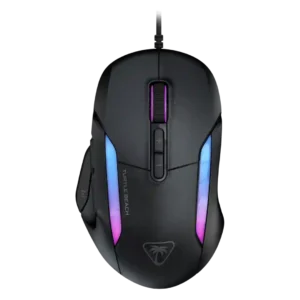
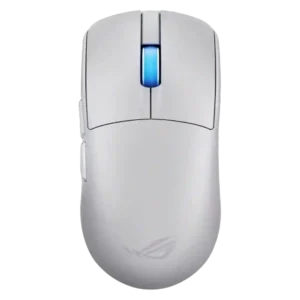
2.4GHz support is repeatedly confirmed for the Kone II Air through dongle references. Reviewers treat it as the preferred wireless gaming mode over Bluetooth.
Reviews repeatedly support the 2.4GHz path as the mouse's primary high-performance connection, including wireless 8K polling through the dongle and tri-mode switching with wired and Bluetooth options.
Acceleration and motion-control evidence is mostly specification and software based. Reviews cite 50G acceleration, tracking speed, motion sync, angle snapping, and related tuning controls rather than deep acceleration testing.
Acceleration behavior is supported mainly through tracking tests: reviewers reported no odd acceleration or cited the high 50G acceleration capability, which supports reliable fast-swipe control rather than adjustable acceleration tuning.
Reviewers mostly describe the Kone II as accurate and responsive, with strong tracking in games and general use. One review reported a small precision quirk during tiny aim corrections, so the evidence is strong but not perfectly uniform.
Aiming precision is one of the clearest strengths. Reviewers describe fine corrections, minimal movements, and real-game reticle control as stable, precise, and natural.
Weight balance has limited direct evidence. One review says the Air weight hits a sweet spot, and another says the large, heavy body still feels balanced, but most reviews discuss weight without balance detail.
Balance is praised in the reviews that discuss it directly, with one noting better hand balance from the shell geometry and another calling the weight and balance spot-on.
Battery-life evidence applies to the Kone II Air. Reviews cite 130 hours on 2.4GHz and up to 350 hours on Bluetooth, with one review slightly exceeding the 130-hour mark in use.
Battery life is strong at standard polling, with multiple reviews citing roughly 98-101 hours or several long sessions, but several also warn that 8K mode drains it much faster.
Bluetooth support is repeatedly confirmed for the Kone II Air. Reviews present it as a power-saving option, while also noting lower performance than 2.4GHz wireless.
Bluetooth is consistently supported as part of the tri-mode setup and is described as stable enough for productivity or multi-device use, though competitive use generally favors 2.4GHz.
Build quality is generally praised as solid, sturdy, or robust. The large chassis helps it feel substantial, though the evidence is mostly first-impression testing rather than long-term durability.
Build quality is broadly praised. Reviewers describe a solid shell, rigid nylon construction, no creaking or flexing in most samples, and a premium-feeling chassis despite the very low weight.
Button customization is one of the clearest strengths. Reviews repeatedly point to Swarm II, Easy-Shift, remapping, and expanded commands as major parts of the mouse's usefulness.
Customization is well supported through Gear Link, with reviewers citing browser-based changes to DPI, button assignments, lighting, lift-off distance, debounce, and Zone Mode.
Button response is consistently praised. Reviewers call the buttons fast, responsive, easy to actuate, or free from response issues in games and general use.
Button responsiveness is rated highly where tested, with immediate main-key response, consistent clicks, and fast actuation noted across multiple reviews.
Cable evidence is mostly positive for the wired Kone II, with PhantomFlex, flexi-cable, and shoelace-like softness reducing drag. One review notes fuzzy braiding as a minor issue.
Cable flexibility is supported in the reviews that mention the included USB-C cable, which is described as flexible or thin enough for wired play.
Charging convenience has narrow evidence. One reviewer says plugging in the wireless model during a short break was acceptable because the battery life was already long.
Charging convenience is a strength where discussed: USB-C charging, quick cable top-ups, and play-while-charging reduce downtime.
Claw grip comfort is supported by several reviewers who found claw or relaxed claw usable. The evidence is positive but tied to hand size because the mouse is large.
Claw grip comfort is a recurring strength. Reviewers repeatedly describe the shape as well suited to claw grip, helped by the low hump, tapering sides, and light shell.
Click and input latency evidence is positive where directly discussed. Reviewers mention fast actuation, responsive switches, and wired use avoiding wireless latency delays.
Click latency is supported by optical switch and movement-delay evidence, with reviewers noting immediate response, no noticeable delay, and very quick optical actuation.
Click noise is mentioned as a minor character trait rather than a major flaw. Reviews describe hollow, louder, or satisfying click sound depending on the reviewer.
Noise evidence is limited but mixed-positive: one review says the primary clicks are slightly louder than the predecessor, while another praises the scroll wheel as smooth and quiet.
Connection stability evidence is limited but strong where tested. One review says the wireless connection was excellent and never failed, even with different receiver placements.
Connection stability is consistently strong in the reviews that tested it, with stable Bluetooth, no dropouts, no ghost inputs, and no desyncs over longer sessions.
Cross-platform evidence is mixed. Reviews cite Windows software support and Xbox plug-and-play use, but also note that Swarm II lacks macOS support and that the mouse is mainly a Windows PC gaming device.
Cross-platform and multi-device use is supported by Gear Link's browser approach and one reviewer switching between a gaming PC and MacBook over different connection modes.
Debounce customization is directly supported through Swarm II references to debounce time, angle snapping, motion settings, and related tuning controls.
Debounce customization is directly supported by Gear Link evidence in one review, which mentions adjusting debounce along with DPI, lift-off distance, and Zone Mode.
Multiple reviews cite the 26K DPI range and Swarm II DPI adjustment options. The range is consistently presented as high-end, even when reviewers personally used much lower DPI settings.
DPI range is strongly supported by repeated references to the AimPoint Pro sensor's 42K or 42,000 DPI/CPI ceiling and per-step DPI adjustment.
Durability-over-time evidence is mainly switch-rating based, with repeated 100-million-click references. Reviews do not provide long-term months-or-years wear data.
Durability over time is supported by durable switch ratings and short-term testing where clicks and chassis feel stayed consistent, though long-term multi-year evidence is not present.
Ecosystem integration is supported through AIMO lighting and Swarm II device management. Reviews mention compatibility with other Turtle Beach gear such as headsets and keyboards.
Ecosystem integration is supported modestly through ROG Gear Link, Armoury Crate references, RGB/Bluetooth additions, and the broader Ace collection context, but it is not a dominant review theme.
Ergonomics are the most consistent strength across the review set. The Kone II is repeatedly described as comfortable, glove-like, or shaped for medium and large hands, with small-hand fit as the main caveat.
Ergonomic design is supported by reviewers describing neutral shaping, tapering sides, contoured buttons, and a shape that gets out of the way rather than forcing one grip style.
Fingertip grip evidence is mixed. Some reviewers found all grip types workable, while others said the shell is too bulky, heavy, or awkward for comfortable fingertip use.
Fingertip grip comfort is a recurring strength. Several reviewers mention fingertip suitability, lower hump control, and easier micro-adjustments.
Firmware reliability has limited evidence. Reviews say firmware upgrades or installation are handled through Swarm II, but they do not provide enough long-term evidence to judge update reliability deeply.
FPS suitability is mixed. The sensor and clicks are fast enough for normal shooters, but several reviewers say the size, weight, or tracking feel makes it less ideal for high-level competitive FPS play.
FPS suitability is strong. Reviews repeatedly frame the mouse around esports and shooters, citing fast tracking, low delay, smooth flicks, and competitive play benefits.
Glide smoothness is consistently positive. Reviews point to PTFE feet, smooth travel, low friction, and good movement on mouse pads and other surfaces.
Glide smoothness is heavily supported. Reviewers praise the PTFE feet, rounded edges, low-friction glide, and smooth movement across pads or desks.
Grip texture evidence covers the matte texture, natural stickiness, and included grip tape. Most comments are positive, but one reviewer disliked the grip tape and another found the smooth shell could be slippery.
Grip texture is mostly positive but not universal. Reviewers praise grippy matte or rubberized coatings, while some note slipperiness, fingerprints, or smudging.
Handedness evidence is clear: the Kone II is right-handed in shape and control layout. Reviews specifically warn that it is unsuitable for left-handed mouse use.
Handedness is mixed. Some reviews call the shell ambidextrous or usable by left-handers, while others emphasize left-side buttons that make it better suited to right-handed users.
Left and right click quality is mostly positive, with comments about snappy, satisfying, large, or responsive main buttons. One review notes a somewhat mushier feel compared with another Turtle Beach model.
Left and right click quality is mostly strong, with crisp, sharp, consistent clicks and precise feedback, though one early sample had trigger rattle.
Lift-off distance receives limited but direct evidence: one review states that the sensor can detect lift-off distance and that it can be adjusted through software.
Lift-off distance is directly supported by settings and test references, including Gear Link LOD adjustment and measured loss of tracking at low card-thickness ranges.
Long-session comfort is mostly positive for users whose hands fit the shell. Reviewers praise all-day or long-stint comfort, but hand fatigue and small-hand fit appear as recurring caveats.
Long-session comfort is generally positive because of low fatigue, low mass, and reliable shape, though palm-grip users with larger hands may prefer a fuller mouse.
Macro support is well supported through Swarm II references to hotkeys, game-specific macros, Photoshop shortcuts, and remapping. Reviews frame this as helpful for both games and productivity.
Macro support is only lightly supported through the reviewer’s description of button remapping with a secondary function layer, so the score is conservative rather than a broad macro claim.
Materials are described through matte plastic, finish quality, cable braiding, and grip surfaces. Feedback is mixed: several reviewers like the finish, while others mention hard plastic feel, fuzzy braiding, or less premium RGB housing.
Materials quality is strong: reviewers repeatedly cite bio-based nylon, rigid construction, and a premium shell that keeps weight low without obvious fragility.
MMO suitability is strong because reviews emphasize Easy-Shift, many commands, macros, and extra buttons. PCWorld and IGN specifically connect the mouse to MMO-style command access.
MMO suitability is weak because the mouse offers limited buttons; one review explicitly says the button layout is limited for MMO gamers.
MOBA suitability has some support through extra buttons, macros, and games such as League of Legends or Deadlock. It is less directly covered than MMO or general gaming use.
Most tracking and motion evidence is positive, with reviewers reporting no skipping, glitches, or response issues. Trusted Reviews is the main exception, describing a visible issue in tiny pixel-perfect movements.
Motion consistency is excellent in the reviews, with stable cursor behavior, no jitter, tracking steadiness, motion sync, and no weird wireless or sensor behavior.
Onboard memory has limited but direct support from reviews that mention five custom profiles and working with the onboard profile through software.
Onboard memory is a clear weakness in the review that discusses it directly, noting that profiles are not stored permanently on the mouse.
Palm grip comfort is generally strong, especially for medium and large hands. A few reviews found other grips better or noted that not every hand size will fit the large shell comfortably.
Palm grip comfort is mixed. Some reviews say the shape can work for palm grip, but others say larger-handed palm users may prefer fuller support from alternatives.
Reviews identify a 1,000Hz maximum polling rate with software control. Several treat it as adequate for normal gaming, while one notes that higher 4,000Hz or 8,000Hz options are now common elsewhere.
Polling rate is one of the strongest supported specs, with many reviews highlighting native 8,000Hz/8K polling, including wireless operation without an extra booster.
Portability is a weak point. Reviews describe the mouse as big or bulky, and one says the larger size is not ideal for laptop users or people who prefer travel-size mice.
Portability is good thanks to low weight, compact travel friendliness, and dongle storage, but one review notes that a carrying bag would have improved the package.
Premium feel is mixed. Some reviews cite quality features, rare comfort, or a premium package, while others imply the design or materials do not fully feel premium.
Premium feel is supported by high-quality impressions, solid premium shell comments, and a rigid finish, although one lightweight chassis was described as initially hollow by one reviewer.
Profile support is mentioned across several reviews, including custom profiles, game profiles, and profile cycling. The evidence is functional rather than deeply tested.
Profile switching has mixed support. Gear Link supports multiple profiles, but one review says profiles are not stored permanently, making multi-PC use less seamless.
The Kone II is repeatedly credited with many programmable inputs, usually described through seven buttons, eight buttons, ten programmable controls, or up to 23 functions with Easy-Shift.
Programmable buttons are supported by key assignment and freely assignable button evidence, though the number of buttons remains focused on shooter use rather than shortcut-heavy games.
RGB is widely covered and mostly positive, with multiple zones, strips, scroll-wheel lighting, AIMO effects, and Swarm II customization. Some criticism appears around the design looking tacky or transitions looking choppy.
RGB features are present but secondary. Reviews mention RGB lighting, scroll wheel lighting, adjustable lighting, and Zone Mode disabling lighting to save power.
The 4D scroll wheel is a recurring strength, with praise for tactile feedback, side tilt, and extra inputs. Some reviews note caveats such as no free-spin mode on the wired model or no dual-mode scrolling.
Scroll wheel quality is positive overall, with reviewers citing precise clicks, defined tactile notches, good tensioning, and smooth quiet scrolling.
The Owl-Eye 26K optical sensor is repeatedly described as strong, capable, fast, or top-tier. Most reviews found no sensor problems, while one noted that the tracking did not feel as smooth in pixel-perfect FPS movements.
Sensor performance is consistently excellent, with reviewers praising the AimPoint Pro sensor, flawless tracking, high DPI capability, and strong practical gaming performance.
The overall shape is a major talking point. Most reviewers find the large ergonomic shell comfortable and supportive, though some note that it feels too large or heavy for smaller hands and certain grip styles.
Shape comfort is generally strong for claw and fingertip users and medium-to-large symmetrical-mouse fans, but reviewers note that shape fit still depends on hand size and grip style.
Side buttons are often described as well placed, easy to reach, or comfortable. A few caveats appear around accidental presses or hand-size fit, so the quality depends on whether the shell suits the user.
Side button quality is generally strong. Reviewers praise crisp feel, placement, accidental-press prevention, and solid implementation, with one long-finger caveat.
Software stability is mixed. Gear Link is described as responsive and better than Armoury Crate, but one reviewer worries about web dependency and server availability.
Swarm II usability is mostly praised as clean, intuitive, simple, and easy to configure. One review criticizes wasted space and a few confusing UI choices, so the software is strong but not perfect.
Software usability is one of the product's clearest strengths. Reviewers repeatedly praise Gear Link as browser-based, clear, responsive, intuitive, and easier than installing heavier software.
Surface compatibility is supported by tests on cloth, hard surfaces, wood, marble, and other everyday surfaces. The evidence is practical rather than laboratory-based.
Surface compatibility is strong. Reviewers cite track-on-glass, surface calibration, varied-surface tracking, and successful use across glass, wood, hard surfaces, and mouse pads.
Switch durability is supported by repeated references to Titan optical switches rated for 100 million clicks. The evidence is based on rating claims rather than long-term wear testing.
Switch durability is strongly supported by repeated 100-million-click ratings for the optical switches and durable microswitch language.
Switch feel is generally described as crisp, tactile, satisfying, or well-balanced. One review found the Kone II less clicky and more mushy than another Turtle Beach mouse, making this a mostly positive but slightly mixed area.
Switch feel is mostly positive, with repeated praise for crisp, decisive, clicky, and consistent optical switches, though one reviewer found them only okay.
Tilt and gesture-style scroll controls are well supported. Reviews repeatedly mention the 4D wheel, side-to-side clicks, left/right tilt, and four-directional wheel behavior.
Value feedback is generally positive at the wired model's price, with several reviewers calling it worth the price or a strong buy. A few reviews still wanted a lower price or found it costly versus rivals.
Value for money is mixed. Reviewers call the price premium or not cheap, but several also describe it as competitive or smartly priced against other flagship mice.
Reviewers consistently confirm the wired Kone II is around 90g, while Air coverage puts the wireless version above 110g. The wired model is reasonably light for its size but not ultralight.
Weight is one of the strongest attributes, with almost every review emphasizing the 46-48g range and praising the mouse as ultralight or extremely easy to move.
Wireless latency evidence applies to the Kone II Air. Reviews cite lower latency on the 2.4GHz dongle and report no lagging or skipping in wireless use.
Wireless latency is excellent where discussed, with reviewers noting no delay, instant 2.4GHz response, low latency, and minimal interference.
Wireless performance evidence applies to the Kone II Air. Reviews describe the 2.4GHz dongle as high performance and say perceived performance stayed consistent in testing.
Wireless performance is excellent overall, with native 8K wireless, strong SpeedNova performance, low interference, and wired-like feel appearing across several reviews.