2.4GHz connectivity
P1
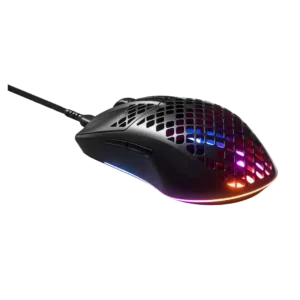
Product 1: SteelSeries Aerox 3
4.5
2.4GHz connectivity contributed positively to avoiding cable dependence in the wireless model.
P2
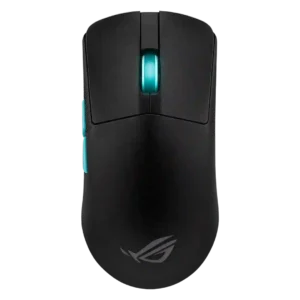
Product 2: ASUS ROG Harpe Ace Aim...
4.8
Reviewers liked the low-latency 2.4GHz mode and receiver setup, especially when it reduced aim-related latency or supported a shared ROG receiver.
Accuracy and tracking precision
P1
Product 1: SteelSeries Aerox 3
4.5
Reviewers split sharply: some praised precise, responsive tracking, while one found the sensor-placement concern mostly overblown after adjustment.
P2
Product 2: ASUS ROG Harpe Ace Aim...
4.5
Accuracy was one of the strongest themes, with reviewers repeatedly praising precise tracking, consistent shots, and strong aim performance, though one Aim Lab optimization test only produced a minor improvement.
battery life
P1
Product 1: SteelSeries Aerox 3
4.5
Battery life was viewed positively where the wireless version avoided dramatic battery-life loss despite weight savings.
P2
Product 2: ASUS ROG Harpe Ace Aim...
4.7
Battery life was consistently praised, with reviewers describing multi-day, fortnight, or even month-like usage and validating the long runtime claims.
Bluetooth support
P1
Product 1: SteelSeries Aerox 3
4.5
Bluetooth support contributed positively to avoiding cable dependence in the wireless model.
P2
Product 2: ASUS ROG Harpe Ace Aim...
4.7
Bluetooth was valued as a convenient secondary mode for non-competitive use and multi-device flexibility, even when 2.4GHz remained preferred for gaming.
build quality
P1
Product 1: SteelSeries Aerox 3
3.3
Build quality was highly divisive, ranging from solid and durable to flexy, creaky, and not great.
P2
Product 2: ASUS ROG Harpe Ace Aim...
4.6
Build quality was generally strong, with many reviewers citing solid shells and no creaking, though one noted the lightweight plastic could feel cheap.
button customization
P1
Product 1: SteelSeries Aerox 3
4.5
Button customization was considered valuable through SteelSeries Engine configuration flexibility.
P2
Product 2: ASUS ROG Harpe Ace Aim...
4.4
Customization was praised when reviewers focused on deep performance tuning and highly configurable buttons, but criticized when the physical button layout felt too sparse.
button responsiveness
P1
Product 1: SteelSeries Aerox 3
3.4
Responsiveness was mostly praised, but some reviewers reported misclicks or click travel that hurt gaming.
P2
Product 2: ASUS ROG Harpe Ace Aim...
5.0
Button responsiveness was praised for fast, clean, responsive actuation that kept up with esports-style play.
cable flexibility
P1
Product 1: SteelSeries Aerox 3
2.6
Cable flexibility was a common weakness: one review praised flexibility, but several called the cable basic, stiff, or bad.
P2
Product 2: ASUS ROG Harpe Ace Aim...
5.0
The included cable was praised as light and flexible enough not to get in the way during wired use.
claw grip comfort
P1
Product 1: SteelSeries Aerox 3
4.0
Claw grip comfort was generally positive, with reviewers calling the shape suitable or comfortable for claw use.
P2
Product 2: ASUS ROG Harpe Ace Aim...
3.9
Claw grip comfort was split: some reviewers found the mouse useful or comfortable for claw grip, while others disliked the length or rear hump.
click latency
P1
Product 1: SteelSeries Aerox 3
5.0
One review described the gaming experience as latency-free, supporting a strong click-latency impression.
P2
Product 2: ASUS ROG Harpe Ace Aim...
4.8
Click latency and immediate actuation were rated highly where reviewers mentioned minimal pre-travel, no travel delay, or fatigue-free resistance.
click noise
P1
Product 1: SteelSeries Aerox 3
4.0
Click noise was acceptable to good, with one review saying the clicks were not annoying or overly loud.
P2
Product 2: ASUS ROG Harpe Ace Aim...
3.9
Click noise was mixed, ranging from consistent and satisfying sound to louder, deeper switches or clicks that were less audible than some competitors.
connection stability
P1
Product 1: SteelSeries Aerox 3
4.5
Connection stability was positive where the detachable cable did not disconnect during quick movements.
P2
Product 2: ASUS ROG Harpe Ace Aim...
3.3
Connection stability was mostly acceptable but not flawless, with reviewers mentioning brief interference, wake delay, or minor lag events.
cross-platform compatibility
P1Product 1: SteelSeries Aerox 3
No score yet
P2
Product 2: ASUS ROG Harpe Ace Aim...
4.8
Cross-platform flexibility was praised for users switching among PCs, laptops, Macs, handhelds, tablets, or other devices.
DPI range
P1
Product 1: SteelSeries Aerox 3
4.5
The DPI range was valued where it translated into fast, precise cursor movement over long distances.
P2
Product 2: ASUS ROG Harpe Ace Aim...
4.9
The 36,000 DPI range was repeatedly praised as extremely high-end and more than enough for competitive sensitivity needs.
durability over time
P1
Product 1: SteelSeries Aerox 3
4.5
Durability over time was supported by a short-term drop outcome where the mouse held up without visible damage.
P2
Product 2: ASUS ROG Harpe Ace Aim...
4.3
Durability over time was mixed: some reviewers found daily-use durability solid, while later comparison feedback flagged double-clicking cases.
ergonomic design
P1
Product 1: SteelSeries Aerox 3
5.0
Ergonomic design scored well where comfort over use was directly praised.
P2
Product 2: ASUS ROG Harpe Ace Aim...
3.8
Ergonomics were divisive: some reviewers praised comfort and control, while others found the hump, narrowness, or larger-hand fit awkward.
fingertip grip comfort
P1
Product 1: SteelSeries Aerox 3
4.0
Fingertip grip comfort was generally positive, with reviewers finding the shape suitable for fingertip users.
P2
Product 2: ASUS ROG Harpe Ace Aim...
4.3
Fingertip comfort was mostly positive where reviewers felt the shape and light weight worked well for fingertip or hybrid fingertip use.
firmware reliability
P1
Product 1: SteelSeries Aerox 3
2.0
Firmware reliability was criticized when RGB settings reverted after closing the software.
P2
Product 2: ASUS ROG Harpe Ace Aim...
2.0
Firmware/update reliability was criticized because updates could require awkward dongle-and-mouse connection steps.
FPS gaming suitability
P1
Product 1: SteelSeries Aerox 3
3.8
FPS suitability was mixed: some called it shooter-ready, while others said sensor or lift-off problems could hurt precise play.
P2
Product 2: ASUS ROG Harpe Ace Aim...
4.8
FPS suitability was a major strength, with reviewers repeatedly calling it excellent, esports-ready, and especially suited to fast shooters.
glide smoothness
P1
Product 1: SteelSeries Aerox 3
4.3
Glide smoothness was broadly praised, though one reviewer found the feet only okay.
P2
Product 2: ASUS ROG Harpe Ace Aim...
4.8
Glide smoothness was highly praised thanks to PTFE feet, low weight, and smooth movement across surfaces.
grip texture
P1
Product 1: SteelSeries Aerox 3
3.8
Grip texture was split between praise for the coating and criticism of slippery side surfaces.
P2
Product 2: ASUS ROG Harpe Ace Aim...
4.1
Grip texture was mixed: many liked the grippy finish or tape, but some found the sides slippery, oily, or under-coated.
left and right click quality
P1
Product 1: SteelSeries Aerox 3
2.7
Primary-click quality was mixed: satisfying in one review but criticized elsewhere for wobble, post-travel, and in-game annoyance.
P2
Product 2: ASUS ROG Harpe Ace Aim...
4.3
Main click quality was generally positive for tactility, though one reviewer found the switches slightly stiff.
lift-off distance
P1
Product 1: SteelSeries Aerox 3
2.8
Lift-off distance was divisive, with one reviewer seeing no issues and two others calling high lift-off or cursor jiggle a real problem.
P2
Product 2: ASUS ROG Harpe Ace Aim...
3.8
Lift-off distance customization was useful but sometimes limited compared with rival software.
long-session comfort
P1
Product 1: SteelSeries Aerox 3
4.7
Long-session comfort was a strength, with reviewers praising comfort and reduced fatigue from the low weight.
P2
Product 2: ASUS ROG Harpe Ace Aim...
4.8
Long-session comfort was praised where reviewers noted relaxed fingers or comfortable longer play, but this depended on grip and hand size.
materials quality
P1
Product 1: SteelSeries Aerox 3
4.3
Materials quality was mostly positive, with praise for the matte finish, coating, and high-quality look.
P2
Product 2: ASUS ROG Harpe Ace Aim...
4.7
Materials quality was praised for strong nylon, sturdy shell feel, and pleasant hand feel despite the low weight.
motion consistency
P1
Product 1: SteelSeries Aerox 3
2.8
Motion consistency ranged from spot-on to distracting cursor jiggle that could throw off shots.
P2
Product 2: ASUS ROG Harpe Ace Aim...
4.8
Motion consistency was praised when reviewers noted consistent shots, stable firing, and no jitter in slow tracking.
onboard memory
P1
Product 1: SteelSeries Aerox 3
2.0
Onboard memory drew criticism because one reviewer could not get settings to save to the device.
P2
Product 2: ASUS ROG Harpe Ace Aim...
4.3
Onboard memory was useful for profile storage and for reducing dependence on software after setup.
palm grip comfort
P1
Product 1: SteelSeries Aerox 3
1.8
Palm grip comfort was weak in reviews that said the mouse was too small or unsuitable for palm use.
P2
Product 2: ASUS ROG Harpe Ace Aim...
3.1
Palm grip comfort was mixed, with some reviewers comfortable using palm grip and others finding the narrow or long shape challenging.
polling rate
P1Product 1: SteelSeries Aerox 3
No score yet
P2
Product 2: ASUS ROG Harpe Ace Aim...
3.5
Polling rate opinions were mixed: 1,000Hz was often enough, but several reviewers wanted higher rates for modern competitive mice.
portability
P1
Product 1: SteelSeries Aerox 3
4.0
Portability was praised because the detachable cable helped with travel and laptop use.
P2
Product 2: ASUS ROG Harpe Ace Aim...
4.8
Portability was praised because the light body, dongle storage, and multi-device receiver made it easy to travel with.
premium feel
P1
Product 1: SteelSeries Aerox 3
4.0
Premium feel was positive in some reviews but undermined by critics who expected more from SteelSeries.
P2
Product 2: ASUS ROG Harpe Ace Aim...
4.1
Premium feel was generally positive for specs and quality, but some reviewers found the look plain or unspectacular.
programmable buttons
P1
Product 1: SteelSeries Aerox 3
4.0
Programmable buttons were viewed as sufficiently flexible for gaming and everyday use.
P2
Product 2: ASUS ROG Harpe Ace Aim...
2.5
Programmable button coverage was mixed, with minimalist controls helping FPS focus but feeling too feature-light for users wanting more inputs.
RGB features
P1
Product 1: SteelSeries Aerox 3
4.3
RGB was consistently one of the strongest positives, though one review found lighting configuration less intuitive.
P2
Product 2: ASUS ROG Harpe Ace Aim...
3.8
RGB was modest but useful to some reviewers for DPI or battery indicators; others found it superfluous or noticed uneven lighting.
scroll wheel quality
P1
Product 1: SteelSeries Aerox 3
4.3
Scroll-wheel quality received positive remarks for feel and performance when specifically judged.
P2
Product 2: ASUS ROG Harpe Ace Aim...
3.8
Scroll wheel quality was mixed, ranging from tactile and nice-stepped to merely okay or missing adjustable resistance.
sensor performance
P1
Product 1: SteelSeries Aerox 3
3.8
Sensor impressions ranged from excellent, latency-free tracking to harsh criticism of lift-off behavior and sensor shortcomings.
P2
Product 2: ASUS ROG Harpe Ace Aim...
4.9
Sensor performance was a standout strength, with reviewers repeatedly describing it as fast, accurate, responsive, or top-notch.
shape comfort
P1
Product 1: SteelSeries Aerox 3
4.4
Shape comfort was generally positive, especially for users who liked the Rival-style low profile.
P2
Product 2: ASUS ROG Harpe Ace Aim...
3.7
Shape comfort was highly divisive, praised by some for FPS control and criticized by others for its hump, narrowness, length, or personal fit.
side button quality
P1
Product 1: SteelSeries Aerox 3
3.3
Side-button feedback ranged from sharp, uncomfortable buttons to comfortable placement with no accidental activation.
P2
Product 2: ASUS ROG Harpe Ace Aim...
3.5
Side button quality was mixed, with some reviewers liking reach and tactility while others found the buttons small or mushy.
skate durability
P1
Product 1: SteelSeries Aerox 3
2.7
Skate durability and foot quality were mixed, with concerns about rough-surface wear, sound, and snagging.
P2
Product 2: ASUS ROG Harpe Ace Aim...
4.5
Skate durability and maintenance were helped by high-quality PTFE feet and included replacements, reducing downtime after wear.
software stability
P1
Product 1: SteelSeries Aerox 3
2.5
Software stability was criticized where users reported occasional stability problems.
P2
Product 2: ASUS ROG Harpe Ace Aim...
2.2
Software stability was a recurring concern, with installation trouble, forced updates, and Armoury Crate issues reported.
software usability
P1
Product 1: SteelSeries Aerox 3
3.3
Software usability was mixed: some praised SteelSeries Engine, while others found it awkward or missing expected settings.
P2
Product 2: ASUS ROG Harpe Ace Aim...
3.2
Software usability split reviewers: Aim Lab tools were often useful, while Armoury Crate drew criticism for complexity, updates, missing premium features, or instability.
surface compatibility
P1
Product 1: SteelSeries Aerox 3
4.8
Surface compatibility was strong overall, with praise for responsive tracking or smooth glide across surfaces and pads.
P2
Product 2: ASUS ROG Harpe Ace Aim...
5.0
Surface compatibility was praised where reviewers highlighted mousepad calibration as a useful tuning tool.
switch durability
P1
Product 1: SteelSeries Aerox 3
5.0
Switch durability was rated strongly where the review emphasized the Aerox 3 switches exceeding average rated click life.
P2
Product 2: ASUS ROG Harpe Ace Aim...
3.7
Switch durability was mixed: reviewers liked the rated lifespan and reliability claims, but later feedback flagged double-clicking cases.
switch feel
P1
Product 1: SteelSeries Aerox 3
4.5
Click feel was positively received where the main buttons produced satisfying clicks.
P2
Product 2: ASUS ROG Harpe Ace Aim...
4.7
Switch feel was broadly praised for satisfying, tactile, responsive clicks, though some felt the switches were heavier than ideal.
value for money
P1
Product 1: SteelSeries Aerox 3
2.8
Value for money was highly split, from 'great value' praise to strong complaints that the price was not justified.
P2
Product 2: ASUS ROG Harpe Ace Aim...
3.8
Value was mixed-to-positive: many felt the performance justified the premium, while casual users and feature-heavy buyers saw the price as steep.
water and dust resistance
P1
Product 1: SteelSeries Aerox 3
4.0
Water and dust resistance was praised for protection, though one review worried the open shell could collect dust and dirt.
P2Product 2: ASUS ROG Harpe Ace Aim...
No score yetweight
P1
Product 1: SteelSeries Aerox 3
4.5
The mouse's low weight was repeatedly praised for agility, maneuverability, and quick movements.
P2
Product 2: ASUS ROG Harpe Ace Aim...
5.0
Weight was the most consistently praised physical attribute, with reviewers repeatedly emphasizing the 54g body as extremely light and easy to control.
wireless latency
P1
Product 1: SteelSeries Aerox 3
5.0
Wireless latency was praised in the review that described lossless, latency-free gaming.
P2
Product 2: ASUS ROG Harpe Ace Aim...
4.2
Wireless latency was mostly praised as unnoticeable or very low, though a few reviewers observed occasional lag or jitter.
wireless performance
P1
Product 1: SteelSeries Aerox 3
4.5
Wireless performance was positively described where the wireless model avoided cable dependence thanks to connection options.
P2
Product 2: ASUS ROG Harpe Ace Aim...
4.8
Wireless performance was praised for feeling close to wired performance, but a few caveats around jitter or sleep wake-up remained.