2.4GHz connectivity
P1
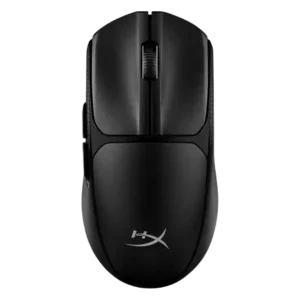
Product 1: HyperX Pulsefire Fuse
4.2
2.4GHz performance was widely treated as reliable and responsive, with reviewers repeatedly noting dongle support and standard 1000Hz operation.
P2
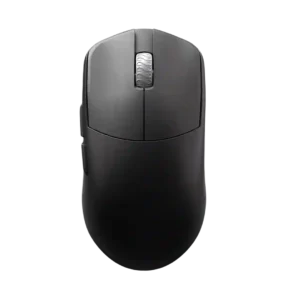
Product 2: LAMZU Maya X
4.8
The reviews identify wired USB plus 2.4GHz wireless connectivity, with compatibility tied to USB-supported systems.
Accuracy and tracking precision
P1
Product 1: HyperX Pulsefire Fuse
4.5
The strongest tracking evidence is positive, with precise tracking reported across fast FPS and broader game genres.
P2
Product 2: LAMZU Maya X
5.0
Tracking accuracy is described as precise and stable, with review evidence pointing to predictable movement and precise tracking.
balance and weight distribution
P1
Product 1: HyperX Pulsefire Fuse
4.0
Weight balance is lightly covered: one review noted a rear battery bias without handling harm, while another called the mouse well-balanced.
P2
Product 2: LAMZU Maya X
5.0
Weight balance is praised directly, with one reviewer saying the balance is on point despite the very low weight.
battery life
P1
Product 1: HyperX Pulsefire Fuse
4.2
Battery life is a consistent strength, with multiple reviewers citing up to 85 hours and practical multi-session or multi-week use.
P2
Product 2: LAMZU Maya X
3.8
Battery life is acceptable at lower polling rates but consistently becomes the main compromise at higher polling rates.
build quality
P1
Product 1: HyperX Pulsefire Fuse
3.1
Build quality is divisive: some reviewers found a solid shell or practical design, while others criticized cheap components and one sample’s wobble.
P2
Product 2: LAMZU Maya X
4.7
Build quality is broadly praised as premium, rigid, and solid, though one review reported a small creaking issue.
button customization
P1
Product 1: HyperX Pulsefire Fuse
3.6
Button customization is present through NGENUITY, but opinions range from straightforward remapping to too few options to justify the app.
P2
Product 2: LAMZU Maya X
4.8
Button customization is well supported through web or companion software, including button mapping and performance settings.
button responsiveness
P1
Product 1: HyperX Pulsefire Fuse
4.1
Button response is generally positive, with several reviewers calling the clicks tactile, reliable, responsive, or satisfying.
P2
Product 2: LAMZU Maya X
4.9
Button responsiveness is one of the stronger areas, with reviewers describing fast, responsive, consistent, and light-feeling clicks.
charging convenience
P1
Product 1: HyperX Pulsefire Fuse
3.8
The replaceable AAA battery is usually framed as convenient because the cover opens easily and batteries can be swapped quickly.
P2
Product 2: LAMZU Maya X
3.6
Charging convenience is mixed: USB-C charging is straightforward, but the included cable can interfere with use while charging.
claw grip comfort
P1
Product 1: HyperX Pulsefire Fuse
2.0
Claw grip evidence is negative and limited to one reviewer, who found the low-profile shape caused wrist drag even in claw grip.
P2
Product 2: LAMZU Maya X
4.9
Claw grip comfort is a consistent strength, especially for relaxed or aggressive claw grips and medium-to-large hands.
click latency
P1
Product 1: HyperX Pulsefire Fuse
4.5
Latency evidence is positive in 2.4GHz mode, with wired-like response and no noticeable lag reported during gameplay.
P2
Product 2: LAMZU Maya X
5.0
Click latency evidence is favorable, including measured 0ms-relative latency and responsive switch impressions.
click noise
P1
Product 1: HyperX Pulsefire Fuse
3.4
Click noise is mixed: one review warned the clicks are not quiet, while another said they are not overly loud.
P2
Product 2: LAMZU Maya X
4.2
Click noise is not a major concern in the available evidence, with one reviewer saying fast scrolling never becomes annoyingly loud.
connection stability
P1
Product 1: HyperX Pulsefire Fuse
4.1
Connection stability is mostly positive, with stable multi-device use and smooth wireless operation reported.
P2
Product 2: LAMZU Maya X
4.8
Connection stability is strong in the reviews that mention it, including no anomalies at 8000 Hz and positive wireless impressions.
cross-platform compatibility
P1
Product 1: HyperX Pulsefire Fuse
4.1
Cross-platform use is supported by Bluetooth and multi-device positioning, with one review explicitly describing the mouse as multi-platform.
P2
Product 2: LAMZU Maya X
4.0
Cross-platform compatibility is supported at a basic connection level for systems with USB 2.0 and above, with MacOS customization caveats.
DPI range
P1
Product 1: HyperX Pulsefire Fuse
4.0
The 12,000 DPI ceiling is consistently documented and usually treated as enough, though one reviewer considered it too sensitive for most users.
P2
Product 2: LAMZU Maya X
5.0
DPI support is high-end, with 30,000 CPI/DPI evidence and software control over DPI settings.
durability over time
P1
Product 1: HyperX Pulsefire Fuse
3.8
Long-term durability evidence is limited to switch ratings, with Kailh switches cited at 20 million clicks.
P2
Product 2: LAMZU Maya X
4.2
Durability impressions are mostly good, but the open-bottom design raises dust and longevity concerns for some reviewers.
ergonomic design
P1
Product 1: HyperX Pulsefire Fuse
3.5
Ergonomic feedback is split: some found the mouse comfortable, while others said the low profile and small size hurt comfort.
P2
Product 2: LAMZU Maya X
4.8
The ergonomic design is praised through comfort grooves, a symmetrical layout, and broad grip-style support.
fingertip grip comfort
P1
Product 1: HyperX Pulsefire Fuse
4.1
Fingertip-oriented comfort is supported indirectly by hybrid fingertip/palm use and a neutral shape that supports different grip styles.
P2
Product 2: LAMZU Maya X
3.5
Fingertip grip comfort is more conditional; reviewers often point smaller or fingertip-focused users toward the smaller Maya or other options.
FPS gaming suitability
P1
Product 1: HyperX Pulsefire Fuse
4.3
FPS suitability is strong in the positive reviews, which describe precise tracking and responsive clicks in fast-paced shooters.
P2
Product 2: LAMZU Maya X
4.7
FPS suitability is strong thanks to responsive clicks, high-end sensor behavior, low weight, and competitive-gaming praise.
glide smoothness
P1
Product 1: HyperX Pulsefire Fuse
3.1
Glide quality is inconsistent: one review praised smooth PTFE movement, while others found the feet less smooth or friction-prone.
P2
Product 2: LAMZU Maya X
4.8
Glide is one of the clearest strengths, with stock PTFE skates repeatedly called smooth, low-friction, and high quality.
grip texture
P1
Product 1: HyperX Pulsefire Fuse
3.3
Grip texture is polarizing, praised for traction by some reviewers but criticized as rough or cheap by others.
P2
Product 2: LAMZU Maya X
4.4
Grip texture is generally well liked, especially for sweat or warmer hands, though coating wear, smudges, and feel are noted as caveats.
handedness options
P1
Product 1: HyperX Pulsefire Fuse
2.8
Handedness is one of the clearest split areas: the symmetrical shape helps, but left-side-only buttons make left-handed use weaker.
P2
Product 2: LAMZU Maya X
4.1
Handedness evidence points to a symmetrical or ambidextrous-style shape, though the mouse is not shown as offering left-handed side-button options.
left and right click quality
P1
Product 1: HyperX Pulsefire Fuse
4.1
Main click quality is generally a strength, with repeated praise for tactile, reliable, satisfying left and right clicks.
P2
Product 2: LAMZU Maya X
4.9
Left and right click quality is widely praised for crispness, consistency, and satisfying optical switch implementation.
lift-off distance
P1Product 1: HyperX Pulsefire Fuse
No score yet
P2
Product 2: LAMZU Maya X
4.6
Lift-off distance is configurable, with evidence for 0.7 mm, 1 mm, and multiple LOD options depending on review source.
long-session comfort
P1
Product 1: HyperX Pulsefire Fuse
3.7
Long-session comfort is highly dependent on hand size and fit, ranging from no fatigue to wrist friction and discomfort.
P2
Product 2: LAMZU Maya X
4.8
Long-session comfort is supported by comments about daily-driver comfort and long-gaming-session suitability.
macro support
P1
Product 1: HyperX Pulsefire Fuse
4.0
Macro support is confirmed through NGENUITY, which can record and trigger macros.
P2
Product 2: LAMZU Maya X
4.9
Macro support is available through software, with reviews mentioning macro recording or macro controls.
materials quality
P1
Product 1: HyperX Pulsefire Fuse
2.5
Materials are mixed, with fingerprint-resistant matte coating on one side and rough or cheap-feeling plastic on the other.
P2
Product 2: LAMZU Maya X
4.8
Materials quality is rated highly through structural-integrity, premium-plastic, and dense in-hand feel evidence.
motion consistency
P1
Product 1: HyperX Pulsefire Fuse
4.5
Motion consistency is positive where tested directly, with reviewers reporting consistent tracking and no noticeable jitter or lag.
P2
Product 2: LAMZU Maya X
4.8
Motion consistency is strong, with no 8000 Hz anomalies, stable tracking, and motion-sync controls in the software.
palm grip comfort
P1
Product 1: HyperX Pulsefire Fuse
4.0
Palm comfort is supported by a hybrid fingertip-and-palm experience, but broader comfort evidence shows hand-size sensitivity.
P2
Product 2: LAMZU Maya X
3.9
Palm grip comfort is mixed: it can work well, especially for some hand sizes, but large-hand palm users may want a fuller shape.
polling rate
P1
Product 1: HyperX Pulsefire Fuse
3.6
Polling rate coverage is consistent at about 1000Hz, viewed as standard and acceptable rather than premium.
P2
Product 2: LAMZU Maya X
5.0
Polling-rate support is a major strength, with multiple reviews confirming 8000 Hz wireless or customizable high polling rates.
portability
P1
Product 1: HyperX Pulsefire Fuse
4.2
Portability is a recurring strength thanks to light weight, dongle storage, Bluetooth fallback, and easy bag travel.
P2
Product 2: LAMZU Maya X
4.5
Portability gets limited but positive support from the included carrying bag.
premium feel
P1
Product 1: HyperX Pulsefire Fuse
2.2
Premium feel is limited; several reviewers explicitly contrast it with higher-end mice or criticize cheap-feeling parts.
P2
Product 2: LAMZU Maya X
4.8
Premium feel is strongly supported through the unboxing, refined build, and price-appropriate in-hand quality.
profile switching
P1
Product 1: HyperX Pulsefire Fuse
3.4
Profile switching evidence is mostly about DPI profiles or DPI levels, not richer full-profile workflows.
P2
Product 2: LAMZU Maya X
4.5
Profile support is present in the web software, though the evidence is limited to one review mention.
programmable buttons
P1
Product 1: HyperX Pulsefire Fuse
3.9
Programmable controls are supported through remappable buttons, side-button mapping, and scroll-wheel assignment.
P2
Product 2: LAMZU Maya X
4.9
Programmable buttons are supported, with evidence for six programmable buttons and full key rebinding.
RGB features
P1
Product 1: HyperX Pulsefire Fuse
3.1
RGB is mixed to negative: it is customizable, but several reviewers found it minimal, unimpressive, or battery-draining.
P2Product 2: LAMZU Maya X
No score yetscroll wheel quality
P1
Product 1: HyperX Pulsefire Fuse
3.6
Scroll wheel quality is split between smooth, tactile praise and criticism that the wheel is too small.
P2
Product 2: LAMZU Maya X
4.5
Scroll wheel quality is generally good, with praise for tension, grip, lightness, and tactile scrolling.
sensor performance
P1
Product 1: HyperX Pulsefire Fuse
3.9
Sensor performance is generally solid for the category, led by positive PAW3311 tracking reports but tempered by one merely adequate verdict.
P2
Product 2: LAMZU Maya X
5.0
Sensor performance is excellent across reviews, centered on the PAW/PixArt 3950 and consistently positive tracking impressions.
shape comfort
P1
Product 1: HyperX Pulsefire Fuse
3.5
Shape comfort is strongly reviewer-dependent, ranging from easy adaptation and a nice shape to too low-profile for larger hands.
P2
Product 2: LAMZU Maya X
4.8
Shape comfort is a defining strength, particularly for users who want a larger, formed, neutral symmetrical mouse.
side button quality
P1
Product 1: HyperX Pulsefire Fuse
1.5
Side-button quality is the weakest control area, with one review calling them small, stiff, uncomfortable, and cheap-feeling.
P2
Product 2: LAMZU Maya X
3.5
Side button quality is the most divisive button-related area, ranging from nearly perfect to stiff, mushy, or too much post-travel.
skate durability
P1
Product 1: HyperX Pulsefire Fuse
2.0
Skate durability evidence is limited and negative, with one reviewer reporting dust buildup around the skates.
P2
Product 2: LAMZU Maya X
4.6
Skate durability is supported by spare-skate inclusion and weeks of use without resistance, though long-term wear is not deeply tested.
software stability
P1
Product 1: HyperX Pulsefire Fuse
3.8
Software stability is only lightly supported; one reviewer called the NGENUITY app solid while others focused on limited usefulness.
P2
Product 2: LAMZU Maya X
3.9
Software stability is mixed: Aurora/web controls are reported to work well, but one companion-app experience was slow and laggy.
software usability
P1
Product 1: HyperX Pulsefire Fuse
3.6
Software usability is divided between straightforward, beginner-friendly customization and complaints that the app is barely worth installing.
P2
Product 2: LAMZU Maya X
4.4
Software usability is mostly positive for web-based controls, but not unanimous because one review found the app slow and ugly.
surface compatibility
P1
Product 1: HyperX Pulsefire Fuse
3.6
Surface compatibility is mixed, with strong glass/all-surface evidence offset by one report of scraping and friction.
P2
Product 2: LAMZU Maya X
4.8
Surface compatibility is strong, with evidence of smooth or consistent behavior across varied pads and surfaces.
switch durability
P1
Product 1: HyperX Pulsefire Fuse
3.8
Switch durability is supported by Kailh 20-million-click ratings rather than long-term failure testing.
P2
Product 2: LAMZU Maya X
4.8
Switch durability is strong on paper, with Omron optical switches and 70-million-click evidence.
switch feel
P1
Product 1: HyperX Pulsefire Fuse
4.1
Switch feel is usually positive, with repeated descriptions of clicky, tactile, crisp, or satisfying feedback.
P2
Product 2: LAMZU Maya X
4.8
Switch feel is widely praised as crisp, light, fast, and satisfying, though one reviewer found the implementation less characterful.
value for money
P1
Product 1: HyperX Pulsefire Fuse
3.7
Value is polarizing: positive reviews call it excellent or strong value, while critical reviews say competitors are more compelling.
P2
Product 2: LAMZU Maya X
4.6
Value is rated well because reviewers see strong specs, extras, and performance for the price, despite cheaper alternatives existing.
water and dust resistance
P1Product 1: HyperX Pulsefire Fuse
No score yet
P2
Product 2: LAMZU Maya X
3.8
Dust resistance is partially addressed through dust-cover and dust-proof encoder evidence, while no water-resistance evidence appears.
weight
P1
Product 1: HyperX Pulsefire Fuse
4.0
Weight is a consistent advantage, with reviewers repeatedly identifying the 75g AAA configuration as light or relatively lightweight.
P2
Product 2: LAMZU Maya X
5.0
Weight is a standout strength, with repeated evidence around 47g to 48g and praise for how light it feels.
wireless latency
P1
Product 1: HyperX Pulsefire Fuse
4.5
Wireless latency is a clear 2.4GHz strength, with reviewers reporting wired-like feel and no noticeable input lag.
P2
Product 2: LAMZU Maya X
4.8
Wireless latency is treated favorably through responsive wireless impressions, instant-feeling clicks, and high-end polling behavior.
wireless performance
P1
Product 1: HyperX Pulsefire Fuse
4.3
Wireless performance is one of the most consistently positive areas, especially over the 2.4GHz dongle.
P2
Product 2: LAMZU Maya X
4.9
Wireless performance is one of the strongest areas, with 8K wireless operation and elite wireless implementation repeatedly praised.