Compare ASUS ROG Strix Impact III Wireless vs SteelSeries Rival 3 Gen 2 Wired

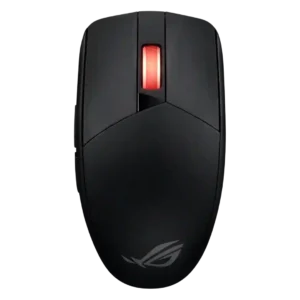
P1 ASUS ROG Strix Impact III Wireless
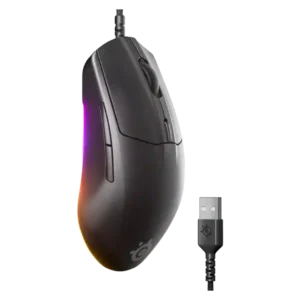
P2 SteelSeries Rival 3 Gen 2 Wired

Comparison Takeaways

ASUS ROG Strix Impact III Wireless

Where It Has the Edge

  • 2.4GHz connectivity is 4.6 vs 1.0. Reviewers consistently cite dual wireless operation through 2.4GHz/ROG SpeedNova and Bluetooth, making the connection options a core strength.
  • Bluetooth support is 4.6 vs 1.0. Bluetooth support is well documented across reviews, often paired with 2.4GHz wireless and multi-device pairing convenience.
  • wireless performance is 4.6 vs 1.0. Wireless performance is a clear strength, combining stable SpeedNova 2.4GHz behavior, Bluetooth flexibility, and no major delay complaints.
  • palm grip comfort is 3.8 vs 2.1. Palm grip support is limited; one review says any grip is possible, but another says palm grip only...

SteelSeries Rival 3 Gen 2 Wired

Where It Has the Edge

  • charging convenience is 5.0 vs 3.2. Charging convenience is favorable only because the wired model avoids charge stops, with the tradeoff of remaining tethered...
  • long-session comfort is 4.1 vs 3.1. Long-session comfort is good overall, with reviewers using it as a daily driver and noting comfort during work...
  • RGB features is 4.2 vs 3.4. RGB is a wired-model advantage, with reviewers noting base lighting, five-zone or three-zone effects, and software customization.
  • surface compatibility is 4.8 vs 4.2. Surface compatibility is supported by a reviewer noting effortless glide across both desks and mousepads.
Average score
Product 1: ASUS ROG Strix Impact III...
4.3
Product 2: SteelSeries Rival 3 Gen 2...
4.0
2.4GHz connectivity
Product 1: ASUS ROG Strix Impact III...
4.6

Reviewers consistently cite dual wireless operation through 2.4GHz/ROG SpeedNova and Bluetooth, making the connection options a core strength.

Product 2: SteelSeries Rival 3 Gen 2...
1.0

2.4GHz connectivity is absent for the wired model, as reviewers describe it as lacking wireless functionality.

acceleration control
Product 1: ASUS ROG Strix Impact III...
No score yet
Product 2: SteelSeries Rival 3 Gen 2...
4.2

SteelSeries GG exposes acceleration among the adjustable performance settings, giving users control in software.

Accuracy and tracking precision
Product 1: ASUS ROG Strix Impact III...
4.7

Tracking accuracy is repeatedly praised, with reviewers describing precise cursor translation, high accuracy, and clean performance without jitter or disruption.

Product 2: SteelSeries Rival 3 Gen 2...
4.3

Reviewers found the mouse accurate enough for gaming, with strong aim-trainer results and natural recoil control despite budget sensor limits.

balance and weight distribution
Product 1: ASUS ROG Strix Impact III...
4.1

The only direct weight-balance note says the mouse does not tilt with the included AA battery, so balance evidence is positive but limited.

Product 2: SteelSeries Rival 3 Gen 2...
4.0

The low weight is said to reduce wrist fatigue during fast reflexes and extended use, supporting good practical balance.

battery life
Product 1: ASUS ROG Strix Impact III...
4.6

Battery life is a standout theme, with several reviewers citing 450-hour 2.4GHz claims, longer Bluetooth use, and little or no drain during testing.

Product 2: SteelSeries Rival 3 Gen 2...
5.0

Battery life is not a measured runtime feature on the wired model; the benefit is that there are no batteries to manage.

Bluetooth support
Product 1: ASUS ROG Strix Impact III...
4.6

Bluetooth support is well documented across reviews, often paired with 2.4GHz wireless and multi-device pairing convenience.

Product 2: SteelSeries Rival 3 Gen 2...
1.0

Bluetooth support is absent for the wired model, which reviewers distinguish from the wireless version's wireless functionality.

build quality
Product 1: ASUS ROG Strix Impact III...
4.6

Build quality is generally strong, with sturdy construction, tight fit, and minimal flex noted despite the lightweight shell.

Product 2: SteelSeries Rival 3 Gen 2...
4.3

Build quality is solid for the price, with sturdy construction and no flex or creaking highlighted.

button customization
Product 1: ASUS ROG Strix Impact III...
4.4

Button customization is supported through Armoury Crate, with button remapping, function assignment, macros, and performance profiles mentioned.

Product 2: SteelSeries Rival 3 Gen 2...
4.2

Button customization is broadly supported through SteelSeries GG, including assignments, remapping, and customizable side buttons.

button responsiveness
Product 1: ASUS ROG Strix Impact III...
4.5

Click response is consistently positive, described as fast, precise, tactile, and reliable across gaming and work use.

Product 2: SteelSeries Rival 3 Gen 2...
4.4

Button response is a clear strength, with reviewers describing inputs and clicks as responsive, crisp, and quick to rebound.

cable flexibility
Product 1: ASUS ROG Strix Impact III...
No score yet
Product 2: SteelSeries Rival 3 Gen 2...
4.6

Cable flexibility is one of the strongest wired-model positives, with reviewers saying the braided or paracord-style cable avoids drag and friction.

charging convenience
Product 1: ASUS ROG Strix Impact III...
3.2

Battery replacement is convenient for some users because AA/AAA cells are easy to find, but several reviewers view the lack of a rechargeable internal battery as a drawback.

Product 2: SteelSeries Rival 3 Gen 2...
5.0

Charging convenience is favorable only because the wired model avoids charge stops, with the tradeoff of remaining tethered to the PC.

claw grip comfort
Product 1: ASUS ROG Strix Impact III...
4.2

Claw comfort is supported mainly for smaller hands and users who like low, compact mice; larger-hand comfort is less certain.

Product 2: SteelSeries Rival 3 Gen 2...
4.4

Claw grip comfort is strong, with multiple reviews saying the shape is especially suited to claw grip.

click latency
Product 1: ASUS ROG Strix Impact III...
4.6

Latency evidence is strong, with reviewers citing low-latency SpeedNova, near-zero click latency, and sub-1ms claims.

Product 2: SteelSeries Rival 3 Gen 2...
4.4

Click latency is described as low, with the wired model receiving favorable response-time comments compared with the wireless version.

click noise
Product 1: ASUS ROG Strix Impact III...
3.9

Click noise lands in a moderate range: reviewers call the clicks audible and crisp but also not very loud or minimal in noise.

Product 2: SteelSeries Rival 3 Gen 2...
4.2

Click noise is controlled, with switches described as clicky without being overly loud.

connection stability
Product 1: ASUS ROG Strix Impact III...
4.6

Connection stability is praised, with no dropouts or delay issues reported and multiple reviewers describing stable, responsive wireless behavior.

Product 2: SteelSeries Rival 3 Gen 2...
5.0

Connection stability is strong in wired use, with reviewers emphasizing stable performance without connection drops or battery drain.

cross-platform compatibility
Product 1: ASUS ROG Strix Impact III...
4.4

Cross-device use is supported by onboard settings and Bluetooth/receiver flexibility, though the evidence is more about device portability than full OS coverage.

Product 2: SteelSeries Rival 3 Gen 2...
4.0

Cross-platform compatibility is supported by SteelSeries GG support for Windows 10 and macOS 11 or higher.

DPI range
Product 1: ASUS ROG Strix Impact III...
4.8

The 100-36,000 DPI range is repeatedly documented and treated as a major precision advantage.

Product 2: SteelSeries Rival 3 Gen 2...
3.9

The wired model's 8,500 DPI ceiling is repeatedly described as enough for typical gaming, though lower than higher-end and wireless alternatives.

durability over time
Product 1: ASUS ROG Strix Impact III...
4.6

Durability over time is helped by wear-resistant PBT buttons and replaceable switches that can extend the usable lifespan.

Product 2: SteelSeries Rival 3 Gen 2...
4.0

Durability over time is supported by long-term switch consistency claims, tempered by one review's isolated switch fault.

ecosystem integration
Product 1: ASUS ROG Strix Impact III...
4.5

ROG ecosystem integration is strong through the Omni receiver and Aura/Armoury features, especially the ability to pair compatible ROG peripherals through one dongle.

Product 2: SteelSeries Rival 3 Gen 2...
4.1

Ecosystem integration is mainly through SteelSeries GG and Prism, which provide lighting, DPI, profile, and button customization.

ergonomic design
Product 1: ASUS ROG Strix Impact III...
3.7

Ergonomic feedback is mixed: the mouse suits small hands and multiple grip styles, but some reviewers found the flat shape or limited support less comfortable.

Product 2: SteelSeries Rival 3 Gen 2...
4.1

The ergonomic design is comfortable and practical, though its simple one-size-fits-all shape lacks premium contouring.

fingertip grip comfort
Product 1: ASUS ROG Strix Impact III...
4.7

Fingertip grip comfort receives clear praise, especially from reviewers who prefer the compact, low-profile shape.

Product 2: SteelSeries Rival 3 Gen 2...
4.4

Fingertip grip comfort is also strong, with reviewers pairing it with claw grip as a natural fit for the mouse.

FPS gaming suitability
Product 1: ASUS ROG Strix Impact III...
4.5

FPS suitability is strong because reviewers connect the mouse's speed, precision, low latency, and lightweight movement to shooters and fast-paced games.

Product 2: SteelSeries Rival 3 Gen 2...
4.5

FPS suitability is strong, with reviewers testing or discussing Counter-Strike, Valorant, Call of Duty, sniping, flicking, and recoil control.

glide smoothness
Product 1: ASUS ROG Strix Impact III...
4.4

Glide is consistently positive where tested, with PTFE feet described as smooth, seamless, or easy over hard surfaces and mouse pads.

Product 2: SteelSeries Rival 3 Gen 2...
4.6

Glide smoothness is consistently praised, with PTFE feet and smooth feet keeping movement easy across mouse mats and surfaces.

grip texture
Product 1: ASUS ROG Strix Impact III...
4.3

Grip texture is a quiet strength, with textured sides and rougher surfaces helping prevent slipping without relying on rubber pads.

Product 2: SteelSeries Rival 3 Gen 2...
4.1

Grip texture is a positive, with matte plastic and subtle texture helping control, though one reviewer wanted deeper side grooves.

handedness options
Product 1: ASUS ROG Strix Impact III...
3.8

Handedness is mixed: the shape is symmetrical or semi-ambidextrous, but side buttons on the left favor right-handed use.

Product 2: SteelSeries Rival 3 Gen 2...
3.6

Handedness is mixed: one review calls the design ambidextrous, while another says the Gen 2 is optimized for right-handed use.

left and right click quality
Product 1: ASUS ROG Strix Impact III...
4.6

Left and right click quality is a major strength, with stable buttons, little wobble, crisp feel, and accurate actuation.

Product 2: SteelSeries Rival 3 Gen 2...
4.5

The primary left and right clicks are described as firm, responsive, and strong for rapid tapping.

lift-off distance
Product 1: ASUS ROG Strix Impact III...
4.4

Lift-off distance is configurable through Armoury Crate or button combinations, giving users a practical tuning option.

Product 2: SteelSeries Rival 3 Gen 2...
No score yet
long-session comfort
Product 1: ASUS ROG Strix Impact III...
3.1

Long-session comfort is mixed because small-hand users found it comfortable, while larger-hand users reported cramping or limited ergonomic support.

Product 2: SteelSeries Rival 3 Gen 2...
4.1

Long-session comfort is good overall, with reviewers using it as a daily driver and noting comfort during work or prolonged use.

macro support
Product 1: ASUS ROG Strix Impact III...
4.3

Macro support is present through Armoury Crate, where reviewers mention macro creation and assigning actions to controls.

Product 2: SteelSeries Rival 3 Gen 2...
4.5

Macro support is directly supported through the side buttons being described as macro-capable in SteelSeries GG.

materials quality
Product 1: ASUS ROG Strix Impact III...
4.4

Materials quality is generally positive, with PBT buttons, practical plastics, and high-quality materials cited across reviews.

Product 2: SteelSeries Rival 3 Gen 2...
4.1

Materials are described as matte ABS or thick textured plastic, giving the budget mouse a solid, grippy shell.

motion consistency
Product 1: ASUS ROG Strix Impact III...
4.6

Motion consistency is strong, with reviewers reporting stable tracking, no jitter, no disruption, and precise movement translation.

Product 2: SteelSeries Rival 3 Gen 2...
4.5

Motion is described as predictable and controlled, especially in recoil and FPS testing.

onboard memory
Product 1: ASUS ROG Strix Impact III...
4.5

Onboard memory is a useful feature, allowing profile settings to be saved directly to the mouse for use without software.

Product 2: SteelSeries Rival 3 Gen 2...
4.5

Onboard memory is supported for saved profiles, letting settings move between computers without relying on software every time.

palm grip comfort
Product 1: ASUS ROG Strix Impact III...
3.8

Palm grip support is limited; one review says any grip is possible, but another says palm grip only works well with a very small hand.

Product 2: SteelSeries Rival 3 Gen 2...
2.1

Palm grip comfort is the main fit weakness, with reviewers saying the mouse feels small or leaves too much room for palm users.

polling rate
Product 1: ASUS ROG Strix Impact III...
4.0

Polling-rate support reaches 1000Hz in 2.4GHz mode, though one reviewer notes Bluetooth polling is lower in practice.

Product 2: SteelSeries Rival 3 Gen 2...
4.0

Reviewers consistently cite a 1,000Hz polling rate, generally framing it as standard or acceptable for a budget gaming mouse.

portability
Product 1: ASUS ROG Strix Impact III...
4.4

Portability is a strength thanks to compact size, receiver storage, battery flexibility, and even a travel bag in one package.

Product 2: SteelSeries Rival 3 Gen 2...
4.0

Portability is supported by the smaller profile, which one reviewer saw as useful for users prioritizing portability.

premium feel
Product 1: ASUS ROG Strix Impact III...
4.3

Premium feel is supported by sturdy construction and well-fitted materials, though this is still positioned as an affordable ROG mouse.

Product 2: SteelSeries Rival 3 Gen 2...
3.2

Premium feel is limited: reviewers say it lacks some high-end flair or premium feel compared with pricier SteelSeries mice.

profile switching
Product 1: ASUS ROG Strix Impact III...
4.5

Profile switching is directly supported through onboard profiles and button/application switching.

Product 2: SteelSeries Rival 3 Gen 2...
4.0

Profile handling is supported through saved settings and DPI adjustments, though one review notes there is no dedicated profile-switch button by default.

programmable buttons
Product 1: ASUS ROG Strix Impact III...
4.0

Programmable button support is adequate but not extensive, with five to seven buttons depending on how reviewers count controls.

Product 2: SteelSeries Rival 3 Gen 2...
4.3

The six-button layout and remappable side buttons give the mouse useful programmable control for a budget model.

RGB features
Product 1: ASUS ROG Strix Impact III...
3.4

RGB is limited and subdued, mainly centered on the scroll wheel, but it remains customizable through Armoury/Aura.

Product 2: SteelSeries Rival 3 Gen 2...
4.2

RGB is a wired-model advantage, with reviewers noting base lighting, five-zone or three-zone effects, and software customization.

scroll wheel quality
Product 1: ASUS ROG Strix Impact III...
4.3

The scroll wheel is generally praised for clear steps, resistance, precision, and quiet or moderate sound.

Product 2: SteelSeries Rival 3 Gen 2...
4.2

The scroll wheel is described as simple but effective, with distinct notches and usable wheel-click firmness.

sensor performance
Product 1: ASUS ROG Strix Impact III...
4.7

Sensor performance is one of the strongest points, with the ROG AimPoint sensor repeatedly described as accurate, precise, and high performing.

Product 2: SteelSeries Rival 3 Gen 2...
4.1

The TrueMove Core sensor is treated as sufficient for budget gaming, with smooth tracking noted even though it is not flagship-level hardware.

shape comfort
Product 1: ASUS ROG Strix Impact III...
3.8

Shape comfort is polarizing: some reviewers like the compact symmetrical shape, while others find it too flat or small.

Product 2: SteelSeries Rival 3 Gen 2...
4.0

Shape comfort is generally good for quick use, though the lower-profile symmetrical shape is not universally ideal.

side button quality
Product 1: ASUS ROG Strix Impact III...
3.9

Side buttons are usable and configurable, though feedback ranges from clear and well positioned to slightly mushy.

Product 2: SteelSeries Rival 3 Gen 2...
3.9

Side button feedback is mixed: one reviewer found them thin and hard to distinguish, while others found them accessible and functional.

skate durability
Product 1: ASUS ROG Strix Impact III...
3.4

Skate durability evidence is limited and mixed, with reviewers noting no spare feet and warning that rough use can wear glides faster.

Product 2: SteelSeries Rival 3 Gen 2...
3.8

Skate durability evidence is limited but positive for maintenance, with skates described as easier to remove without damage.

software stability
Product 1: ASUS ROG Strix Impact III...
No score yet
Product 2: SteelSeries Rival 3 Gen 2...
3.9

Software stability is acceptable, with reviewers saying GG should not hurt PC performance and functions well at its core.

software usability
Product 1: ASUS ROG Strix Impact III...
4.3

Software usability is positive overall, with Armoury Crate described as familiar, intuitive, and rich in controls.

Product 2: SteelSeries Rival 3 Gen 2...
3.6

Software usability is mixed: SteelSeries GG enables useful control, but reviewers criticize navigation, clutter, and ads.

surface compatibility
Product 1: ASUS ROG Strix Impact III...
4.2

Surface compatibility is good on pads and ordinary desk surfaces, with glass noted as the main weak surface.

Product 2: SteelSeries Rival 3 Gen 2...
4.8

Surface compatibility is supported by a reviewer noting effortless glide across both desks and mousepads.

switch durability
Product 1: ASUS ROG Strix Impact III...
4.6

Switch durability is strong, with repeated 70-million-click ratings and replaceable switch sockets.

Product 2: SteelSeries Rival 3 Gen 2...
4.3

Switch durability is supported by repeated 60-million-click ratings, though one review reported an isolated switch issue.

switch feel
Product 1: ASUS ROG Strix Impact III...
4.3

Switch feel is praised as crisp, tactile, light, and customizable through replaceable mechanical switches.

Product 2: SteelSeries Rival 3 Gen 2...
4.5

The switches are praised for crisp, balanced, clicky feel without feeling too heavy.

value for money
Product 1: ASUS ROG Strix Impact III...
4.4

Value is a consistent strength, especially where reviewers compare its sensor, wireless features, and replaceable switches to the asking price.

Product 2: SteelSeries Rival 3 Gen 2...
4.5

Value for money is the strongest consensus point, with every review framing the wired mouse as a capable low-cost option.

weight
Product 1: ASUS ROG Strix Impact III...
4.1

Weight is light for a battery-powered wireless mouse, though several reviewers note the advertised 57g excludes the required battery.

Product 2: SteelSeries Rival 3 Gen 2...
4.3

Weight is a consistent strength: reviewers repeatedly cite the roughly 77g to 80g wired body as easy to move.

weight tuning
Product 1: ASUS ROG Strix Impact III...
4.2

Weight tuning is possible through AA versus AAA batteries, which changes total weight while also affecting battery life.

Product 2: SteelSeries Rival 3 Gen 2...
No score yet
wireless latency
Product 1: ASUS ROG Strix Impact III...
4.6

Wireless latency is rated very highly, with reviewers saying it feels wired-like or citing very low-latency operation.

Product 2: SteelSeries Rival 3 Gen 2...
No score yet
wireless performance
Product 1: ASUS ROG Strix Impact III...
4.6

Wireless performance is a clear strength, combining stable SpeedNova 2.4GHz behavior, Bluetooth flexibility, and no major delay complaints.

Product 2: SteelSeries Rival 3 Gen 2...
1.0

Wireless performance is effectively absent on the wired model because reviewers explicitly distinguish it from the wireless variant.