2.4GHz connectivity
P1
Product 1: Cherry M68 Pro
5.0
The 2.4GHz connection was praised directly as fast and reliable in competitive use.
P2
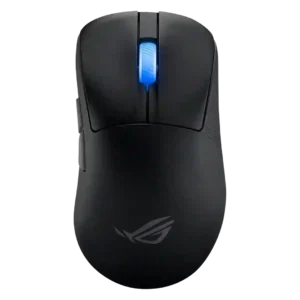
Product 2: ASUS ROG Keris II Ace
4.5
Reviewers discussed the 2.4GHz receiver mainly as part of the broader wireless setup, with praise for low-latency use when paired with the booster.
Accuracy and tracking precision
P1
Product 1: Cherry M68 Pro
4.6
Reviewers consistently found tracking precise and confidence-inspiring, from accurate desktop movement to flawless aim adjustments in games.
P2
Product 2: ASUS ROG Keris II Ace
4.5
Reviewers consistently praised tracking accuracy and precision, with only one reviewer warning that extreme DPI values became irregular.
balance and weight distribution
P1
Product 1: Cherry M68 Pro
4.8
The mouse was described as well-balanced by reviewers who focused on weight distribution and in-hand balance.
P2
Product 2: ASUS ROG Keris II Ace
4.7
Weight distribution was usually praised as well balanced, though one reviewer found the mouse slightly forward-balanced.
battery life
P1
Product 1: Cherry M68 Pro
4.0
Battery life was good in standard or lower polling modes, but 8K/Pro modes shortened runtime and battery warnings were a recurring weakness.
P2
Product 2: ASUS ROG Keris II Ace
4.2
Battery life was generally praised as good to excellent, with caveats that high polling rates and active use drain it faster.
Bluetooth support
P1Product 1: Cherry M68 Pro
No score yet
P2
Product 2: ASUS ROG Keris II Ace
4.5
Bluetooth was viewed as a useful convenience for work, travel, and multi-device use, not as the preferred competitive mode.
build quality
P1
Product 1: Cherry M68 Pro
4.3
Build quality was consistently strong, with reviewers describing the shell as sturdy, solid, well-constructed, or tank-like.
P2
Product 2: ASUS ROG Keris II Ace
4.5
Build quality was mostly strong, with repeated praise for rigidity and lack of flex, though one reviewer reported average build with creaking.
button customization
P1
Product 1: Cherry M68 Pro
2.0
Button customization was limited by the software-free design, especially for remapping and fine adjustments.
P2
Product 2: ASUS ROG Keris II Ace
4.0
Customization was considered adequate to strong where reviewers described remapping, DPI, and profile tools as straightforward or sufficient.
button responsiveness
P1
Product 1: Cherry M68 Pro
4.2
Button responsiveness was usually praised for quick actuation and reset, though one reviewer treated the buttons as merely fine in-game.
P2
Product 2: ASUS ROG Keris II Ace
4.8
Button responsiveness was praised for snappy, reliable, and fast actuation in several reviews.
cable flexibility
P1
Product 1: Cherry M68 Pro
3.9
Cable impressions were mixed: reviewers liked the flexible braided/EZcord cables, but side-cable movement could feel encumbered.
P2
Product 2: ASUS ROG Keris II Ace
4.5
The cable was usually praised as flexible, free-flowing, and low-friction, with one reviewer calling it a bit stiff.
charging convenience
P1
Product 1: Cherry M68 Pro
2.9
Charging convenience was sharply mixed: quick charging and flexible cables helped, but the side USB-C placement annoyed many reviewers.
P2
Product 2: ASUS ROG Keris II Ace
3.8
Charging and dongle convenience were mixed: USB-C and cable placement helped, but the booster/dongle setup could feel chunky.
claw grip comfort
P1
Product 1: Cherry M68 Pro
4.4
Claw grip support was a clear strength, with multiple reviewers saying the low-front shape suits relaxed or claw-style control.
P2
Product 2: ASUS ROG Keris II Ace
4.4
Claw-grip comfort was generally positive, especially relaxed claw, though hand size affected comfort.
click latency
P1
Product 1: Cherry M68 Pro
4.5
Primary clicks were described as quick, responsive, and swift to reset, supporting low-latency-feeling inputs in the reviewed units.
P2
Product 2: ASUS ROG Keris II Ace
4.5
Click latency was praised as very low or competitive, including measured or perceived fast response.
click noise
P1
Product 1: Cherry M68 Pro
3.8
Click noise was acceptable to positive for some reviewers, but another found the buttons pretty loud.
P2
Product 2: ASUS ROG Keris II Ace
4.2
Click noise impressions were mixed, from quiet and pleasant to fairly loud, depending on reviewer and switch comparison.
connection stability
P1
Product 1: Cherry M68 Pro
4.8
Connection stability was strong, especially over 2.4GHz, with repeated reports of no hiccups, lag, or stuttering.
P2
Product 2: ASUS ROG Keris II Ace
5.0
Connection stability was strongly praised, with reviewers reporting no dropouts, hiccups, or interference.
cross-platform compatibility
P1Product 1: Cherry M68 Pro
No score yet
P2
Product 2: ASUS ROG Keris II Ace
4.8
Cross-platform use was praised through Bluetooth multi-device pairing and easy movement between PCs, laptops, tablets, and handhelds.
DPI range
P1
Product 1: Cherry M68 Pro
3.5
DPI/CPI coverage was useful for preset users, but reviewers criticized the lack of granular software tuning for non-preset sensitivities.
P2
Product 2: ASUS ROG Keris II Ace
4.0
The DPI ceiling was seen as technically impressive, but one reviewer found very high DPI practically unusable.
durability over time
P1
Product 1: Cherry M68 Pro
2.8
Durability-over-time evidence was mixed-negative, centered on coating residue and concern about click wobble rather than failures.
P2
Product 2: ASUS ROG Keris II Ace
4.0
Long-term durability was not directly tested, but switch durability and repairability evidence supported limited durability scoring.
ergonomic design
P1
Product 1: Cherry M68 Pro
4.5
The low-front ergonomic design was widely credited with improving control, grip security, and comfort.
P2
Product 2: ASUS ROG Keris II Ace
4.5
The ergonomic design was broadly praised for right-handed comfort, while left-handed users were consistently excluded.
fingertip grip comfort
P1
Product 1: Cherry M68 Pro
3.0
Fingertip grip support was less certain, with one reviewer saying a G Pro X was probably the safer fingertip option.
P2
Product 2: ASUS ROG Keris II Ace
3.3
Fingertip grip comfort was mixed; some found it possible, while others found the ergonomic shell awkward for fingertip use.
FPS gaming suitability
P1
Product 1: Cherry M68 Pro
4.6
FPS suitability was a major strength, with reviewers praising precise, responsive performance in shooters such as Counter-Strike, Valorant, and CS:GO.
P2
Product 2: ASUS ROG Keris II Ace
4.8
FPS suitability was one of the strongest areas, with repeated praise for competitive aiming, speed, and esports performance.
glide smoothness
P1
Product 1: Cherry M68 Pro
4.1
Glide was usually smooth and easy, though reviewers noted skates, hard surfaces, or the missing center foot could affect feel.
P2
Product 2: ASUS ROG Keris II Ace
4.6
Glide smoothness was consistently praised across stock PTFE feet and multiple surfaces.
grip texture
P1
Product 1: Cherry M68 Pro
3.6
Grip texture was mixed: several reviewers liked the traction or rubber grip, while the black coating drew fingerprint complaints.
P2
Product 2: ASUS ROG Keris II Ace
3.4
Grip texture was the most divided attribute, ranging from non-slip praise to strong complaints about slippery coating.
left and right click quality
P1
Product 1: Cherry M68 Pro
4.3
Left and right clicks were generally solid, easy, and satisfying, though one reviewer noted the M68 felt a little stiffer than the M64.
P2
Product 2: ASUS ROG Keris II Ace
4.2
Left and right click quality was mostly positive, with praise for consistency and similar actuation between sides.
lift-off distance
P1
Product 1: Cherry M68 Pro
3.3
Lift-off options were adequate but not standout, and one reviewer had to raise LOD on hard surfaces.
P2
Product 2: ASUS ROG Keris II Ace
3.8
Lift-off distance was mixed: one reviewer liked the low setting, while another found low too low and high too high.
long-session comfort
P1
Product 1: Cherry M68 Pro
5.0
Long-session comfort had limited but strong support, with one reviewer reporting no hand fatigue over extended gaming.
P2
Product 2: ASUS ROG Keris II Ace
4.8
Long-session comfort was strongly positive where reviewers mentioned low strain, no hand pain, or reduced fatigue.
materials quality
P1
Product 1: Cherry M68 Pro
3.4
Materials quality was good but imperfect, combining useful traction and durable plastic with residue and fingerprint concerns.
P2
Product 2: ASUS ROG Keris II Ace
4.5
Materials quality was scored through reviewer judgments about the nylon/PBT shell, coating, and perceived premium or slippery feel.
motion consistency
P1
Product 1: Cherry M68 Pro
4.8
Motion consistency was a major strength, with reviewers reporting no inconsistencies, no hiccups, and flawless wireless tracking.
P2
Product 2: ASUS ROG Keris II Ace
4.5
Motion consistency was praised through comments about precise recognition, consistent tracking, and polling stability.
palm grip comfort
P1
Product 1: Cherry M68 Pro
2.5
Palm grip comfort was limited for larger hands, with one reviewer specifically calling it cramped in palm grips.
P2
Product 2: ASUS ROG Keris II Ace
4.2
Palm grip comfort was positive for average or compatible hands, though not universal for larger hands.
polling rate
P1
Product 1: Cherry M68 Pro
4.2
The 8K polling rate impressed some reviewers with smooth responsiveness, while others found little detectable difference and noted battery tradeoffs.
P2
Product 2: ASUS ROG Keris II Ace
4.4
Polling rate support was widely praised, especially 4K wireless and included booster access, with some debate over 8K usefulness.
premium feel
P1
Product 1: Cherry M68 Pro
4.0
Premium feel was mostly positive due to a solid, non-hollow shell, though one reviewer felt some details were not top-tier.
P2
Product 2: ASUS ROG Keris II Ace
3.5
Premium feel was mixed: some found the mouse premium, while others felt the coating or hollow shell hurt the premium impression.
programmable buttons
P1
Product 1: Cherry M68 Pro
2.0
Programmable-button support was weak because reviewers noted that buttons could not be reprogrammed without software.
P2
Product 2: ASUS ROG Keris II Ace
4.0
Programmable buttons were considered competitive and sufficient for this class, though not extensive like MMO mice.
scroll wheel quality
P1
Product 1: Cherry M68 Pro
4.0
The scroll wheel was generally smooth, controlled, and pleasant, with a few reviewers describing it as merely okay or not ideal for repeated clicks.
P2
Product 2: ASUS ROG Keris II Ace
3.6
Scroll wheel quality was mixed, ranging from excellent and distinct to average, light, or prone to overscrolling.
sensor performance
P1
Product 1: Cherry M68 Pro
4.7
The Pixart sensor drew broad praise for responsive, accurate tracking, with several reviewers calling it wonderful, snappy, or beautiful in use.
P2
Product 2: ASUS ROG Keris II Ace
4.9
Sensor performance was one of the best-reviewed areas, repeatedly described as accurate, top-tier, or flawless.
shape comfort
P1
Product 1: Cherry M68 Pro
4.1
Shape comfort was the most polarizing area: several reviewers loved the low, controlled feel, while others found it cramped, wide, or odd.
P2
Product 2: ASUS ROG Keris II Ace
4.2
Shape comfort was generally praised, especially for right-handed ergonomic users, but hand size and finger length created caveats.
side button quality
P1
Product 1: Cherry M68 Pro
4.0
Side buttons received positive notes for feedback and positioning, but some criticism appeared around travel and feel.
P2
Product 2: ASUS ROG Keris II Ace
3.8
Side button quality was mixed: several reviewers praised crisp placement, while others found them small, high, or stiff.
software usability
P1
Product 1: Cherry M68 Pro
2.4
Software usability was the most repeated complaint: no software meant awkward manuals, color LEDs, and button-combo setup.
P2
Product 2: ASUS ROG Keris II Ace
2.9
Software usability was the clearest weakness, with repeated complaints about Armoury Crate being bloated, slow, or needing improvement.
surface compatibility
P1
Product 1: Cherry M68 Pro
3.8
Surface compatibility was solid on pads and several non-glass surfaces, but reviewers still recommended a mouse pad or adjusted LOD on hard surfaces.
P2
Product 2: ASUS ROG Keris II Ace
4.9
Surface compatibility was strongly praised, including glass, mouse pads, tables, and varied surfaces.
switch feel
P1
Product 1: Cherry M68 Pro
4.2
Switch feel was mostly praised as excellent or snappy, with one early-look reviewer finding the implementation only okay.
P2
Product 2: ASUS ROG Keris II Ace
4.1
Switch feel was mixed but often positive, with some crisp/punchy praise and some dull or mushy complaints.
value for money
P1
Product 1: Cherry M68 Pro
3.3
Value was mixed: reviewers liked the performance and shape, yet several thought the price was hard to justify against rivals.
P2
Product 2: ASUS ROG Keris II Ace
3.6
Value was mixed: reviewers praised the feature set but often called the price expensive or hard to justify.
weight
P1
Product 1: Cherry M68 Pro
4.6
Reviewers strongly agreed the mouse is impressively light and easy to move, with the 55g class weight repeatedly praised.
P2
Product 2: ASUS ROG Keris II Ace
4.9
Weight was consistently praised as very light, impressive, and control-friendly.
wireless latency
P1
Product 1: Cherry M68 Pro
4.8
Wireless latency impressions were excellent, with reviewers reporting instantaneous responsiveness, no lag, and no delays.
P2
Product 2: ASUS ROG Keris II Ace
4.1
Wireless latency was praised in 2.4GHz mode but Bluetooth was criticized as too latent for competitive gaming.
wireless performance
P1
Product 1: Cherry M68 Pro
4.6
Wireless performance was praised across reviews for smooth operation, reliable tracking, and no obvious hiccups.
P2
Product 2: ASUS ROG Keris II Ace
4.8
Wireless performance was repeatedly praised as low-latency, stable, and responsive.