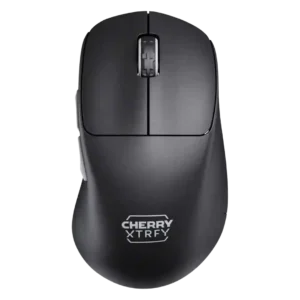
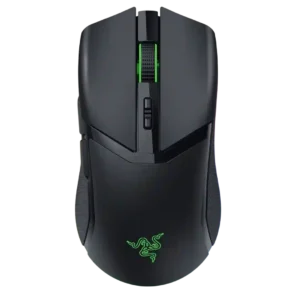
Compare Cherry M64 Pro vs Razer Cobra Pro

P1 Cherry M64 Pro
P2 Razer Cobra Pro

Comparison Takeaways

Cherry M64 Pro

Where It Has the Edge

  • weight is 4.7 vs 3.3. Weight is a clear strength, with reviewers repeatedly measuring or citing roughly 54-55 grams for the Pro model.
  • balance and weight distribution is 4.5 vs 3.3. Weight balance was praised when mentioned, with reviewers calling the mouse solid, well-balanced, and free of obvious balance...
  • MMO gaming suitability is 3.5 vs 2.5. MMO suitability received only indirect support through a standard gaming sensor mode described for lower-precision MMO-style play.
  • motion consistency is 4.5 vs 3.8. Motion consistency was a strong theme, with reviewers describing smooth, consistent movement and no obvious tracking irregularities.

Razer Cobra Pro

Where It Has the Edge

  • RGB features is 4.6 vs 1.3. RGB features are one of the most praised differentiators, with reviewers highlighting underglow, Chroma zones, bright lighting, and...
  • button customization is 4.3 vs 2.5. Button customization is a major strength through Synapse, with reviewers noting remapping, extra functions, profiles, and secondary-function options.
  • fingertip grip comfort is 4.3 vs 2.6. Fingertip grip comfort is consistently strong because the compact, low-profile shape suits fingertip use for many hand sizes.
  • surface compatibility is 5.0 vs 3.6. Surface compatibility is excellent, with multiple reviewers noting tracking on glass and other surfaces.
Average score
Product 1: Cherry M64 Pro
3.9
Product 2: Razer Cobra Pro
4.0
2.4GHz connectivity
Product 1: Cherry M64 Pro
4.6

Reviewers who discussed the radio link described the 2.4GHz connection as fast, reliable, and tied to the larger high-polling dongle experience.

Product 2: Razer Cobra Pro
4.9

Reviewers consistently cite flexible 2.4GHz wireless or HyperSpeed use alongside wired and Bluetooth modes, treating the low-latency dongle mode as the main gaming connection.

acceleration control
Product 1: Cherry M64 Pro
No score yet
Product 2: Razer Cobra Pro
4.5

Sensor specs and testing repeatedly point to high acceleration handling, usually framed around the Focus Pro sensor’s 70G capability rather than user-tunable acceleration controls.

Accuracy and tracking precision
Product 1: Cherry M64 Pro
4.6

Tracking precision was a consistent strength: reviewers reported smooth aiming, accurate snapping, and precise response on normal gaming surfaces.

Product 2: Razer Cobra Pro
4.7

Tracking precision is one of the strongest areas, with reviewers describing accurate tracking, precision-shooter suitability, and reliable movement across demanding game and surface tests.

balance and weight distribution
Product 1: Cherry M64 Pro
4.5

Weight balance was praised when mentioned, with reviewers calling the mouse solid, well-balanced, and free of obvious balance issues despite the low mass.

Product 2: Razer Cobra Pro
3.3

Weight balance is mixed: some reviewers found the added mass helpful for control, while others called the mouse back-heavy or unusually weighted.

battery life
Product 1: Cherry M64 Pro
3.8

Battery life is mostly good in standard or mixed polling use, but IGN found peak 8K and Pro Gaming settings could drain it far faster than the rated 90 hours.

Product 2: Razer Cobra Pro
4.1

Battery life is generally usable to strong, but reviewers repeatedly note that RGB brightness, high polling, and HyperPolling can cut runtime far below headline claims.

Bluetooth support
Product 1: Cherry M64 Pro
No score yet
Product 2: Razer Cobra Pro
3.7

Bluetooth is widely supported and useful for travel or productivity, though reviewers often warn it adds latency compared with 2.4GHz wireless.

build quality
Product 1: Cherry M64 Pro
4.2

Build quality is generally solid for an ultralight shell, though one reviewer found M64 side-wall flex and IGN noted only minor flexing and a slightly cheap feel.

Product 2: Razer Cobra Pro
4.3

Build quality is broadly praised, with reviewers describing solid construction, no rattles, and sturdy materials, though a few critical reviews still question the overall product direction.

button customization
Product 1: Cherry M64 Pro
2.5

Button customization is limited: reviewers found basic mapping or CPI presets, but no software-driven fine control or deeper customization.

Product 2: Razer Cobra Pro
4.3

Button customization is a major strength through Synapse, with reviewers noting remapping, extra functions, profiles, and secondary-function options.

button responsiveness
Product 1: Cherry M64 Pro
4.2

Main-button responsiveness is strong overall, with reviewers describing snappy travel, good bounce-back, and reliable actuation during gameplay.

Product 2: Razer Cobra Pro
4.7

Button responsiveness is praised where discussed, especially fast primary-switch triggering and solid in-game button feel.

cable flexibility
Product 1: Cherry M64 Pro
4.1

The included cable was usually described as flexible or pliant, helping offset the awkward side-port layout when charging or using wired mode.

Product 2: Razer Cobra Pro
3.5

Cable feedback is mixed: some reviewers liked the flexible braided cable, while others found it stiff or prone to pull when used wired.

charging convenience
Product 1: Cherry M64 Pro
2.8

Charging is fast enough and possible while playing, but several reviewers criticized the side USB-C port because the cable can feel awkward or drag against the hand.

Product 2: Razer Cobra Pro
4.2

Charging convenience is strong because the mouse can charge over USB-C while in use and can add magnetic wireless charging through optional accessories.

claw grip comfort
Product 1: Cherry M64 Pro
3.6

Claw comfort depends on hand size: some reviewers liked the low front and relaxed-claw support, while IGN found the small right-handed shell cramped for large hands.

Product 2: Razer Cobra Pro
4.1

Claw grip comfort is well supported, especially for small to medium hands, though a few reviewers with larger hands found the small body less comfortable over time.

click latency
Product 1: Cherry M64 Pro
4.2

Click latency is supported by adjustable debounce settings, giving users several response-time presets directly on the mouse.

Product 2: Razer Cobra Pro
4.8

Click latency is rated highly, with optical switches, low-latency wired behavior, and no debounce delay cited as performance advantages.

click noise
Product 1: Cherry M64 Pro
4.0

Click sound is moderate rather than silent: reviewers described the main clicks as mellow or balanced, though one found them fairly loud.

Product 2: Razer Cobra Pro
3.8

Click noise is mixed but mostly acceptable: some reviewers found the clicks pronounced or loud, while others described the sound as pleasant.

connection stability
Product 1: Cherry M64 Pro
4.6

Connection stability was consistently positive, with reviewers reporting no lag, stutter, hiccups, or wireless dropouts in normal use.

Product 2: Razer Cobra Pro
4.9

Connection stability is mostly strong, with several reviewers reporting no lag, no reliability issues, or no connectivity problems in wireless use.

cross-platform compatibility
Product 1: Cherry M64 Pro
No score yet
Product 2: Razer Cobra Pro
4.2

Cross-platform use is supported mainly through Bluetooth, dongle, and wired modes across computers, laptops, tablets, phones, and multiple devices.

debounce customization
Product 1: Cherry M64 Pro
4.2

Debounce customization is broad on paper, but one reviewer had ghost clicks at the lowest setting while others praised the selectable 2/4/8/12 ms options.

Product 2: Razer Cobra Pro
No score yet
dock compatibility
Product 1: Cherry M64 Pro
No score yet
Product 2: Razer Cobra Pro
4.1

Dock compatibility is present but accessory-dependent, with reviewers noting Mouse Dock Pro support and separate-purchase limitations.

DPI range
Product 1: Cherry M64 Pro
4.4

The DPI/CPI range is wide, reaching 26,000, but preset-only adjustment limits fine-grained sensitivity tuning.

Product 2: Razer Cobra Pro
4.6

The DPI range is very strong on paper and in software, with many reviewers referencing the 30,000 DPI sensor and adjustable DPI stages.

durability over time
Product 1: Cherry M64 Pro
4.0

Durability evidence is limited but positive around the finish, with Tom's Hardware noting the coating is designed for and withstood visible wear.

Product 2: Razer Cobra Pro
4.5

Durability over time is supported mainly through switch life claims and reviewer confidence in long-term clicking, not through extended multi-year wear testing.

ecosystem integration
Product 1: Cherry M64 Pro
No score yet
Product 2: Razer Cobra Pro
4.2

Ecosystem integration is a clear Razer strength, including Chroma lighting, Synapse, HyperSpeed multi-device pairing, dock support, and single-dongle setups.

ergonomic design
Product 1: Cherry M64 Pro
4.2

The M64's right-handed ergonomic shape was a major draw for several reviewers, especially those who liked its low front and thumb groove, though large hands may struggle.

Product 2: Razer Cobra Pro
3.8

Ergonomic impressions are mixed: many liked the compact symmetrical feel, while others said it lacks the comfort of larger ergonomic mice.

fingertip grip comfort
Product 1: Cherry M64 Pro
2.6

Fingertip grip drew weak support because reviewers found the M64's curvature awkward for fingertip users compared with palm or claw.

Product 2: Razer Cobra Pro
4.3

Fingertip grip comfort is consistently strong because the compact, low-profile shape suits fingertip use for many hand sizes.

firmware reliability
Product 1: Cherry M64 Pro
No score yet
Product 2: Razer Cobra Pro
2.5

Firmware reliability has limited negative evidence, with one reviewer reporting inconsistent DPI behavior between Bluetooth and wireless modes.

FPS gaming suitability
Product 1: Cherry M64 Pro
4.3

FPS suitability is strong when tracking and responsiveness matter, though the shape may favor controlled play more than universal fast-flick comfort.

Product 2: Razer Cobra Pro
4.1

FPS suitability is mixed-positive: the sensor and clicks suit shooters, but the weight and compact body make it less ideal for strict ultralight esports users.

glide smoothness
Product 1: Cherry M64 Pro
4.6

Glide quality was praised, with reviewers citing smooth movement, strong PTFE feet, and good glide across multiple ordinary surfaces.

Product 2: Razer Cobra Pro
4.5

Glide smoothness is a major strength, with PTFE skates repeatedly described as smooth, consistent, controlled, or effortless.

grip texture
Product 1: Cherry M64 Pro
3.7

Grip texture is mixed: the white coating was seen as grippier and durable, while the black coating was criticized as a fingerprint magnet.

Product 2: Razer Cobra Pro
3.7

Grip texture is divisive: reviewers praise the rubberized sides for control, but critics warn they wear down, feel slippery, or cannot be removed.

handedness options
Product 1: Cherry M64 Pro
2.5

Handedness is limited because the M64 Pro is explicitly a right-handed ergonomic mouse, not an ambidextrous option.

Product 2: Razer Cobra Pro
2.8

Handedness is limited despite the symmetrical body because side buttons are on the left; right-handers benefit most and left-handers face compromises.

left and right click quality
Product 1: Cherry M64 Pro
4.3

Left and right click quality was mostly praised for feel and reliability, with several reviewers calling the clicks snappy, satisfying, or trouble-free in gameplay.

Product 2: Razer Cobra Pro
4.3

Left and right click quality is generally positive, with reviewers calling the clicks tactile, expected for Razer, or nicely implemented.

lift-off distance
Product 1: Cherry M64 Pro
4.2

Lift-off distance can be adjusted, typically between 1 mm and 2 mm, and one reviewer specifically needed the 2 mm option on hard surfaces.

Product 2: Razer Cobra Pro
4.3

Lift-off distance and tracking-distance options are supported through Synapse calibration, adjustable cut-off, and reviewer comments on liftoff settings.

long-session comfort
Product 1: Cherry M64 Pro
4.5

Long-session comfort is mostly positive from Tom's Hardware, but the side charging cable and large-hand fit concerns limit universal comfort.

Product 2: Razer Cobra Pro
4.1

Long-session comfort is mixed: some reviewers reported fatigue-free or long-term comfort, while others found the small body or weight tiring.

macro support
Product 1: Cherry M64 Pro
No score yet
Product 2: Razer Cobra Pro
3.9

Macro support is mixed-positive: several reviewers cite macros and Synapse functions, but one notes the mouse is not fully macro-programmable in the broadest sense.

materials quality
Product 1: Cherry M64 Pro
3.4

Materials feel mixed: the shell and UV coating are solid, but IGN felt the ultralight construction made the mouse feel somewhat cheap.

Product 2: Razer Cobra Pro
4.4

Materials quality is usually praised through sturdy plastic, matte finishes, rubberized grips, and solid feel, though grip material durability raises concerns.

MMO gaming suitability
Product 1: Cherry M64 Pro
3.5

MMO suitability received only indirect support through a standard gaming sensor mode described for lower-precision MMO-style play.

Product 2: Razer Cobra Pro
2.5

MMO suitability is weak because reviewers repeatedly say the Cobra Pro lacks the extra inputs expected from MMO-focused mice.

MOBA gaming suitability
Product 1: Cherry M64 Pro
No score yet
Product 2: Razer Cobra Pro
2.3

MOBA suitability is also weak-to-mixed, with reviewers saying it lacks the extra keys common for MOBA/MMO play despite being usable as an all-rounder.

motion consistency
Product 1: Cherry M64 Pro
4.5

Motion consistency was a strong theme, with reviewers describing smooth, consistent movement and no obvious tracking irregularities.

Product 2: Razer Cobra Pro
3.8

Motion consistency is mostly strong thanks to smooth tracking and strong sensor performance, though one reviewer noticed jitter at very high DPI.

onboard memory
Product 1: Cherry M64 Pro
4.3

On-device settings are a strength for plug-and-play users because key controls can be adjusted directly on the mouse without software.

Product 2: Razer Cobra Pro
4.4

Onboard memory is a strength, with repeated evidence of five stored profiles and software-free profile use after setup.

palm grip comfort
Product 1: Cherry M64 Pro
3.5

Palm grip comfort is decent for smaller to medium hands, but several reviewers warned the shape or size can be awkward for fingertip users or large hands.

Product 2: Razer Cobra Pro
3.5

Palm grip comfort is limited to smaller hands; reviewers commonly say claw and fingertip fit better, while palm grip can feel cramped.

polling rate
Product 1: Cherry M64 Pro
4.5

The Pro model's 8K polling rate is widely documented and usually praised, though some reviewers said they could not always feel a meaningful difference.

Product 2: Razer Cobra Pro
4.3

Polling rate support is strong but accessory-dependent: 1,000Hz is standard, while 4,000Hz or 8,000Hz requires optional Razer hardware.

portability
Product 1: Cherry M64 Pro
No score yet
Product 2: Razer Cobra Pro
4.5

Portability is strong thanks to compact size, Bluetooth, dongle storage, and laptop-bag usefulness.

premium feel
Product 1: Cherry M64 Pro
3.0

Premium feel is mixed: some praised the non-hollow feel, while others felt the quality and finish were not quite top-tier for the price.

Product 2: Razer Cobra Pro
3.9

Premium feel is generally positive, with reviewers citing refined feel, premium finish, and well-engineered construction, though one negative review disputed the modern premium impression.

profile switching
Product 1: Cherry M64 Pro
4.0

Profile or sensor-mode switching is available directly on the mouse, with Pro Gaming, Standard, and Low Power modes mentioned.

Product 2: Razer Cobra Pro
3.7

Profile switching is supported through onboard profiles and a bottom profile button, though some reviewers question the placement or usefulness.

programmable buttons
Product 1: Cherry M64 Pro
3.0

Programmable-button support is basic, mostly limited to standard game or Windows button mapping rather than rich software macros.

Product 2: Razer Cobra Pro
4.0

Programmable buttons are a core feature, usually advertised as 10 controls, though reviewers sometimes count fewer practical top-side buttons.

RGB features
Product 1: Cherry M64 Pro
1.3

RGB is essentially absent, with reviewers repeatedly noting no flashy lighting or special lighting beyond an indicator LED.

Product 2: Razer Cobra Pro
4.6

RGB features are one of the most praised differentiators, with reviewers highlighting underglow, Chroma zones, bright lighting, and customization.

scroll wheel quality
Product 1: Cherry M64 Pro
4.2

Scroll wheel quality is generally solid, with tactile notches, consistent scrolling, and easy movement, though one reviewer described the wheel feel as merely okay.

Product 2: Razer Cobra Pro
4.0

Scroll wheel quality is mixed-positive: most found it tactile and stable, while some disliked the fixed wheel or lack of advanced wheel settings.

sensor performance
Product 1: Cherry M64 Pro
4.6

Sensor performance is consistently strong thanks to the Pixart/Pixart 3395-class sensor, accurate tracking, and stable performance on common surfaces.

Product 2: Razer Cobra Pro
4.9

Sensor performance is outstanding across reviews, centered on the Focus Pro 30K sensor, high resolution, high speed, and accurate tracking.

shape comfort
Product 1: Cherry M64 Pro
3.9

Shape comfort is the most divisive area: some reviewers loved the locked-in ergonomic shape, while IGN found it cramped for large hands.

Product 2: Razer Cobra Pro
4.2

Shape comfort is broadly positive for small and medium hands, but reviewers with larger hands or Viper Mini expectations were less convinced.

side button quality
Product 1: Cherry M64 Pro
3.9

Side-button quality is split: some reviewers praised their size and crispness, while others found the M64's side buttons mushy.

Product 2: Razer Cobra Pro
4.2

Side button quality is generally positive, with reviewers praising access, resistance, minimal travel, and tactility despite limited left-side-only placement.

software stability
Product 1: Cherry M64 Pro
No score yet
Product 2: Razer Cobra Pro
2.5

Software stability has limited negative evidence, mainly one reviewer describing Synapse as less stable than before.

software usability
Product 1: Cherry M64 Pro
2.8

Software usability is polarizing because there is no software; plug-and-play users may like it, but many reviewers found on-device controls tedious or limiting.

Product 2: Razer Cobra Pro
3.7

Software usability is mixed: Synapse offers deep control, but reviewers also complain that it is unpleasant, bloated, or requires extra apps.

surface compatibility
Product 1: Cherry M64 Pro
3.6

Surface compatibility is acceptable on normal plastic and wood surfaces, but glass was reported unusable.

Product 2: Razer Cobra Pro
5.0

Surface compatibility is excellent, with multiple reviewers noting tracking on glass and other surfaces.

switch durability
Product 1: Cherry M64 Pro
No score yet
Product 2: Razer Cobra Pro
4.9

Switch durability is very strong on paper, with repeated references to Gen-3 optical switches rated for 90 million clicks.

switch feel
Product 1: Cherry M64 Pro
4.2

Switch feel is generally good, with reviewers praising snappy, balanced main clicks, though one early impression found the implementation merely okay.

Product 2: Razer Cobra Pro
4.4

Switch feel is generally positive, described as tactile, clicky, precise, satisfying, or nicely implemented, though a few reviewers found them heavier.

tilt gesture controls
Product 1: Cherry M64 Pro
No score yet
Product 2: Razer Cobra Pro
1.0

Tilt controls are essentially absent; reviewers explicitly note there is no tilt wheel or left/right scroll-wheel push.

value for money
Product 1: Cherry M64 Pro
3.0

Value is mixed to weak: the $139 Pro version performs well, but reviewers questioned the 8K surcharge and compared it against strong software-supported competitors.

Product 2: Razer Cobra Pro
3.7

Value for money is split: many reviewers justify the price through features and performance, while others call the base price and accessory costs high.

weight
Product 1: Cherry M64 Pro
4.7

Weight is a clear strength, with reviewers repeatedly measuring or citing roughly 54-55 grams for the Pro model.

Product 2: Razer Cobra Pro
3.3

Weight is one of the most divisive attributes: 77g feels manageable or even balanced to some, but too heavy for ultralight-focused reviewers.

weight tuning
Product 1: Cherry M64 Pro
No score yet
Product 2: Razer Cobra Pro
2.5

Weight tuning is very limited, with one reviewer only noting a small 2g reduction by removing the underside cover.

wireless latency
Product 1: Cherry M64 Pro
4.3

Wireless latency was mostly praised as lag-free, though IGN questioned whether 8K gains are noticeable to average users.

Product 2: Razer Cobra Pro
4.7

Wireless latency is mostly excellent in 2.4GHz mode, with reviewers reporting no perceptible latency or seamless response; Bluetooth is slower.

wireless performance
Product 1: Cherry M64 Pro
4.5

Wireless performance was a strength, with reviewers reporting reliable 2.4GHz operation and no obvious wireless tracking issues.

Product 2: Razer Cobra Pro
4.6

Wireless performance is a major strength in HyperSpeed/2.4GHz mode, with reviewers describing responsive, stable, low-latency wireless behavior.