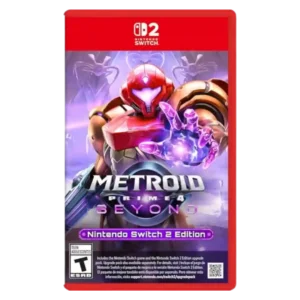
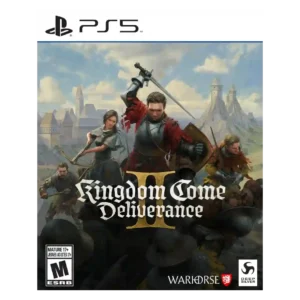
Compare Metroid Prime 4: Beyond vs Kingdom Come: Deliverance II

P1 Metroid Prime 4: Beyond
P2 Kingdom Come: Deliverance II

Comparison Takeaways

Metroid Prime 4: Beyond

Where It Has the Edge

  • bug frequency is 5.0 vs 3.7. Bug frequency receives limited but positive evidence from one completion-focused review that reported no glitches or frame drops.
  • handheld play suitability is 4.7 vs 3.5. Handheld play is well supported, with reviewers praising handheld performance and docked/handheld control smoothness.
  • facial animations is 4.0 vs 3.0. Facial animations receive limited positive evidence, mostly tied to Nintendo taking a step forward with character presentation.
  • performance optimization is 4.9 vs 4.4. Performance optimization is excellent on Switch 2, repeatedly praised as technically strong and stable.

Kingdom Come: Deliverance II

Where It Has the Edge

  • open-world design is 4.7 vs 2.1. Open-world design is a major highlight, with huge maps, dense cities, reactive systems, and immersive spaces.
  • narrative quality is 4.7 vs 2.3. Narrative quality is a major strength, with reviewers praising the epic medieval saga, emotional range, political stakes, and...
  • value for money is 5.0 vs 2.6. Value for money is excellent for players who like this style, with reviewers citing very long playtimes and...
  • writing quality is 4.8 vs 2.4. Writing quality is a standout, with reviewers praising humor, quest writing, emotional drama, and historically grounded dialogue.
Average score
Product 1: Metroid Prime 4: Beyond
3.6
Product 2: Kingdom Come: Deliverance II
4.2
accessibility options
Product 1: Metroid Prime 4: Beyond
No score yet
Product 2: Kingdom Come: Deliverance II
4.0

Post-launch coverage supports adaptable HUD visibility as the main accessibility-adjacent option, improving immersion and readability rather than offering a broad accessibility suite.

age appropriateness
Product 1: Metroid Prime 4: Beyond
No score yet
Product 2: Kingdom Come: Deliverance II
2.5

Review evidence points to adult suitability: violence, misogyny, racism, and heavy profanity are repeatedly flagged as caveats.

AI behavior
Product 1: Metroid Prime 4: Beyond
No score yet
Product 2: Kingdom Come: Deliverance II
4.7

NPC and crime behavior are a major strength, with reviewers praising realistic reactions, memory, and consequences, though AI exploits remain possible.

aiming precision
Product 1: Metroid Prime 4: Beyond
3.9

Reviewers liked the precision possible with gyro, pointer, or mouse-style aiming, though comfort and consistency varied by setup.

Product 2: Kingdom Come: Deliverance II
4.4

Aiming is improved over the first game, with smoother sensitivity and more accurate archery, while still staying relatively HUD-light.

animation quality
Product 1: Metroid Prime 4: Beyond
No score yet
Product 2: Kingdom Come: Deliverance II
4.7

Animation and cinematic presentation are generally strong, especially mocap and facial work, though minor visual oddities remain.

art direction
Product 1: Metroid Prime 4: Beyond
4.5

Art direction is a consistent strength, with reviewers calling out alien visual design, striking environments, and strong Switch 2 presentation.

Product 2: Kingdom Come: Deliverance II
4.7

The art direction leans into medieval authenticity, painterly presentation, stylish maps, and strong cinematic composition.

atmosphere
Product 1: Metroid Prime 4: Beyond
4.7

Atmosphere is one of the clearest wins: many reviews describe Viewros as eerie, lonely, alien, and richly mood-driven.

Product 2: Kingdom Come: Deliverance II
4.9

Reviewers consistently describe the medieval atmosphere as immersive, memorable, and central to the game's appeal.

boss design
Product 1: Metroid Prime 4: Beyond
4.4

Boss design lands well overall, often described as puzzle-like, spectacular, intense, and among the stronger parts of the adventure.

Product 2: Kingdom Come: Deliverance II
No score yet
bug frequency
Product 1: Metroid Prime 4: Beyond
5.0

Bug frequency receives limited but positive evidence from one completion-focused review that reported no glitches or frame drops.

Product 2: Kingdom Come: Deliverance II
3.7

Bugs are present across several reviews, mostly graphical or silly rather than game-breaking, with some later coverage noting improvement.

camera behavior
Product 1: Metroid Prime 4: Beyond
2.0

Camera behavior has limited negative evidence, with one review describing the bike/camera targeting as snapping away from the intended object.

Product 2: Kingdom Come: Deliverance II
3.0

Camera issues are a repeated but limited complaint, especially around the finicky first-person perspective and in-engine scenes.

character development
Product 1: Metroid Prime 4: Beyond
2.2

Character development is divisive: some moments lose impact because Samus stays silent, while companions rarely receive deep arcs.

Product 2: Kingdom Come: Deliverance II
4.4

Character development is strongest around Henry, Hans, and their relationship, with memorable characterization and humor supporting the journey.

character roster
Product 1: Metroid Prime 4: Beyond
4.1

The supporting cast is broader than older Prime games, with some reviewers enjoying the team and others seeing them as thin archetypes.

Product 2: Kingdom Come: Deliverance II
4.5

The cast is repeatedly described as diverse, complex, and memorable, even though some secondary faces or voices repeat.

checkpoint system
Product 1: Metroid Prime 4: Beyond
2.5

Checkpoint design drew criticism in boss fights, especially when deaths send players back to the beginning of lengthy encounters.

Product 2: Kingdom Come: Deliverance II
2.5

Checkpointing is a weak spot because autosaves are limited and can force replay after failed encounters.

combat system
Product 1: Metroid Prime 4: Beyond
4.3

Combat is generally fun, weighty, and quick, although some reviewers found its action focus repetitive or less exploratory than classic Prime.

Product 2: Kingdom Come: Deliverance II
4.2

Combat is divisive but deeply evidenced: many praise the skill-focused melee system, while some find it slow, awkward, or punishing.

companion AI
Product 1: Metroid Prime 4: Beyond
2.5

Companion behavior is one of the most divisive elements, ranging from tolerable or charming to intrusive, over-explanatory, and mechanically awkward.

Product 2: Kingdom Come: Deliverance II
3.9

Companion support is mainly represented by Mutt, whose usefulness is praised, while broader companion AI is less central.

content variety
Product 1: Metroid Prime 4: Beyond
No score yet
Product 2: Kingdom Come: Deliverance II
4.9

Content variety is one of the strongest attributes, spanning quests, dice, crafting, alchemy, hunting, side activities, and large maps.

controls responsiveness
Product 1: Metroid Prime 4: Beyond
4.6

Controls are widely praised, with strong support for dual-stick, gyro, pointer, and other setups, aside from ergonomic caveats around mouse mode.

Product 2: Kingdom Come: Deliverance II
4.5

Controls are generally smoother and more responsive than the first game, especially camera control, aiming, and combat feel.

core gameplay loop
Product 1: Metroid Prime 4: Beyond
3.9

The core loop still works best when it emphasizes scanning, combat, puzzle-solving, upgrades, and atmospheric exploration, though some reviews say action and padding disrupt it.

Product 2: Kingdom Come: Deliverance II
5.0

The loop of making stories, choosing approaches, building Henry, and reacting to consequences is strongly supported by reviewer evidence.

crafting system
Product 1: Metroid Prime 4: Beyond
No score yet
Product 2: Kingdom Come: Deliverance II
4.3

Crafting is deep and often satisfying, especially blacksmithing and alchemy, though a few reviewers find parts clunky or elaborate.

crash stability
Product 1: Metroid Prime 4: Beyond
No score yet
Product 2: Kingdom Come: Deliverance II
4.7

Crash stability is strong overall, with several reviewers reporting no crashes or soft locks despite bugs elsewhere.

dialogue quality
Product 1: Metroid Prime 4: Beyond
No score yet
Product 2: Kingdom Come: Deliverance II
4.8

Dialogue is consistently praised as abundant, well-written, and well-performed, with skill checks and conversations shaping play.

difficulty balance
Product 1: Metroid Prime 4: Beyond
3.3

Difficulty is mixed: boss fights can be challenging and adjustable, but some reviewers called spikes or easy completion balance uneven.

Product 2: Kingdom Come: Deliverance II
3.5

Difficulty is intentionally demanding; reviewers often praise the payoff but warn that the early hours and combat can overwhelm players.

DLC value
Product 1: Metroid Prime 4: Beyond
2.0

DLC value is only lightly supported through criticism of amiibo-locked music, framed as poor value rather than traditional expansion content.

Product 2: Kingdom Come: Deliverance II
4.2

Later coverage supports DLC value through Royal Edition packaging that includes all content in one bundle.

driving mechanics
Product 1: Metroid Prime 4: Beyond
4.0

Vi-O-La is polarizing: several reviewers love its speed and feel, while others dislike its drift, open-hub use, or role as padding.

Product 2: Kingdom Come: Deliverance II
No score yet
economy and resource balance
Product 1: Metroid Prime 4: Beyond
No score yet
Product 2: Kingdom Come: Deliverance II
3.8

Resource balance is intentionally stingy and survival-oriented, with money, food, hunger, sleep, and inventory pressure shaping play.

emotional impact
Product 1: Metroid Prime 4: Beyond
4.0

Emotional impact has limited positive evidence around the finale and companion relationships, but it is not a universal strength.

Product 2: Kingdom Come: Deliverance II
5.0

The narrative lands real emotional weight for some reviewers, including tears and strong reactions to major story moments.

enemy variety
Product 1: Metroid Prime 4: Beyond
2.8

Enemy variety is mixed-to-negative in several reviews, with some praise for boss variety but repeated complaints about similar bots, bugs, and aliens.

Product 2: Kingdom Come: Deliverance II
4.0

Enemy and wildlife variety is supported through wolves, rats, bears, bandits, and varied combat encounters, though it is not a central praise point.

environmental detail
Product 1: Metroid Prime 4: Beyond
4.8

Environmental detail is a strong point, with varied biomes, dense visual detail, and effects that communicate heat, cold, and alien scale.

Product 2: Kingdom Come: Deliverance II
4.7

Environmental detail is a standout, from forests, streams, and meadows to detailed medieval cities and weather effects.

exploration quality
Product 1: Metroid Prime 4: Beyond
4.1

Exploration remains a major draw inside the main regions, though the desert hub and linear structure weaken the Metroidvania feeling for some reviewers.

Product 2: Kingdom Come: Deliverance II
4.3

Exploration is consistently rewarding, with huge regions, hidden sites, side quests, and a world that rewards close attention.

facial animations
Product 1: Metroid Prime 4: Beyond
4.0

Facial animations receive limited positive evidence, mostly tied to Nintendo taking a step forward with character presentation.

Product 2: Kingdom Come: Deliverance II
3.0

Facial animation evidence is mixed: one reviewer found some characters lifeless during dialogue scenes.

faithfulness to franchise
Product 1: Metroid Prime 4: Beyond
4.1

Faithfulness is split: some see it as unmistakably Prime, while others feel the open hub, companions, and linearity dilute classic Metroid identity.

Product 2: Kingdom Come: Deliverance II
4.9

As a sequel, reviewers strongly agree it improves and continues the original's identity without abandoning its core design.

family friendliness
Product 1: Metroid Prime 4: Beyond
No score yet
Product 2: Kingdom Come: Deliverance II
2.0

Family friendliness is low because reviewers cite objectification of women, profanity, brutality, and potentially offensive portrayals.

fast travel convenience
Product 1: Metroid Prime 4: Beyond
2.0

Fast travel convenience is weak, with multiple reviewers wishing for faster ways to revisit areas or move between hubs.

Product 2: Kingdom Come: Deliverance II
3.4

Fast travel is mixed: one review praises dynamic events, while another finds it cumbersome and slow.

frame rate stability
Product 1: Metroid Prime 4: Beyond
4.9

Frame rate stability is a strong technical point, with repeated praise for 60fps, 120fps, and barely dropping frames on Switch 2.

Product 2: Kingdom Come: Deliverance II
4.8

Frame rate and smoothness are positively supported, including 4K/60 on PS5 Pro and consistent PC frame rate reports.

fun factor
Product 1: Metroid Prime 4: Beyond
3.9

Fun factor is mostly positive despite caveats, with several reviewers saying the core adventure kept them engaged or was hard to put down.

Product 2: Kingdom Come: Deliverance II
4.9

Fun factor is high for patient players, with reviewers describing the game as entertaining, satisfying, and hard to stop playing.

gameplay mechanics
Product 1: Metroid Prime 4: Beyond
3.5

Gameplay mechanics are solid but uneven: classic Prime mechanics still compel, while psychic powers and some additions feel conservative or clunky.

Product 2: Kingdom Come: Deliverance II
4.9

Gameplay mechanics are dense, systemic, and highly improved, with layered simulation and meaningful quality-of-life changes.

graphics quality
Product 1: Metroid Prime 4: Beyond
4.8

Graphics quality is one of the strongest consensus positives, frequently described as gorgeous, stunning, or best-looking on Switch 2.

Product 2: Kingdom Come: Deliverance II
4.7

Graphics earn strong praise across reviews for landscapes, lighting, painterly visuals, and overall fidelity.

grind level
Product 1: Metroid Prime 4: Beyond
2.0

Grind level is a repeated concern, especially around green crystal collection and late-game resource padding.

Product 2: Kingdom Come: Deliverance II
2.8

Grind and friction are real concerns, especially early, where persistence and repeated failure can wear players down.

handheld play suitability
Product 1: Metroid Prime 4: Beyond
4.7

Handheld play is well supported, with reviewers praising handheld performance and docked/handheld control smoothness.

Product 2: Kingdom Come: Deliverance II
3.5

Handheld suitability has limited support, with transcript evidence only noting handheld performance testing rather than a full evaluation.

haptic feedback integration
Product 1: Metroid Prime 4: Beyond
No score yet
Product 2: Kingdom Come: Deliverance II
4.5

DualSense haptics are specifically praised for adaptive triggers and steel-clash feedback on PS5.

horror tension
Product 1: Metroid Prime 4: Beyond
No score yet
Product 2: Kingdom Come: Deliverance II
3.0

Horror tension appears in at least one memorable quest, but the reviewer says the sequence ends too quickly to fully build dread.

HUD clarity
Product 1: Metroid Prime 4: Beyond
4.0

Supported by direct review evidence.

Product 2: Kingdom Come: Deliverance II
4.4

HUD clarity is praised when it avoids intrusive guidance and later improves through adaptive HUD options.

immersion
Product 1: Metroid Prime 4: Beyond
4.4

Immersion is high in the crafted areas, although chatter, hints, and hub padding can interrupt the mood.

Product 2: Kingdom Come: Deliverance II
4.7

Immersion is one of the best-supported attributes, with reviewers repeatedly describing the world as absorbing and believable.

innovation
Product 1: Metroid Prime 4: Beyond
2.8

Innovation is mixed-to-weak: the game adds psychic powers and a bike, but many reviewers call the changes conservative or not compelling.

Product 2: Kingdom Come: Deliverance II
4.7

Innovation comes from its rare, systems-heavy medieval RPG style and unusually committed simulation design.

learning curve
Product 1: Metroid Prime 4: Beyond
No score yet
Product 2: Kingdom Come: Deliverance II
2.9

The learning curve is steep and often frustrating at first, but multiple reviewers say the payoff improves once systems click.

level design
Product 1: Metroid Prime 4: Beyond
4.3

Level design is strong in the dungeon-like areas but more criticized when reviewers discuss linearity or the desert connector.

Product 2: Kingdom Come: Deliverance II
4.5

Level design shines when areas are reused or reframed for different objectives and story beats.

live-service support
Product 1: Metroid Prime 4: Beyond
No score yet
Product 2: Kingdom Come: Deliverance II
4.5

Post-launch support is evidenced through multiple combat patches, fixes, and quality-of-life updates.

load times
Product 1: Metroid Prime 4: Beyond
2.7

Load times are mixed: some praise minimal loading, while others criticize traversal layers and disguised loading sequences.

Product 2: Kingdom Come: Deliverance II
3.5

Load-time evidence is limited but includes one endless loading screen causing a restart.

loot system
Product 1: Metroid Prime 4: Beyond
No score yet
Product 2: Kingdom Come: Deliverance II
3.8

Loot handling is intentionally constrained by carry weight and realism, making inventory management part of the challenge rather than a pure reward stream.

lore depth
Product 1: Metroid Prime 4: Beyond
4.3

Lore depth is a strength, especially through scanning, environmental storytelling, and Lamorn history.

Product 2: Kingdom Come: Deliverance II
4.9

Lore depth is excellent, with historical codex material, extensive script detail, and strong cultural grounding.

map and navigation design
Product 1: Metroid Prime 4: Beyond
3.1

Map and navigation design is mixed, with useful markers and collectible tracking offset by split areas, hub traversal, and reduced discovery.

Product 2: Kingdom Come: Deliverance II
4.2

Map and navigation design are praised for medieval flair, uncluttered structure, and breathable exploration.

menu usability
Product 1: Metroid Prime 4: Beyond
2.2

Menu usability has limited negative evidence around unclear progress/menu information for crystal collection.

Product 2: Kingdom Come: Deliverance II
3.3

Menu usability is mixed: some find menus easy to navigate, while others criticize controller-oriented paneling and dense UI.

mission design
Product 1: Metroid Prime 4: Beyond
No score yet
Product 2: Kingdom Come: Deliverance II
4.1

Mission design is ambitious and often excellent, but a few reviews criticize scripted sequences or required paths that clash with sandbox freedom.

mission variety
Product 1: Metroid Prime 4: Beyond
No score yet
Product 2: Kingdom Come: Deliverance II
4.8

Mission variety is a strength, with reviewers praising diverse main quests, side quests, mysteries, heists, and unique objectives.

monetization fairness
Product 1: Metroid Prime 4: Beyond
2.0

Monetization fairness has limited negative evidence tied to criticism of amiibo-locked bike music and perceived Nintendo greed.

Product 2: Kingdom Come: Deliverance II
No score yet
movement feel
Product 1: Metroid Prime 4: Beyond
4.8

Movement feel is strong for Samus and general first-person control, though vehicle handling is more divisive.

Product 2: Kingdom Come: Deliverance II
No score yet
narrative quality
Product 1: Metroid Prime 4: Beyond
2.3

Narrative quality is mixed-to-negative: Lamorn lore interests reviewers, but the conclusion, Sylux, and Samus's silence often disappoint.

Product 2: Kingdom Come: Deliverance II
4.7

Narrative quality is a major strength, with reviewers praising the epic medieval saga, emotional range, political stakes, and strong finale.

onboarding experience
Product 1: Metroid Prime 4: Beyond
2.8

Onboarding is divisive, with some reviewers appreciating newcomer guidance and others criticizing forced tutorials and aggressive handholding.

Product 2: Kingdom Come: Deliverance II
3.7

Onboarding ranges from elegant catch-up material to overwhelming early information, so new-player friendliness is useful but uneven.

open-world design
Product 1: Metroid Prime 4: Beyond
2.1

Open-world design is the clearest repeated weakness; Sol Valley is often called empty, barren, dated, or padding.

Product 2: Kingdom Come: Deliverance II
4.7

Open-world design is a major highlight, with huge maps, dense cities, reactive systems, and immersive spaces.

originality
Product 1: Metroid Prime 4: Beyond
2.8

Originality receives limited and lukewarm evidence, with reviewers saying the game has fewer memorable ideas than Prime Remastered.

Product 2: Kingdom Come: Deliverance II
4.5

Originality is high because reviewers emphasize how few modern games offer this specific old-school, simulation-heavy RPG style.

pacing
Product 1: Metroid Prime 4: Beyond
2.7

Pacing is inconsistent: dungeon progression can flow well, but desert backtracking, late-game crystals, and bloat are common complaints.

Product 2: Kingdom Come: Deliverance II
3.9

Pacing is mixed: some reviewers say the game sustains momentum, while others cite rapid climaxes, long cutscenes, or dragging quests.

performance optimization
Product 1: Metroid Prime 4: Beyond
4.9

Performance optimization is excellent on Switch 2, repeatedly praised as technically strong and stable.

Product 2: Kingdom Come: Deliverance II
4.4

Performance optimization is generally strong on PC and console, though one reviewer calls performance occasionally unpredictable.

platform-specific feature support
Product 1: Metroid Prime 4: Beyond
4.7

Platform-specific support is strong on Switch 2 thanks to control options, HDR, and 60/120fps display modes.

Product 2: Kingdom Come: Deliverance II
4.5

Platform-specific support is strongest on PS5 Pro and DualSense, with direct evidence for 4K/60 and controller feedback.

polish
Product 1: Metroid Prime 4: Beyond
3.0

Polish is mixed: presentation can be excellent, but some reviews note rough spots, glitches, or awkward technical seams.

Product 2: Kingdom Come: Deliverance II
3.9

Polish is improved over the original but still imperfect, with typos, mismatched voice lines, bugs, and small visual oddities.

progression system
Product 1: Metroid Prime 4: Beyond
4.0

Progression works when upgrades make Samus feel more capable, but the macro-structure is often considered too linear.

Product 2: Kingdom Come: Deliverance II
4.5

Progression is meaningful, use-based, and more natural than before, with perks and training making difficult systems easier over time.

protagonist appeal
Product 1: Metroid Prime 4: Beyond
2.5

Protagonist appeal is limited by Samus's silence in dialogue-heavy scenes, even though her iconic presence remains central.

Product 2: Kingdom Come: Deliverance II
4.4

Protagonist appeal is supported through Henry's grounded role, humor, trauma, and ordinary-man framing, though he is not universally central to every review.

puzzle design
Product 1: Metroid Prime 4: Beyond
4.2

Puzzle design is generally good, especially in boss and dungeon contexts, though some psychic mechanics feel familiar.

Product 2: Kingdom Come: Deliverance II
No score yet
quest design
Product 1: Metroid Prime 4: Beyond
No score yet
Product 2: Kingdom Come: Deliverance II
4.7

Quest design is a core strength, repeatedly praised for depth, reactivity, memorable episodes, and multiple solutions.

replay value
Product 1: Metroid Prime 4: Beyond
4.5

Replay value has limited positive evidence from a reviewer who wanted to continue collecting and replay after near-completion.

Product 2: Kingdom Come: Deliverance II
4.8

Replay value is strong because different playstyles and choices can produce distinct stories and reviewers wanted to continue after long runs.

sandbox freedom
Product 1: Metroid Prime 4: Beyond
No score yet
Product 2: Kingdom Come: Deliverance II
4.9

Sandbox freedom is highly praised, with multiple ways to solve problems, exploit systems, and tailor Henry's role.

save system reliability
Product 1: Metroid Prime 4: Beyond
2.0

Save reliability is a recurring concern, especially point-of-no-return behavior and limited autosave frequency.

Product 2: Kingdom Come: Deliverance II
2.9

The save system is a common concern, with restricted manual saves and stingy checkpoints frustrating some reviewers.

side character depth
Product 1: Metroid Prime 4: Beyond
3.4

Side character depth is mixed, with some attachment to the crew but repeated criticism that arcs and personalities are thin.

Product 2: Kingdom Come: Deliverance II
4.2

Side character depth is supported by individual praise for characters like Katherine and the Henry-Capon relationship.

skill tree depth
Product 1: Metroid Prime 4: Beyond
No score yet
Product 2: Kingdom Come: Deliverance II
4.6

Skill tree depth is strong, with many perks, archetypes, stats, buffs, and meaningful bonuses.

sound design
Product 1: Metroid Prime 4: Beyond
4.5

Sound design is praised for maintaining Prime's atmospheric feel and supporting the alien setting.

Product 2: Kingdom Come: Deliverance II
4.5

Sound design supports stealth and combat awareness, including positional audio and tactile-sounding steel clashes.

soundtrack quality
Product 1: Metroid Prime 4: Beyond
4.8

Soundtrack quality is very strong, with many reviewers calling the music excellent, fantastic, or phenomenal.

Product 2: Kingdom Come: Deliverance II
4.9

The soundtrack is one of the clearest strengths, repeatedly described as memorable, orchestral, and emotionally elevating.

stealth mechanics
Product 1: Metroid Prime 4: Beyond
No score yet
Product 2: Kingdom Come: Deliverance II
3.4

Stealth is useful and sometimes satisfying, but reviewers often call it finicky, exploitable, or the weakest gameplay element.

tutorial quality
Product 1: Metroid Prime 4: Beyond
2.0

Tutorial quality is criticized in limited evidence for a mandatory motorcycle tutorial and over-explanation.

Product 2: Kingdom Come: Deliverance II
3.2

Tutorial quality is mixed: the game explains a lot but leans heavily on dense text and can overwhelm new players.

upgrade system
Product 1: Metroid Prime 4: Beyond
4.2

Upgrade system is mostly positive where quality-of-life upgrades and ability growth improve return visits.

Product 2: Kingdom Come: Deliverance II
4.2

Upgrade systems are supported through weapon quality tiers and damage scaling tied to crafting and equipment progression.

user interface design
Product 1: Metroid Prime 4: Beyond
4.2

User interface design gets positive evidence from map item display, though some hinting systems were too aggressive.

Product 2: Kingdom Come: Deliverance II
4.4

Interface design improves through outfit slots and loadouts, though broader menu usability remains mixed.

value for money
Product 1: Metroid Prime 4: Beyond
2.6

Value for money is mixed, with one reviewer recommending a sale for the Switch 2 version and another feeling the purchase was not worthwhile.

Product 2: Kingdom Come: Deliverance II
5.0

Value for money is excellent for players who like this style, with reviewers citing very long playtimes and large amounts of content.

visual effects quality
Product 1: Metroid Prime 4: Beyond
4.2

Visual effects are strong overall, with impressive lighting and particles, though one review notes some effects animate at a lower frame rate.

Product 2: Kingdom Come: Deliverance II
4.7

Visual effects and presentation are supported by lighting, weather, moonlight, cutscenes, and environmental visual touches.

voice acting
Product 1: Metroid Prime 4: Beyond
3.5

Voice acting is mixed, praised by some as strong and criticized by others as uneven or tied to annoying characters.

Product 2: Kingdom Come: Deliverance II
4.7

Voice acting is consistently praised for main performances and many NPCs, with occasional mismatches as a polish caveat.

weapon balance
Product 1: Metroid Prime 4: Beyond
No score yet
Product 2: Kingdom Come: Deliverance II
4.2

Weapon balance is mostly positive because weapons have distinct armor interactions, though some reviews note stat dominance or uneven usefulness.

world-building
Product 1: Metroid Prime 4: Beyond
4.6

World-building is a major strength, especially in how Viewros, the Lamorn, and environmental scans make the planet feel coherent.

Product 2: Kingdom Come: Deliverance II
5.0

World-building is a major strength, grounded in medieval Bohemia, historical events, codex material, and dense social systems.

world interactivity
Product 1: Metroid Prime 4: Beyond
No score yet
Product 2: Kingdom Come: Deliverance II
4.8

World interactivity is exceptional, with NPC memory, crime systems, object reactions, reputation, and reactive scripts repeatedly praised.

writing quality
Product 1: Metroid Prime 4: Beyond
2.4

Writing quality is uneven, with repeated criticism of clichés, caricatures, repeated reminders, and over-explaining.

Product 2: Kingdom Come: Deliverance II
4.8

Writing quality is a standout, with reviewers praising humor, quest writing, emotional drama, and historically grounded dialogue.