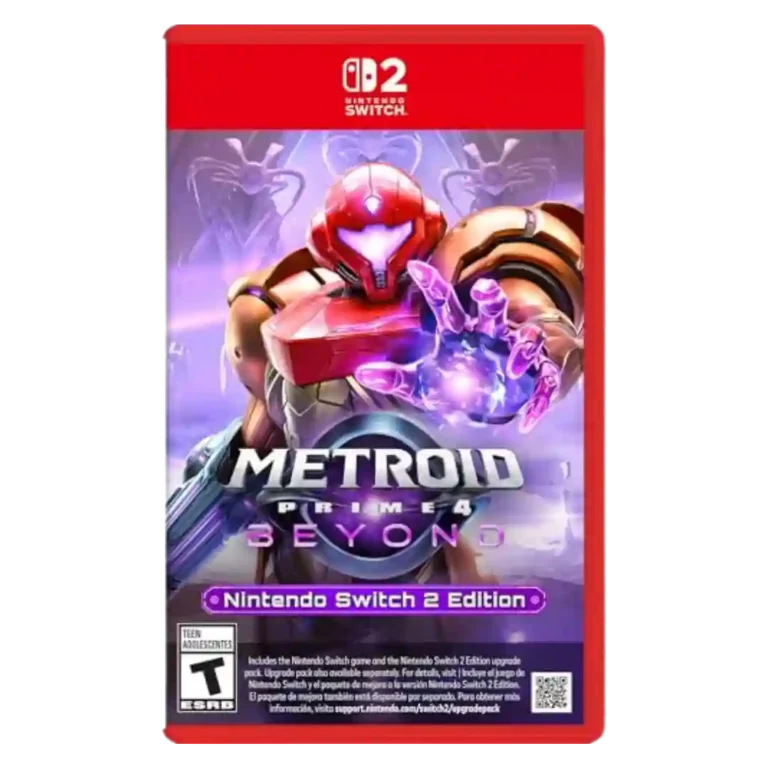
Metroid Prime 4: Beyond

Metroid Prime 4: Beyond Review

Brand: Nintendo
Updated: 2 minutes ago
3.6
Consolidated expert score
236
Review insights
63
Scored features
43
Expert reviews

Bottom Line

Choose Metroid Prime 4: Beyond for gorgeous Prime-style exploration, strong bosses, and flexible controls. Skip it if an empty hub, crystal grinding, chatty companions, or linear progression will sour the experience.

Best for

Best for players who want a cinematic, modern Prime adventure with eerie environments, scanning-driven lore, strong boss fights, and several control options on Switch 2. It also suits newcomers who prefer clearer guidance over dense Metroidvania confusion.

Not for

Not for players who primarily want a tightly interconnected, lonely Metroidvania with minimal dialogue and little hand-holding. The desert hub, crystal grind, and linear dungeon structure are the main reasons skeptical fans may bounce off it.

Verdict

Reviewers broadly agree that Metroid Prime 4: Beyond works best when it behaves like classic Prime: scanning strange spaces, solving environmental puzzles, fighting memorable bosses, and soaking in eerie sci-fi atmosphere. Its Switch 2 presentation, soundtrack, performance modes, and control options earn frequent praise. The tradeoff is that its biggest new structural idea, Sol Valley and Vi-O-La traversal, often feels like padding rather than meaningful openness. Companions and hints also split opinion, adding cinematic warmth for some while weakening isolation and discovery for others. The result is a polished, visually striking return with high peaks and unusually visible seams.

Reviewer Consensus

Strong agreement: Reviewers most consistently praise the visuals, atmosphere, technical performance, boss encounters, and the feel of Prime-style exploration inside the main areas.

Mixed opinions: The bike, companions, guidance, and Zelda-like hub structure are context-dependent: some reviewers enjoy the added scale and character, while others see them as dilution.

Common concern: The most repeated concern is Sol Valley, especially its emptiness, backtracking, green crystal collection, and late-game pacing drag.

Evidence coverage
  • 43 expert reviews
  • 32 of 63 scored features show reviewer agreement
  • 29 scored features have limited or less conclusive evidence
  • 2 scored features show reviewer disagreement or mixed evidence
  1. Limited review data
  2. Mixed evidence
  3. Moderate consensus
  4. Strong consensus

Compared in Reviews

Products reviewers directly compared with this model, grouped into quick takeaways.

Halo

  • Compared: structure and tone The review argues the game often resembles a mediocre Halo-style shooter more than Metroid.

Metroid Prime Remastered

  • Better: memorable ideas VGC says the sequel has fewer memorable ideas than Prime Remastered.

Ocarina of Time

  • Similar: hub-world traversal Giant Bomb views Sol Valley as closer to Ocarina of Time's Hyrule Field than a modern open world.

Feature Scorecards

Pros

  • 5.0
    based on 1 review
    bug frequency: 5.0, based on 1 review
    Bug frequency receives limited but positive evidence from one completion-focused review that reported no glitches or frame drops.
  • 4.9
    based on 3 reviews
    frame rate stability: 4.9, based on 3 reviews
    Frame rate stability is a strong technical point, with repeated praise for 60fps, 120fps, and barely dropping frames on Switch 2.
  • 4.9
    based on 4 reviews
    performance optimization: 4.9, based on 4 reviews
    Performance optimization is excellent on Switch 2, repeatedly praised as technically strong and stable.
  • 4.8
    based on 1 review
    environmental detail: 4.8, based on 1 review
    Environmental detail is a strong point, with varied biomes, dense visual detail, and effects that communicate heat, cold, and alien scale.
  • 4.8
    based on 7 reviews
    soundtrack quality: 4.8, based on 7 reviews
    Soundtrack quality is very strong, with many reviewers calling the music excellent, fantastic, or phenomenal.
  • 4.8
    based on 3 reviews
    movement feel: 4.8, based on 3 reviews
    Movement feel is strong for Samus and general first-person control, though vehicle handling is more divisive.
  • 4.8
    based on 10 reviews
    graphics quality: 4.8, based on 10 reviews
    Graphics quality is one of the strongest consensus positives, frequently described as gorgeous, stunning, or best-looking on Switch 2.
  • 4.7
    based on 6 reviews
    atmosphere: 4.7, based on 6 reviews
    Atmosphere is one of the clearest wins: many reviews describe Viewros as eerie, lonely, alien, and richly mood-driven.
  • 4.7
    based on 2 reviews
    handheld play suitability: 4.7, based on 2 reviews
    Handheld play is well supported, with reviewers praising handheld performance and docked/handheld control smoothness.
  • 4.7
    based on 2 reviews
    platform-specific feature support: 4.7, based on 2 reviews
    Platform-specific support is strong on Switch 2 thanks to control options, HDR, and 60/120fps display modes.
  • 4.6
    based on 5 reviews
    world-building: 4.6, based on 5 reviews
    World-building is a major strength, especially in how Viewros, the Lamorn, and environmental scans make the planet feel coherent.
  • 4.6
    based on 12 reviews
    controls responsiveness: 4.6, based on 12 reviews
    Controls are widely praised, with strong support for dual-stick, gyro, pointer, and other setups, aside from ergonomic caveats around mouse mode.
  • 4.5
    based on 3 reviews
    art direction: 4.5, based on 3 reviews
    Art direction is a consistent strength, with reviewers calling out alien visual design, striking environments, and strong Switch 2 presentation.
  • 4.5
    based on 1 review
    replay value: 4.5, based on 1 review
    Replay value has limited positive evidence from a reviewer who wanted to continue collecting and replay after near-completion.
  • 4.5
    based on 1 review
    sound design: 4.5, based on 1 review
    Sound design is praised for maintaining Prime's atmospheric feel and supporting the alien setting.
  • 4.4
    based on 11 reviews
    boss design: 4.4, based on 11 reviews
    Boss design lands well overall, often described as puzzle-like, spectacular, intense, and among the stronger parts of the adventure.
  • 4.4
    based on 2 reviews
    immersion: 4.4, based on 2 reviews
    Immersion is high in the crafted areas, although chatter, hints, and hub padding can interrupt the mood.
  • 4.3
    based on 4 reviews
    lore depth: 4.3, based on 4 reviews
    Lore depth is a strength, especially through scanning, environmental storytelling, and Lamorn history.
  • 4.3
    based on 3 reviews
    combat system: 4.3, based on 3 reviews
    Combat is generally fun, weighty, and quick, although some reviewers found its action focus repetitive or less exploratory than classic Prime.
  • 4.3
    based on 6 reviews
    level design: 4.3, based on 6 reviews
    Level design is strong in the dungeon-like areas but more criticized when reviewers discuss linearity or the desert connector.
  • 4.2
    based on 1 review
    upgrade system: 4.2, based on 1 review
    Upgrade system is mostly positive where quality-of-life upgrades and ability growth improve return visits.
  • 4.2
    based on 1 review
    user interface design: 4.2, based on 1 review
    User interface design gets positive evidence from map item display, though some hinting systems were too aggressive.
  • 4.2
    based on 4 reviews
    puzzle design: 4.2, based on 4 reviews
    Puzzle design is generally good, especially in boss and dungeon contexts, though some psychic mechanics feel familiar.
  • 4.2
    based on 2 reviews
    visual effects quality: 4.2, based on 2 reviews
    Visual effects are strong overall, with impressive lighting and particles, though one review notes some effects animate at a lower frame rate.
  • 4.1
    based on 9 reviews
    exploration quality: 4.1, based on 9 reviews
    Exploration remains a major draw inside the main regions, though the desert hub and linear structure weaken the Metroidvania feeling for some reviewers.
  • 4.1
    based on 2 reviews
    character roster: 4.1, based on 2 reviews
    The supporting cast is broader than older Prime games, with some reviewers enjoying the team and others seeing them as thin archetypes.
  • 4.1
    based on 6 reviews
    faithfulness to franchise: 4.1, based on 6 reviews
    Faithfulness is split: some see it as unmistakably Prime, while others feel the open hub, companions, and linearity dilute classic Metroid identity.
  • 4.0
    based on 9 reviews
    driving mechanics: 4.0, based on 9 reviews
    Vi-O-La is polarizing: several reviewers love its speed and feel, while others dislike its drift, open-hub use, or role as padding.
  • 4.0
    based on 1 review
    emotional impact: 4.0, based on 1 review
    Emotional impact has limited positive evidence around the finale and companion relationships, but it is not a universal strength.
  • 4.0
    based on 1 review
    facial animations: 4.0, based on 1 review
    Facial animations receive limited positive evidence, mostly tied to Nintendo taking a step forward with character presentation.
  • 4.0
    based on 1 review
    HUD clarity: 4.0, based on 1 review
    Supported by direct review evidence.
  • 4.0
    based on 1 review
    progression system: 4.0, based on 1 review
    Progression works when upgrades make Samus feel more capable, but the macro-structure is often considered too linear.
  • 3.9
    based on 5 reviews
    aiming precision: 3.9, based on 5 reviews
    Reviewers liked the precision possible with gyro, pointer, or mouse-style aiming, though comfort and consistency varied by setup.
  • 3.9
    based on 6 reviews
    fun factor: 3.9, based on 6 reviews
    Fun factor is mostly positive despite caveats, with several reviewers saying the core adventure kept them engaged or was hard to put down.
  • 3.9
    based on 4 reviews
    core gameplay loop: 3.9, based on 4 reviews
    The core loop still works best when it emphasizes scanning, combat, puzzle-solving, upgrades, and atmospheric exploration, though some reviews say action and padding disrupt it.
  • 3.5
    based on 5 reviews
    gameplay mechanics: 3.5, based on 5 reviews
    Gameplay mechanics are solid but uneven: classic Prime mechanics still compel, while psychic powers and some additions feel conservative or clunky.
  • 3.5
    based on 2 reviews
    voice acting: 3.5, based on 2 reviews
    Voice acting is mixed, praised by some as strong and criticized by others as uneven or tied to annoying characters.

Cons

  • 3.4
    based on 2 reviews
    side character depth: 3.4, based on 2 reviews
    Side character depth is mixed, with some attachment to the crew but repeated criticism that arcs and personalities are thin.
  • 3.3
    based on 3 reviews
    difficulty balance: 3.3, based on 3 reviews
    Difficulty is mixed: boss fights can be challenging and adjustable, but some reviewers called spikes or easy completion balance uneven.
  • 3.1
    based on 4 reviews
    map and navigation design: 3.1, based on 4 reviews
    Map and navigation design is mixed, with useful markers and collectible tracking offset by split areas, hub traversal, and reduced discovery.
  • 3.0
    based on 2 reviews
    polish: 3.0, based on 2 reviews
    Polish is mixed: presentation can be excellent, but some reviews note rough spots, glitches, or awkward technical seams.
  • 2.8
    based on 4 reviews
    onboarding experience: 2.8, based on 4 reviews
    Onboarding is divisive, with some reviewers appreciating newcomer guidance and others criticizing forced tutorials and aggressive handholding.
  • 2.8
    based on 6 reviews
    innovation: 2.8, based on 6 reviews
    Innovation is mixed-to-weak: the game adds psychic powers and a bike, but many reviewers call the changes conservative or not compelling.
  • 2.8
    based on 4 reviews
    enemy variety: 2.8, based on 4 reviews
    Enemy variety is mixed-to-negative in several reviews, with some praise for boss variety but repeated complaints about similar bots, bugs, and aliens.
  • 2.8
    based on 1 review
    originality: 2.8, based on 1 review
    Originality receives limited and lukewarm evidence, with reviewers saying the game has fewer memorable ideas than Prime Remastered.
  • 2.7
    based on 3 reviews
    load times: 2.7, based on 3 reviews
    Load times are mixed: some praise minimal loading, while others criticize traversal layers and disguised loading sequences.
  • 2.7
    based on 8 reviews
    pacing: 2.7, based on 8 reviews
    Pacing is inconsistent: dungeon progression can flow well, but desert backtracking, late-game crystals, and bloat are common complaints.
  • 2.6
    based on 2 reviews
    value for money: 2.6, based on 2 reviews
    Value for money is mixed, with one reviewer recommending a sale for the Switch 2 version and another feeling the purchase was not worthwhile.
  • 2.5
    based on 1 review
    checkpoint system: 2.5, based on 1 review
    Checkpoint design drew criticism in boss fights, especially when deaths send players back to the beginning of lengthy encounters.
  • 2.5
    based on 1 review
    protagonist appeal: 2.5, based on 1 review
    Protagonist appeal is limited by Samus's silence in dialogue-heavy scenes, even though her iconic presence remains central.
  • 2.5
    based on 8 reviews
    companion AI: 2.5, based on 8 reviews
    Companion behavior is one of the most divisive elements, ranging from tolerable or charming to intrusive, over-explanatory, and mechanically awkward.
  • 2.4
    based on 3 reviews
    writing quality: 2.4, based on 3 reviews
    Writing quality is uneven, with repeated criticism of clichés, caricatures, repeated reminders, and over-explaining.
  • 2.3
    based on 3 reviews
    narrative quality: 2.3, based on 3 reviews
    Narrative quality is mixed-to-negative: Lamorn lore interests reviewers, but the conclusion, Sylux, and Samus's silence often disappoint.
  • 2.2
    based on 2 reviews
    character development: 2.2, based on 2 reviews
    Character development is divisive: some moments lose impact because Samus stays silent, while companions rarely receive deep arcs.
  • 2.2
    based on 1 review
    menu usability: 2.2, based on 1 review
    Menu usability has limited negative evidence around unclear progress/menu information for crystal collection.
  • 2.1
    based on 14 reviews
    open-world design: 2.1, based on 14 reviews
    Open-world design is the clearest repeated weakness; Sol Valley is often called empty, barren, dated, or padding.
  • 2.0
    based on 7 reviews
    grind level: 2.0, based on 7 reviews
    Grind level is a repeated concern, especially around green crystal collection and late-game resource padding.
  • 2.0
    based on 2 reviews
    fast travel convenience: 2.0, based on 2 reviews
    Fast travel convenience is weak, with multiple reviewers wishing for faster ways to revisit areas or move between hubs.
  • 2.0
    based on 1 review
    camera behavior: 2.0, based on 1 review
    Camera behavior has limited negative evidence, with one review describing the bike/camera targeting as snapping away from the intended object.
  • 2.0
    based on 1 review
    DLC value: 2.0, based on 1 review
    DLC value is only lightly supported through criticism of amiibo-locked music, framed as poor value rather than traditional expansion content.
  • 2.0
    based on 1 review
    monetization fairness: 2.0, based on 1 review
    Monetization fairness has limited negative evidence tied to criticism of amiibo-locked bike music and perceived Nintendo greed.
  • 2.0
    based on 1 review
    tutorial quality: 2.0, based on 1 review
    Tutorial quality is criticized in limited evidence for a mandatory motorcycle tutorial and over-explanation.
  • 2.0
    based on 4 reviews
    save system reliability: 2.0, based on 4 reviews
    Save reliability is a recurring concern, especially point-of-no-return behavior and limited autosave frequency.

Compared With Category Average

Compared with other Video Games, this product is below average in open-world design, character development, DLC value.

Attribute This product Category average Difference
open-world design 2.1 4.0 -1.9
character development 2.2 4.1 -1.9
DLC value 2.0 3.8 -1.8
companion AI 2.5 4.0 -1.6
save system reliability 2.0 3.7 -1.7
fast travel convenience 2.0 3.7 -1.7
value for money 2.6 4.2 -1.6
tutorial quality 2.0 3.6 -1.6

FAQ

Is Metroid Prime 4: Beyond faithful to the Prime series?

Mostly, but not completely. Reviewers say the core scanning, atmosphere, combat, and boss design feel like Prime, while the open desert hub, companions, and extra guidance make it less isolated and less traditional.

What do reviewers like most about it?

The strongest praise goes to the Switch 2 visuals, eerie atmosphere, stable performance, soundtrack, boss fights, and the crafted dungeon-like areas. Several reviewers call the main regions the part where the game truly shines.

What is the biggest complaint?

Sol Valley is the most common complaint. Reviewers often describe the desert hub as empty or padded, and many dislike the green crystal collection tied to progression.

Are the new motorcycle sections good?

They are divisive. Some reviewers love Vi-O-La's feel, speed, and style, while others think the bike mainly exists to justify a barren hub and extra backtracking.

Does the game run well on Switch 2?

Yes. Reviews repeatedly praise the 60fps and 120fps options, visual quality, and overall technical stability, although a few note rough assets or lower-rate effects in places.

Are the companions annoying?

Opinions are split. Some reviewers warmed to the Federation crew or found them useful, but many criticized frequent hints, quips, escort moments, or how they interrupt the classic sense of isolation.

Is it a good entry point for newcomers?

Several reviews suggest it is approachable because it uses clearer guidance, map support, and a more linear structure. Longtime fans who value mystery and nonlinear discovery may find that same accessibility frustrating.

Consider This Instead

If you want better open-world design

Choose Forza Horizon 5. It scores 5.0 vs 2.1 for open-world design, with a 4.0 overall score.

Compare

If you want better fast travel convenience

Choose Ghost of Yōtei. It scores 4.9 vs 2.0 for fast travel convenience, with a 4.2 overall score.

Compare

If you want better save system reliability

Choose Saros. It scores 4.6 vs 2.0 for save system reliability, with a 4.3 overall score.

Compare

Overall Top Video Games Alternatives

#1 Hades II
4.6
25 reviews

Good if you want deeper Hades-style roguelite combat, huge build variety, polished art, and rewarding progression. Skip it if repetition, resource tracking, or a less intimate story than the original...

Pros: world interactivity, side character depth

Cons: grind level

#2 Clair Obscur: Expedition 33
4.3
21 reviews

Best for a stylish, emotional RPG with deep timed combat and exceptional music. Skip it if tight parry timing, weak maps, or awkward platforming would frustrate you.

Pros: world-building, crash stability

Cons: platforming precision, map and navigation design

#3 Donkey Kong Bananza
4.3
30 reviews

Good if you want joyful 3D exploration, fluid DK movement, dense collectibles, and playful destruction. Skip it if frame drops, camera hiccups, easy or repeated bosses, or a $70 price...

Pros: load times, movement feel

Cons: enemy variety, platforming precision

#4 Lego Batman: Legacy of the Dark Knight
4.3
12 reviews

Good if you want Arkham-style Lego combat, lively Gotham exploration, collectibles, and couch co-op. Skip it if seven launch heroes, no online co-op, or deluxe-locked content bothers you.

Pros: voice acting, performance optimization

Cons: multiplayer design, monetization fairness