art direction
P1
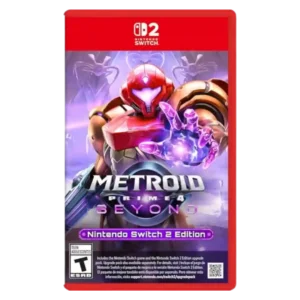
Product 1: Metroid Prime 4: Beyond
4.7
Art direction was one of the clearest strengths, with reviewers repeatedly calling the environments, lighting, and visual identity gorgeous or striking.
P2
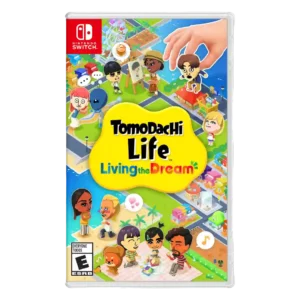
Product 2: Tomodachi Life: Living the Dream
4.3
The bright, cartoonish, sometimes photorealistic presentation is generally praised for matching the game's strange and playful tone.
atmosphere
P1
Product 1: Metroid Prime 4: Beyond
4.6
Atmosphere drew broad praise, especially in the Prime-style facilities where reviewers felt loneliness, dread, and alien mood were strongest.
P2
Product 2: Tomodachi Life: Living the Dream
4.5
Atmosphere is praised where discussed, especially for the bright, silly, offbeat mood created by the presentation and sound.
boss design
P1
Product 1: Metroid Prime 4: Beyond
4.4
Bosses were widely praised as memorable, cinematic, puzzle-like, and challenging, though a few reviews found them too weak-point-driven or uneven.
P2Product 2: Tomodachi Life: Living the Dream
No score yetcharacter development
P1
Product 1: Metroid Prime 4: Beyond
3.8
The Federation cast landed unevenly: some reviewers grew attached, while others felt characterization stayed broad or underdeveloped.
P2
Product 2: Tomodachi Life: Living the Dream
4.4
Reviewers often felt Miis became memorable through quirks, relationships, and player input, although one noted that development can be slow.
combat system
P1
Product 1: Metroid Prime 4: Beyond
3.5
Combat was generally seen as satisfying and polished, but some reviewers criticized repeated waves, limited enemy interplay, or mixed encounter pacing.
P2Product 2: Tomodachi Life: Living the Dream
No score yetcommunity features
P1Product 1: Metroid Prime 4: Beyond
No score yet
P2
Product 2: Tomodachi Life: Living the Dream
2.4
Community-facing features are a major weakness, with reviewers frustrated by blocked sharing, capture limits, and reduced online potential.
companion AI
P1
Product 1: Metroid Prime 4: Beyond
1.9
Companion behavior was a repeat complaint when allies caused game overs, needed reviving, or disrupted the usual solo Metroid flow.
P2Product 2: Tomodachi Life: Living the Dream
No score yetcontent variety
P1Product 1: Metroid Prime 4: Beyond
No score yet
P2
Product 2: Tomodachi Life: Living the Dream
3.2
Opinions are mixed: many praise surprising events and plentiful unlocks, but repetition, missing activities, and finite scenarios are common concerns.
controls responsiveness
P1
Product 1: Metroid Prime 4: Beyond
4.5
Controls were a major positive overall, with tight movement, responsive shooting, strong gyro support, and multiple schemes; mouse ergonomics were more divisive.
P2
Product 2: Tomodachi Life: Living the Dream
4.2
Controls are generally described as intuitive and responsive, especially for basic island management, though one reviewer wanted stronger touchscreen use.
core gameplay loop
P1
Product 1: Metroid Prime 4: Beyond
4.2
The core Prime loop still worked for supportive reviewers, but some felt it was familiar rather than transformative.
P2
Product 2: Tomodachi Life: Living the Dream
4.0
The loop of checking in, helping Miis, collecting happiness, and unlocking island features is widely seen as relaxed and satisfying, though best in short sessions.
dialogue quality
P1
Product 1: Metroid Prime 4: Beyond
2.2
Dialogue was a common weak spot, with several reviewers calling the chatter irritating, clichéd, or out of place for Metroid.
P2
Product 2: Tomodachi Life: Living the Dream
4.5
Dialogue is often called hilarious and well localized, though a few reviewers noticed repeated conversation templates over time.
economy and resource balance
P1Product 1: Metroid Prime 4: Beyond
No score yet
P2
Product 2: Tomodachi Life: Living the Dream
3.8
Economy impressions are mildly mixed, with one reviewer saying cash was never a problem and another joking about surprisingly high food prices.
emotional impact
P1
Product 1: Metroid Prime 4: Beyond
4.0
One review found the companion relationships strengthened the closing moments, though emotional delivery was not a universal focus.
P2
Product 2: Tomodachi Life: Living the Dream
4.3
Some reviewers grew attached to their islands and Miis, describing the game as smile-inducing, endearing, and easy to return to.
environmental detail
P1
Product 1: Metroid Prime 4: Beyond
4.8
Environmental detail was praised for making Viewros feel rich, alien, and visually meaningful.
P2
Product 2: Tomodachi Life: Living the Dream
4.5
One review specifically notes that environments are more detailed than before, supporting the upgraded presentation.
exploration quality
P1
Product 1: Metroid Prime 4: Beyond
3.8
Exploration was strongest in the dungeon-like zones and weakest when the desert hub or heavy guidance interrupted discovery.
P2
Product 2: Tomodachi Life: Living the Dream
4.0
One review praises the shift from menu screens to a connected island where events unfold more organically as players move through the space.
facial animations
P1
Product 1: Metroid Prime 4: Beyond
4.5
Facial work earned praise in one review as an unexpectedly strong visual element for Nintendo.
P2
Product 2: Tomodachi Life: Living the Dream
2.5
One reviewer criticizes face paint for sometimes blocking traditional facial expressions, limiting expressiveness.
faithfulness to franchise
P1
Product 1: Metroid Prime 4: Beyond
4.0
Reviewers split on franchise faithfulness: many felt the fundamentals remained Prime, while others felt the hub, companions, or linearity diluted Metroid.
P2
Product 2: Tomodachi Life: Living the Dream
3.6
Several reviewers see it as a fitting sequel or upgrade, though others feel missing features and sharing cuts weaken its connection to earlier entries.
fun factor
P1
Product 1: Metroid Prime 4: Beyond
3.6
Overall enjoyment ranged from enthusiastic recommendations to sharp disappointment, with most positive reactions tied to classic Prime sections.
P2
Product 2: Tomodachi Life: Living the Dream
4.5
The strongest agreement is that the game is funny, weird, charming, and often laugh-out-loud enjoyable when its absurd systems click.
gameplay mechanics
P1
Product 1: Metroid Prime 4: Beyond
3.5
Moment-to-moment mechanics were often praised, but psychic powers, open-zone structure, and companion sections made the package uneven.
P2
Product 2: Tomodachi Life: Living the Dream
3.0
Reviewers consistently describe the active play as light, simple, and often passive, with minigames and requests adding texture but not deep mechanical substance.
graphics quality
P1
Product 1: Metroid Prime 4: Beyond
4.7
Graphics were one of the strongest consensus positives, frequently described as gorgeous, stunning, or among Nintendo's best-looking work.
P2
Product 2: Tomodachi Life: Living the Dream
4.4
Visuals are consistently described as sharp, colorful, clearer than past entries, and good-looking on Switch 2 hardware.
grind level
P1
Product 1: Metroid Prime 4: Beyond
2.1
The green-crystal requirement was one of the most repeated pain points, often described as filler, tedious, or poorly paced.
P2
Product 2: Tomodachi Life: Living the Dream
5.0
One reviewer specifically praises the relaxed progression for having no grind.
handheld play suitability
P1
Product 1: Metroid Prime 4: Beyond
4.0
Handheld and docked play were generally viable, though Switch 1 presentation was less crisp and some preferred a full controller setup.
P2
Product 2: Tomodachi Life: Living the Dream
4.5
Handheld play is praised for sharp 1080p output and a portable, short-session structure that fits the game's rhythm.
HUD clarity
P1
Product 1: Metroid Prime 4: Beyond
2.5
One review found scan-log clarity weakened by indistinct highlighting, making completion tracking more of a hassle than it needed to be.
P2
Product 2: Tomodachi Life: Living the Dream
4.0
One review highlights the relationship chart as a helpful on-screen aid for understanding nearby Mii connections.
immersion
P1
Product 1: Metroid Prime 4: Beyond
4.0
Immersion was strong when the game leaned into alien solitude, but hints, companions, and roadblocks could break that feeling.
P2
Product 2: Tomodachi Life: Living the Dream
4.5
Reviewers who scored immersion felt the island tracks daily life well enough to feel like a living virtual world.
innovation
P1
Product 1: Metroid Prime 4: Beyond
2.8
Innovation was viewed as conservative: some refinements worked, but many reviewers felt the game did not push the genre forward.
P2
Product 2: Tomodachi Life: Living the Dream
4.0
One review frames the sequel as a bold evolution, expanding the series with a more connected world, deeper systems, and player-created content.
learning curve
P1Product 1: Metroid Prime 4: Beyond
No score yet
P2
Product 2: Tomodachi Life: Living the Dream
4.7
The game is widely framed as easy to pick up, approachable, and accessible in play style rather than demanding or skill-heavy.
load times
P1
Product 1: Metroid Prime 4: Beyond
4.5
Load screens were rarely a major complaint, and one review praised the minimal loading between areas.
P2
Product 2: Tomodachi Life: Living the Dream
4.5
Load times are praised as minimal or nearly absent in the reviews that discuss them.
map and navigation design
P1
Product 1: Metroid Prime 4: Beyond
4.0
Navigation was approachable and sometimes praised, but aggressive guidance and logbook tracking issues split opinion.
P2
Product 2: Tomodachi Life: Living the Dream
4.5
One review praises the ability to use the menu to jump straight to characters instead of searching tediously.
narrative quality
P1
Product 1: Metroid Prime 4: Beyond
2.9
Narrative reception was mixed-to-negative: Lamorn lore intrigued some reviewers, but the ending, Sylux, and character use often disappointed.
P2
Product 2: Tomodachi Life: Living the Dream
3.9
The story is mostly emergent and player-authored, producing memorable relationship drama for some while feeling barebones to others.
open-world design
P1
Product 1: Metroid Prime 4: Beyond
2.2
Sol Valley was the most consistent criticism, described by many reviewers as empty, barren, padded, or less interesting than the dungeons.
P2
Product 2: Tomodachi Life: Living the Dream
3.8
The connected island is viewed as a meaningful upgrade that gives players a visible, customizable world, though building depth is not universally praised.
originality
P1Product 1: Metroid Prime 4: Beyond
No score yet
P2
Product 2: Tomodachi Life: Living the Dream
4.8
Reviewers repeatedly describe the experience as unusually distinctive, hard to compare, and powered by a kind of play few games offer.
pacing
P1
Product 1: Metroid Prime 4: Beyond
2.5
Pacing suffered whenever desert traversal, crystal collection, or upgrade trips slowed the stronger dungeon rhythm.
P2
Product 2: Tomodachi Life: Living the Dream
2.9
Pacing is divisive: the relaxed daily rhythm suits short bursts, but longer sessions can become slow, empty, or repetitive.
performance optimization
P1
Product 1: Metroid Prime 4: Beyond
4.8
Technical performance was a standout strength, with reviewers praising stable modes, HDR, and smooth operation on Switch 2.
P2
Product 2: Tomodachi Life: Living the Dream
4.5
Switch and Switch 2 impressions are positive, with reviewers saying the game runs well and feels snappy.
platform-specific feature support
P1
Product 1: Metroid Prime 4: Beyond
3.1
Switch 2 options, HDR, and mouse controls were notable, but mouse comfort and Switch 1 compromises made this mixed.
P2
Product 2: Tomodachi Life: Living the Dream
2.6
Hardware-specific support is uneven: handheld visuals are praised, but mouse, touch, capture, and local-only sharing limitations frustrate reviewers.
progression system
P1
Product 1: Metroid Prime 4: Beyond
4.7
Progression was praised when upgrades opened new routes and improved movement, though some disliked overly linear or lock-and-key usage.
P2
Product 2: Tomodachi Life: Living the Dream
3.9
The Wishing Fountain, island ranks, and Mii levels are often rewarding, but some reviewers found later unlocks generic or less motivating.
sandbox freedom
P1Product 1: Metroid Prime 4: Beyond
No score yet
P2
Product 2: Tomodachi Life: Living the Dream
4.5
Creative freedom is one of the strongest points, with reviewers praising island building, custom objects, relationship nudging, and player-authored absurdity.
side character depth
P1
Product 1: Metroid Prime 4: Beyond
2.7
Side characters were divisive: some reviewers warmed to them, while others found them annoying, tropey, or poorly matched to Metroid.
P2Product 2: Tomodachi Life: Living the Dream
No score yetsound design
P1
Product 1: Metroid Prime 4: Beyond
4.9
Sound design was praised for supporting atmosphere, alien spaces, and the Prime identity.
P2
Product 2: Tomodachi Life: Living the Dream
4.3
Sound design supports the quirky atmosphere through playful audio touches and oddball effects that reinforce the game's tone.
soundtrack quality
P1
Product 1: Metroid Prime 4: Beyond
4.6
The soundtrack was a strong positive, often described as excellent, memorable, atmospheric, or among the best parts of the game.
P2
Product 2: Tomodachi Life: Living the Dream
4.1
Music is generally described as whimsical, playful, and catchy, though one review found the selection more dialed back than before.
tutorial quality
P1
Product 1: Metroid Prime 4: Beyond
2.7
Guidance split reviewers; some appreciated direction, but many disliked hand-holding, repeated hints, or tutorialization.
P2
Product 2: Tomodachi Life: Living the Dream
3.8
Tutorial impressions are mostly positive for basic play, though one reviewer felt the creation tools could use more guidance after the quick introduction.
user interface design
P1Product 1: Metroid Prime 4: Beyond
No score yet
P2
Product 2: Tomodachi Life: Living the Dream
4.6
The interface and building tools are repeatedly praised as clean, intuitive, snappy, and easy to use.
value for money
P1
Product 1: Metroid Prime 4: Beyond
2.7
Value was mixed, with some reviewers satisfied and others warning about price, length, or waiting for a sale.
P2
Product 2: Tomodachi Life: Living the Dream
4.2
Value is positive for players who enjoy short-session chaos and creative building, with reviewers citing money's worth and plenty of value.
voice acting
P1
Product 1: Metroid Prime 4: Beyond
3.5
Voice acting was mixed: some reviewers liked the performances, while others found the comedic or companion delivery uneven.
P2
Product 2: Tomodachi Life: Living the Dream
4.3
The robotic text-to-speech voices are repeatedly praised as funny and charming, even when awkward by design.
world-building
P1
Product 1: Metroid Prime 4: Beyond
5.0
World-building was a strength in reviews that praised scanning, Lamorn history, and the way environments explained Viewros.
P2
Product 2: Tomodachi Life: Living the Dream
4.3
The island can become a personalized little society, with reviewers highlighting its growth from a blank space into a distinct Mii world.
writing quality
P1
Product 1: Metroid Prime 4: Beyond
2.1
Writing was among the weaker elements, criticized for clichés, awkward jokes, and underdeveloped storytelling.
P2
Product 2: Tomodachi Life: Living the Dream
4.7
Localized dialogue, absurd phrasing, and player-seeded language are frequently praised as central to the comedy and personality.