accessibility options
P1
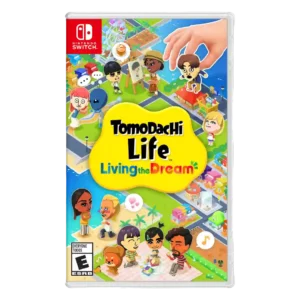
Product 1: Tomodachi Life: Living the Dream
2.0
Only one review directly discusses accessibility options, and it flags the absence of specific settings as a limitation despite general ease of play.
P2
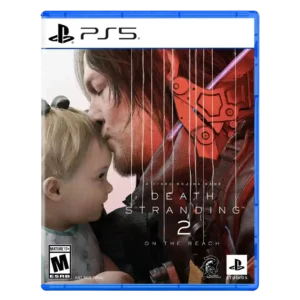
Product 2: Death Stranding 2: On the...
4.1
Accessibility-adjacent options, especially boss skips and a more accessible sequel structure, are treated positively by reviewers who mentioned them.
AI behavior
P1
Product 1: Tomodachi Life: Living the Dream
3.4
The Miis' semi-autonomous behavior creates enjoyable unpredictability, though reviewers also identify repeated patterns and limited spontaneity over time.
P2
Product 2: Death Stranding 2: On the...
2.8
Enemy AI is a repeated weak spot, with reviewers noting it is not especially sharp even when combat remains fun.
animation quality
P1
Product 1: Tomodachi Life: Living the Dream
4.5
Reviewers praise smoother transitions and expressive Mii animation, especially how animation supports personality and absurdity.
P2
Product 2: Death Stranding 2: On the...
5.0
Animation quality is strongly praised through motion capture, character animation, and facial/body performance work.
art direction
P1
Product 1: Tomodachi Life: Living the Dream
4.3
The bright, cartoonish, sometimes photorealistic presentation is generally praised for matching the game's strange and playful tone.
P2
Product 2: Death Stranding 2: On the...
4.8
Art direction is strongly praised, especially the detailed vistas and rugged depiction of Australia.
atmosphere
P1
Product 1: Tomodachi Life: Living the Dream
4.5
Atmosphere is praised where discussed, especially for the bright, silly, offbeat mood created by the presentation and sound.
P2
Product 2: Death Stranding 2: On the...
4.6
Atmosphere is a major strength, ranging from meditative and haunting to warm, strange, and emotionally resonant.
character development
P1
Product 1: Tomodachi Life: Living the Dream
4.4
Reviewers often felt Miis became memorable through quirks, relationships, and player input, although one noted that development can be slow.
P2
Product 2: Death Stranding 2: On the...
4.5
Character development is praised where reviewers saw Sam relying on others more and the sequel deepening characterization.
character roster
P1
Product 1: Tomodachi Life: Living the Dream
4.0
The 70-Mii limit is generally treated as sufficient by reviewers who discussed it, with one saying even 20 felt like enough.
P2
Product 2: Death Stranding 2: On the...
4.6
The cast/character roster is widely praised as excellent, quirky, memorable, and performance-rich, with a few mixed views on newer characters.
combat system
P1Product 1: Tomodachi Life: Living the Dream
No score yet
P2
Product 2: Death Stranding 2: On the...
4.0
Combat is widely seen as tighter and more viable than before, but several reviewers still found it basic, intrusive, or less compelling than traversal.
community features
P1
Product 1: Tomodachi Life: Living the Dream
2.4
Community-facing features are a major weakness, with reviewers frustrated by blocked sharing, capture limits, and reduced online potential.
P2
Product 2: Death Stranding 2: On the...
4.9
Community features receive strong praise for likes, shared structures, monorails, roads, and the sense of helping unseen players.
companion AI
P1Product 1: Tomodachi Life: Living the Dream
No score yet
P2
Product 2: Death Stranding 2: On the...
4.9
Dollman’s companion role is strongly praised for scouting, advice, and personality, making the journey feel less lonely.
content variety
P1
Product 1: Tomodachi Life: Living the Dream
3.2
Opinions are mixed: many praise surprising events and plentiful unlocks, but repetition, missing activities, and finite scenarios are common concerns.
P2
Product 2: Death Stranding 2: On the...
4.3
Reviewers praise expanded tools, weapons, boots, and unlockable options, making the sequel feel broader than the first game.
controls responsiveness
P1
Product 1: Tomodachi Life: Living the Dream
4.2
Controls are generally described as intuitive and responsive, especially for basic island management, though one reviewer wanted stronger touchscreen use.
P2
Product 2: Death Stranding 2: On the...
4.4
Controls are mostly praised as more refined, smoother, and less cumbersome, including PC input support, with only minor complexity caveats.
core gameplay loop
P1
Product 1: Tomodachi Life: Living the Dream
4.0
The loop of checking in, helping Miis, collecting happiness, and unlocking island features is widely seen as relaxed and satisfying, though best in short sessions.
P2
Product 2: Death Stranding 2: On the...
4.5
The delivery loop is often called addictive, satisfying, and more approachable, with dissent focused on repetition rather than the basic loop itself.
dialogue quality
P1
Product 1: Tomodachi Life: Living the Dream
4.5
Dialogue is often called hilarious and well localized, though a few reviewers noticed repeated conversation templates over time.
P2
Product 2: Death Stranding 2: On the...
3.2
Dialogue quality is mixed, with one review praising clarity while others complain about long or nonsensical speeches.
difficulty balance
P1Product 1: Tomodachi Life: Living the Dream
No score yet
P2
Product 2: Death Stranding 2: On the...
3.3
Difficulty balance is one of the more divisive areas: some praise fair harder settings, while others say combat, BTs, or traversal became too easy.
economy and resource balance
P1
Product 1: Tomodachi Life: Living the Dream
3.8
Economy impressions are mildly mixed, with one reviewer saying cash was never a problem and another joking about surprisingly high food prices.
P2
Product 2: Death Stranding 2: On the...
3.2
Resource balance is mixed because plentiful building materials make construction smoother but also reduce challenge.
emotional impact
P1
Product 1: Tomodachi Life: Living the Dream
4.3
Some reviewers grew attached to their islands and Miis, describing the game as smile-inducing, endearing, and easy to return to.
P2
Product 2: Death Stranding 2: On the...
4.3
Emotional impact is usually strong, driven by sincerity, human stories, and moving payoffs, but not every reviewer felt affected.
environmental detail
P1
Product 1: Tomodachi Life: Living the Dream
4.5
One review specifically notes that environments are more detailed than before, supporting the upgraded presentation.
P2
Product 2: Death Stranding 2: On the...
4.9
Environmental detail is consistently praised for texture, variety, visual density, and natural effects.
exploration quality
P1
Product 1: Tomodachi Life: Living the Dream
4.0
One review praises the shift from menu screens to a connected island where events unfold more organically as players move through the space.
P2
Product 2: Death Stranding 2: On the...
4.7
Exploration is strongly praised for making Australia exciting, scenic, and rewarding to traverse, especially when routes and vistas click.
facial animations
P1
Product 1: Tomodachi Life: Living the Dream
2.5
One reviewer criticizes face paint for sometimes blocking traditional facial expressions, limiting expressiveness.
P2
Product 2: Death Stranding 2: On the...
5.0
Facial animation evidence is uniformly positive, with reviewers highlighting detailed faces, capture, and rendered human contact.
faithfulness to franchise
P1
Product 1: Tomodachi Life: Living the Dream
3.6
Several reviewers see it as a fitting sequel or upgrade, though others feel missing features and sharing cuts weaken its connection to earlier entries.
P2
Product 2: Death Stranding 2: On the...
4.8
One reviewer praised the sequel for preserving the franchise’s heart and soul while expanding its systems.
frame rate stability
P1Product 1: Tomodachi Life: Living the Dream
No score yet
P2
Product 2: Death Stranding 2: On the...
5.0
Frame-rate stability is consistently positive, with reviewers citing smooth 60fps, high PC frame rates, and handheld stability.
fun factor
P1
Product 1: Tomodachi Life: Living the Dream
4.5
The strongest agreement is that the game is funny, weird, charming, and often laugh-out-loud enjoyable when its absurd systems click.
P2
Product 2: Death Stranding 2: On the...
4.3
Fun factor trends positive, with many reviewers calling the sequel more fun, though some still did not personally connect with it.
gameplay mechanics
P1
Product 1: Tomodachi Life: Living the Dream
3.0
Reviewers consistently describe the active play as light, simple, and often passive, with minigames and requests adding texture but not deep mechanical substance.
P2
Product 2: Death Stranding 2: On the...
4.2
Reviewers generally describe the broader mechanics as substantially refined and more approachable, though one review found the gameplay disappointing despite the spectacle.
graphics quality
P1
Product 1: Tomodachi Life: Living the Dream
4.4
Visuals are consistently described as sharp, colorful, clearer than past entries, and good-looking on Switch 2 hardware.
P2
Product 2: Death Stranding 2: On the...
5.0
Graphics quality receives near-universal acclaim, with reviewers repeatedly calling it gorgeous, stunning, or among the best-looking games on PS5/PC.
grind level
P1
Product 1: Tomodachi Life: Living the Dream
5.0
One reviewer specifically praises the relaxed progression for having no grind.
P2
Product 2: Death Stranding 2: On the...
4.5
Grind level is rated positively by one reviewer who felt the game can be enjoyed at the player’s own pace without grinding.
handheld play suitability
P1
Product 1: Tomodachi Life: Living the Dream
4.5
Handheld play is praised for sharp 1080p output and a portable, short-session structure that fits the game's rhythm.
P2
Product 2: Death Stranding 2: On the...
4.2
Handheld play is viable but compromised, with Steam Deck running at low resolution while ROG handheld play was issue-free.
haptic feedback integration
P1Product 1: Tomodachi Life: Living the Dream
No score yet
P2
Product 2: Death Stranding 2: On the...
5.0
Haptic/DualSense integration is praised as highly immersive through controller feedback, speaker use, and adaptive triggers.
immersion
P1
Product 1: Tomodachi Life: Living the Dream
4.5
Reviewers who scored immersion felt the island tracks daily life well enough to feel like a living virtual world.
P2
Product 2: Death Stranding 2: On the...
5.0
Immersion is strongly praised, with reviewers describing effortless absorption and deeply lingering experiences.
innovation
P1
Product 1: Tomodachi Life: Living the Dream
4.0
One review frames the sequel as a bold evolution, expanding the series with a more connected world, deeper systems, and player-created content.
P2
Product 2: Death Stranding 2: On the...
5.0
Reviewers praise the sequel’s inventive systems, unusual world, and a gameplay structure that few other games attempt.
learning curve
P1
Product 1: Tomodachi Life: Living the Dream
4.7
The game is widely framed as easy to pick up, approachable, and accessible in play style rather than demanding or skill-heavy.
P2
Product 2: Death Stranding 2: On the...
3.5
The main noted learning curve is movement weight, which takes adjustment before it becomes satisfying.
load times
P1
Product 1: Tomodachi Life: Living the Dream
4.5
Load times are praised as minimal or nearly absent in the reviews that discuss them.
P2
Product 2: Death Stranding 2: On the...
5.0
Load times receive a perfect single-review score for near-seamless transitions between menu, cutscenes, and gameplay.
map and navigation design
P1
Product 1: Tomodachi Life: Living the Dream
4.5
One review praises the ability to use the menu to jump straight to characters instead of searching tediously.
P2
Product 2: Death Stranding 2: On the...
5.0
Map and navigation design gets strong praise from the Route Simulator and more convenient route planning.
menu usability
P1
Product 1: Tomodachi Life: Living the Dream
4.5
One review specifically praises the lack of bloated menus and the ability to jump directly to characters.
P2
Product 2: Death Stranding 2: On the...
4.1
Menu usability is improved overall, especially radial menus and reworked menus, though some still found systems fiddly or clunky.
mission variety
P1Product 1: Tomodachi Life: Living the Dream
No score yet
P2
Product 2: Death Stranding 2: On the...
4.5
Mission variety is praised for fresher cargo conditions, hazards, and delivery setups, though some reviewers still noted simplification.
multiplayer design
P1Product 1: Tomodachi Life: Living the Dream
No score yet
P2
Product 2: Death Stranding 2: On the...
4.9
Asynchronous multiplayer is one of the clearest strengths, making players feel connected through structures, roads, likes, and shared effort.
narrative quality
P1
Product 1: Tomodachi Life: Living the Dream
3.9
The story is mostly emergent and player-authored, producing memorable relationship drama for some while feeling barebones to others.
P2
Product 2: Death Stranding 2: On the...
4.0
Narrative quality is highly divisive: many praise the story as memorable and emotional, while others find it muddled, messy, or unsatisfying.
onboarding experience
P1
Product 1: Tomodachi Life: Living the Dream
4.0
One review notes that new features begin unlocking quickly enough to keep the early setup from dragging.
P2
Product 2: Death Stranding 2: On the...
4.5
Onboarding is praised for clearer instructions, a stronger opening, and a better job of pulling players into the systems.
open-world design
P1
Product 1: Tomodachi Life: Living the Dream
3.8
The connected island is viewed as a meaningful upgrade that gives players a visible, customizable world, though building depth is not universally praised.
P2
Product 2: Death Stranding 2: On the...
4.7
The open world is repeatedly praised as varied, beautiful, and more densely interesting, with Australia seen as a stronger setting than before.
originality
P1
Product 1: Tomodachi Life: Living the Dream
4.8
Reviewers repeatedly describe the experience as unusually distinctive, hard to compare, and powered by a kind of play few games offer.
P2
Product 2: Death Stranding 2: On the...
4.5
Originality remains high, with reviewers praising bold creativity, even as some say the sequel is safer than the first.
pacing
P1
Product 1: Tomodachi Life: Living the Dream
2.9
Pacing is divisive: the relaxed daily rhythm suits short bursts, but longer sessions can become slow, empty, or repetitive.
P2
Product 2: Death Stranding 2: On the...
3.9
Pacing is mixed: many reviews praise improved mission or story momentum, while others call the narrative slow, muddled, or filler-heavy.
performance optimization
P1
Product 1: Tomodachi Life: Living the Dream
4.5
Switch and Switch 2 impressions are positive, with reviewers saying the game runs well and feels snappy.
P2
Product 2: Death Stranding 2: On the...
4.9
Performance optimization is praised across PS5 and PC, including smooth performance mode, strong PC scaling, and polished port work.
platform-specific feature support
P1
Product 1: Tomodachi Life: Living the Dream
2.6
Hardware-specific support is uneven: handheld visuals are praised, but mouse, touch, capture, and local-only sharing limitations frustrate reviewers.
P2
Product 2: Death Stranding 2: On the...
5.0
Platform-specific support is excellent in cited reviews, covering deep PC settings, controller support, and full DualSense implementation.
progression system
P1
Product 1: Tomodachi Life: Living the Dream
3.9
The Wishing Fountain, island ranks, and Mii levels are often rewarding, but some reviewers found later unlocks generic or less motivating.
P2
Product 2: Death Stranding 2: On the...
4.4
Progression is praised for faster unlock pacing and more forgiving advancement that keeps deliveries rewarding.
replay value
P1
Product 1: Tomodachi Life: Living the Dream
3.8
Replay potential depends heavily on player creativity; many reviewers saw long-term daily appeal, while others found repetition and content limits setting in.
P2
Product 2: Death Stranding 2: On the...
4.5
Replay value is supported by one reviewer eager to return for more missions after finishing the story.
sandbox freedom
P1
Product 1: Tomodachi Life: Living the Dream
4.5
Creative freedom is one of the strongest points, with reviewers praising island building, custom objects, relationship nudging, and player-authored absurdity.
P2
Product 2: Death Stranding 2: On the...
4.5
One reviewer praised the sequel for letting individual playstyles feel legitimate through its expanded systems.
social features
P1
Product 1: Tomodachi Life: Living the Dream
1.9
The lack of online sharing, QR-style exchange, and broader social tools is one of the most repeated complaints.
P2
Product 2: Death Stranding 2: On the...
4.8
Social features are praised where likes and player feedback create a warm, positive network of encouragement.
sound design
P1
Product 1: Tomodachi Life: Living the Dream
4.3
Sound design supports the quirky atmosphere through playful audio touches and oddball effects that reinforce the game's tone.
P2
Product 2: Death Stranding 2: On the...
5.0
Sound design is very highly rated for immersive environmental audio, rain, wind, footsteps, and overall atmosphere.
soundtrack quality
P1
Product 1: Tomodachi Life: Living the Dream
4.1
Music is generally described as whimsical, playful, and catchy, though one review found the selection more dialed back than before.
P2
Product 2: Death Stranding 2: On the...
4.9
Soundtrack quality is strongly praised, from licensed tracks to Ludvig Forssell/Woodkid scoring and emotionally timed music.
stealth mechanics
P1Product 1: Tomodachi Life: Living the Dream
No score yet
P2
Product 2: Death Stranding 2: On the...
4.4
Stealth is broadly praised as deeper, more flexible, and more fun, with many reviewers comparing the expanded toolkit favorably to Kojima’s stealth legacy.
tutorial quality
P1
Product 1: Tomodachi Life: Living the Dream
3.8
Tutorial impressions are mostly positive for basic play, though one reviewer felt the creation tools could use more guidance after the quick introduction.
P2
Product 2: Death Stranding 2: On the...
4.5
VR Training/tutorial support is praised as both useful and fun for refreshing mechanics.
upgrade system
P1Product 1: Tomodachi Life: Living the Dream
No score yet
P2
Product 2: Death Stranding 2: On the...
4.5
Upgrade systems are praised for flexible perks and incentives that help tailor traversal, stealth, and combat approaches.
user interface design
P1
Product 1: Tomodachi Life: Living the Dream
4.6
The interface and building tools are repeatedly praised as clean, intuitive, snappy, and easy to use.
P2
Product 2: Death Stranding 2: On the...
4.5
User interface design is praised for thoughtful fictional UI and a radial menu that makes road management easier.
visual effects quality
P1Product 1: Tomodachi Life: Living the Dream
No score yet
P2
Product 2: Death Stranding 2: On the...
5.0
Visual effects are praised as incredible, with weather, landscapes, and special effects repeatedly singled out.
voice acting
P1
Product 1: Tomodachi Life: Living the Dream
4.3
The robotic text-to-speech voices are repeatedly praised as funny and charming, even when awkward by design.
P2
Product 2: Death Stranding 2: On the...
4.6
Voice acting is one of the strongest consensus positives, with performances frequently called excellent, memorable, or world-bringing.
weapon balance
P1Product 1: Tomodachi Life: Living the Dream
No score yet
P2
Product 2: Death Stranding 2: On the...
3.1
Weapon balance is mixed to weak, with several reviewers calling Sam overpowered or finding many weapons redundant, despite some praise for variety.
world-building
P1
Product 1: Tomodachi Life: Living the Dream
4.3
The island can become a personalized little society, with reviewers highlighting its growth from a blank space into a distinct Mii world.
P2
Product 2: Death Stranding 2: On the...
4.1
World-building is praised as bizarre, imaginative, and distinctive, though one review criticized gaps in cultural representation.
world interactivity
P1
Product 1: Tomodachi Life: Living the Dream
3.5
Custom items and island objects can feed into Mii behavior and scenarios, but several reviewers note that some interactions remain shallow or limited.
P2
Product 2: Death Stranding 2: On the...
4.2
Dynamic weather, terrain hazards, and reactive routes add life and variety, though one critic felt some additions gesture at depth without enough substance.
writing quality
P1
Product 1: Tomodachi Life: Living the Dream
4.7
Localized dialogue, absurd phrasing, and player-seeded language are frequently praised as central to the comedy and personality.
P2
Product 2: Death Stranding 2: On the...
3.4
Writing quality is split sharply, ranging from career-best praise to criticisms that the script and finale do not land.