Average score
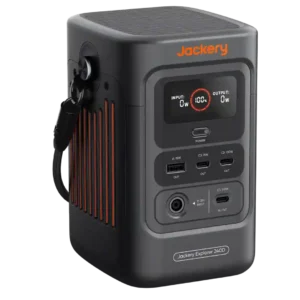
Jackery Explorer 240D
4.3
12-volt outlet
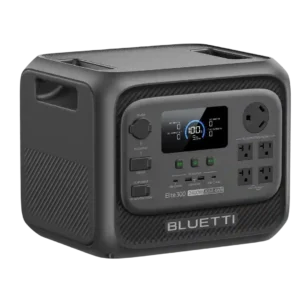
Bluetti Elite 300
5.0
The 12V connections are genuinely useful for fridges, pumps, inflators, and vehicle accessories, especially when paired with the higher-current output.
Jackery Explorer 240D
1.5
The 240D omits a car-style 12V output, which is a real drawback for portable fridges and other vehicle accessories. USB-only users may not miss it.
battery storage performance
Bluetti Elite 300
5.0
After sitting unplugged for three days, the unit lost only 1%, suggesting excellent charge retention while stored.
Jackery Explorer 240D
1.5
Storage behavior is inconsistent. One older unit reportedly failed after being left too long, while a direct 240D report describes unusually fast idle drain.
ventilation requirements
Bluetti Elite 300
1.5
The rear exhaust can be blocked because the case lacks protective stand-offs, creating a serious overheating risk if placed flush against a surface.
Jackery Explorer 240D
5.0
As a battery station, it produces no exhaust or carbon monoxide and can be used indoors without generator-style ventilation. Normal heat clearance is still sensible.
high-demand appliance support
Bluetti Elite 300
4.6
Kettles, toasters, microwaves, air fryers, heaters, tools, and even some welders ran successfully within the 2,400W limit. Industrial motors and simultaneous heavy loads can still trip it.
Jackery Explorer 240D
1.3
This is not an appliance-backup station. Refrigerators, kettles, pumps, CPAP machines with AC plugs, and similar loads are either impossible to connect or run for too little time.
remaining runtime estimate
Bluetti Elite 300
4.5
The display and app provide useful estimates of remaining runtime, helping users judge whether a load can stay connected.
Jackery Explorer 240D
1.5
The display's biggest information gap is the lack of a dependable time-remaining estimate. Users must infer runtime from wattage and capacity.
Bluetooth connectivity
Bluetti Elite 300
5.0
Local Bluetooth control connected without trouble in testing and provides dependable access when Wi-Fi is unavailable.
Jackery Explorer 240D
2.0
The 240D does not include Bluetooth, so there is no nearby app-based status checking or control.
output stability
Bluetti Elite 300
2.0
Typical loads were stable, but one long-duration maximum test caused both AC and USB-C output failures near the limits.
Jackery Explorer 240D
5.0
Hands-on tests found stable power delivery across multiple devices and high combined loads. Direct DC output is well suited to sensitive electronics.
solar panel bundle value
Bluetti Elite 300
5.0
A promotion bundling a 200W panel at no extra cost was viewed as a strong deal.
Jackery Explorer 240D
2.0
Solar greatly expands usefulness, but buying panels separately can add a substantial unexpected cost. Bundle pricing deserves close comparison before purchase.
Wi-Fi connectivity
Bluetti Elite 300
5.0
Wi-Fi setup worked smoothly and extends monitoring and control beyond local Bluetooth range.
Jackery Explorer 240D
2.0
There is no Wi-Fi connection or remote cloud monitoring. That keeps the unit simple and efficient, but removes smart-home-style visibility.
battery chemistry
Bluetti Elite 300
4.9
LiFePO4 cells earn strong approval for thermal stability, safety, and durability compared with older lithium-ion chemistries.
Jackery Explorer 240D
2.0
One source describes shorter-lived lithium-ion behavior associated with older Explorer 240 coverage, contrasting with the LiFePO4 chemistry reported across direct 240D sources.
AC charging speed
Bluetti Elite 300
4.5
Wall charging is fast for a 3kWh battery, usually finishing in roughly 1.5 to 2.75 hours depending on mode and test conditions. One test found it slower than expected, but still respectable for the capacity.
Jackery Explorer 240D
1.8
Wall-charging results vary sharply by model and adapter. Direct 240D coverage is fast with high-power or dual input, while older Explorer 240 tests took five to eight hours.
idle noise
Bluetti Elite 300
4.5
In UPS and background use, the station stays quiet enough to sit near desks, routers, and living spaces without becoming distracting.
Jackery Explorer 240D
2.0
Some users report the fan activating even when the unit is not under load. That behavior is unusual for a small DC-only station and can be distracting.
weight
Bluetti Elite 300
2.6
At roughly 58-60 pounds, the Elite 300 is heavy despite its compact dimensions. The weight is acceptable for the capacity but remains the most consistent portability complaint.
Jackery Explorer 240D
5.0
Sub-five-pound direct 240D measurements make weight a standout advantage. It is dramatically easier to carry than most conventional power stations.
load handling
Bluetti Elite 300
4.4
Most real-world loads ran smoothly, including appliances, computers, RV systems, and workshop tools. A minority of extreme sustained tests exposed shutdowns or limits near maximum output.
Jackery Explorer 240D
2.0
One stress test found thermal shutdown during sustained near-rated output. The unit is better suited to moderate electronics than continuous operation near its ceiling.
overload protection
Bluetti Elite 300
4.3
Protection circuits generally shut the unit down cleanly when pushed beyond its limits and were easy to reset afterward.
Jackery Explorer 240D
2.0
The BMS does shut the station down when combined demand exceeds safe limits, though one test triggered protection quickly near the rated ceiling.
materials quality
Bluetti Elite 300
2.5
The housing feels solid, but one review called the control buttons cheap-looking and criticized their loud click.
Jackery Explorer 240D
4.7
The exterior design and hardware are generally well liked, with sturdy cable mounts and a cleaner look than older orange-heavy Jackery styling.
app connectivity
Bluetti Elite 300
4.8
Pairing and connection were described as quick and trouble-free, making app control easy to establish.
Jackery Explorer 240D
2.8
App opinions are mixed. Some coverage mentions cycle counts and firmware access, while hands-on 240D tests report no app support and question whether a small nearby unit needs it.
MPPT controller performance
Bluetti Elite 300
3.0
The integrated MPPT controller measured about 81% efficiency in one test. That was better than some competitors but still left noticeable solar energy lost as heat.
Jackery Explorer 240D
5.0
The dedicated solar controller tracks changing panel voltage well and makes effective use of available sunlight. Tests and comparisons consistently favor the proper MPPT input over improvised USB-C solar charging.
maximum solar input
Bluetti Elite 300
3.1
The 1,200W headline input is generous, but the 60V/22A window can make that ceiling difficult to reach with common panels. Several testers wanted a higher voltage limit.
Jackery Explorer 240D
5.0
The dedicated solar input accepts about 100W and held that limit reliably in testing. That is well matched to portable panels in this size class.
USB-C ports
Bluetti Elite 300
2.5
The two USB-C ports are capable, but one tester wanted three USB-C ports and fewer legacy USB-A connections.
Jackery Explorer 240D
4.4
Three USB-C ports suit modern laptops, tablets, phones, and gaming devices very well. The layout is a major improvement over older Explorer 240 models that lacked USB-C.
standby power loss
Bluetti Elite 300
3.9
Standby results varied sharply by mode and test, from excellent charge retention to roughly three days with the inverter left on. Output settings matter greatly when idle.
Jackery Explorer 240D
2.0
One report describes roughly 1% charge loss every 1.5 hours while idle, which would be poor for emergency storage. Other storage results are better, so unit-to-unit consistency is uncertain.
solar cable compatibility
Bluetti Elite 300
5.0
Standard-style solar connectors were easy to join and worked immediately, avoiding proprietary-cable frustration.
Jackery Explorer 240D
3.3
The dedicated 8020 input is sturdy, but third-party panels may require adapters. Compatibility is broad once the correct connector and voltage range are matched.
DC output
Bluetti Elite 300
3.4
The high-current DC connections are useful, but results were not flawless. One sustained USB-C/DC test ended in an over-current shutdown, while other testers reported strong 12V performance.
Jackery Explorer 240D
5.0
The 240D's direct-DC architecture is a strong match for USB-native gear, delivering efficient power without inverter losses. Its usefulness drops sharply for anything requiring a wall outlet.
outlet selection
Bluetti Elite 300
4.6
The mix of AC, USB, 12V, high-current DC, and RV connections covers most home, van, and mobile-work needs without extra splitters.
Jackery Explorer 240D
3.0
The USB-focused port array is excellent for modern electronics, but the lack of AC and 12V outputs makes the overall selection highly use-case dependent.
outlet accessibility
Bluetti Elite 300
3.4
The TT-30 placement is thoughtful, but AC outlet spacing varies by region and can be tight enough for large bricks to block neighboring sockets.
Jackery Explorer 240D
5.0
Front-mounted ports remain easy to reach even when the station is tucked beside a bag or other gear.
home backup capability
Bluetti Elite 300
4.6
It is highly effective for selected essentials such as refrigerators, routers, lights, computers, and kitchen appliances during short or medium outages.
Jackery Explorer 240D
3.0
The 240D is useful during short outages for phones, laptops, lights, cameras, and connectivity gear. It is not a substitute for appliance or whole-home backup.
full-load noise
Bluetti Elite 300
3.5
Maximum charging or heavy output brings audible fan noise around 49-50dB. It remains tolerable, but it is not silent.
Jackery Explorer 240D
5.0
A multi-device test near a substantial load remained effectively silent, reinforcing the advantage of a DC-only station without an AC inverter.
hot-weather performance
Bluetti Elite 300
5.0
Two months of testing, including near-30°C conditions, showed consistent output; extra battery drain came from connected cooling equipment working harder.
Jackery Explorer 240D
3.5
Summer operation is generally supported, but one test measured slower charging around 95°F. High heat can trigger protective throttling.
self-discharge rate
Bluetti Elite 300
5.0
Charge retention is excellent: one unit lost only 1% after sitting unplugged for three days.
Jackery Explorer 240D
3.5
Storage results conflict: one test saw only 2% loss over three months, while another report described rapid idle drain. Checking a unit periodically is prudent.
USB-A ports
Bluetti Elite 300
2.5
The USB-A ports work for legacy devices, but one tester would trade one of them for an additional USB-C connection.
Jackery Explorer 240D
4.0
One legacy USB-A port is considered sufficient beside the three more useful USB-C ports. The balance favors modern devices without completely abandoning older cables.
solar panel compatibility
Bluetti Elite 300
3.6
Standard connectors and straightforward setup are positives, but the low voltage ceiling complicates series wiring and can force parallel arrays into the current limit.
Jackery Explorer 240D
5.0
The station works well with Jackery and many third-party panels when voltage and connectors match. The dedicated solar input is more robust than relying only on USB-C.
long-term reliability
Bluetti Elite 300
4.9
Extended use was generally consistent and trouble-free, with several testers describing the unit as dependable infrastructure rather than a gadget.
Jackery Explorer 240D
3.5
Brand reputation and LiFePO4 chemistry inspire confidence, but isolated early failures keep the long-term outlook from being unequivocal.
cooling performance
Bluetti Elite 300
3.7
Cooling is mostly effective, including successful heat-soak testing, but one maximum-output test made the fan work harder and more erratically than expected.
Jackery Explorer 240D
5.0
The station stayed cool during extended use in the available hands-on test, with only mild warmth under heavier loads.
runtime
Bluetti Elite 300
4.5
The large battery delivered long practical runtimes, from hours on cooking and computing loads to days on refrigerators and lighter essentials.
Jackery Explorer 240D
3.2
Runtime is strong for phones, laptops, cameras, lights, and Starlink Mini, but short for coolers and CPAP use. Real results depend heavily on device draw and conversion path.
lifting ease
Bluetti Elite 300
3.8
Short moves are manageable with the built-in handles, but stairs and repeated carrying become tiring. Several testers preferred a two-person lift.
Jackery Explorer 240D
5.0
The compact body and integrated handle make one-handed lifting easy. It is far less cumbersome than conventional power stations.
portability
Bluetti Elite 300
3.8
The small footprint travels well in vans and vehicles, but nearly 60 pounds makes it transportable rather than truly portable. It is best moved occasionally and then left in place.
Jackery Explorer 240D
5.0
The 240D is exceptionally easy to carry for a 256Wh device. It suits road trips, field work, camping, photography, and remote work without the bulk of a conventional power station.
AC outlet count
Bluetti Elite 300
2.2
Outlet count depends on region, and the two-socket European configuration drew repeated criticism. The four- or five-outlet versions are more flexible, but total inverter output still limits combined loads.
Jackery Explorer 240D
1.0
The defining limitation is the complete absence of an AC outlet on the 240D. Anything with a standard wall plug requires a different power station.
car charging speed
Bluetti Elite 300
3.3
Charging from a basic vehicle socket is painfully slow, often taking more than a day. Dedicated alternator hardware improves that dramatically to roughly three to six hours.
Jackery Explorer 240D
2.3
Vehicle charging works but is usually slower than high-power USB-C or dual input. Results range from acceptable top-ups to six- or eight-hour full charges in older-model coverage.
built-in light
Bluetti Elite 300
2.0
The lack of an integrated LED light is a recurring frustration, especially because the heavy unit often requires both hands during an outage.
Jackery Explorer 240D
1.0
There is no built-in lantern, a notable omission beside competitors such as the Anker C300 DC. Campers may need to carry a separate light.
size and footprint
Bluetti Elite 300
4.0
The refined footprint fits shelves, vans, and storage spaces more easily than older high-capacity Bluetti models.
Jackery Explorer 240D
5.0
The older Explorer 240's smaller footprint was already a strength, and the 240D pushes the concept further with an even narrower DC-only body.
charging cable quality
Bluetti Elite 300
5.0
A standard, replaceable AC cord is a welcome improvement over proprietary cables, making replacements inexpensive and easy to source.
Jackery Explorer 240D
4.2
The braided handle-cable feels durable, flexible, and capable of high-power charging. Its main compromise is its short length when a device must stay in use.
simultaneous device support
Bluetti Elite 300
4.3
Multiple computers, chargers, lights, and appliances can run together, but the shared 2,400W ceiling means users must manage combinations of high-draw equipment.
Jackery Explorer 240D
5.0
Four ports and a 200W shared budget handle several personal devices at once. Laptops, phones, cameras, tablets, and gaming hardware can share the station effectively.
battery capacity
Bluetti Elite 300
4.8
The 3,014Wh battery is the product's defining strength, delivering unusually deep reserves in a body closer to many 2kWh stations.
Jackery Explorer 240D
4.1
The 256Wh capacity is generous for phones, laptops, cameras, drones, and short outings, but modest for multi-day use. It works best as device backup rather than appliance backup.
usable battery capacity
Bluetti Elite 300
4.7
Measured usable output was excellent, commonly around 89-94% in favorable tests and unusually high for a station this size.
Jackery Explorer 240D
4.0
About 218Wh of usable energy is a realistic expectation after conversion losses, enough for a focused kit of USB devices.
power output
Bluetti Elite 300
4.4
The 2,400W inverter is strong enough for most household, RV, office, and workshop loads, though it trails some 3kWh rivals and cannot replace unlimited shore or whole-home power.
Jackery Explorer 240D
5.0
The 200W total DC output is unusually strong for the size. It supports demanding personal electronics but not AC appliances.
battery management system
Bluetti Elite 300
5.0
Advanced protection circuitry adds confidence around a large indoor battery, with safety and stability treated as major strengths.
Jackery Explorer 240D
4.4
Protection coverage is generally reassuring, including temperature, voltage, and battery-health safeguards. A minority of reports identify the BMS as a possible reliability weak point.
value for money
Bluetti Elite 300
3.9
Many considered the sale price compelling for 3kWh, fast charging, and RV connectivity. Others found cheaper rivals with larger batteries or expansion, making full-price value more debatable.
Jackery Explorer 240D
4.5
Value is strongest when discounted and used for USB-centric gear. Buyers needing AC output or a full accessory bundle may find a slightly larger station more economical.
battery cycle life
Bluetti Elite 300
5.0
The 6,000-cycle rating is exceptional for the category and translates to many years of frequent use before capacity falls to 80%.
Jackery Explorer 240D
4.5
Direct 240D coverage repeatedly praises the 6,000-cycle rating as exceptional for this size. Older Explorer 240 sources report only about 500 cycles, so model generation matters.
battery longevity
Bluetti Elite 300
4.8
Long cycle life makes the pack feel suitable for daily use rather than occasional emergencies, with estimates extending beyond 16 years at one cycle per day.
Jackery Explorer 240D
4.3
The LiFePO4-equipped 240D is expected to last many years, with claims around a decade. A few sources caution that electronics and the BMS may fail before the cells reach their theoretical lifespan.
handle comfort
Bluetti Elite 300
4.5
The recessed, sturdy handles give a secure grip and make short moves manageable, even though the unit remains too heavy for casual one-handed carrying.
Jackery Explorer 240D
5.0
The integrated strap-handle supports easy one-handed carrying and feels secure. Its dual role as a cable makes it more useful than a conventional fixed handle.
customer support
Bluetti Elite 300
3.0
Support experiences were split: one reviewer received quick, helpful answers, while another reported no response after flagging test failures.
Jackery Explorer 240D
2.5
Support experiences are inconsistent. Some owners describe quick, helpful replacements, while others report unanswered requests and prolonged warranty trouble.
accessory ecosystem
Bluetti Elite 300
4.5
The Charger 2 and compatible solar hardware give van and boat users practical ways to add alternator charging and evolve their setup over time.
Jackery Explorer 240D
4.0
Existing Jackery owners benefit from compatible cables and charging accessories. New buyers may need to add a high-power wall charger, car cable, or solar adapter.
eco mode
Bluetti Elite 300
4.5
ECO mode can shut outputs down after a load finishes, reducing unnecessary drain. It should be disabled for very low-power medical devices that could be mistaken for no load.
Jackery Explorer 240D
5.0
Low-load auto-shutdown and energy-saving behavior help prevent needless drain when connected devices stop drawing meaningful power.
impact resistance
Bluetti Elite 300
4.5
The casing handles knocks and scrapes well, adding confidence for repeated loading, vehicle travel, and rough job-site use.
Jackery Explorer 240D
5.0
The older Explorer 240 survived accidental drops onto dirt and concrete with only minor scuffs, suggesting a resilient housing.
rated output
Bluetti Elite 300
4.5
Several tests sustained the full rated load without shutdown, though one long-duration test exposed instability close to empty.
Jackery Explorer 240D
5.0
The 200W total rating is considered impressive for such a small station. It is ample for several personal electronics, but not high-wattage appliances.
warranty
Bluetti Elite 300
4.5
The five-year warranty is a strong match for the long-cycle battery and adds confidence for frequent use.
Jackery Explorer 240D
4.0
Warranty coverage ranges from two to five years depending on source, seller, and registration. The length is competitive, though support execution is not consistently praised.
water resistance
Bluetti Elite 300
1.5
An IP20 rating means there is no meaningful water protection, so outdoor users must keep the station dry and sheltered.
Jackery Explorer 240D
2.0
The available IP20 assessment offers no meaningful rain protection. Outdoor users should keep the station dry.
noise level
Bluetti Elite 300
4.2
Normal operation is usually quiet enough for apartments, RVs, tents, and recording work. Under heavy load or fast charging, some units became noticeably louder than competing stations.
Jackery Explorer 240D
3.8
The DC-only design is usually silent or nearly silent. A few reports mention fan or coil noise, including unexpected fan activity at light loads.
solar generator functionality
Bluetti Elite 300
4.6
Solar support turns the unit into a capable off-grid hub for vans, boats, campsites, and outdoor work rather than a battery that only drains down.
Jackery Explorer 240D
5.0
When paired with a suitable panel, the station can provide a practical continuous off-grid supply for small electronics. The compact solar setup is especially useful for camping and remote work.
USB-C power delivery
Bluetti Elite 300
4.6
The 100W and 140W USB-C outputs are well suited to laptops and modern devices, with enough combined power to charge two computers at high speed.
Jackery Explorer 240D
5.0
The 140W USB-C port is a standout strength, handling demanding laptops and gaming hardware at or near full charging speed. Every direct test of the high-power port was strongly positive.
durability
Bluetti Elite 300
4.6
The casing resists knocks and scrapes and feels suited to rough vehicle, campsite, and job-site use, though it is not fully ruggedized.
Jackery Explorer 240D
5.0
Older Explorer 240 travel testing found the unit tough enough for repeated motorcycle and camping use.
recharge speed
Bluetti Elite 300
4.8
Rapid recharging is a core strength, particularly for vanlife and travel where the station can be restored between daily uses.
Jackery Explorer 240D
4.4
With a suitable high-power charger or dual input, the 240D recharges very quickly and can reach 80% in about an hour. Slower adapters greatly extend that time.
storage convenience
Bluetti Elite 300
4.7
The compact cube fits closets, van compartments, shelves, and under-desk spaces better than many 3kWh alternatives.
Jackery Explorer 240D
5.0
The compact upright shape, built-in cable, and low weight make it easy to keep in a car, backpack, shelf, or camping bin.
compactness
Bluetti Elite 300
4.7
For a 3kWh station, the Elite 300 is exceptionally compact and often compared in size with 2kWh models. A few testers still found it chunky rather than truly small.
Jackery Explorer 240D
5.0
Compactness is the clearest consensus strength. The 240D fits backpacks, shelves, vehicle storage, and campsite setups far more easily than inverter-equipped stations.
energy efficiency
Bluetti Elite 300
4.7
Measured AC efficiency was consistently strong, often around 86-94%, with several testers placing it above average or among the best large stations they had measured.
Jackery Explorer 240D
5.0
Skipping the AC inverter improves efficiency for USB devices by avoiding DC-to-AC-to-DC conversion. This is a central advantage of the 240D's design.
display quality
Bluetti Elite 300
4.3
The screen presents useful power-flow, charge, and runtime information without much learning curve. Minor complaints include visual clutter when readings sit at zero.
Jackery Explorer 240D
4.0
The small display covers the essentials, including charge percentage and live wattage. It is functional rather than feature-rich.
dual-input charging
Bluetti Elite 300
4.8
Combining AC with solar, or alternator with solar, can shorten recharge time and makes continuous travel or off-grid use more practical.
Jackery Explorer 240D
5.0
Combining USB-C with the dedicated DC input is a major strength, pushing recharge power close to 200W and reaching about 80% in an hour.
charging efficiency
Bluetti Elite 300
5.0
Silent charging produced a strong measured 88.5% input efficiency, using less energy than the faster modes.
Jackery Explorer 240D
4.8
The DC-focused design wastes little energy, and measured USB efficiency is strong. Older Explorer 240 testing also produced unusually high capacity-to-output efficiency.
input and output monitoring
Bluetti Elite 300
4.8
Real-time input and output data makes appliance draw and solar production easy to understand from the app.
Jackery Explorer 240D
5.0
Live input and output wattage is genuinely useful for balancing solar input, device draw, and remaining energy.
ease of use
Bluetti Elite 300
4.8
Operation is straightforward: connect a device, select AC or DC output, and monitor the load. The simple layout and app reduce the learning curve for first-time users.
Jackery Explorer 240D
5.0
Simple buttons, straightforward ports, and minimal setup make the station approachable for first-time users. The built-in cable further reduces daily friction.
display readability
Bluetti Elite 300
3.9
Most testers found the screen clear, including outdoors, but a few reported washout or reduced readability in bright sunlight.
Jackery Explorer 240D
3.7
The screen is generally easy to read head-on and in daylight, but angle washout, darkness, and cold-weather lag can reduce usability.
ease of setup
Bluetti Elite 300
4.8
The all-in-one design avoids complex inverter and battery wiring. Most setups were described as plug-and-play, with app pairing and solar connections taking only minutes.
Jackery Explorer 240D
5.0
Setup is minimal: unbox the station, attach the cable-handle, and connect a charger or device. The straightforward start-up process suits first-time users.
control panel layout
Bluetti Elite 300
4.9
Controls and ports are generally clean, logical, and easy to reach, with clear labeling that works well in vans, workshops, and low-light settings.
Jackery Explorer 240D
5.0
Front-facing, clearly separated ports make connections easy to understand and reduce cable clutter. Dedicated output-only and bidirectional USB-C roles are particularly useful.
build quality
Bluetti Elite 300
4.6
The reinforced housing, protected edges, sturdy handles, and solid feel inspire confidence for repeated transport between vans, campsites, workshops, and garages.
Jackery Explorer 240D
4.6
The chassis, handle mounts, and braided cable generally feel sturdy and practical. Hands-on tests describe secure connections and typical Jackery solidity.
solar charging speed
Bluetti Elite 300
4.4
With sufficient panels and good sun, solar charging is practical and can restore the battery in roughly three to four hours. Smaller arrays still meaningfully extend outdoor runtime.
Jackery Explorer 240D
4.4
A good 100W panel can refill the 240D in roughly three to four hours under strong sun. Cloud cover and older lower-input models stretch that substantially.
heat management
Bluetti Elite 300
5.0
Stress testing earned exceptional praise for thermal control, suggesting the compact enclosure can manage sustained high power when ventilation is clear.
Jackery Explorer 240D
5.0
A demanding multi-device test found no overheating, supporting confidence in the thermal design under ordinary use.
included accessories
Bluetti Elite 300
2.0
The box is sparse, typically including only the mains cable. Solar and vehicle charging leads may require separate purchases.
Jackery Explorer 240D
2.0
The package is sparse: typically the station, integrated USB-C cable, and documentation. The missing wall adapter, car lead, or solar adapter can add meaningful cost.
LiFePO4 battery
Bluetti Elite 300
5.0
The LiFePO4 pack is strongly favored for safety, stability, and long service life under frequent use.
Jackery Explorer 240D
5.0
The 240D's LiFePO4 cells are widely praised for safety and long service life. This chemistry is one of its strongest upgrades over older Explorer 240 versions.
pass-through charging
Bluetti Elite 300
4.5
Pass-through operation worked as claimed, allowing devices to remain powered while the battery recharged.
Jackery Explorer 240D
4.5
Pass-through operation works well and can keep devices running while the station recharges. Heavy simultaneous input and output may add heat or reduce available power.
power quality
Bluetti Elite 300
5.0
Pass-through and backup tests showed clean, stable power without voltage problems for sensitive office and production equipment.
Jackery Explorer 240D
5.0
Older Explorer 240 coverage praises pure sine wave AC for sensitive electronics; the current 240D instead relies on stable direct-DC output.
pure sine wave output
Bluetti Elite 300
5.0
Testing and specifications support clean sine-wave power suitable for sensitive electronics, computers, and production equipment.
Jackery Explorer 240D
5.0
Older Explorer 240 coverage praises pure sine wave AC for sensitive electronics. The 240D itself removes the inverter and instead supplies stable DC power.
30-amp output
Bluetti Elite 300
4.6
The high-current 12V output is repeatedly praised for RV fridges, pumps, diesel heaters, compressors, and other gear that can overwhelm a standard 10A socket.
Jackery Explorer 240DNo score yet
air filter access
Bluetti Elite 300
4.8
The removable fan filter and serviceable rear cover make dust cleanup unusually easy, a valuable detail for campsites, garages, and job sites.
Jackery Explorer 240DNo score yet
air travel suitability
Bluetti Elite 300No score yet
Jackery Explorer 240D
1.0
At 256Wh, the battery is too large for normal commercial-airline carry-on rules. It is travel-friendly by car or on foot, not by plane.
app quality
Bluetti Elite 300
4.5
The app is generally considered feature-rich, clear, and easy to use for monitoring, scheduling, UPS settings, and output control. One comparison found it slower and laggier than EcoFlow's app.
Jackery Explorer 240DNo score yet
automatic start
Bluetti Elite 300
4.8
Scheduling and weather-aware routines can wake or cycle outputs automatically, adding useful hands-off control for backup and remote setups.
Jackery Explorer 240DNo score yet
battery expandability
Bluetti Elite 300
1.9
The fixed 3kWh capacity is the most repeated design limitation. Buyers who expect to add batteries later will need a different platform.
Jackery Explorer 240DNo score yet
battery percentage accuracy
Bluetti Elite 300No score yet
Jackery Explorer 240D
2.0
Percentage reporting is a concern in a few sources, ranging from coarse increments to sudden 10% jumps. Buyers should not assume laboratory-level precision.
battery reliability
Bluetti Elite 300No score yet
Jackery Explorer 240D
2.0
Most direct coverage is optimistic, but owner reports include early failures and charging problems. Reliability confidence is therefore weaker than the cell-life claims alone suggest.
cable storage
Bluetti Elite 300No score yet
Jackery Explorer 240D
5.0
The detachable 140W USB-C cable doubling as the carry handle is the most consistently praised design feature. It removes one loose cable from the packing list and is hard to forget.
cold-weather performance
Bluetti Elite 300No score yet
Jackery Explorer 240D
3.5
Cold-weather findings are mixed. Some sources expect dependable winter use, while one hands-on test found the LCD sluggish at 5°F.
energy usage tracking
Bluetti Elite 300
5.0
Detailed logging makes it easier to understand hourly consumption and compare solar or vehicle charging against actual loads.
Jackery Explorer 240DNo score yet
EPS switchover speed
Bluetti Elite 300
5.0
Transfer to battery power is exceptionally quick, with measured or reported switching around 9-20ms. Routers, computers, printers, and networking gear generally stayed online without rebooting.
Jackery Explorer 240DNo score yet
firmware updates
Bluetti Elite 300No score yet
Jackery Explorer 240D
4.0
One source reports that firmware updates can improve charging behavior, though other hands-on coverage says the 240D lacks app access for installing them.
housing durability
Bluetti Elite 300
4.5
The reinforced molded housing feels rugged, resists flex, and appears ready for repeated transport and outdoor use.
Jackery Explorer 240DNo score yet
instruction quality
Bluetti Elite 300No score yet
Jackery Explorer 240D
3.0
Instruction quality is uneven. One unboxing praised the concise picture-based guide, while another source criticized grammar and misleading technical details.
inverter quality
Bluetti Elite 300
5.0
Testing points to a well-built inverter with high usable capacity, strong efficiency, and dependable output across normal loads.
Jackery Explorer 240DNo score yet
operating cost
Bluetti Elite 300
5.0
Long battery life produces very low estimated lifetime storage costs, strengthening the case for regular rather than emergency-only use.
Jackery Explorer 240DNo score yet
operating temperature range
Bluetti Elite 300No score yet
Jackery Explorer 240D
4.3
The stated operating range is broad enough for many outdoor situations, and several sources praise all-season usefulness. Performance still degrades at temperature extremes.
over-temperature protection
Bluetti Elite 300No score yet
Jackery Explorer 240D
3.0
Thermal protection successfully shut the unit down during a prolonged heavy load, though the interruption occurred below the nominal continuous rating.
over-voltage protection
Bluetti Elite 300No score yet
Jackery Explorer 240D
5.0
Electrical protection is presented as reassuring for connected devices, especially during ordinary indoor and travel use.
peak output
Bluetti Elite 300
3.3
Power Lifting can help with resistive appliances, but it does not turn the station into a true 4,800W continuous source. One test still capped around the normal 2,400W output.
Jackery Explorer 240DNo score yet
quiet mode
Bluetti Elite 300
4.5
Silent charging meaningfully reduces fan noise by lowering input power, useful when the station is near sleeping or working areas.
Jackery Explorer 240DNo score yet
remote control
Bluetti Elite 300
4.8
App controls make it easy to switch outputs and adjust settings from bed, another room, or a remote installation.
Jackery Explorer 240DNo score yet
remote monitoring
Bluetti Elite 300
4.8
Detailed remote readouts show output, state of charge, and estimated runtime without requiring access to the front panel.
Jackery Explorer 240DNo score yet
repairability
Bluetti Elite 300No score yet
Jackery Explorer 240D
1.0
Repair economics look poor when a replacement battery can cost more than the complete unit. Long-term ownership depends heavily on avoiding an early hardware failure.
replacement battery cost
Bluetti Elite 300No score yet
Jackery Explorer 240D
1.0
One owner reported replacement batteries costing more than twice the original device price, making repair economically unattractive.
runtime at full load
Bluetti Elite 300
3.0
Results at the limit were mixed: some tests sustained near-rated output, while another shut down near empty and reviewers discouraged all-day maximum loading.
Jackery Explorer 240DNo score yet
runtime at half load
Bluetti Elite 300
4.5
A roughly 1.36kW heater ran for about one hour and 47 minutes, a solid result for a sustained mid-to-high load.
Jackery Explorer 240DNo score yet
RV outlet
Bluetti Elite 300
4.5
Direct RV hookup is a major convenience, avoiding adapters or custom wiring for common camper and van setups.
Jackery Explorer 240DNo score yet
short-circuit protection
Bluetti Elite 300No score yet
Jackery Explorer 240D
5.0
Short-circuit protection is part of a reassuring safety suite intended to protect both the battery and connected devices.
startup performance
Bluetti Elite 300
5.0
Strong surge behavior helps start refrigerators, tools, and other motor-driven appliances with brief startup spikes.
Jackery Explorer 240DNo score yet
startup reliability
Bluetti Elite 300
5.0
Workshop testing showed demanding motor equipment starting and running cleanly when it stayed within the station's limits.
Jackery Explorer 240DNo score yet
storage preparation
Bluetti Elite 300No score yet
Jackery Explorer 240D
3.0
Storage care matters. Moderate charge levels can minimize degradation, while older-model owner reports warn against leaving the unit unattended for many months.
surge capacity
Bluetti Elite 300
5.0
Surge performance was consistently strong, starting compressors, tools, and appliances that briefly demand far more than their running wattage.
Jackery Explorer 240DNo score yet
transfer switch compatibility
Bluetti Elite 300
5.0
The 30-amp connection can feed an RV or suitable transfer-switch setup without awkward adapter arrangements.
Jackery Explorer 240DNo score yet
TT-30 outlet
Bluetti Elite 300
4.9
The built-in TT-30 is one of the most consistently praised additions. Its placement makes direct RV connection easy without blocking nearby AC outlets on the U.S. model.
Jackery Explorer 240DNo score yet
UPS functionality
Bluetti Elite 300
4.8
UPS performance is a standout strength: transitions were consistently fast and reliable across computers, routers, NAS devices, printers, and home-office equipment.
Jackery Explorer 240DNo score yet
voltage regulation
Bluetti Elite 300
5.0
A measured 120V output remained clean under a 1,500W load, supporting confidence in voltage stability.
Jackery Explorer 240DNo score yet
weather resistance
Bluetti Elite 300No score yet
Jackery Explorer 240D
2.0
The enclosure is not meaningfully rainproof. Despite outdoor positioning, it should be protected from moisture and wet ground.
wheel quality
Bluetti Elite 300
2.3
There are no wheels or trolley handle, so a heavier wheeled competitor can actually be easier to move across level ground.
Jackery Explorer 240DNo score yet
whole-home integration
Bluetti Elite 300
2.6
The Elite 300 is best for selected circuits and appliances, not days of whole-home power. Buyers needing scalable household backup should look at a modular system.
Jackery Explorer 240DNo score yet