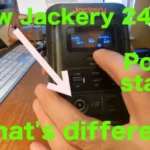
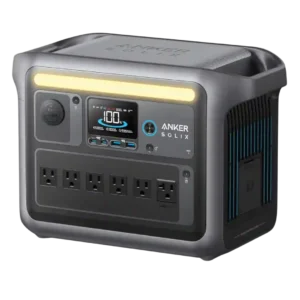
Choose the Explorer 240D for exceptionally portable, fast USB-C power for laptops, phones, cameras, and short trips. Skip it if you need an AC outlet, overnight appliance runtime, airline carry-on compatibility, or a complete charger bundle.
Best for
Best for photographers, campers, digital nomads, road-trippers, gamers, and emergency-kit users whose devices charge by USB-C or USB-A. It is especially compelling when pack weight and fast laptop charging matter more than appliance support.
Not for
Not for anyone needing wall-plug appliances, overnight CPAP or cooler runtime, whole-home backup, airline carry-on use, or built-in smart monitoring. Buyers without a high-wattage USB-C charger should also budget for accessories.
Verdict
The Explorer 240D is best understood as an oversized, exceptionally capable USB-C power bank rather than a traditional power station. Its 4.85-pound body, 256Wh LiFePO4 battery, 140W USB-C port, four-device support, and clever cable-handle make it unusually convenient for laptops, phones, cameras, drones, gaming handhelds, and short off-grid work. Fast dual-input and useful solar charging strengthen the package. The tradeoff is fundamental: there is no AC outlet or 12V accessory socket, so wall-plug appliances, many CPAP setups, coolers, and broader emergency loads are outside its role. Sparse included accessories and mixed reports about battery reporting, idle drain, support, and electronics reliability also temper the long-life claims. For USB-native travel and field use, however, the size-to-capacity balance is excellent.
Compactness is the clearest consensus strength. The 240D fits backpacks, shelves, vehicle storage, and campsite setups far more easily than inverter-equipped stations.
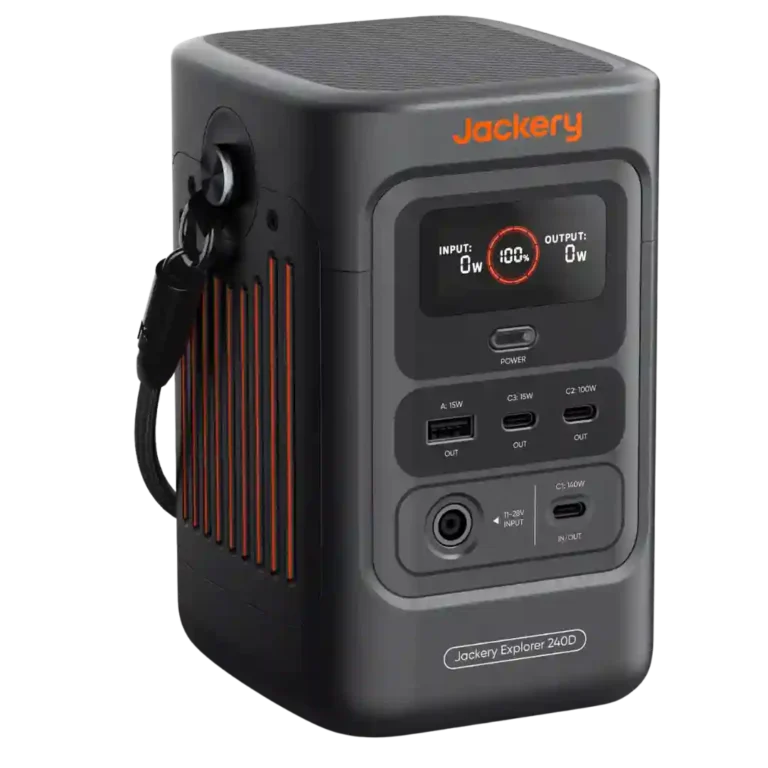
The detachable 140W USB-C cable doubling as the carry handle is the most consistently praised design feature. It removes one loose cable from the packing list and is hard to forget.
USB-C power delivery: 5.0, 13 reviews, strong consensus
The 140W USB-C port is a standout strength, handling demanding laptops and gaming hardware at or near full charging speed. Every direct test of the high-power port was strongly positive.
The 240D is exceptionally easy to carry for a 256Wh device. It suits road trips, field work, camping, photography, and remote work without the bulk of a conventional power station.
Four ports and a 200W shared budget handle several personal devices at once. Laptops, phones, cameras, tablets, and gaming hardware can share the station effectively.
The integrated strap-handle supports easy one-handed carrying and feels secure. Its dual role as a cable makes it more useful than a conventional fixed handle.
solar panel compatibility: 5.0, 5 reviews, strong consensus
The station works well with Jackery and many third-party panels when voltage and connectors match. The dedicated solar input is more robust than relying only on USB-C.
value for money: 4.5, 20 reviews, moderate consensus
Value is strongest when discounted and used for USB-centric gear. Buyers needing AC output or a full accessory bundle may find a slightly larger station more economical.
control panel layout: 5.0, 4 reviews, strong consensus
Front-facing, clearly separated ports make connections easy to understand and reduce cable clutter. Dedicated output-only and bidirectional USB-C roles are particularly useful.
The 240D's LiFePO4 cells are widely praised for safety and long service life. This chemistry is one of its strongest upgrades over older Explorer 240 versions.
The dedicated solar controller tracks changing panel voltage well and makes effective use of available sunlight. Tests and comparisons consistently favor the proper MPPT input over improvised USB-C solar charging.
Direct 240D coverage repeatedly praises the 6,000-cycle rating as exceptional for this size. Older Explorer 240 sources report only about 500 cycles, so model generation matters.
Simple buttons, straightforward ports, and minimal setup make the station approachable for first-time users. The built-in cable further reduces daily friction.
The DC-focused design wastes little energy, and measured USB efficiency is strong. Older Explorer 240 testing also produced unusually high capacity-to-output efficiency.
With a suitable high-power charger or dual input, the 240D recharges very quickly and can reach 80% in about an hour. Slower adapters greatly extend that time.
solar charging speed: 4.4, 10 reviews, low consensus
A good 100W panel can refill the 240D in roughly three to four hours under strong sun. Cloud cover and older lower-input models stretch that substantially.
The chassis, handle mounts, and braided cable generally feel sturdy and practical. Hands-on tests describe secure connections and typical Jackery solidity.
Pass-through operation works well and can keep devices running while the station recharges. Heavy simultaneous input and output may add heat or reduce available power.
Three USB-C ports suit modern laptops, tablets, phones, and gaming devices very well. The layout is a major improvement over older Explorer 240 models that lacked USB-C.
The LiFePO4-equipped 240D is expected to last many years, with claims around a decade. A few sources caution that electronics and the BMS may fail before the cells reach their theoretical lifespan.
Protection coverage is generally reassuring, including temperature, voltage, and battery-health safeguards. A minority of reports identify the BMS as a possible reliability weak point.
The 256Wh capacity is generous for phones, laptops, cameras, drones, and short outings, but modest for multi-day use. It works best as device backup rather than appliance backup.
The braided handle-cable feels durable, flexible, and capable of high-power charging. Its main compromise is its short length when a device must stay in use.
operating temperature range: 4.3, 3 reviews, low consensus
The stated operating range is broad enough for many outdoor situations, and several sources praise all-season usefulness. Performance still degrades at temperature extremes.
The 240D's direct-DC architecture is a strong match for USB-native gear, delivering efficient power without inverter losses. Its usefulness drops sharply for anything requiring a wall outlet.
Setup is minimal: unbox the station, attach the cable-handle, and connect a charger or device. The straightforward start-up process suits first-time users.
Older Explorer 240 coverage praises pure sine wave AC for sensitive electronics. The 240D itself removes the inverter and instead supplies stable DC power.
The 200W total rating is considered impressive for such a small station. It is ample for several personal electronics, but not high-wattage appliances.
When paired with a suitable panel, the station can provide a practical continuous off-grid supply for small electronics. The compact solar setup is especially useful for camping and remote work.
As a battery station, it produces no exhaust or carbon monoxide and can be used indoors without generator-style ventilation. Normal heat clearance is still sensible.
Warranty coverage ranges from two to five years depending on source, seller, and registration. The length is competitive, though support execution is not consistently praised.
Existing Jackery owners benefit from compatible cables and charging accessories. New buyers may need to add a high-power wall charger, car cable, or solar adapter.
One source reports that firmware updates can improve charging behavior, though other hands-on coverage says the 240D lacks app access for installing them.
One legacy USB-A port is considered sufficient beside the three more useful USB-C ports. The balance favors modern devices without completely abandoning older cables.
Storage results conflict: one test saw only 2% loss over three months, while another report described rapid idle drain. Checking a unit periodically is prudent.
This is not an appliance-backup station. Refrigerators, kettles, pumps, CPAP machines with AC plugs, and similar loads are either impossible to connect or run for too little time.
AC charging speed: 1.8, 4 reviews, moderate consensus
Wall-charging results vary sharply by model and adapter. Direct 240D coverage is fast with high-power or dual input, while older Explorer 240 tests took five to eight hours.
included accessories: 2.0, 4 reviews, strong consensus
The package is sparse: typically the station, integrated USB-C cable, and documentation. The missing wall adapter, car lead, or solar adapter can add meaningful cost.
Vehicle charging works but is usually slower than high-power USB-C or dual input. Results range from acceptable top-ups to six- or eight-hour full charges in older-model coverage.
Storage behavior is inconsistent. One older unit reportedly failed after being left too long, while a direct 240D report describes unusually fast idle drain.
Percentage reporting is a concern in a few sources, ranging from coarse increments to sudden 10% jumps. Buyers should not assume laboratory-level precision.
Most direct coverage is optimistic, but owner reports include early failures and charging problems. Reliability confidence is therefore weaker than the cell-life claims alone suggest.
Repair economics look poor when a replacement battery can cost more than the complete unit. Long-term ownership depends heavily on avoiding an early hardware failure.
App opinions are mixed. Some coverage mentions cycle counts and firmware access, while hands-on 240D tests report no app support and question whether a small nearby unit needs it.
Support experiences are inconsistent. Some owners describe quick, helpful replacements, while others report unanswered requests and prolonged warranty trouble.
One source describes shorter-lived lithium-ion behavior associated with older Explorer 240 coverage, contrasting with the LiFePO4 chemistry reported across direct 240D sources.
Some users report the fan activating even when the unit is not under load. That behavior is unusual for a small DC-only station and can be distracting.
One stress test found thermal shutdown during sustained near-rated output. The unit is better suited to moderate electronics than continuous operation near its ceiling.
Solar greatly expands usefulness, but buying panels separately can add a substantial unexpected cost. Bundle pricing deserves close comparison before purchase.
One report describes roughly 1% charge loss every 1.5 hours while idle, which would be poor for emergency storage. Other storage results are better, so unit-to-unit consistency is uncertain.
Runtime is strong for phones, laptops, cameras, lights, and Starlink Mini, but short for coolers and CPAP use. Real results depend heavily on device draw and conversion path.
Instruction quality is uneven. One unboxing praised the concise picture-based guide, while another source criticized grammar and misleading technical details.
Storage care matters. Moderate charge levels can minimize degradation, while older-model owner reports warn against leaving the unit unattended for many months.
solar cable compatibility: 3.3, 3 reviews, low consensus
The dedicated 8020 input is sturdy, but third-party panels may require adapters. Compatibility is broad once the correct connector and voltage range are matched.
The 240D is useful during short outages for phones, laptops, lights, cameras, and connectivity gear. It is not a substitute for appliance or whole-home backup.
The USB-focused port array is excellent for modern electronics, but the lack of AC and 12V outputs makes the overall selection highly use-case dependent.
Thermal protection successfully shut the unit down during a prolonged heavy load, though the interruption occurred below the nominal continuous rating.
Compared With Category Average
Compared with other Generators, this product is above average in weight, full-load noise, maximum solar input, near average in compactness, USB-C power delivery, below average in remaining runtime estimate, high-demand appliance support, Wi-Fi connectivity.
Summary
72 compared features
Above average0.4+ pts higher
24(33%)
Same as averagewithin 0.3 pts
20(28%)
Below average0.4+ pts lower
28(39%)
Largest category differences
Attribute
This product
Category average
Difference
remaining runtime estimate
1.5
4.6
-3.1
high-demand appliance support
1.3
4.2
-2.9
Wi-Fi connectivity
2.0
5.0
-3.0
AC charging speed
1.8
4.7
-2.9
battery chemistry
2.0
4.9
-2.9
idle noise
2.0
4.8
-2.8
AC outlet count
1.0
3.7
-2.7
load handling
2.0
4.7
-2.7
Consider This Instead
If you want better 12-volt outlet
Choose Bluetti Elite 30 V2. It scores 5.0 vs 1.5 for 12-volt outlet, with a 4.4 overall score.
Products reviewers directly compared with this model, grouped into quick takeaways.
Anker SOLIX C300
Better: capacity and total outputThe C300 offers more capacity and higher output, while the 240D emphasizes lower weight and faster charging.
Alternative: camping featuresThe Anker is a similarly compact alternative with extra DC power and a built-in lantern.
Better: cooler runtimeThe Anker lasts longer on the same cooler load than the 240D.
Anker C300 DC
Better: features and portsThe C300 DC offers stronger overall specifications at the cost of extra weight.
Anker SOLIX C200
Worse: capacity and outputThe 240D offers more capacity while matching the C200's 200W output ceiling.
FAQ
Does the Explorer 240D have an AC outlet?
No. It is a DC-only station with USB-C and USB-A outputs, so standard wall-plug devices cannot connect.
How many devices can it charge at once?
It supports up to four devices across three USB-C ports and one USB-A port, with 200W total output and up to 140W from one USB-C port.
How fast does it recharge?
With suitable high-power dual input, it can reach about 80% in one hour. Standard lower-wattage USB-C chargers take substantially longer.
Can it recharge from solar panels?
Yes. The dedicated input accepts about 100W, and strong sunlight can produce a full charge in roughly three to four hours. Third-party panels may need an adapter.
How long should the battery last?
Direct 240D sources cite LiFePO4 cells rated around 6,000 cycles and roughly a decade of use. Some reports caution that the BMS or other electronics may fail sooner.
Can it run a fridge or CPAP overnight?
Generally no. It lacks an AC outlet and its 256Wh capacity is too limited for dependable overnight appliance or medical-device use.
Can it go in airline carry-on luggage?
No. At 256Wh, it exceeds the battery capacity generally allowed for passenger carry-on use.
Sample Expert Reviews We Analyzed
These are a few of the reviews included in our analysis.
Best for quiet, portable UPS backup, fast laptop charging, camping, and short outages. Skip it for whole-home power, heavy appliances, freezing-weather charging, or anyone unwilling to manage standby drain and...
Best for compact 3kWh backup, RV hookups, fast charging, and strong appliance runtime. Skip it if you need easy one-person carrying, expansion batteries, broad whole-home backup, or simple high-voltage solar...
Best for quiet 3,000W power, rapid wall charging, dependable UPS backup, and DJI drone integration. Skip it if you need easy one-person carrying, built-in 12V or solar connections, or freedom...