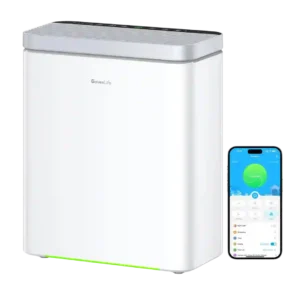
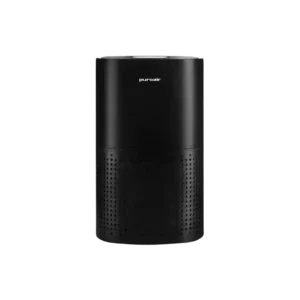
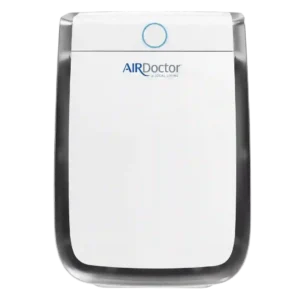
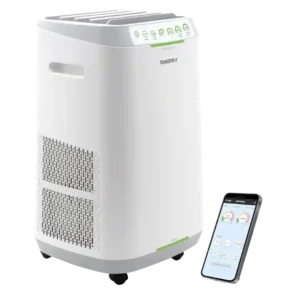
- Compared: budget air purifier market competition The Levoit Core 300S was named as a strong competitor in the same segment.
- Better: particle removal in 194 sq. ft. room The Levoit Core 300S slightly outperformed the Airmega 100 in the same room test.
- Worse: nightlight and mood lighting The Airmega 100’s lighting was contrasted with the core 300s, which the reviewer said lacks nightlight or mood lighting.
Coway Airmega 100 Review
Bottom Line
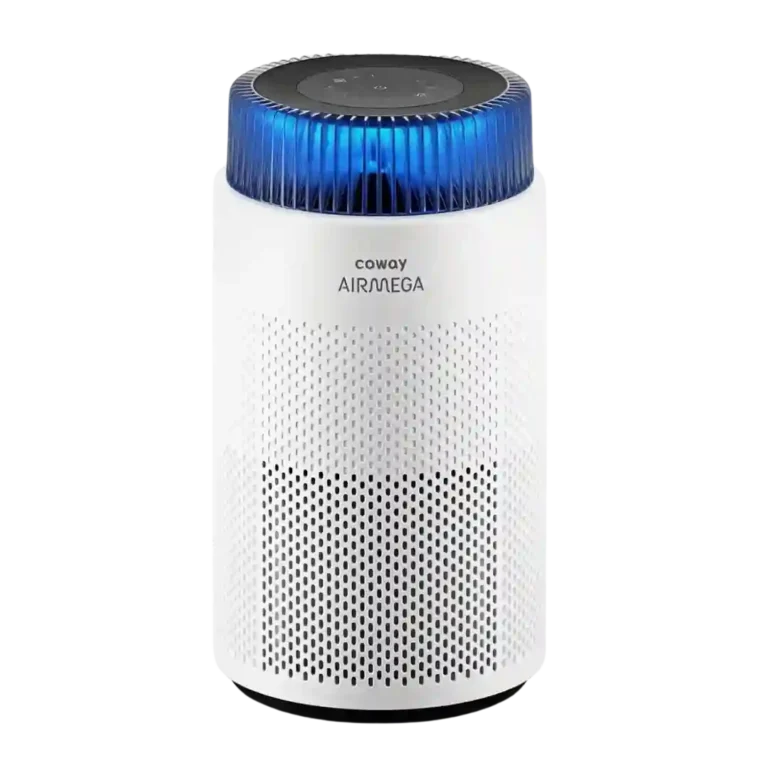
Choose the Coway Airmega 100 for small bedrooms or offices where quiet particle cleaning, compact design, and low running costs matter. Skip it for strong odors, large rooms, app control, or fast cleaning at very quiet speeds.
Best for small bedrooms, dorm rooms, offices, or compact apartments where quiet particle cleaning, low running costs, and a simple auto mode matter most.
Not for large living rooms, heavy cooking odors, strong smoke, app-based control, voice platforms, or users who need fast cleaning at very quiet fan speeds.
Across reviews, the Coway Airmega 100 comes across as a strong small-room air purifier with unusually good particle-removal results, quiet operation in normal bedroom use, and low energy and filter costs. Reviewers also liked its compact cylindrical design, visible AQI/night-light treatment, and useful auto mode. The tradeoff is that its strengths are mostly particle-focused: odor and heavier smoke control are limited by the carbon-coated fabric, not pellet carbon, and HouseFresh found quiet-speed cleaning weak because there are too few fan steps. It also lacks app connectivity and broader smart features. Overall, it is a polished, affordable-to-run compact purifier with clear limits around odor, connectivity, and larger-room use.
Compared in Reviews
Products reviewers directly compared with this model, grouped into quick takeaways.
- Compared: budget air purifier market competition The Blue Pure 511i Max was named as a strong competitor in the same segment.
- Compared: small-room purifier benchmark The reviewer framed the Levoit Core 300 as the benchmark for comparison against the Airmega 100.
Feature Scorecards
Summary
40 reviewed features- Very positive 4.5-5.0 25% 10 features
- Positive 3.5-4.4 53% 21 features
- Neutral 2.5-3.4 20% 8 features
- Negative 1.5-2.4 3% 1 feature
- Very negative below 1.5 0% 0 features
Pros
-
Ozone-free operation was strongly supported by safety-oriented comments about no ozone production and zero ozone emissions.
-
The True HEPA filter was credited as a key reason for excellent particle-removal performance.
-
Power consumption was consistently favorable, with reviewers emphasizing very low monthly or annual operating costs.
-
HEPA filtration was praised as the critical part of the filtration system in AirPurifierFirst’s review.
-
Energy efficiency was a consistent strength, with reviews citing impressive performance per watt, low energy use, and lower electricity costs.
-
Across six reviews, the Airmega 100 was judged a strong small-room performer, with test results described as outstanding, effective, best-used, or high-ranking.
-
Sensor accuracy was praised by GearBrain as more precise than most air purifiers in the market.
-
Child lock was scored positively for convenience and household safety.
-
PM2.5 detection was praised for specific sensitivity that helped make the sensor more precise.
-
Portability was positive thanks to the lightweight body and side-table-friendly size.
-
Indicator lights were a strength, with praise for the night light, color-coding, and design-enhancing light ring.
-
Particle removal evidence was consistently positive, including an excellent particle test, 93% improvement, and competitive measured results.
-
The overall filter-stage system earned praise from AirPurifierFirst, which was positively surprised by filter efficiency and performance.
-
Size and footprint were generally positive for compact placement, though one review noted the unit is taller than direct competitors.
-
Allergen reduction evidence was positive in GearBrain’s review, tied to pollen/allergen cleaning and more comfortable rest.
-
Pollen removal was supported by GearBrain’s allergy-season assessment that it purifies air of pollen and allergens.
-
Noise level was mostly praised as quiet and bedroom-friendly, but HouseFresh reported whistling/grinding at low speed and louder high-speed behavior.
-
Auto mode was generally well received, with reviews praising immediate airflow adjustment, a decent sensor-driven mode, and time/energy savings.
-
Value for money was strong overall due to price-to-value and low running costs, with the main caveat being a higher upfront price in one review.
-
Room coverage was strong for small rooms and sometimes slightly larger spaces, but Vice warned it is not suited to living rooms.
-
Dust removal was supported by GearBrain’s outcome-based note that it reduces dust accumulation and improves room cleanliness.
-
Design and appearance were generally praised as stylish, compact, cool, or impressive, with one review finding it conventional.
-
Filter replacement cost was mostly positive because filters and running costs were considered low, though one review called the $39 cost a bit higher.
-
Air changes per hour received limited positive support from one review calling the 4.8 ACH level an industry standard.
-
Pet-related filtration was supported by GearBrain’s recommendation for pet households seeking efficient air purification.
-
Scheduling options had limited but positive support because one review found the classic timer useful.
-
Sleep mode was divided: several reviews found it quiet enough for sleep, while HouseFresh criticized slow air cleaning in sleep mode.
-
Maintenance ease was mixed: setup and filter replacement were simple, but HouseFresh found regular vacuuming awkward.
-
Real-time air quality monitoring was mixed, with praise for feedback and color-coded readings but concern that visibility can require being near the unit.
-
Smoke removal was mixed-positive: it handled light smoke or smoke particles, but one review framed carbon performance as only okay.
-
Display readability was mixed: one reviewer said the unit must be viewed nearby, while another found the LED readable from across the room.
Cons
-
Smart features were mixed: reviewers liked useful advanced features and auto mode, but criticized the lack of broader smart connectivity.
-
Filter life was mixed: one review liked the year-long replacement interval, while others expected earlier replacement or carbon saturation.
-
Odor reduction was mixed: reviewers noted help with kitchen or light odors, but clear limitations with strong or heavier odors.
-
Fan speed options were mixed: one review liked the four speeds, while HouseFresh said too few speed steps hurt quiet-speed performance.
-
Build quality was only middling, with AirPurifierFirst describing the plastic and build quality as okay.
-
App connectivity was a repeated weakness, with reviewers wanting app support or finding no-app monitoring limiting.
-
Activated carbon performance was a weakness, with reviewers criticizing carbon-coated fabric versus pellet carbon and questioning long-term saturation.
-
The pre-filter design drew a maintenance-related criticism because HouseFresh found regular vacuuming awkward.
-
Handle design was a weakness because the lack of carrying handles made room-to-room movement harder.
Compared With Category Average
Compared with other Air Purifiers, this product is above average in true HEPA filter, child lock, PM2.5 detection, below average in handle design, pre-filter quality, build quality.
Summary
8 compared features- Above average 0.4+ pts higher 38% 3 features
- Same as average within 0.3 pts 0% 0 features
- Below average 0.4+ pts lower 63% 5 features
| Attribute | This product | Category average | Difference |
|---|---|---|---|
| handle design | 2.2 | 3.5 | -1.3 |
| pre-filter quality | 2.5 | 3.7 | -1.2 |
| build quality | 3.0 | 4.2 | -1.2 |
| true HEPA filter | 4.8 | 3.6 | +1.2 |
| activated carbon filter | 2.5 | 3.5 | -1.0 |
| fan speed options | 3.1 | 4.0 | -0.9 |
| child lock | 4.5 | 3.6 | +0.9 |
| PM2.5 detection | 4.5 | 3.7 | +0.8 |
FAQ
Is the Coway Airmega 100 good for bedrooms?
Yes. Reviewers repeatedly described it as compact and quiet enough for bedrooms, with sleep mode and a night light called useful for nighttime use.
Can it handle large rooms?
The evidence supports small rooms and some slightly larger spaces, but one reviewer said it is not a good fit for a living room. It is best treated as a compact-room purifier.
How well does it remove odors?
Odor performance is mixed. It can help with light odors or kitchen smells, but reviewers said it lacks the power for strong odors and may struggle with heavier odors.
Does it have app or Wi-Fi control?
No. Multiple reviewers criticized the lack of app connectivity, and one found that no-app monitoring made it harder to track air quality directly.
Are running costs low?
Yes overall. Reviews praised low energy use and reasonably priced filters, though one reviewer warned the carbon layer might fill before the stated 12 months.
Is sleep mode effective?
Sleep mode is quiet, but not every reviewer was fully satisfied. HouseFresh found that sleep or very quiet speeds did not clean the air quickly enough.
Sample Expert Reviews We Analyzed
These are a few of the reviews included in our analysis.
Video Reviews
- Review score
- 4.3/5
- Review score
- 4.3/5
Article Reviews
- Review score
- 4.1/5
Consider This Instead
If you want better pre-filter quality
Choose Levoit Vital 200S. It scores 4.7 vs 2.5 for pre-filter quality, with a 4.3 overall score.
If you want better app connectivity
Choose Levoit Vital 100S. It scores 4.7 vs 2.6 for app connectivity, with a 4.4 overall score.
If you want better activated carbon filter
Choose Levoit Core 300S. It scores 4.5 vs 2.5 for activated carbon filter, with a 4.2 overall score.
If you want better fan speed options
Choose Blueair Blue Pure 211i Max. It scores 5.0 vs 3.1 for fan speed options, with a 3.9 overall score.
Overall Top Air Purifiers Alternatives
Best for compact rooms, strong particle removal, quiet sleep use, and useful app controls. Skip it for large spaces, heavy odors, or exact PM2.5 readings.
Pros: Wi-Fi reliability, filter stages
Cons: PM2.5 detection
Best for fast particle removal, quiet smart bedroom use, pet-friendly pre-filtering, and strong value. Skip it for medical HEPA certainty, serious VOC/odor problems, premium design, or very large spaces needing...
Pros: allergen reduction, safety certifications
Cons: PM2.5 detection, true HEPA filter
Best for quiet, efficient bedroom air cleaning, strong app controls, and low upkeep costs. Skip it for large open spaces, pet-heavy homes, or buyers needing fast, highly accurate sensors.
Pros: energy efficiency, power consumption
Cons: handle design, air quality sensor accuracy
Best for strong large-room cleaning, quiet low-speed auto operation, easy filter care, and allergy/smoke help. Skip it if you need a small, cheap purifier, app controls, or want to avoid...
Pros: smoke removal, CADR rating
Cons: filter replacement cost, app connectivity