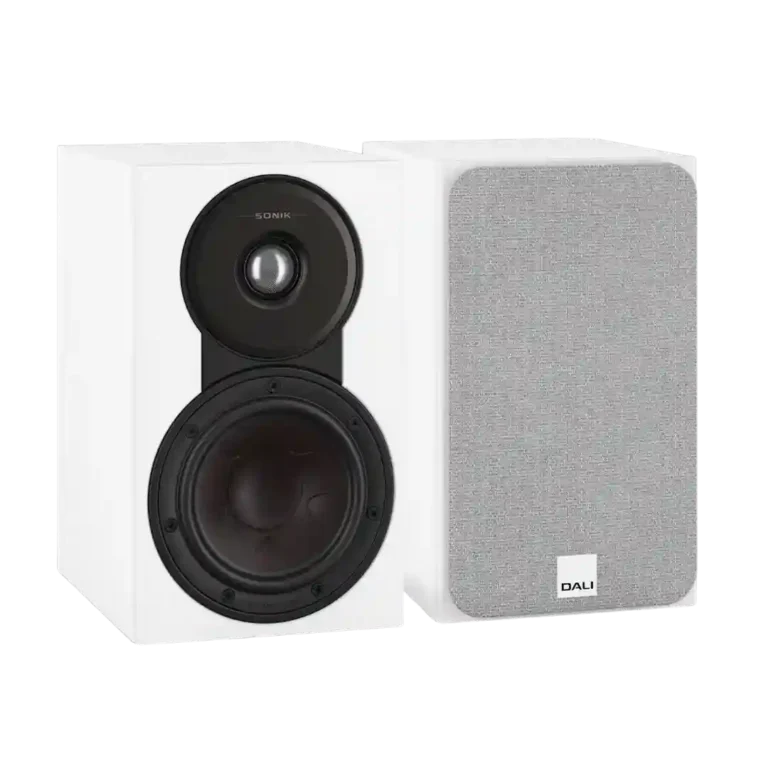
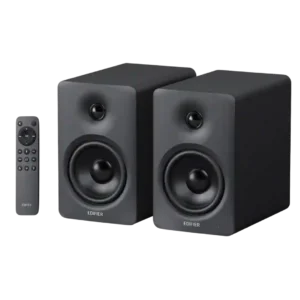
Dali Sonik 1

Dali Sonik 1 Review

Brand: DALI
Released: February 2, 2026
Updated: 51 minutes ago
4.3
Overall review score
78
Review evidence points
24
Scored features
6
Expert reviews

Bottom Line

Choose the Sonik 1 for compact-room hi-fi with vivid vocals, punchy bass and precise imaging. Skip it if you need deep sub-bass, dislike forward treble, or cannot justify the steep US price.

Best for

Listeners building a refined stereo in a small or medium room who value vocals, imaging, lively dynamics and compact cabinets. It also suits first-time hi-fi buyers using a sensible integrated amplifier.

Not for

Deep-bass hunters, near-field desktop users wanting something smaller, or buyers who are sensitive to forward treble should look elsewhere. US shoppers on a strict budget may prefer Dali’s cheaper Kupid.

Verdict

The Dali Sonik 1 combines compact dimensions with a surprisingly large, composed presentation. Reviewers consistently praise its vocal realism, fast bass, fine detail and stable imaging, while ordinary integrated amplifiers appear sufficient to make it sing. It suits small and medium rooms especially well and feels refined enough to compete above its entry-level position. The tradeoff is that the treble can lean slightly forward, the rear port rewards careful placement, and deep-bass listeners may want a larger model or subwoofer. Build and styling are widely admired, though the square-edged look is not universal. Value is strong at the UK price, but the $900 US price makes the cheaper Kupid a serious alternative.

Feature Scorecards

Summary

24 reviewed features
  • Very positive 4.5-5.0
    14 (58%)
  • Positive 3.5-4.4
    8 (33%)
  • Neutral 2.5-3.4
    2 (8%)

Pros

  • 5.0
    based on 3 reviews
    Dynamic headroom: 5.0, based on 3 reviews
    Fast attacks, crescendos and demanding passages are handled with confidence. The Sonik 1 keeps bass and transients controlled instead of becoming slow or congested.
  • 5.0
    based on 1 review
    Distortion at high volume: 5.0, based on 1 review
    The Sonik 1 handles loud signals with very little audible distortion, maintaining clarity and control when pushed.
  • 4.9
    based on 4 reviews
    Detail retrieval: 4.9, based on 4 reviews
    Fine details come through clearly, from individual string plucks to dense layers in complex mixes. Reviewers repeatedly hear more articulation than they expect from compact entry-level speakers.
  • 4.9
    based on 4 reviews
    Music performance: 4.9, based on 4 reviews
    Across vinyl, CDs and streaming, the Sonik 1 sounds engaging, versatile and musically expressive. It handles delicate vocals, dense rock and rhythmic material with equal confidence.
  • 4.9
    based on 4 reviews
    Small-room suitability: 4.9, based on 4 reviews
    Small rooms, bedrooms, offices and compact living spaces are ideal matches. The speakers can also fill medium rooms, though desktop near-field use may feel larger than necessary.
  • 4.9
    based on 4 reviews
    Voice clarity: 4.9, based on 4 reviews
    Vocals are consistently singled out for accuracy, presence and emotional immediacy. Voices sound natural, clearly focused and unusually tangible for speakers this size.
  • 4.8
    based on 3 reviews
    Cohesive presentation: 4.8, based on 3 reviews
    Even busy recordings remain organized, clear and musically connected. Bass, mids and treble keep pace with one another without the presentation falling apart.
  • 4.8
    based on 2 reviews
    Amplifier power requirements: 4.8, based on 2 reviews
    The Sonik 1 is less demanding than its sensitivity figures might suggest. Reviewers had excellent results with common 50-60 watt integrated amplifiers and did not find exotic amplification necessary.
  • 4.7
    based on 3 reviews
    Stereo imaging accuracy: 4.7, based on 3 reviews
    Imaging is a major strength, with sharply located center vocals and convincing three-dimensional placement. The stage can extend beyond the cabinets and remain easy to follow.
  • 4.5
    based on 5 reviews
    Value for money: 4.5, based on 5 reviews
    Performance is widely considered excellent for the money, with detail, bass and refinement that resemble pricier speakers. The main value concern comes from the high US price and strong cheaper alternatives within Dali’s lineup.
  • 4.5
    based on 4 reviews
    Bass performance: 4.5, based on 4 reviews
    Bass is fast, punchy and far fuller than the cabinet size suggests. Deep-bass listeners should note that ultimate weight is limited and the rear port does much of the low-end work.
  • 4.5
    based on 3 reviews
    Loudness / maximum volume: 4.5, based on 3 reviews
    Despite their compact cabinets, the Sonik 1 can play with convincing scale and fill small to medium rooms. They stay composed as volume rises rather than sounding strained.
  • 4.5
    based on 1 review
    Omnidirectional sound: 4.5, based on 1 review
    Wide dispersion spreads sound evenly enough that listeners do not need to remain locked into a narrow central seat.
  • 4.5
    based on 1 review
    Soundstage height: 4.5, based on 1 review
    The central image can appear slightly above the cabinets, adding believable vertical scale to vocals and instruments.
  • 4.3
    based on 5 reviews
    Aesthetic design / Finish options: 4.3, based on 5 reviews
    Most reviewers praise the refined finishes, magnetic grilles and understated Scandinavian appearance. One reviewer disliked the square edges, visible hardware and brown driver, preferring the cleaner Kupid design.
  • 4.3
    based on 5 reviews
    Design and aesthetics: 4.3, based on 5 reviews
    The clean, modern styling blends easily into living rooms and looks premium with the grilles installed. The squared front and exposed design details are more divisive for buyers who prefer a softer, less conspicuous look.
  • 4.3
    based on 4 reviews
    Cabinet construction / bracing: 4.3, based on 4 reviews
    Construction is generally praised for careful detailing, rigid materials and a premium feel. One first-look reviewer was less impressed by the flat MDF front, squared edges and vinyl treatment.
  • 4.3
    based on 3 reviews
    Frequency response balance: 4.3, based on 3 reviews
    The overall balance is rich, natural and full without obvious excess. A mild upper-frequency emphasis keeps it from sounding perfectly neutral in every setup.
  • 4.3
    based on 3 reviews
    Setup simplicity: 4.3, based on 3 reviews
    The Sonik 1 is approachable to connect and works with ordinary passive-speaker systems, but rear-port placement and toe-in can take some experimentation. Once positioned, the sweet spot is easy to enjoy.
  • 4.0
    based on 4 reviews
    Treble performance: 4.0, based on 4 reviews
    Treble is crisp, detailed and spatially revealing, but several reviewers hear a mild forwardness. Amplifier character, toe-in and room placement can make the upper range sound smoother or more prominent.
  • 4.0
    based on 4 reviews
    Wired input: 4.0, based on 4 reviews
    The single-wire binding posts are simple and well made, and most reviewers did not see the lack of bi-wiring as a serious loss. Cable enthusiasts may still prefer a more flexible terminal arrangement.
  • 3.5
    based on 5 reviews
    Price: 3.5, based on 5 reviews
    The price feels justified by the sound and build in the UK market, but $900 is a substantial ask in the US. The premium over Dali’s cheaper Kupid can make budget-conscious buyers hesitate.

Cons

  • 3.3
    based on 2 reviews
    Included accessories: 3.3, based on 2 reviews
    Dali includes useful rubber feet for shelf and wall placement, but the package is otherwise sparse and does not include speaker cables.
  • 2.5
    based on 1 review
    Warranty support: 2.5, based on 1 review
    Warranty support may vary by market, and one reviewer cautions that genuine repair parts could be harder to obtain locally.

Compared With Category Average

Compared with other Bookshelf Speakers, this product is above average in Distortion at high volume, Dynamic headroom, Voice clarity, near average in Cohesive presentation, Price.

Summary

18 compared features
  • Above average 0.4+ pts higher
    6 (33%)
  • Same as average within 0.3 pts
    12 (67%)

Largest category differences

Attribute This product Category average Difference
Distortion at high volume 5.0 4.0 +1.0
Dynamic headroom 5.0 4.2 +0.8
Voice clarity 4.9 4.3 +0.6
Loudness / maximum volume 4.5 4.0 +0.5
Detail retrieval 4.9 4.5 +0.4
Soundstage height 4.5 4.1 +0.4

Consider This Instead

If you want better Wired input

Choose Edifier M90. It scores 4.9 vs 4.0 for Wired input, with a 4.3 overall score.

Compare

Compared in Reviews

Products reviewers directly compared with this model, grouped into quick takeaways.

Bowers & Wilkins 607 S3

  • Compared: sound quality, design and market position The 607 S3 is identified as a leading direct rival in the same entry-level hi-fi class.
  • Compared: entry-level positioning, treble balance and bi-wiring The 607 S3 is presented as a similarly priced rival with a comparable high-frequency preference and the added option of bi-wiring.

Dali Kupid

  • Alternative: lower-cost bookshelf speaker alternative The Kupid is recommended as the cheaper Dali option for buyers who cannot justify the Sonik 1’s price.

Oberon one

  • Older model: product generation The Sonik 1 is described as the replacement for the classic Oberon one.

FAQ

How strong is the bass for such a small speaker?

Bass is fast, punchy and fuller than the cabinet size suggests. It does not deliver the deepest weight, and the rear port contributes heavily to the low end.

Do the Sonik 1 speakers need a powerful amplifier?

No special amplifier was required in the supplied reviews. Common 50-60 watt integrated amplifiers drove them confidently.

What room size suits them best?

They are best matched to small and medium rooms, including bedrooms, offices and compact living spaces. They can sound larger than expected, but may be excessive for close desktop listening.

Do they sound bright?

Treble is detailed and generally refined, but several reviewers heard a slight forwardness. Toe-in, wall distance and amplifier character can affect how prominent the highs feel.

Are they difficult to position?

Setup is manageable, though the rear port and stereo image reward experimentation. One reviewer preferred slight toe-in and roughly 15-18 inches of wall clearance.

Are they worth the price?

Most reviewers considered the sound and build excellent value, especially at the UK price. The $900 US price is harder to justify when Dali's cheaper Kupid is available.

Sample Expert Reviews We Analyzed

These are a few of the reviews included in our analysis.

Video Reviews

Article Reviews

Top Bookshelf Speakers to Consider

#1 Edifier M90
4.3

Choose the M90 for powerful, spacious sound, exceptional connectivity, and easy TV integration in a compact desktop-friendly pair. Skip it if you need Wi-Fi or AirPlay, front-mounted controls, or deep...

Pros: HDMI ARC, Low-volume performance

Cons: AirPlay compatibility, Wi-Fi streaming reliability
#2 Kanto REN Speakers
4.2

Choose the Kanto REN if you want stylish powered stereo speakers with HDMI ARC, strong imaging, easy setup, and flexible inputs. Skip them if you need Wi-Fi, surround/Atmos, maximum SPL,...

Pros: HDMI ARC, Stereo imaging accuracy

Cons: Surround sound simulation, Bluetooth codec support

#3 KEF LSX II Wireless HiFi Speakers
4.2

Choose the KEF LSX II if you want compact wireless speakers with sharp imaging, easy setup, strong streaming, and stylish design. Skip it if you need theater-style surround, deepest bass...

Pros: Soundstage height, Amplifier power requirements

Cons: On-device controls, Surround sound simulation

#4 Fluance Ri71 Reference Powered Bookshelf Speakers
4.1

Choose the Fluance Ri71 if you want balanced, detailed powered stereo speakers for music and TV with HDMI ARC and subwoofer expansion. Skip them if you need Wi-Fi, USB/optical inputs,...

Pros: Setup simplicity, Bluetooth connection stability

Cons: optical, Smart features