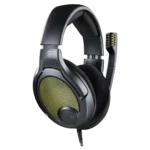
Drop + Epos PC38X Feature Scores
Explore all 47 feature scores for Drop + Epos PC38X, organized into pros and cons.
Scores by Feature
Summary
47 reviewed features-
Very positive 4.5-5.022 (47%)
-
Positive 3.5-4.413 (28%)
-
Neutral 2.5-3.44 (9%)
-
Negative 1.5-2.46 (13%)
-
Very negative below 1.52 (4%)
Pros
Sort
-
Sound quality is the headline strength: reviewers repeatedly call the PC38X superb, detailed and unusually strong for a gaming headset. Even the more critical takes generally concede that its core audio is good.
-
The open-back design delivers a consistently praised wide, immersive soundstage that makes games and music feel spacious. A small minority found the stage less expansive or too left-right focused than the hype suggests.
-
Bass is surprisingly full for an open-back headset, with repeated praise for punch, texture and control rather than muddy boom. A few reviewers prefer less bass for competitive play, and sub-bass depth is not universally strong.
-
Long-session comfort is a major strength: most reviewers can wear the PC38X for hours with little fatigue, helped by low weight and breathable pads. The main exception is firm initial clamp, which often eases after break-in.
-
Overall sentiment is strongly positive, with many reviewers calling the PC38X a favorite, a top-tier gaming headset or an easy recommendation. The dissenting reviews mainly object to price, build feel, clamp or specific FPS tuning rather than the whole product.
-
Low weight is unanimously praised where discussed. Reviewers repeatedly say the light plastic frame reduces fatigue over long gaming sessions.
-
The accessory bundle is repeatedly praised: two useful cables, two pad sets and a simple pouch cover the main use cases without much filler.
-
The ear pads are generally soft, breathable and deep enough to keep ears off the drivers, with cloth and velour options to suit preference. A few reviewers find the pads smaller or hotter than ideal.
-
Positional audio is usually excellent, with repeated praise for locating direction, distance and movement without virtual surround. A minority found the advantage game-dependent or the imaging hazier than competing headphones.
-
The PC38X is widely praised as easy to drive from phones, PCs and console controllers without a dedicated amp. One reviewer still wanted a little more headroom from a low-power controller, but output is generally sufficient.
-
Mids are usually described as clear, natural and full, especially for voices and in-game detail. A minority found them either too recessed or a little too prominent, so the midrange tuning is not unanimous.
-
Treble is generally crisp and detailed without becoming piercing, helping gunfire and positional cues stand out. Pad choice and taste matter: some heard a slightly dull top end, while others found it a bit bright or harsh.
-
Swappable earpads are a well-liked feature, letting owners choose between the included cloth/mesh and velour options. Reviewers who comment on it appreciate both the flexibility and the easy changeover.
-
Voice quality is one of the PC38X's better traits: calls and chat are typically clear, intelligible and natural for a headset mic. Some reviewers still hear thinness, inconsistent level behavior or a lack of bass compared with dedicated mics.
-
The tuning is widely viewed as balanced, natural or well judged for gaming, with enough warmth to stay enjoyable. Competitive-FPS preferences create some disagreement about how much upper-mid and treble emphasis is ideal.
-
Separation is a strong point in dense mixes, with reviewers praising distinct channels, instruments and game cues. One music-focused take found separation merely average, but the overall pattern is clearly positive.
-
The simple right-earcup volume wheel is usually praised for being easy to find and adjust quickly. Several reviewers dislike its light resistance or the fact that turning it fully down does not completely mute.
-
When reviewers discuss the swap process directly, they find the pads easy to pop off and snap back into place. Changing between cloth and velour is quick and fuss-free.
-
Glasses wearers report excellent results once the clamp settles, with soft pads applying little unwanted temple pressure. The open, cushioned fit is repeatedly singled out as glasses-friendly.
-
Headband adjustment has a broad range and accommodates a wide span of head sizes. The click-step mechanisms are generally viewed as secure and useful.
-
Cross-platform use is a consistent strength: reviewers successfully use the PC38X across PC and multiple consoles, with the included cable options making controller connections straightforward.
-
The boom microphone is broadly above average for a gaming headset, with clear speech and convenient flip-to-mute behavior. Criticism focuses on its bulky fixed design, plosives and the gap versus a dedicated microphone.
-
Setup is mostly simple plug-and-play analog audio with no required drivers or companion software. One later owner reported more Windows and game-level troubleshooting than expected, so ease can depend on the source hardware.
-
The restrained Sennheiser-style shape is widely liked, especially the later all-black look, but the original yellow accents are polarizing. Several reviewers appreciate that it looks less aggressively 'gamer' than many alternatives.
-
Value depends heavily on sale price and priorities. Many reviewers consider the sound and comfort worth the premium, while others question paying close to $200 for a wired, plastic headset when cheaper or more feature-rich alternatives exist.
-
The integrated boom mic is unusually capable for an all-in-one gaming headset. Reviewers like having clear built-in communication without needing a separate desk or boom microphone.
-
Dual analog cables make it easy to move between desktop and portable/controller sources without adapters. Reviewers who discuss the connection options see them as a practical strength.
-
The included braided cables are often praised as sturdy and practical, especially because two lengths/terminations cover different setups. Complaints center on stiffness, tangling and the occasional transmission of rubbing noise.
-
Background-noise handling is decent to very good in many tests, but plosives are a recurring weakness. Several reviewers recommend positioning carefully or adding a windscreen/pop filter for cleaner speech.
-
The wired analog connections provide a low-latency gaming experience, with no meaningful audio-video sync concern reported.
-
Because the PC38X is wired, there is no battery runtime to manage or recharge. One reviewer explicitly treats that effectively unlimited uptime as a benefit.
-
One reviewer found the PC38X keeps its audio quality consistent as volume changes, with no obvious degradation at higher or lower listening levels.
-
The matte plastic finish resists visible fingerprints well in the one review that evaluates smudging, helping the headset stay clean-looking.
-
One detailed fit assessment notes that the stronger clamp helps keep the headset stable on the head, even though that pressure can affect comfort.
-
Packaging is minimalist and functional rather than premium. Reviewers generally accept the plain presentation because the headset and accessories are protected and the budget appears focused on the product itself.
Cons
Sort
-
Passive isolation is poor by design. Reviewers repeatedly note that the open-back cups let outside noise in, making the headset a better fit for quiet rooms than noisy shared spaces.
-
There is no companion software for EQ, and reviewers who want to tune the sound see that as a clear limitation. External EQ or sound-card adjustments are possible, but the headset itself offers no software customization.
-
Two reviewers specifically found footsteps too subdued in competitive FPS with the stock tuning. They preferred brighter alternatives or EQ when footstep prominence was the priority.
-
The cable is detachable, but the deeply recessed proprietary-style 2.5 mm connection limits easy third-party replacement. Multiple reviewers call that restriction inconvenient.
-
Sound leakage is an unavoidable open-back tradeoff: nearby people can hear your audio, especially at higher levels. One owner found leakage modest at normal volume, but shared-room use remains less private.
-
The flip-to-mute boom is convenient, but it is permanently attached and fairly large. Reviewers who want a cleaner everyday headphone or modular setup repeatedly wish the mic could be removed.
-
The included cloth pouch keeps the headset from getting scratched or dusty, but reviewers say it provides little real impact protection.
-
Portability is weak. The cups do not fold flat, the pouch offers little protection, and the open-back design plus fixed boom mic make mobile use less convenient.
-
Ear-cup rotation is limited: the cups may tilt or move slightly, but they do not swivel fully or lay flat. Reviewers who value full swivel see this as a drawback.
-
Clamp is the most divisive comfort trait. Some reviewers call it perfectly judged, but many find it tight or pinchy out of the box and recommend letting the headset loosen with use.
-
Build quality is the clearest split in the coverage. Some reviewers find the plastic chassis durable and well assembled, while others call it cheap-feeling, flimsy or chintzy for the price.
-
Cable-borne rubbing noise is inconsistent but real: two reviewers notice some microphonics from the braided cable, while another says the deep-set connector largely suppresses vibration noise.