
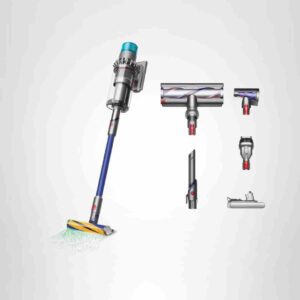
Review: Dyson Gen5 Outsize Cordless Vacuum Cleaner
Updated: 3 months ago
4.3
Based on methodology below
167
Insights analyzed
40
Grouped by key features
9
From expert reviews
Scores below reflect consolidated expert coverage across these features.
Bottom Line
Choose the Gen5 Outsize if you want elite cordless pickup plus fewer bin dumps; Skip if you need something lighter or less expensive, because its biggest compromises are weight and price.
Best for
Large homes with lots of floor area and pet hair, especially if you want long cordless runtime and a big bin so you can clean longer before swapping batteries or emptying.
Not for
Small spaces, frequent handheld/overhead cleaning, or value-focused shoppers; the Outsize adds bulk and cost that many people will not need compared with slimmer cordless alternatives.
Verdict
Across lab-style tests and hands-on impressions, the Gen5 Outsize delivers near-flagship cleaning: around 98% debris pickup, excellent pet hair removal, and a fully sealed HEPA-style system. Two swappable batteries and a 0.5-gallon bin suit big sessions, and the Fluffy Optic laser plus LCD runtime readout add real usability. The tradeoff is ergonomics and cost: at about 8.6 lb it can feel bulky for handheld or overhead jobs, and the premium pricing only makes sense if you truly need the larger head and capacity.
Pros
-
5.0based on 4 reviewsFiltration / Dust Containment: 5.0, based on 4 reviewsFiltration is repeatedly described as top-tier, with a fully sealed system and HEPA media that targets very small particles. This is framed as a meaningful upgrade for dust containment compared with less-sealed cordless competitors.
-
5.0based on 2 reviewsHard Floor — Fine Dust Pickup: 5.0, based on 2 reviewsHard-floor fine dust pickup is consistently described as exceptional, especially with the Fluffy Optic head that both reveals and removes fine particles. Multiple reviewers comment that floors look cleaner than expected once the laser highlights what’s left behind.
-
4.9based on 2 reviewsHard Floor — Large Debris Intake: 4.9, based on 2 reviewsHard-floor large-debris pickup is excellent in both testing and real-world anecdotes, including piles of debris, pet hair, and even hay-like material. Reviewers highlight strong intake and consistent results across different hard-floor mess types.
-
4.8based on 6 reviewsPet-Ready Features: 4.8, based on 6 reviewsPet hair performance is a highlight: multiple tests report excellent fur pickup and very low clogging, even with heavy shedding. The included hair-focused tools (hair screw and detangling floorhead) are repeatedly called out as effective for pet owners.
-
4.8based on 7 reviewsDebris illumination: 4.8, based on 7 reviewsThe Fluffy Optic green laser is one of the most-cited features and is widely considered genuinely useful for hard floors. Reviewers say it makes fine dust visible and encourages more thorough cleaning, though it can be a bit unsettling for anyone sensitive to seeing every speck.
-
4.8based on 5 reviewsHair‑Wrap / Tangle Resistance: 4.8, based on 5 reviewsHair-wrap resistance is repeatedly praised, with testing showing near-zero tangling on the brushroll and effective detangling combs. A minority of comments mention hair can wrap on side axles/gaps, but overall maintenance burden from hair is low.
-
4.7based on 2 reviewsBuild quality and durability: 4.7, based on 2 reviewsBuild quality is described as premium and well-finished, consistent with Dyson’s reputation. Minor notes include small flex around the built-in crevice tool area, but overall durability impressions are strong.
-
4.7based on 2 reviewsClogging and debris prevention: 4.7, based on 2 reviewsClogging and tangle-related interruptions are reported as rare in testing, especially with pet hair and long hair. A few reviewers note potential hair wrapping around side axles/gaps, but overall debris flow and anti-tangle systems reduce maintenance compared with many cordless rivals.
-
4.7based on 1 reviewCarpet — High-Pile Pickup: 4.7, based on 1 reviewHigh-pile carpet pickup is also reported as strong, with lab-style results in the high‑90% range and good hair handling. A few comparisons suggest the Outsize’s wider head can slightly reduce concentrated deep-clean performance versus the Gen5 Detect, but still scores well above average.
-
4.7based on 1 reviewCarpet — Low-Pile Pickup: 4.7, based on 1 reviewOn low-pile carpet, test results and reviewer feedback indicate strong pickup and good deep-cleaning ability for a cordless stick vacuum. Performance is generally framed as premium-tier, though some comparisons suggest the standard-width Gen5 Detect can be slightly more effective per pass.
-
4.7based on 1 reviewSuitability for heavy-duty use: 4.7, based on 1 reviewThe Gen5 Outsize is repeatedly framed as ideal for big cleans: large homes, heavy debris loads, and pet owners. The combination of high pickup, big bin, and two-battery runtime supports longer sessions without frequent stops.
-
4.7based on 9 reviewsBattery and Charging: 4.7, based on 9 reviewsBattery setup is a standout: the Outsize commonly includes two swappable batteries and an extra charger, enabling long sessions and easy battery swaps. Charge times are described as typical for the category, but the ability to rotate batteries is a major usability win.
-
4.7based on 8 reviewsBin and Bag: 4.7, based on 8 reviewsThe larger 0.5-gallon (about 1.9 L) bin is a core Outsize advantage and reduces how often you need to empty during large cleans. The tradeoff is added bulk, and a few reviewers note that runtime may end before the bin fills for some households.
-
4.7based on 4 reviewsVersatility: 4.7, based on 4 reviewsVersatility is a consistent strength: the combo of a hard-floor roller and an all-floor Motorbar head is repeatedly praised for mixed flooring. Reviewers commonly describe it as effective across hardwood/tile and carpets without frequent tool swaps.
-
4.6based on 9 reviewsSuction and Airflow: 4.6, based on 9 reviewsReviews consistently describe suction and real-world pickup as elite for a cordless stick vacuum, with lab-style results around 98% debris removal. A few comparisons note the wider XL head can spread suction over more area, slightly reducing concentration versus the standard-width Gen5 Detect, but performance remains well above average.
-
4.6based on 6 reviewsOnboard tool storage: 4.6, based on 6 reviewsOnboard tool storage is a clear convenience win: the built-in crevice/dusting tool stored in the wand is frequently praised for quick cleanup without hunting for attachments. This design is cited as improving everyday usability over older Dyson models.
-
4.6based on 1 reviewCrevice / Groove Pickup (Hard Floors): 4.6, based on 1 reviewCrevice cleaning is generally strong, helped by the included crevice tool and high suction. Some review testing reports only minor issues in crevice-specific trials, suggesting it performs reliably for gaps and grooves on hard floors.
-
4.6based on 1 reviewEdge and Baseboard Cleaning (Hard Floors): 4.6, based on 1 review
-
4.6based on 9 reviewsRuntime: 4.6, based on 9 reviewsEco/Low runtimes are commonly reported around 70–75 minutes per battery depending on head, which is excellent for a high-power cordless. With the included second battery on Outsize packages, reviewers emphasize that total cleaning time can exceed two hours for large homes. Boost/Turbo runtime is much shorter, often reported in the ~7–15 minute range per battery depending on the test and head. Several reviews suggest Boost is best reserved for occasional deep-clean bursts rather than whole-home cleaning.
-
4.6based on 2 reviewsInnovation compared to competitors: 4.6, based on 2 reviewsMultiple sources describe the Gen5 series as state-of-the-art cordless vacuum tech, highlighting the laser illumination, sensors, improved filtration, and strong power specs. Innovation is framed more as a premium refinement than a necessity for every buyer.
-
4.5based on 5 reviewsOverall opinion: 4.5, based on 5 reviewsOverall sentiment is very positive on cleaning performance and feature set, with several reviewers placing it among the best cordless vacuums available. The strongest reservations are about price and the heavier, bulkier feel compared with non-Outsize alternatives.
-
4.5based on 8 reviewsAccessories and Tools: 4.5, based on 8 reviewsThe tool set is widely praised: two main floorheads plus a hair screw tool, combination/dusting tools, and a built-in crevice tool cover most home scenarios. Some reviewers note that many attachments can become a storage hassle if you do not have a dedicated dock or stand setup.
-
4.5based on 2 reviewsMaintenance requirements: 4.5, based on 2 reviewsRoutine maintenance is generally described as simple (emptying the bin, maintaining filters), and anti-tangle systems reduce brush cleanup. The main practical maintenance complaint is organizational: lots of tools need a good storage solution to avoid losing attachments.
-
4.5based on 1 reviewConvertible handheld design: 4.5, based on 1 reviewIt converts to handheld easily and includes effective handheld tools, but several reviewers warn the Outsize can feel wrist-heavy for longer above-floor tasks. Some recommend using a hose accessory to make handheld and dusting jobs more comfortable.
-
4.5based on 6 reviewsControls and UI: 4.5, based on 6 reviewsControls and readouts are generally considered excellent: an on/off button (no trigger hold), mode switching, and an LCD that shows time remaining and alerts. The particle-count display is often viewed as novelty, but real-time runtime and troubleshooting info are valued.
-
4.5based on 3 reviewsEmptying and Mess Control: 4.5, based on 3 reviewsEmptying is described as quick and low-mess, and the larger bin reduces how often you need to do it. Transparent bin design also helps users see what’s collected and avoid surprises before dumping.
-
4.4based on 4 reviewsAI, Smart, App and Automation: 4.4, based on 4 reviewsAuto/Medium mode and sensor-driven suction adjustments are frequently mentioned as helpful, reducing the need to manually switch settings. The automation is generally appreciated even when the particle-count visuals are seen as less useful day to day.
-
4.4based on 6 reviewsFloorhead design: 4.4, based on 6 reviewsFloorhead design is widely praised: the Fluffy Optic head excels on hard floors and the Motorbar XL adds faster coverage for larger spaces. Some testing suggests the wider XL head can slightly reduce suction concentration versus a standard-width head, but overall pickup remains excellent.
-
4.3based on 6 reviewsEase of use: 4.3, based on 6 reviewsUsability is rated highly overall thanks to an on/off button, strong pickup, helpful tools, and clear runtime readouts. The biggest usability negatives are the heavier feel and bulk, plus occasional comments that the lack of a trigger can lead to leaving it running between rooms and wasting battery.
-
4.0based on 5 reviewsDried-On Stain Removal: 4.0, based on 5 reviewsHandling is strong for floor cleaning, especially in open areas where the wider head covers more space per pass. The flip side is added bulk and weight, making tight spaces and prolonged handheld use less comfortable than on lighter Dyson models.
-
3.9based on 4 reviewsComparative performance: 3.9, based on 4 reviewsComparisons often favor the Gen5 Detect for lighter weight and slightly better concentrated performance, while the Outsize is preferred for capacity and coverage speed. Against older Dysons, reviewers highlight incremental improvements (runtime, filtration, features), but some argue the performance leap over a V15 may be smaller than the price gap.
-
3.7based on 2 reviewsAssembly and Setup: 3.7, based on 2 reviewsSetup is straightforward for the vacuum itself, but docking options can add complexity. Wall-mount docks may require drilling, while freestanding stand options (when included) are viewed as easier and more renter-friendly.
-
3.7based on 2 reviewsStorage footprint and upright-stand stability: 3.7, based on 2 reviewsStorage feedback is mixed: wall docks can require drilling and can feel finicky for renters, while a freestanding stand (where available) is praised for keeping tools organized. Overall, the Outsize footprint and accessory count make storage planning more important than with smaller stick vacs.
-
3.7based on 3 reviewsNoise level: 3.7, based on 3 reviewsNoise is described as typical for high-power cordless vacuums: not quiet, but manageable. Measured figures and reviewer impressions generally place it around the high‑60s to high‑70s dB depending on mode, with Boost being noticeably louder.
-
3.6based on 1 reviewAirflow blowback: 3.6, based on 1 reviewSome reviews note airflow can cause minor blowback with very small debris in certain situations. It is presented as an occasional annoyance rather than a major failure, but it’s a notable edge case for a high-suction cordless vacuum.
Cons
-
3.1based on 3 reviewsUpholstery / Above-Floor Pickup: 3.1, based on 3 reviewsAbove-floor cleaning is effective thanks to strong suction and the hair screw tool, but the Outsize’s weight makes extended handheld or overhead work more fatiguing. Reviewers suggest it’s best as a primary floor vacuum rather than a lightweight dusting tool.
-
3.1based on 3 reviewsSuitability for small spaces: 3.1, based on 3 reviewsThe Outsize format is less ideal for cramped areas. Several reviewers note difficulty in very tight spots (for example, car seats or compact nooks) and recommend considering a smaller model if you mainly clean small rooms or do lots of spot-cleaning.
-
3.0based on 8 reviewsPrice and Value: 3.0, based on 8 reviewsPrice is the most consistent complaint. Reviewers often describe the Gen5 Outsize as best-in-class but hard to justify unless you specifically want the XL bin, wide head, and included extra battery; otherwise, the Gen5 Detect or older Dyson models are frequently cited as better values.
-
2.6based on 8 reviewsWeight: 2.6, based on 8 reviewsWeight is one of the biggest drawbacks. Multiple reviews cite around 8.6 lb (about 3.9 kg) and describe it as noticeably heavy for wrist-intensive handheld work, stairs, and overhead cleaning compared with lighter stick vacuums.
FAQ
How long does the Gen5 Outsize run on a charge?
Real-world runtimes vary by mode and head, but reviews commonly report about 70–75 minutes per battery on Eco/Low, around the mid‑40 minutes in Auto/Medium, and roughly 7–15 minutes on Boost. The included second battery effectively doubles total time.
Is the Outsize better than the Gen5 Detect?
Outsize adds a much larger bin, a wider Motorbar XL head, and typically ships with an extra battery. Several reviews note the Gen5 Detect is lighter, cheaper, and can feel more ergonomic, with slightly more concentrated cleaning performance from the standard-width head.
Does it handle long hair and pet fur without tangling?
Multiple tests show near-zero brushroll tangling and excellent pet hair pickup thanks to detangling combs and the hair screw tool. A few reviewers mention hair can still wrap on side axles or gaps, but overall tangle resistance is a standout strength.
Is the Fluffy Optic laser actually useful on hard floors?
Yes. Reviewers repeatedly say the green laser makes fine dust more visible and helps them clean hard floors more thoroughly, though it can also make your floors look dirtier than you expected.
Reviews we analyzed
Video Reviews

Article Reviews

#1
4.3
Choose the Dyson V8 Animal for lightweight, powerful cordless cleanups and pet hair. Skip it if you need strong large-debris pickup on hard...
Pros: Cordless convenience, Carpet — Low-Pile Pickup, Filtration / Dust Containment, Suction & Airflow, Assembly and Setup, Under-Furniture Pickup, Overall durability/longevity
Cons: Hard Floor — Large Debris Intake, Suitability for heavy-duty use, Runtime (Measured, Boost/Turbo), Area Rug Handling
#2
4.3
Choose if you want class-leading suction with a sealed auto-empty station; Skip if the big dock and luxury pricing don’t fit your home...
Pros: Cordless convenience, Stair Cleaning, Suitability for heavy-duty use, Floorhead Seal on Hard Floors, Filtration / Dust Containment, Emptying & Mess Control, Crevice /...
Cons: Runtime (Measured, Boost/Turbo), Suitability for small spaces, Price & Value
#3
4.3
Choose the Stylus Elite if you want a lightweight cordless stick with a self-emptying base and strong everyday pickup; Skip it if your...
Pros: Under-Furniture Pickup, Low-profile design, Hair Pickup — Hard Floors, Cordless convenience, Emptying & Mess Control, Aesthetic design & finish, Floorhead design
Cons: None
#4
4.3
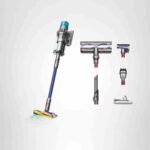
Choose the Gen5 Outsize if you want elite cordless pickup plus fewer bin dumps; Skip if you need something lighter or less expensive,...
Pros: Filtration / Dust Containment, Hard Floor — Fine Dust Pickup, Hard Floor — Large Debris Intake, Pet-Ready Features, Debris illumination, Hair‑Wrap / Tangle...
Cons: Weight, Price & Value, Suitability for small spaces, Upholstery / Above-Floor Pickup