If you want better durability
Choose Levoit EverestAir. It scores 4.7 vs 2.5 for durability, with a 4.5 overall score.
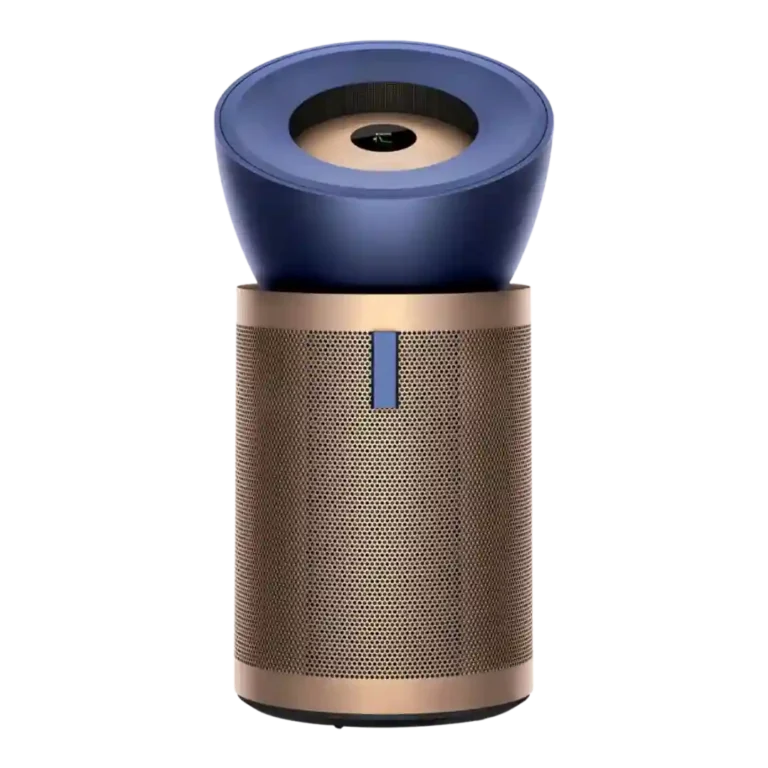
Choose the Dyson BP04 for quiet, sensor-rich purification in large or open rooms. Skip it if price, bulk, or a smaller-room need matters more than premium design and wide pollutant tracking.
Best for larger rooms, open-plan homes, and buyers who want quiet whole-room airflow plus detailed air-quality monitoring. It also suits people especially concerned with VOCs, odors, formaldehyde, smoke, and sensor visibility.
Not for shoppers who mainly need a compact, inexpensive purifier for a small room or basic dust and allergy relief. It is also a poor fit if you need easy carrying up stairs or standardized CADR comparisons.
The Dyson Purifier Big+Quiet Formaldehyde BP04 earns strong praise for quiet operation, large-room airflow, detailed air-quality monitoring, chemical and VOC filtration, and a polished app experience. Multiple testers found it powerful enough for open spaces and unusually quiet for its output, with useful sensors and long filter-life claims helping offset some running costs. The tradeoff is equally clear: it is physically large, expensive, and not always the fastest-reacting or easiest-to-benchmark purifier because CADR data is limited. It is best viewed as a premium whole-room purifier for buyers who value design, silence, and information as much as raw value.
Compared with other Air Purifiers, this product is above average in replacement experience, app connectivity, VOC sensor accuracy, near average in air purification performance, HEPA filtration, below average in size and footprint, value for money, CADR rating.
| Attribute | This product | Category average | Difference |
|---|---|---|---|
| replacement experience | 4.4 | 2.9 | +1.5 |
| app connectivity | 4.5 | 3.2 | +1.3 |
| VOC sensor accuracy | 4.2 | 2.9 | +1.3 |
| smart features | 4.6 | 3.3 | +1.3 |
| remote control | 3.9 | 2.7 | +1.2 |
| reliability | 4.2 | 3.0 | +1.2 |
| VOC reduction | 4.6 | 3.5 | +1.1 |
| size and footprint | 3.0 | 3.9 | -0.9 |
Choose Levoit EverestAir. It scores 4.7 vs 2.5 for durability, with a 4.5 overall score.
Choose Shark HP102. It scores 4.9 vs 3.0 for size and footprint, with a 4.1 overall score.
Choose PuroAir 240. It scores 4.8 vs 2.0 for condition on arrival, with a 4.6 overall score.
Choose Alen BreatheSmart 45i. It scores 4.9 vs 4.1 for build quality, with a 3.9 overall score.
Products reviewers directly compared with this model, grouped into quick takeaways.
Yes. Reviewers repeatedly describe it as very quiet, with one measuring 57dB at the highest setting and another saying the hum fades into background white noise.
Yes, large-room use is one of its strongest themes. Reviewers cite strong airflow, corner placement, and coverage for open-plan or large spaces, while noting it may be overkill in smaller homes.
Very good based on the supplied reviews. Testers praised chemical filtration, VOC reduction, cooking-smell reduction, and odor handling.
Yes. Reviewers liked the MyDyson app for controls, air-quality data, schedules, filter care, and detailed pollutant history, though one wanted broader weekly or monthly reports.
The biggest downsides are price and size. Some reviewers also mention slower reaction times, hard-to-benchmark CADR data, carpet portability limits, and a tiny remote.
Several reviewers saw filter running costs as reasonable for the size class because of long claimed filter life, though one warned that heavy smoke use could shorten real-world life.
These are a few of the reviews included in our analysis.

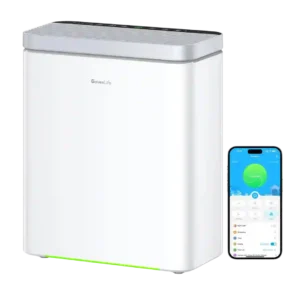
Choose the H7124 if you want a quiet smart purifier for odors, dust, pets, and app control. Skip it if you need foolproof Wi-Fi, wall-facing intake, UV light, or strong...
Pros: particle removal effectiveness, pollen removal
Cons: UV-C light effectiveness, air dryness
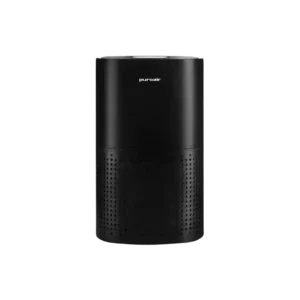
Best for quiet, simple cleaning in bedrooms or apartments. Skip it if you need verified large-room CADR value, app control, or guaranteed neighbor-smoke removal.
Pros: particle removal effectiveness, dust removal
Cons: CADR rating, air changes per hour
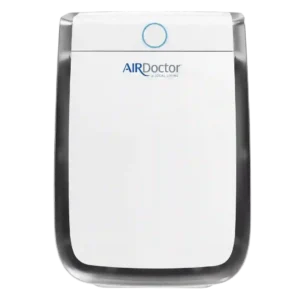
Best for strong room cleaning, allergy relief, odor control, and simple operation. Skip it if high filter costs, a larger footprint, or possible nighttime fan noise would bother you.
Pros: particle removal effectiveness, HEPA filtration
Cons: customer support, warranty coverage
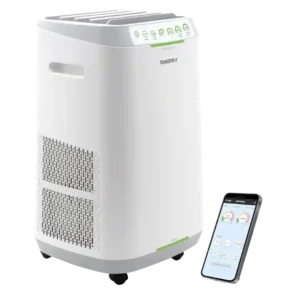
Choose this if you want strong odor, dust, smoke, and pet-air cleanup with washable filters. Skip it if turbo noise, Wi-Fi setup, or a high upfront price will bother you.
Pros: filter replacement cost, allergen reduction
Cons: Wi-Fi reliability