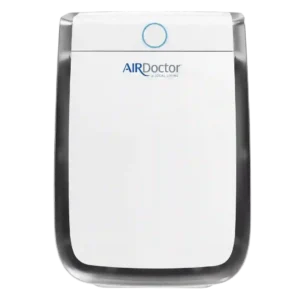
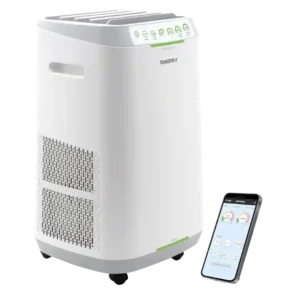
- Compared: coverage and odor handling A separate purifier such as the Shark is suggested as a potentially better paired setup.
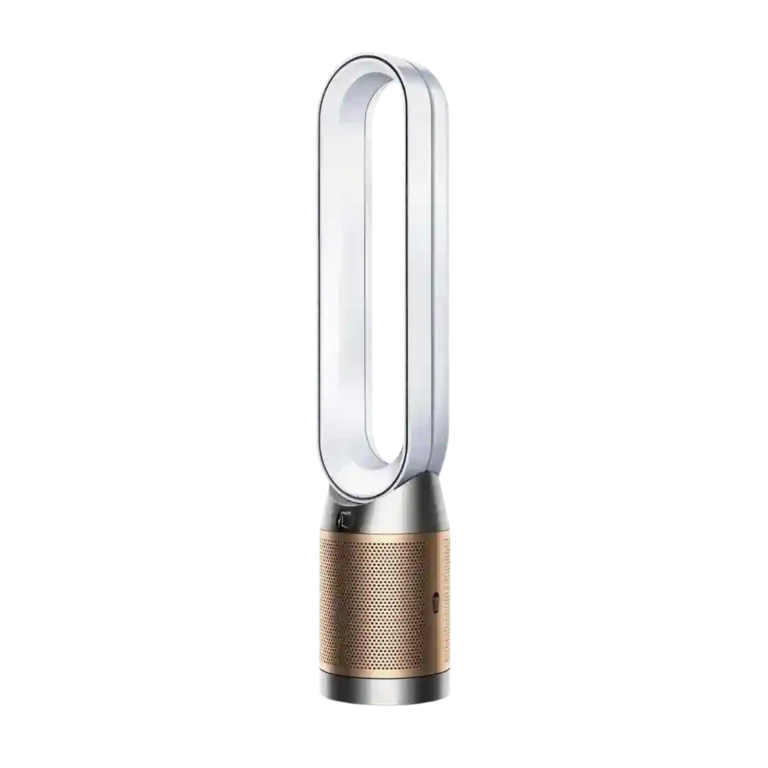
Dyson Purifier Cool Formaldehyde TP09 Review
Bottom Line
Choose the TP09 for smart monitoring, formaldehyde/VOC focus, and stylish purification. Skip it if you need powerful cooling, quiet long-term operation, low filter costs, or dependable support.
Best for buyers who want a design-forward purifier with formaldehyde/VOC monitoring, app controls, and visible air-quality feedback. It is especially compelling for allergy, off-gassing, cooking-fume, or data-focused households.
Not for shoppers who mainly need a strong cooling fan, a low-cost purifier, or a quiet bedroom unit at every speed. It is also risky for buyers unwilling to deal with possible warranty, remote, app, or early-failure issues.
The Dyson Purifier Cool Formaldehyde TP09 earns real praise for detecting pollutants, presenting air quality clearly, and giving users app-based control over a premium-looking purifier fan. Expert reviews especially like its formaldehyde/VOC focus, HEPA filtration, oscillation, and real-time monitoring. Customer reviews add strong allergy, odor, and clean-air wins, but they also expose the tradeoff: this is not always a powerful cooling fan, and high-pitched noise, early failures, missing remotes, app pairing, filter availability, and support problems appear repeatedly. It suits buyers who value smart purification data and formaldehyde peace of mind more than raw fan strength or bargain value.
Compared in Reviews
Products reviewers directly compared with this model, grouped into quick takeaways.
Dreo\'s Air Purifier Tower Fan
- Cheaper: price and core functions The reviewer says Dreo offers similar core fan-purifier functions for much less money.
Dyson Purifier Cool Gen1 TP10 Purifying Fan
- Older model: air quality data and diffused mode The TP09 is presented as worth the extra spend over the TP10 for app data and diffused airflow.
Feature Scorecards
Summary
49 reviewed features- Very positive 4.5-5.0 29% 14 features
- Positive 3.5-4.4 27% 13 features
- Neutral 2.5-3.4 22% 11 features
- Negative 1.5-2.4 18% 9 features
- Very negative below 1.5 4% 2 features
Pros
-
Allergen-related evidence is strongly positive, with customers reporting better allergies, asthma, and less congestion.
-
PM2.5 detection is supported by expert testing showing quick detection and response to particle spikes.
-
Smoke and combustion-particle evidence is positive in expert testing and cooking/smoke-related particle responses.
-
Overall satisfaction is split between enthusiastic repeat-buy praise and disappointment from noise, failures, or value concerns.
-
Auto mode is generally praised for reacting to changing air quality, with isolated concern tied to noise or reliability.
-
VOC reduction is usually positive in expert evidence and formaldehyde/off-gassing use, though odor outcomes do not always follow.
-
HEPA filtration evidence is positive where reviewers describe H13 HEPA as effective or part of the sealed filter system.
-
Particle removal is supported by expert PM testing and broad particle-capture evidence, though customer evidence is less specific.
-
The display and monitor are consistently liked for readable air quality information and useful on-unit feedback.
-
Ease of use is a strength, with setup, controls, and operation repeatedly described as easy or intuitive.
-
Dust removal evidence is positive where reviewers describe the unit catching a remarkable amount or capturing ultrafine dust.
-
Filter-stage evidence is positive, emphasizing sealed HEPA, carbon, and catalytic filtration systems.
-
Design and appearance are widely praised as modern, stylish, compact-looking, and visually premium.
-
True HEPA evidence is positive, especially around H13 sealed filtration and pollutant capture.
-
Pollen evidence is limited but positive, centered on detecting pollen counts and allergy comfort.
-
Portability is mixed: one related review says the unit is easy to move, while TP09 owners note no handles and awkward handling.
-
Real-time air quality monitoring is a major strength, repeatedly praised through the display and app data.
-
Fan speed options are appreciated when they provide control, though some evidence says useful cooling requires high, louder speeds.
-
Room coverage evidence is positive in expert reviews and one customer’s whole-house foyer placement, though not universal.
-
Smart features are a strong differentiator, especially data tracking and app controls, though some advanced details are seen as nonessential.
-
Purification performance draws the strongest positive evidence from expert tests and many customers, but a smaller group reports no noticeable clean-air improvement.
-
Maintenance is mostly easy, especially filter installation and replacement, though some customers struggle with clipping filters or compare other units unfavorably.
-
The app is usually valued for control and air data, but a few customers report unusable app access or pairing issues.
-
VOC sensor accuracy is positive in some expert tests and mixed in customer skepticism around NO2/VOC response.
-
Size and footprint are mixed, with praise for saving space and complaints that the unit is large for smaller rooms.
-
Voice assistant support is useful but uneven; Alexa and Siri support works for some controls but can be limited or wordy.
-
Adjustable airflow, oscillation, and backflow/diffused modes are usually praised, though a few customers reported broken rotation or weak practical benefit.
Cons
-
Odor reduction is mixed, with strong praise for removing cooking, musty, and off-gassing smells, but repeated complaints about chemical odors from the unit itself.
-
Filter replacement cost is a common caveat, usually described as pricey, though one related review considered longer filter life cost-effective.
-
Scheduling evidence is mixed: some users like scheduling controls while one expert notes the lack of a true scheduling system.
-
Air circulation is polarizing: several reviewers like the smooth breeze and room movement, while many customers say it barely cools or moves enough air for the price.
-
Wi-Fi reliability is mixed, with easy pairing for some and pairing/disconnect complaints for others.
-
Sensor accuracy is praised when it reacts to pollutants, but criticized in reviews describing flat-lined, inconsistent, or nonresponsive readings.
-
Activated carbon evidence is mixed: one customer valued it for general use, while another associated the carbon-style smell with an unpleasant odor concern.
-
Noise level is the most repeated concern: some find it quiet, but many report loud, high-pitched, whistling, or screeching sounds.
-
Value is sharply mixed: fans praise premium capability when discounted, while critics call the price excessive for weak airflow, noise, or failures.
-
The only child-lock evidence is a customer wishing the swivel had one, making this a small negative gap.
-
Sleep mode is mixed: some slept easily with it, while others say night mode is too weak or noise prevents sleep.
-
Build quality gets strong expert praise for sturdy design, but some customers describe cheap materials, gaps, or declining brand quality.
-
Documentation receives limited negative evidence, mostly around unclear assembly/app instructions or instructions not matching the returned unit.
-
Remote control is a recurring gap: reviewers like the magnetic remote when present, but missing, broken, or unsupported remotes hurt the experience.
-
Replacement and repair experiences are mostly negative, although one customer reports Dyson eventually made the issue right.
-
Arrival condition is inconsistent, ranging from excellent condition to damaged, broken, or poorly packed units.
-
Durability is a major concern in customer reviews, with repeated early failures, bearing issues, and noise developing after weeks or months.
-
Filter availability has limited but negative evidence from a customer who could not find filters available.
-
Handle design is weak because customers and experts note awkward movement and lack of easy grip points.
-
Indicator evidence is mixed: readable alerts are useful, but one customer had persistent red filter alerts after replacing filters.
-
Reliability is a major weakness in customer reviews, with repeated reports of early failure, error messages, broken oscillation, and defective units.
-
Customer support is one of the weakest recurring areas, with many warranty, return, repair, and response complaints.
Compared With Category Average
Compared with other Air Purifiers, this product is below average in reliability, indicator lights, filter availability.
Summary
8 compared features- Above average 0.4+ pts higher 0% 0 features
- Same as average within 0.3 pts 0% 0 features
- Below average 0.4+ pts lower 100% 8 features
| Attribute | This product | Category average | Difference |
|---|---|---|---|
| reliability | 1.3 | 3.7 | -2.4 |
| indicator lights | 1.5 | 3.9 | -2.4 |
| filter availability | 1.5 | 3.8 | -2.3 |
| customer support | 1.1 | 3.1 | -1.9 |
| durability | 1.6 | 3.7 | -2.1 |
| build quality | 2.4 | 4.1 | -1.8 |
| value for money | 2.5 | 4.0 | -1.4 |
| noise level | 2.7 | 4.1 | -1.4 |
FAQ
Does the Dyson TP09 purify air well?
Most expert evidence says yes, especially for pollutant detection, HEPA filtration, formaldehyde/VOC focus, and PM response. Some customers still report little noticeable air-quality change.
Is the TP09 quiet?
It can be quiet at low speeds, but many customer reviews complain about loud, high-pitched, whistling, or screeching noises that develop over time.
Does it work well as a fan?
It provides smooth airflow and some cooling, but many reviewers say it is weaker than a dedicated tower fan, especially for cooling a whole room.
Is the app useful?
Yes for many users: reviews praise air-quality graphs, remote control, pollutant readings, and auto-mode insight. A smaller set reports pairing or regional app problems.
Is it worth the price?
Value is split. It feels worthwhile to buyers who need premium sensing and formaldehyde filtering, but poor value to those focused on fan power, quietness, or low ownership cost.
What are the biggest risks?
Recurring risks include high-pitched noise, early reliability failures, missing or broken remotes, filter availability, expensive replacements, and frustrating support experiences.
Sample Expert Reviews We Analyzed
These are a few of the reviews included in our analysis.

Video Reviews
- Review score
- 4.5
Article Reviews
- Review score
- 4.4
- Review score
- 4.0
- Review score
- 4.0
- Review score
- 4.5
Consider This Instead
If you want better customer support
Choose Shark HP102. It scores 5.0 vs 1.1 for customer support, with a 4.0 overall score.
If you want better reliability
Choose Levoit Core 400S. It scores 4.7 vs 1.3 for reliability, with a 4.1 overall score.
If you want better durability
Choose Coway Airmega 200M. It scores 5.0 vs 1.6 for durability, with a 4.1 overall score.
If you want better indicator lights
Choose Coway Airmega 250. It scores 5.0 vs 1.5 for indicator lights, with a 4.3 overall score.
Overall Top Air Purifiers Alternatives
Best for quiet, smart large-room cleaning and strong odor control. Skip it if $99 filters, true-HEPA wording, or occasional sensor/fan reliability complaints are dealbreakers.
Pros: air purification performance, allergen reduction
Cons: reliability, filter replacement cost
Best for compact rooms, strong particle removal, quiet sleep use, and useful app controls. Skip it for large spaces, heavy odors, or exact PM2.5 readings.
Pros: Wi-Fi reliability, filter stages
Cons: PM2.5 detection
Best for fast particle removal, quiet smart bedroom use, pet-friendly pre-filtering, and strong value. Skip it for medical HEPA certainty, serious VOC/odor problems, premium design, or very large spaces needing...
Pros: allergen reduction, safety certifications
Cons: PM2.5 detection, true HEPA filter
Best for quiet, efficient bedroom air cleaning, strong app controls, and low upkeep costs. Skip it for large open spaces, pet-heavy homes, or buyers needing fast, highly accurate sensors.
Pros: energy efficiency, power consumption
Cons: handle design, air quality sensor accuracy