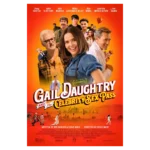
Gail Daughtry and the Celebrity Sex Pass Feature Scores
Explore all 35 feature scores for Gail Daughtry and the Celebrity Sex Pass, organized into pros and cons.
Scores by Feature
Summary
35 reviewed features-
Very positive 4.5-5.07 (20%)
-
Positive 3.5-4.412 (34%)
-
Neutral 2.5-3.49 (26%)
-
Negative 1.5-2.46 (17%)
-
Very negative below 1.51 (3%)
Pros
Sort
-
David Wain’s commitment to absurdity, fast comic rhythm, and playful celebrity cameos is widely admired, though some felt the film shows less control than his best work.
-
The Wizard of Oz framework is familiar, yet the celebrity-sex-pass premise, aggressive anti-comedy, and self-mocking cameos make the final mix feel unusually unpredictable.
-
The joke density is enormous, but the hit rate is the central point of disagreement. Some laughed harder than they had at a recent comedy, while others found it painfully unfunny.
-
Supporters describe a breezy, irresistible theatrical experience; detractors found it a draining slog. Enjoyment depends heavily on whether the intentionally stupid humor clicks.
-
The cast commits fully to the movie’s heightened silliness. Some found the early overacting tiring, but most agreed the performers understand the absurd tone.
-
Gail and Otto’s supportive friendship gives the silliness a warm center, while Jon Hamm and John Slattery’s Mad Men history adds an effective layer of self-aware chemistry.
-
The bright wardrobe and ruby-red Oz references are a standout, with Gail’s styling helping sell the cheerful storybook tone.
-
At its best, the dialogue turns deliberate nonsense into sharp punchlines. The weakest lines can feel wooden or overworked, but the verbal hit rate impressed several critics.
-
For viewers who miss broad, fearless absurdist comedy, the movie delivers exactly that kind of experience and feels like a welcome return to an underused style.
-
Zoey Deutch is the clearest point of agreement, balancing wide-eyed sweetness, fast delivery, and controlled absurdity well enough to anchor the entire film.
-
The central premise and gleefully irrational turns feel fresh and surprising, even though the story openly borrows its basic journey from The Wizard of Oz.
-
The supporting ensemble is energetic and game, with several performers turning tiny roles into memorable comic moments and John Slattery emerging as the most frequent standout.
-
Some found the finale boldly unpredictable and consistent with the movie’s lunacy, while others considered the resolution bland or less satisfying than the setup.
-
Los Angeles is presented as bright, tacky, sleazy, and affectionately artificial. Some critics enjoyed that vulgar postcard look, while others found it cheap or visually shallow.
-
The movie is competently shot and technically clean, even when its deliberately cheap-looking aesthetic and inserted cameos make some moments feel less polished.
-
A surprising warmth runs underneath the Hollywood satire, keeping the movie from feeling entirely cynical even when the story stays deliberately lightweight.
-
Despite its explicit premise, the movie often feels oddly wholesome and affectionate. Its sexual material, language, and cartoon violence still make it unsuitable for family viewing with younger children.
-
The sexual premise and soft-focus set pieces are raunchy but usually presented with playful innocence rather than grim explicitness, which several critics found surprisingly light.
-
The movie creates a refreshingly ridiculous version of Hollywood where celebrity logic overrides reality, and that heightened setting remains enjoyable even when individual jokes miss.
Cons
Sort
-
The story works primarily as a frame for jokes and cameos. That loose construction delights viewers who accept the format but frustrates those looking for a coherent, fully developed narrative.
-
The profanity and juvenile vulgarity fit the deliberately lowbrow style, but at least one critic found that approach puerile rather than playful.
-
The cartoon and gory violence is a major tonal divider. Some viewers found the sudden brutality hilarious, while others thought it struck a sour note against the movie’s cheerful mood.
-
The late action material is one of the weaker stretches, with the Western-set climax described as laugh-light compared with the faster verbal and visual gags.
-
Critical response is highly split: enthusiastic supporters see inspired absurdism, while detractors view the same choices as sloppy, shallow, or underwritten.
-
The overall construction moves quickly, but some digitally inserted cameos and transitions feel clunky enough to break the comic flow.
-
The movie gestures toward ideas about celebrity worship and Hollywood fantasy, but the comic detours keep those ideas from reaching a strong emotional or thematic conclusion.
-
The locations and bright surfaces support the heightened Hollywood fantasy, but the inexpensive finish can look shiny, shallow, and closer to streaming than a polished theatrical comedy.
-
Gail gets a modest self-liberating arc, but most of the traveling companions remain intentionally thin comic types rather than fully developed characters.
-
The Hollywood and celebrity satire has a clear target, but the film rarely pauses long enough to explore it deeply; the emphasis stays on jokes rather than substance.
-
This is sharply divisive comedy. Fans of David Wain’s anti-comedy and Los Angeles industry jokes are likely to enjoy it most, while mainstream viewers may find it exhausting or inaccessible.
-
The Wizard of Oz structure gives the movie a recognizable path, but the gangster subplot and constant digressions leave the narrative feeling loose, contradictory, or barely held together.
-
Some viewers were still quoting and remembering the jokes days later or immediately wanted another viewing. Others expected to forget the trip quickly and had no interest in returning.
-
At roughly 93 minutes, the movie feels fast and satisfying to fans. For viewers who reject the humor, the same runtime can feel far longer than it is.
-
The screenplay is either tightly engineered nonsense or an underdeveloped spitballing session, depending on the viewer. Its strongest recurring bits show real craft, but weaker sections feel unfinished.
-
The pace is deliberately relentless and often gets funnier as it goes. Still, repeated bits, a slow first half-hour, and a sagging back half test the patience of less receptive viewers.