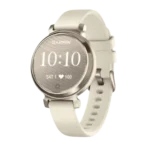
Garmin Lily 2 Feature Scores
Explore all 51 feature scores for Garmin Lily 2, organized into pros and cons.
Scores by Feature
Summary
51 reviewed features-
Very positive 4.5-5.017 (33%)
-
Positive 3.5-4.413 (25%)
-
Neutral 2.5-3.412 (24%)
-
Negative 1.5-2.49 (18%)
Pros
Sort
-
Style and design are the product’s strongest consensus win: reviewers praise the elegant, jewelry-like look and discreet size.
-
Comfort is one of the clearest strengths: reviewers repeatedly say the Lily 2 is light, discreet, and easy to wear day and night.
-
Body Battery, stress, sleep summaries, and energy insights are repeatedly praised as useful, motivating wellness guidance.
-
Heart-rate tracking receives broad praise, often matching or staying close to chest straps, Apple Watch, Polar, or Oura comparisons.
-
Most reviewers found battery life close to Garmin’s multi-day claim, often four to five days, though one heavy-use YouTube review saw only about three and a half days.
-
Stress tracking is one of the standout wellness features, repeatedly described as great, enjoyable, or excellent.
-
Fall/incident detection, assistance, and LiveTrack are positively received as practical safety tools.
-
Standard quick-release bands are a widely praised upgrade, with most reviewers liking the flexibility; one reviewer disliked the fixed keeper loop.
-
Core activity tracking is generally praised as accurate for casual exercise, though unsupported sports can reduce accuracy.
-
Body Battery and recovery-related guidance are praised for helping users decide when to rest or push harder.
-
The small case and strap setup are praised for fitting small wrists and wearing snugly.
-
Outdoor visibility is mostly praised, especially by DC Rainmaker and DesFit, though one reviewer found sunny conditions harder.
-
Value depends on priorities: reviewers justify the price for style and wellness, but criticize missing features at this price.
-
Garmin Connect and the broader Garmin ecosystem earn praise for subscription-free data access, training resources, desktop analysis, and motivating badges.
-
Phone/GPS pairing is strongly praised in DC Rainmaker evidence, with connections working consistently in testing.
-
The aluminum case and overall construction are praised as more premium, solid, and durable than the original Lily.
-
User-review evidence says the Lily 2 works well and reliably handles the basics expected from it.
-
Walk detection is praised as reliable in several reviews, though automatic Move IQ entries are considered thin on detail.
-
Menu navigation is usually described as straightforward or intuitive, though one reviewer notes a learning curve.
-
Reviewers like the band and sport-profile flexibility, especially the standard bands and ability to keep all profiles on the watch.
-
General health tracking is praised as reliable across basics such as sleep, steps, heart rate, calories, SpO2, and wellness metrics.
-
Step tracking is praised as accurate and reliable in the reviews that evaluate it directly.
-
Display opinions are mixed: visibility and contrast can be good, but several reviewers call the monochrome hidden screen flat or basic.
-
Garmin Connect is divisive: some reviewers find it detailed and intuitive, while others call it clunky or hard to navigate.
-
The interface is mixed-to-positive: one reviewer found it fine, while another praised the watch and app interface as intuitive.
-
One reviewer praised the Lily 2 Classic for integrating smoothly with both Android and Apple devices.
-
One review positively notes that the 5ATM rating allowed showering, bathing, swimming, and pool length counting.
-
Gesture wake and false-pause behavior improved, but some display wake behavior still feels sluggish in other reviews.
-
Garmin’s subscription-free courses, prepared trainings, and plans are praised as helpful ecosystem-level coaching support.
-
Durability evidence is mixed, with praise for the aluminum upgrade but criticism that aluminum is cheaper and less durable than steel.
Cons
Sort
-
Multiple reviewers treated the missing temperature sensor as a meaningful weakness for a female-focused wearable and period prediction.
-
Reviewers consistently criticize the lack of onboard music storage or playback, limiting phone-free workouts.
-
The absence of ECG is criticized as a gap, especially given the product’s price and female-focused positioning.
-
The no-button design and pseudo-button are a recurring frustration, especially for pausing workouts or navigating during activity.
-
Pulse Ox/SpO2 is treated skeptically, with reviewers warning that it can hurt battery life and produce readings that seem too low.
-
Mapping is a weakness because accurate route and map data require carrying a phone.
-
Reviewers criticized the lack of Bluetooth/ANT+ broadcasting and direct equipment or external sensor pairing, especially for Peloton-style use.
-
Several reviewers wanted the monochrome display to be brighter, especially through the patterned lens or outdoors.
-
Android quick replies are useful, but iPhone users repeatedly lose reply and call-response functions, making call handling limited.
-
Touchscreen responsiveness is a recurring concern, with several reviewers reporting slow response, missed taps, or frustration.
-
Watch-face and patterned-lens opinions are mostly negative, with complaints about limited options, flatness, and design compromises.
-
Notifications are mixed to weak: instant delivery is praised, but iOS limitations and excessive buzzing make them less useful.
-
The proprietary clip is a drawback because losing or forgetting it can leave the user stuck.
-
One reviewer criticized the aluminum build as cheaper and less durable than stainless steel.
-
Calorie estimates are mixed, with one reviewer calling them slightly off and another finding them more generous than other devices.
-
Garmin Pay is considered useful, but its value depends heavily on bank support and is limited in some regions.
-
Charging is acceptable in some reviews but often criticized as slower than Apple Watch-style fast charging and requiring planning for 24/7 wear.
-
Smartwatch features are useful but intentionally lean, with reviewers noting fewer advanced tools than broader smartwatches.
-
Sleep tracking is mixed: some reviewers found it aligned well, while others saw inaccurate sleep duration or not enough detail.
-
Connected GPS works well when paired, but reviewers repeatedly note that phone dependence limits true GPS usefulness.
-
Workout variety is mixed: reviewers like the added profiles and dance modes, but often miss indoor cycling or sports options.