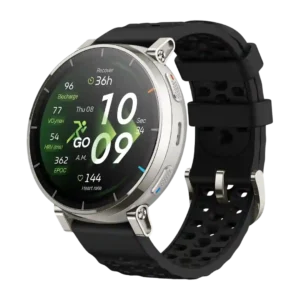
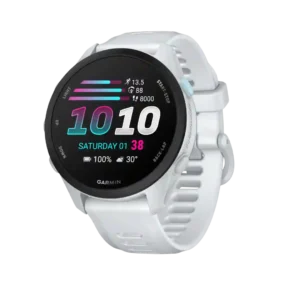
- Better: feature depth at similar price TechAdvisor said similar-priced Garmin models offer more features but lose Lily 2 compactness.
- Alternative: serious training features Wareable recommended Garmin Vivoactive or Forerunner models for more serious athletes.
Garmin Lily 2 Review
Bottom Line
Choose the Garmin Lily 2 for elegant comfort, strong wellness insights, and casual tracking. Skip it if you need built-in GPS, rich smartwatch apps, faster charging, or advanced training metrics.
Best for casual exercisers, small-wrist users, and buyers who want a discreet, jewelry-like tracker with Body Battery, stress tracking, notifications, and enough activity data for everyday wellness.
Not for serious athletes, phone-free runners, indoor cycling users, or shoppers who want AMOLED richness, broad third-party apps, onboard music, ECG, LTE, or full smartwatch interaction.
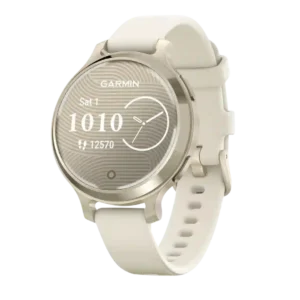
The Garmin Lily 2 is strongest as a stylish wellness tracker that people will actually keep on day and night. Across reviews, its slim build, comfort, band upgrade, battery life, Body Battery, stress tracking, and casual activity accuracy stand out. The tradeoff is that its fashion-first simplicity limits the sports-watch side: GPS depends on a phone, indoor cycling is oddly missing, recovery metrics are thin, and the touch-driven interface can feel clunky. Smartwatch features are useful but lean, with Garmin Pay limited to Classic models and notification controls weaker on iPhone. It suits buyers who value elegance and everyday health visibility more than deep training analytics or app-rich smartwatch behavior.
Compared in Reviews
Products reviewers directly compared with this model, grouped into quick takeaways.
- Cheaper: price TechRadar said the Lily 2 costs more than the Fitbit Sense, weakening its price position.
- Better: feature depth at similar price TechAdvisor said similar-priced Garmin models offer more features but lose Lily 2 compactness.
Feature Scorecards
Pros
-
Comfort is one of the strongest themes, with reviewers repeatedly saying the watch is lightweight, barely noticeable, and suitable for day-and-night wear.
-
Pairing reliability for connected GPS and phone handoff was much improved, with reviewers reporting quick locks and strong connection maintenance.
-
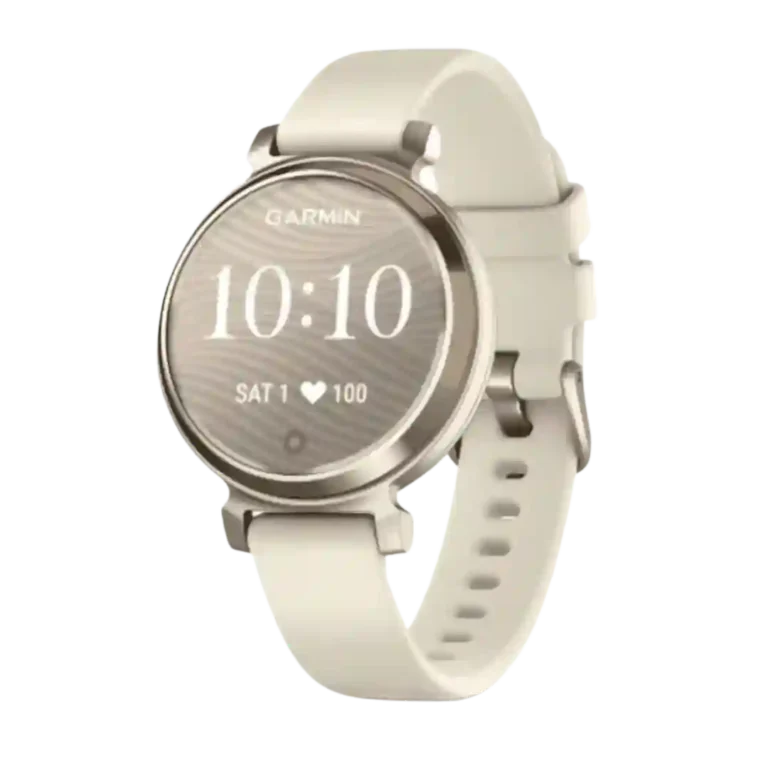
Style and design were the broadest positive theme, with reviewers repeatedly describing the Lily 2 as elegant, classy, jewelry-like, and more wearable than sporty watches.
-
Band quality is a clear upgrade, with standard 14mm quick-release bands repeatedly praised for flexibility, comfort, and easy replacement.
-
Water resistance is a strength, with 5ATM or 50-meter swim/shower-safe evidence across multiple reviews.
-
Wellness insights are a standout, especially Body Battery, stress, hydration, sleep score, and Garmin Connect data that help users understand daily energy.
-
Build quality improved versus the original Lily, with aluminum, Gorilla Glass, and a more premium feel appearing repeatedly in reviews.
-
Stress tracking was praised as engaging and useful, often linked with Body Battery and daily wellness patterns.
-
Size options and wrist fit favor small wrists and compact-wearable shoppers, though the product line itself remains very small and style-focused.
-
Fit was praised for small wrists, snug wear, and a low-profile shape that sits comfortably without bulk.
-
Safety features are a real strength for this class, including incident detection, LiveTrack, emergency contacts, and assistance alerts through a phone.
-
Heart-rate accuracy was a consistent strength, with several reviewers comparing it favorably to straps, Oura, Apple Watch, or Garmin watches, though intense intervals could wobble.
-
Customization is strong for bands and morning reports, with watch-face and patterned-lens customization more limited.
-
Software smoothness improved over the original Lily, especially gesture wake and connected GPS handoff, though some touch controls remained less fluid.
-
Fitness tracking accuracy was mostly positive for casual use, especially activity and heart-rate basics, but HIIT and unsupported activities produced caveats.
-
Outdoor visibility was mostly good to excellent, especially in DC Rainmaker and DesFit testing, though one reviewer found bright sun harder to read.
-
Step counting was broadly supported and valued, including pool-length and walking evidence, though one user contrasted it with an older inaccurate watch rather than direct lab validation.
-
Health tracking accuracy was generally reliable for core metrics like heart rate, steps, sleep, respiration, and wellness trends, with some sleep and SpO2 caveats.
-
Reliability was good in user-level evidence, with reviewers calling tracking reliable and one owner saying it did what they wanted.
-
Battery life was generally strong for a small wearable, usually landing around four to five days, with a few heavier-use reviews seeing closer to three days.
-
Cross-platform compatibility is generally good across Android and iPhone, but Android gets more interactive notification and call-response features.
-
Automatic activity detection was consistently useful for walks and casual movement, with reviewers noting reliable walk detection and Garmin Move IQ, though its automatic detail is limited.
-
Durability looks improved thanks to Gorilla Glass and aluminum construction, though few reviews included long-term abuse testing.
-
Music controls are available for controlling a paired phone, but reviewers consistently distinguished that from true onboard music.
-
Workout variety is good for casual users with 18 profiles and new dance, HIIT, rowing, and meditation options, but missing indoor cycling and some sports frustrates reviewers.
-
Materials quality improved with aluminum, but one reviewer still viewed aluminum as cheaper and less durable than stainless steel.
-
Coaching features are useful but limited, including hydration adaptation, timers, alerts, plans, and VO2 Max mentions, while richer recovery guidance is absent.
-
Value is context-dependent: reviewers liked the style, battery, and feature set, but comparisons to cheaper Fitbits or similarly priced Garmin models limited enthusiasm.
-
Blood oxygen tracking is present through Pulse Ox or SpO2, but one reviewer warned readings could run low, so confidence is moderate rather than excellent.
-
Smartwatch features are useful but lean, including notifications, weather, calendar, Find My Phone, Morning Report, Garmin Pay on Classic, and music controls.
-
Garmin Pay is a useful addition on Classic models, though regional bank support limits how valuable it is for some reviewers.
-
Charging is functional but not universally convenient: the magnetic or clip-style charger is easy enough, yet proprietary clips and travel cable needs were recurring caveats.
-
Garmin Connect provides deep data and useful dashboards, but app clarity was split between reviewers who found it intuitive and those who called it clunky or unclear.
-
Menu navigation was workable and often easy enough, but some reviewers still described learning curves or extra steps.
-
Third-party app support is limited overall, but manually started workouts can sync to outside services like Strava through Garmin Connect.
-
Smartphone notifications arrive reliably, but control is limited, especially on iPhone and when trying to filter app-specific alerts.
-
Call handling works best with Android predefined responses, while iPhone users mostly just receive alerts and still need the phone to act.
Cons
-
Display quality is intentionally minimalist and readable for many, but several reviewers criticized the basic monochrome LCD and lack of AMOLED vibrancy.
-
The user interface is usable but not polished; reviewers described it as fine, simple, or learnable, while also noting extra steps and learning curves.
-
Brightness drew mixed reactions: one reviewer found direct-sun visibility excellent, while several others wanted a brighter screen through the patterned lens.
-
Sleep tracking was mixed: some reviewers found scores and timing aligned, while others saw missed sleep duration and less useful graphs.
-
Recovery insights are a partial win: Body Battery gives readiness-style guidance, but dedicated recovery time and workout benefit features are absent.
-
Charging speed was mixed, ranging from roughly an hour to full charge in some tests to slower 30-minute gains versus Apple Watch.
-
Watch face quality is basic, with a handful of monochrome options and repeated wishes for more color or more choices.
-
Calorie tracking was present but not especially trusted, with direct reviewer evidence saying calories were slightly off or generous.
-
The operating system experience is Garmin-centric and lean, optimized for fitness and notifications rather than native Apple or Google app ecosystems.
-
Touchscreen responsiveness was mixed to weak, with several reviewers finding it sluggish, less fluid, or insufficiently refined despite one positive touch-screen comment.
-
GPS accuracy depends on the phone because there is no onboard GPS; connected GPS could work well, but carrying a phone is required for maps and reliable distance.
-
Button controls are a weak point because the Lily 2 depends on touch and a pseudo-button; reviewers wanted real side buttons or easier pause controls.
-
Bluetooth-related connectivity is limited: phone pairing and notifications work, but reviewers noted no gym-equipment broadcast, no direct Bluetooth headphone use, and no external HR sensor pairing.
-
The Lily 2 is constrained as an app platform: reviewers noted no Connect IQ widgets and no native third-party app installation.
-
Onboard music storage is missing, and multiple reviewers explicitly called out no music storage or offline listening.
-
ECG functionality is essentially absent, with reviews explicitly noting no ECG recordings or wishing for newer sensor hardware.
Compared With Category Average
Compared with other Smart Watch, this product is above average in size options, below average in GPS accuracy, Bluetooth connectivity, button controls.
| Attribute | This product | Category average | Difference |
|---|---|---|---|
| GPS accuracy | 2.4 | 4.0 | -1.6 |
| Bluetooth connectivity | 2.2 | 3.9 | -1.8 |
| button controls | 2.3 | 3.9 | -1.6 |
| app ecosystem | 2.0 | 3.6 | -1.6 |
| onboard music storage | 1.6 | 2.8 | -1.3 |
| ECG functionality | 1.0 | 2.3 | -1.3 |
| size options | 4.4 | 3.1 | +1.2 |
| charging speed | 3.1 | 4.0 | -1.0 |
FAQ
Does the Garmin Lily 2 have built-in GPS?
No. Reviewers repeatedly noted that the Lily 2 relies on connected GPS from a paired phone for outdoor routes, pace, and distance.
How long does the Garmin Lily 2 battery last?
Most reviews landed around four to five days, with some heavy-use testing closer to three days. That was still better than daily charging for many smartwatch users.
Is the Garmin Lily 2 good for workouts?
It works well for casual workouts, walks, runs with a phone, HIIT, dance, rowing, swimming, and general activity tracking. It is less compelling for serious training because it lacks built-in GPS, richer recovery metrics, and some sport profiles like indoor cycling.
Is the Garmin Lily 2 comfortable to wear overnight?
Yes. Comfort was one of the strongest points across reviews, with multiple reviewers saying it was lightweight, barely noticeable, and easy to wear while sleeping.
Does the Garmin Lily 2 support Garmin Pay?
Garmin Pay is available on the Lily 2 Classic models, not every Lily 2 version. Reviewers liked the idea but warned that bank support can be limited depending on region.
Can the Garmin Lily 2 store music or use third-party apps?
No onboard music storage was reported, though phone music controls are available. Reviews also noted limited app-platform support, including no Connect IQ widgets and no native Google or Apple app installation.
Is sleep tracking accurate on the Garmin Lily 2?
Sleep tracking was mixed. Some reviewers found scores and sleep data aligned well, while others reported missed sleep duration, harder-to-read graphs, or weaker insights than Fitbit or Apple Watch.
Consider This Instead
If you want better onboard music storage
Choose Huawei Watch Fit 4. It scores 4.7 vs 1.6 for onboard music storage, with a 4.1 overall score.
If you want better GPS accuracy
Choose Garmin Epix Pro (Gen 2). It scores 4.8 vs 2.4 for GPS accuracy, with a 4.1 overall score.
If you want better app ecosystem
Choose Apple Watch Ultra 3. It scores 4.9 vs 2.0 for app ecosystem, with a 4.2 overall score.
If you want better Bluetooth connectivity
Choose Xiaomi Watch 2 Pro. It scores 4.7 vs 2.2 for Bluetooth connectivity, with a 3.8 overall score.
Overall Top Smart Watch Alternatives
Good if you want the most rugged Apple Watch, brighter outdoor screen, better battery, LTE, and top apps. Skip it if you need Garmin-like mapping, recovery analytics, smaller sizing, or...
Pros: display quality, heart rate accuracy
Cons: cross-platform compatibility, recovery insights
Choose the Galaxy Watch 6 for a polished Android smartwatch with a bright screen, strong apps, and broad health tracking. Skip it if battery life, iPhone support, or full non-Samsung...
Pros: outdoor visibility, workout tracking variety
Cons: cross-platform compatibility, battery life
Good if you need a rugged Garmin with deep outdoor, tactical, GPS, training, and battery features. Skip it if you want a cheaper lifestyle watch or do not need the...
Pros: materials quality, durability
Cons: LTE connectivity, value for money
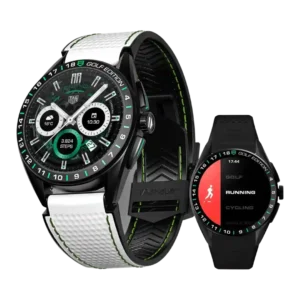
Good if you want premium golf maps, virtual caddie tools, health metrics, music, notifications, and long battery life in one watch. Skip it if you only need basic yardages or...
Pros: pairing reliability, brightness
Cons: software smoothness, user interface