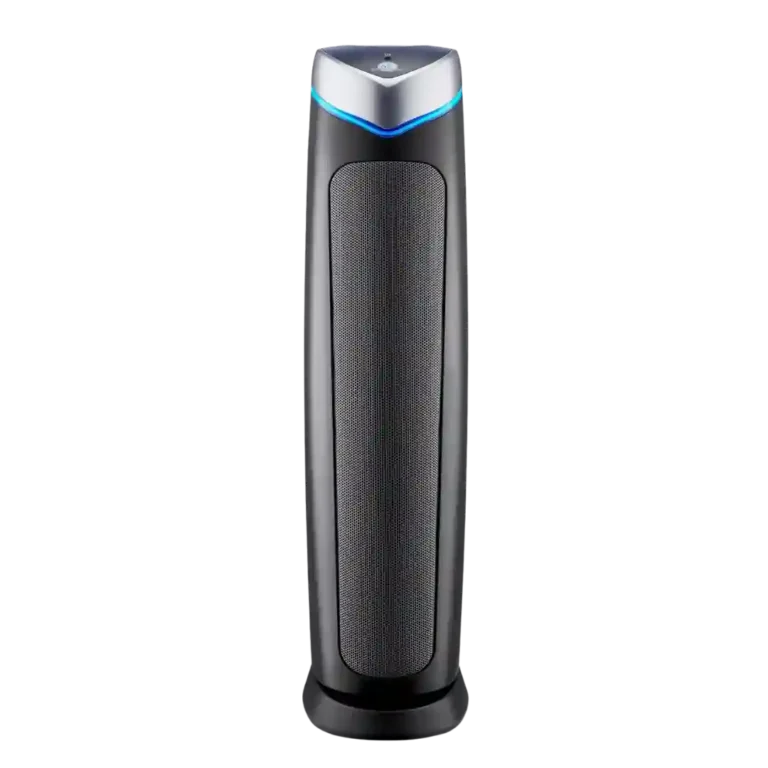
- Better: room performance Tom’s Guide says the GermGuardian does not keep up with this mid-sized Blueair.
GermGuardian AC5250 Air Purifier Review
Bottom Line
Choose the GermGuardian AC5250 if allergies, dust, pet odors, or room freshness matter more than quiet design. Skip it if you need a dark bedroom purifier, smart controls, low upkeep costs, or proven top-tier CADR performance.
Best for allergy sufferers, pet owners, and households that want a straightforward tower purifier for bedrooms, offices, basements, or litter-box areas. It is especially appealing when visible dust and everyday odors are the main problems.
Not ideal for light-sensitive sleepers, smart-home buyers, or anyone expecting quiet high-speed cleaning in a large open room. Buyers worried about UV bulb upkeep, alarms, or premium CADR performance should compare alternatives.
The GermGuardian AC5250 comes across as a purifier that many real owners love for practical results: fresher air, less dust, fewer allergy symptoms, and better control of pet or litter-box odors. Its HEPA, carbon, pre-filter, and UV-C setup gives buyers a lot of perceived protection for the money, and long-term owners often report years of steady use. The tradeoff is refinement. Expert testing and some customers criticize its power, CADR, energy use, bright lights, loud upper speeds, awkward alarms, and occasional durability or safety failures. It is strongest as a bedroom or pet-area workhorse for people who tolerate light and fan noise, not as a polished smart purifier.
Compared in Reviews
Products reviewers directly compared with this model, grouped into quick takeaways.
- Better: particle cleaning test Breathe Quality says the GermGuardian trails the Blue Pure 511i Max in its particle-cleaning result.
- Better: particle cleaning test Breathe Quality says the GermGuardian trails the Airmega 150 in its particle-cleaning result.
Feature Scorecards
Summary
66 reviewed features- Very positive 4.5-5.0 0% 0 features
- Positive 3.5-4.4 55% 36 features
- Neutral 2.5-3.4 29% 19 features
- Negative 1.5-2.4 17% 11 features
- Very negative below 1.5 0% 0 features
Pros
-
Setup and basic use are easy, with simple controls and little assembly. The ease-of-use praise does not extend to every maintenance task or nighttime control adjustment.
-
Pet-dander feedback is generally positive, especially from homes with dogs, cats, birds, and rabbits. Several owners noticed reduced symptoms or visible dander capture, though severe pet allergies still required other cleaning steps.
-
True HEPA is treated as a meaningful reason to choose this model. Comments praise the particle-capture promise, especially for allergens, dust, mold spores, and smoke-prone areas.
-
Many owners sleep better because of reduced congestion or steady white noise. Light-sensitive sleepers have the opposite experience when the red or blue indicators brighten the room.
-
Breathing relief is a major strength. Users with asthma, sinus issues, congestion, bronchitis, or pet allergies repeatedly described easier breathing and fewer symptoms.
-
Room coverage works best in bedrooms, offices, and moderate spaces. Several owners used it in larger open areas with multiple units, while some found performance weaker outside enclosed rooms.
-
Several users saw visible buildup on filters or fewer airborne particles, while expert testing described only middling particle-cleaning numbers. It appears capable, but not a top performer against stronger mid-size units.
-
Mold and mildew comments are limited but generally positive, mostly from basement or older-home use. Buyers saw fresher rooms and fewer musty or mildew-related concerns when pairing the unit with other cleanup.
-
Most owners describe noticeably fresher or cleaner air, often within hours or days. The main pushback comes from a few users and one lab-style review that found the purifier underpowered for its price.
-
Portability is decent for a tall purifier. Owners mention carrying it, moving it between rooms, or traveling with it, though it is not a tiny tabletop unit.
-
Pet hair capture is helpful when the pre-filter is maintained. Cat hair, dog hair, and rabbit fur show up on the filter, though whole-home hair control still requires cleaning.
-
The pre-filter can be vacuumed or rinsed by some owners, which helps extend maintenance intervals. This is a practical upkeep benefit when the unit is catching pet hair or visible dust.
-
Air changes per hour came up mainly in expert coverage, where the 5X figure matched the claimed room size. This is a specifications-driven strength rather than a common owner talking point.
-
One buyer liked the ionizing setting for nighttime use. Ionization is not a major theme across the comments, so this should not drive the purchase decision.
-
Allergy relief is the strongest customer theme, with many users mentioning less sneezing, congestion, coughing, or sinus irritation. Results vary in large rooms and severe allergy situations, but the pattern is strongly favorable.
-
Value depends on sale price and expectations. Many buyers call it worth the money after allergy or odor relief, while critics see high replacement costs and better competitors at similar prices.
-
The tall, slim body is usually seen as space-efficient, though some buyers are surprised by its height or bulk. It fits corners and narrow spots better than squat, wide purifiers.
-
Owners value the HEPA filtration and frequently connect it with cleaner air, allergy relief, and visible filter buildup. A few complaints focus less on HEPA performance and more on replacement reminders or filter costs.
-
Smoke handling is mixed but often helpful for light or localized smoke. Some users said it reduced indoor smoke smell, while expert testing found smoke CADR was the product’s strongest lab category.
-
Dust reduction is one of the clearest owner wins, with many people seeing less dust on surfaces or heavy dust buildup on the filter. A few still found dust control only partial in larger or pet-heavy spaces.
-
Customer sentiment is broadly favorable, driven by cleaner air, allergy relief, odor control, and repeat purchases. Negative experiences are concentrated around noise, lights, durability, and support.
-
Some owners feel a cooling effect from the airflow, sometimes enough to reduce air-conditioning use. It is comfort airflow, not true cooling or heating.
-
Pollen-sensitive owners often reported easier breathing and less seasonal irritation. The strongest comments came from allergy users who noticed symptoms return outside the filtered room.
-
Odor control is a major reason many owners like it, especially for litter boxes, pets, cooking, musty rooms, and stale air. A smaller group found odor removal weak or dependent on placement and filter upkeep.
-
Buyers appreciate the layered cleaning approach, especially when HEPA, carbon, pre-filter, and UV-C are framed as working together. The design is seen as more complete than a basic fan-style filter.
-
The carbon or charcoal layer gets credit for helping with smells, especially pets and kitchen odors. Dissenters say the carbon layer is thin and not strong enough for serious odor control.
-
The multiple fan speeds are appreciated because buyers can trade cleaning power for noise. Complaints center on high settings being loud or, in a few cases, lower settings feeling too weak.
-
Ozone-free operation matters to bird owners and ozone-sensitive users. Most positive comments frame the shielded UV design as safer, though one owner noticed an ozone-like smell.
-
The pre-filter is useful for catching larger material like hair, dust, and visible debris. Some owners like vacuuming it between replacements, while critics think the pre-filter layer is too thin.
-
Virus and germ confidence is mostly tied to UV-C. Some buyers felt reassured during illness or COVID exposure, while skeptics questioned whether the UV light has enough contact time to matter.
-
Durability is polarized. Some units run for years, even nearly a decade, while a smaller but serious set of buyers report failures within months or a year.
-
Appearance is mixed-positive: many like the sleek black tower, while others dislike stickers or the flashy light ring. It looks more polished than basic units but not universally bedroom-friendly.
-
Filter changes are often described as easy, but reset buttons, UV bulb access, and internal cleaning draw complaints. Maintenance is simple for routine filter swaps and worse for alarms or deeper cleaning.
-
The timer is useful for simple shutoff scheduling, and several buyers like it for evening use. Some wish it worked more like a true sleep schedule or could cooperate with smart plugs.
-
Airflow direction is a recurring quirk: air often exits at an angle rather than straight forward. Some users simply reposition the tower, while others see it as poor engineering.
-
Filter life depends heavily on dust, pets, and 24/7 use. Some users get months from a filter, while others clog filters quickly and see maintenance costs rise.
Cons
-
Noise is the biggest tradeoff. Low settings can be quiet or pleasant white noise, but many owners find higher speeds, alarms, beeps, or motor whines too loud for bedrooms or TV rooms.
-
UV-C is divisive. Some buyers trust it for germs or illness prevention, but others see little difference, dislike bulb replacement, or report premature UV bulb failures.
-
Bright indicator lights are one of the most repeated complaints. The red power light and blue UV ring can bother light-sensitive sleepers, even when owners otherwise like the purifier.
-
Reliability is generally strong among long-term owners, with many units still running after years. The downside is a cluster of failures, random shutoffs, squeaks, or defective units.
-
Build quality ranges from solid and well-made to cheap around the rear cover tab. The most consistent physical complaint is fragile plastic on the filter door or tab.
-
Power use ranges from acceptable owner measurements to high expert-test consumption. Buyers planning 24/7 operation should weigh electricity cost along with filter and bulb replacements.
-
Warranty coverage is mixed. Expert coverage praises the five-year warranty, while customer comments show frustration when UV bulbs or failed units feel outside easy coverage.
-
Initial smell varies by unit. Many owners report no plastic or chemical smell, while others describe a temporary chemical odor or, in worse cases, a persistent toxic smell.
-
Sleep mode is a modest plus from expert coverage, but it does not solve the bright-light problem. The fan can be toned down, yet the unit still needs better night-friendly lighting.
-
Energy feedback is split. Some owners saw low running costs or even lower electric bills, while expert testing and a few users found the unit power-hungry compared with competitors.
-
Listing accuracy is mixed. Some owners say it works as described, but others dispute quietness claims, coverage claims, or five-speed usefulness.
-
CADR feedback is mixed: the product has documented smoke, dust, and pollen ratings, but expert testing was unimpressed compared with rival mid-size purifiers. It is not positioned as a high-CADR standout.
-
Documentation is serviceable but incomplete. The manual is short and diagram-heavy, yet some buyers wanted clearer instructions about lights, filter bags, or red indicators.
-
Filter and bulb costs are a recurring caveat. Some buyers find replacement filters reasonable, but others call HEPA filters, UV bulbs, or frequent changes expensive.
-
Controls are simple in daylight but frustrating in the dark. Flat or unlit buttons, awkward reset holes, and speed cycling make nighttime adjustments harder than expected.
-
Display readability is mixed. Some displays are easy to read, but fading screens, bright panels, and unlit buttons make nighttime operation frustrating.
-
Replacement filter fit and sourcing can be frustrating. A few owners warn that factory filters or specific models fit best, while cheaper alternatives may not close properly.
-
Replacement experiences are mixed. One owner had an easy unit exchange, while others struggled with filter fit or replacements that did not solve the underlying issue.
-
One buyer wished the unit could rotate, pointing to a small airflow-direction limitation rather than a core cleaning complaint.
-
Customer support feedback is sharply mixed. One buyer praised help with a replacement, while several others reported slow, dismissive, or unhelpful support when defects appeared.
-
Arrival condition is a real risk in a small number of cases. Buyers reported damaged, dented, opened-box, or faulty units even when the purifier itself could still function.
-
Settings retention is a real annoyance for power interruptions. Several owners say the unit stays off after a flicker or cannot restart from a smart plug or timer.
-
The missing remote comes up as a convenience complaint. Buyers using it in bedrooms or across a room would like remote power and speed control.
-
Sensor-related feedback is negative because this model lacks a smart sensor. Buyers wanting automatic air-quality-based adjustments need a more advanced purifier.
-
The handle design drew a clear complaint: one handhold makes repositioning awkward. This matters for buyers planning to move the tall unit often.
-
Wi-Fi is essentially absent on this model. Shoppers who want app or Wi-Fi reliability should look at a connected GermGuardian or a different smart purifier.
-
Smart features are limited. Expert coverage calls out the lack of internet controls and smart sensors, so this is a classic manual purifier rather than a connected appliance.
-
Safety concerns are uncommon but serious when they appear. Complaints include sharp plastic, UV bulb melting, fire fears, ozone-like smell, and toxic odor reports.
-
One owner linked the purifier to dryness, scratchy throat, and sinus irritation. This is not a common pattern, but it is a caution for people sensitive to dry-feeling airflow.
-
The lack of auto mode is a clear limitation. The unit depends on manual speed selection rather than adjusting itself to room conditions.
Compared With Category Average
Compared with other Air Purifiers, this product is below average in auto mode performance, air dryness, air quality sensor accuracy.
Summary
8 compared features- Above average 0.4+ pts higher 0% 0 features
- Same as average within 0.3 pts 0% 0 features
- Below average 0.4+ pts lower 100% 8 features
| Attribute | This product | Category average | Difference |
|---|---|---|---|
| auto mode performance | 1.5 | 3.9 | -2.4 |
| air dryness | 1.5 | 3.5 | -2.0 |
| air quality sensor accuracy | 2.0 | 3.7 | -1.7 |
| smart features | 1.8 | 3.4 | -1.7 |
| Wi-Fi reliability | 2.0 | 3.5 | -1.5 |
| handle design | 2.0 | 3.4 | -1.4 |
| energy efficiency | 2.9 | 4.1 | -1.3 |
| display readability | 2.7 | 3.9 | -1.3 |
FAQ
Does the GermGuardian AC5250 help with allergies?
Many owners say it helped with allergies, sinus congestion, sneezing, asthma triggers, and pet dander. It works best when placed in the room where symptoms are worst and paired with regular cleaning.
Is it quiet enough for a bedroom?
It can be quiet or pleasant white noise on lower settings, but many buyers say higher speeds, alarms, and motor sounds are too loud. The bright red and blue lights are a bigger bedroom complaint than the fan for some users.
Does it remove odors?
Most odor comments are positive for litter boxes, pets, cooking, smoke, musty rooms, and stale air. A smaller group says odor control is weak, especially when expecting fast elimination from the carbon layer.
Is the UV-C light worth using?
Some buyers like the extra confidence for germs or illness, but others notice little difference or dislike bulb replacement issues. UV-C is a bonus feature here, not the clearest reason to buy it.
How expensive is maintenance?
Routine filter swaps are often easy, but filter and UV bulb costs can add up. Owners in dusty or pet-heavy homes may need replacements sooner than expected.
Does it work for large rooms?
It performs best in bedrooms, offices, and contained spaces. Several owners use multiple units in open floor plans, while expert testing and some customers question its strength for larger areas.
Sample Expert Reviews We Analyzed
These are a few of the reviews included in our analysis.
Consider This Instead
If you want better customer support
Choose Levoit Core 200S. It scores 5.0 vs 2.3 for customer support, with a 4.2 overall score.
If you want better filter replacement cost
Choose MOOKA AP-S0610L. It scores 5.0 vs 2.7 for filter replacement cost, with a 4.2 overall score.
If you want better control placement
Choose Honeywell HPA3100. It scores 5.0 vs 2.7 for control placement, with a 4.0 overall score.
If you want better reliability
Choose Honeywell HPA125. It scores 5.0 vs 3.3 for reliability, with a 4.2 overall score.
Overall Top Air Purifiers Alternatives
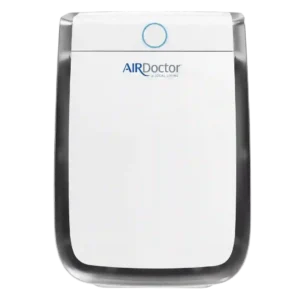
Choose the H7124 if you want a quiet smart purifier for odors, dust, pets, and app control. Skip it if you need foolproof Wi-Fi, wall-facing intake, UV light, or strong...
Pros: particle removal effectiveness, pollen removal
Cons: UV-C light effectiveness, air dryness
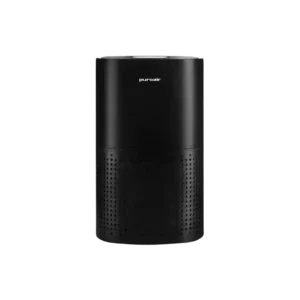
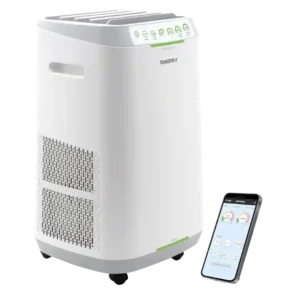
Best for quiet, smart large-room cleaning and strong odor control. Skip it if $99 filters, true-HEPA wording, or occasional sensor/fan reliability complaints are dealbreakers.
Pros: air purification performance, allergen reduction
Cons: reliability, filter replacement cost
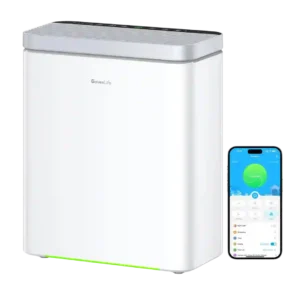
Best for large rooms, strong particle cleanup, quiet everyday running, and easy rolling. Skip it if you need app control, compact placement, automatic restart after outages, or low filter costs.
Pros: ozone-free operation, particle removal effectiveness
Cons: filter replacement cost, app connectivity
Best for compact rooms, strong particle removal, quiet sleep use, and useful app controls. Skip it for large spaces, heavy odors, or exact PM2.5 readings.
Pros: Wi-Fi reliability, filter stages
Cons: PM2.5 detection