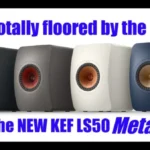
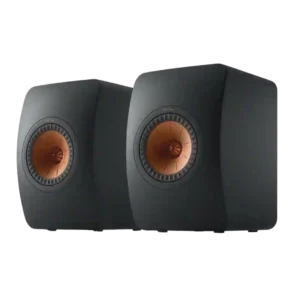
Review: KEF LS50 Meta Passive Bookshelf Speakers
Updated: 4 weeks ago
4.2
Based on methodology below
122
Insights analyzed
16
Grouped by key features
12
From expert reviews
Scores below reflect consolidated expert coverage across these features.
Bottom Line
Choose LS50 Meta for pinpoint imaging and clean, refined vocals in a compact standmount; Skip if you want deep bass or party-level dynamics without investing in capable amplification.
Best for
Small to medium rooms and nearfield listeners who want holographic imaging, vocal realism, and neutral-to-refined tuning, and who can pair the speakers with a quality amp (and optionally a sub).
Not for
Large rooms, bass-first listeners, or anyone who wants effortless party-level loudness and slam without adding a subwoofer and higher-current amplification.
Verdict
KEF’s Meta update keeps the LS50’s point-source strengths while making the presentation smoother and less splashy, thanks to MAT’s backwave absorption and Uni-Q refinements. Across reviews, the speaker disappears well, resolves micro-information, and maintains a locked center image that scales noticeably with higher-quality sources and amplification. The tradeoff is practicality: the 85dB/low-impedance load prefers an amp with real current, and the small cabinet cannot deliver floorstander-scale slam or true sub-bass without help. Put them on sturdy stands with room to breathe, and add a sub if movies are a priority.
Pros
-
4.8based on 11 reviewsStereo imaging accuracy: 4.8, based on 11 reviewsStereo imaging accuracy is one of the most praised attributes, with a stable center image, precise placement, and strong off-axis behavior contributing to a wide, convincing soundstage.
-
4.7based on 1 reviewDialogue clarity (for TV/soundbar use): 4.7, based on 1 reviewWhen used with TV or films, spoken-word intelligibility is described as excellent, with clear articulation and strong image focus that helps dialogue lock to the screen.
-
4.6based on 8 reviewsDesign and aesthetics: 4.6, based on 8 reviewsThe LS50 Meta’s futuristic Uni-Q look and matte finish options (including newer colorways) are widely liked, with frequent praise for fit, finish, and visual appeal on matching stands.
-
4.6based on 11 reviewsDetail retrieval: 4.6, based on 11 reviewsDetail retrieval is consistently highlighted as a key strength, with reviewers citing strong micro-detail, separation in complex mixes, and the ability to reveal upstream gear differences and recording quality.
-
4.5based on 3 reviewsLow-volume performance: 4.5, based on 3 reviewsLow-volume performance is commonly praised, with many noting that imaging, vocal focus, and fine detail remain convincing even at quiet listening levels.
-
4.5based on 10 reviewsCohesive presentation: 4.5, based on 10 reviewsUni-Q coherence is a repeated theme: the speakers are often described as seamless, integrated, and single-driver-like in how they blend bass, mids, and treble once properly set up and broken in.
-
4.4based on 11 reviewsVoice clarity: 4.4, based on 11 reviewsVoice clarity is a standout strength, with repeated praise for natural, centered vocals and reduced sibilance compared with earlier LS50 models. A few listeners still hear a hint of metallic character or a slightly recessed/veiled vocal range depending on gear and preferences.
-
4.3based on 11 reviewsFrequency response balance: 4.3, based on 11 reviewsTonality is generally described as smooth, balanced, and neutral-to-slightly-warm, with the Meta revision reducing treble glare and sibilance versus earlier LS50 versions. Bass reaches impressively low for size but does not deliver true sub-bass extension.
-
4.2based on 12 reviewsValue for money: 4.2, based on 12 reviewsValue for money is usually rated highly because the LS50 Meta competes with pricier designs on imaging and resolution, but there is a minority view that the current price is too high given bass and dynamics limitations versus cheaper rivals.
-
4.2based on 5 reviewsDistortion at high volume: 4.2, based on 5 reviewsAt sane volumes, the presentation stays clean and composed, with MAT frequently credited for reducing treble distortion and harshness. When driven beyond comfort zones, some listeners report treble peakiness, flattening, or compression rather than graceful scaling.
-
4.0based on 2 reviewsHome theater integration: 4.0, based on 2 reviewsSeveral reviews find the LS50 Meta compelling in home-theater roles (2.0/2.1 or as part of 5.1), but also note that a subwoofer is the easiest way to add the low-end weight and impact movies demand.
-
4.0based on 8 reviewsLoudness / maximum volume: 4.0, based on 8 reviewsMaximum loudness is respectable for the size, but several reviews caution that these are not the right choice for sustained very high SPL or 100dB+ peaks, especially in larger rooms.
-
3.9based on 9 reviewsDynamic headroom: 3.9, based on 9 reviewsDynamic headroom is strong for a compact standmount but not unlimited; multiple sources note the speakers are most comfortable at moderate listening levels and can feel restrained or compressed when pushed hard, depending on amplification.
-
3.9based on 9 reviewsSetup simplicity: 3.9, based on 9 reviewsSetup is not difficult but is placement-sensitive: stands, some distance from walls, and careful toe-in/positioning are repeatedly recommended. Port plugs and room placement tweaks can help if space is tight.
-
3.7based on 10 reviewsAmplifier power requirements: 3.7, based on 10 reviewsMost sources call the LS50 Meta moderately demanding: 85dB sensitivity and low-impedance dips benefit from an amp with good current and quality. They can play well on modest power at moderate levels, but stronger electronics unlock better dynamics, clarity, and control.
-
3.6based on 1 reviewSoundstage height: 3.6, based on 1 reviewWhile width and depth are often excellent, at least one review notes soundstage height is less spectacular, describing a lower perceived ceiling compared with some alternatives.
FAQ
Do the LS50 Meta need a subwoofer?
Not for most music at moderate levels, as bass is surprisingly full for the size, but a sub helps if you want true sub-bass, more impact, or movie-style rumble.
How demanding are they to drive?
They are not impossible, but the 85dB sensitivity and low-impedance dips mean they reward an amplifier with good current delivery. Better amps also improve dynamics and image stability at higher volumes.
Can I place them on a bookshelf or close to a wall?
They can work, especially with port plugs, but multiple reviews note they sound best on stands with breathing room from the rear and side walls to keep bass tight and the stage open.
Are they forgiving with poor recordings?
They are highly resolving and will expose harshness and compression, but several listeners also found the Meta revision less splashy and more refined than the original LS50, making rough recordings more tolerable.
Are they good for home theater?
Yes as front L/R (and in a multichannel setup), with excellent clarity and imaging for dialogue and effects. A subwoofer is recommended for full-range impact in movies.
Reviews we analyzed
Video Reviews

Article Reviews
Klauseulenbach
The Absolute Sound
Theaudiobeatnik
Best Bookshelf Speakers
#1
4.5
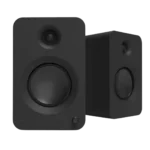
Choose the REN if you want a stylish, plug-and-play stereo alternative to a soundbar with excellent inputs and imaging. Skip it if you...
Pros: Wired input availability, HDMI ARC), Home theater integration, Bluetooth connection stability, Cohesive presentation, Dialogue clarity (for TV/soundbar use), Stereo imaging accuracy
Cons: none
#2
4.4
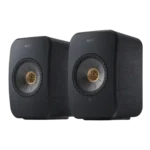
Choose the LSX II for compact wireless speakers with standout imaging and flexible streaming. Skip if you need deep bass or large-room volume...
Pros: Wired input availability, Latency with TV (lip sync), Setup simplicity, Design and aesthetics, Stereo imaging accuracy, Cohesive presentation, Audio format support
Cons: On-device controls, Remote control usability
#3
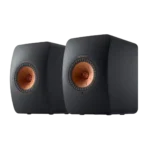
4.3
Choose LS50 Wireless II for reference-level imaging in a sleek all-in-one streamer/TV setup; Skip if you want deep sub-bass without a sub or...
Pros: AirPlay compatibility, Chromecast compatibility, Latency with TV (lip sync), Amplifier power requirements, Audio format support, Voice clarity, Stereo imaging accuracy
Cons: Smart assistant integration (Alexa, Privacy & data, Remote control usability
#4
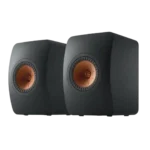
4.2
Choose LS50 Meta for pinpoint imaging and clean, refined vocals in a compact standmount; Skip if you want deep bass or party-level dynamics...
Pros: Stereo imaging accuracy, Dialogue clarity (for TV/soundbar use), Design & aesthetics, Detail retrieval, Low-volume performance, Cohesive presentation, Voice clarity
Cons: None