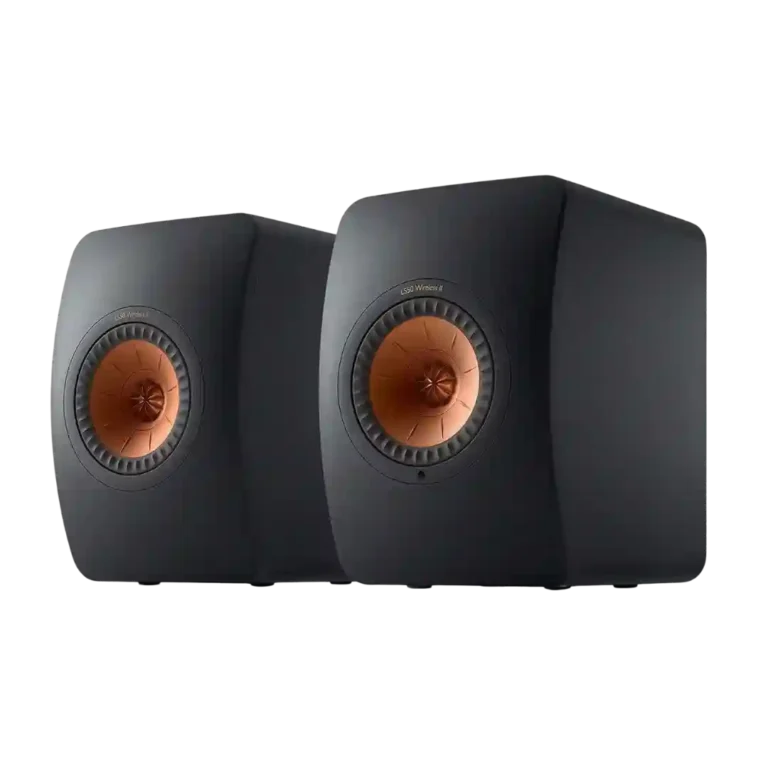
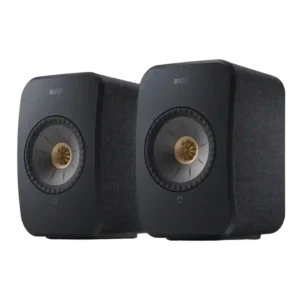
KEF LS50 Wireless II Powered Bookshelf Speakers Review
Bottom Line
Choose LS50 Wireless II for reference-level imaging in a sleek all-in-one streamer/TV setup; Skip if you want deep sub-bass without a sub or you’re allergic to app/firmware quirks.
Listeners who want a compact, premium all-in-one stereo that doubles as TV speakers and streams hi-res music without separate amplification or a separate streamer, especially in small-to-medium rooms where imaging and clarity matter.
Bass-first listeners or very large-room users who expect true full-range slam without adding a sub, and anyone who does not want to depend on apps, Wi-Fi, or firmware updates for daily use.
KEF’s LS50 Wireless II is a true do-it-all hi-fi system: active amps and DSP deliver a clean, controlled presentation with standout imaging, wide soundstaging, and excellent detail, while HDMI eARC and modern streaming (AirPlay 2, Chromecast, Roon, Spotify/Tidal Connect) make it easy to live with. The tradeoff is that it still behaves like a small, powered computer: setup and network/HDMI reliability is excellent for many, but a subset of reviewers and owners report dropouts or handshake quirks, and bass depth below roughly 40–50Hz benefits from a sub. If you value simplicity over box-stacking, it’s one of the strongest options in its class.
Scored Features
Pros
-
AirPlay 2 support is repeatedly mentioned as a core convenience feature and is generally reported to work smoothly for streaming from Apple devices.
-
Chromecast Built-in is frequently cited as a major upgrade over the original and is generally described as seamless, including for multi-room casting.
-
As a powered system, LS50 Wireless II eliminates external amp matching; built-in amplification and DSP are repeatedly highlighted as a major simplifier and a key reason the speakers stay composed across volumes.
-
Where measured or discussed, latency is portrayed as very low and lip-sync problems are generally not reported, helping the Wireless II work well for TV and movies.
-
Wireless II is repeatedly credited with broad hi-res support including up to 24-bit/384kHz playback, plus DSD256 and MQA core decoding; several reviews note that speaker-to-speaker wireless linking can downsample and that wiring the pair unlocks higher inter-speaker resolution.
-
Vocals are repeatedly described as clear, intelligible, and well focused, with strong midrange articulation that makes singers and dialogue-like content easy to follow at normal volumes.
-
Stereo imaging is a hallmark across reviews, with point-source style precision, stable center focus, and strong instrument placement cited as signature advantages of the Uni-Q design.
-
Cohesion and integration are consistently praised, with multiple reviews noting that the presentation stays unified and well layered rather than sounding like separate drivers.
-
Reviewers repeatedly call out the comprehensive rear-panel connectivity: HDMI eARC for TV, optical and coax digital, analog aux, Ethernet, and sub outputs; a recurring downside is that the Wireless II drops the older USB-B computer input. The analog aux input is valued for turntables and legacy sources, but multiple reviews note that analog is still processed through the internal DSP chain, which some purists may not love even when the results sound clean.
-
Detail and micro-detail retrieval are repeatedly singled out as a standout strength, with many reviewers describing the presentation as highly resolving and revealing.
-
Soundstage is frequently described as wide and especially deep/tall for the cabinet size, with strong layering; a few impressions suggest depth can exceed width depending on room and setup.
-
Reviews consistently praise the LS50 line’s distinctive Uni-Q look and premium finishes; Wireless II keeps the iconic curved baffle and compact footprint while still feeling hefty and high-end, with multiple color options and stand-mount friendly design.
-
Touch/button interaction is typically described as responsive and intuitive, with quick access to power, volume, mute, and source.
-
On-speaker touch controls and clear source/status indicators are frequently mentioned as genuinely useful for quick input changes and volume, even when most control is done via phone.
-
Codec details are rarely emphasized for Wireless II, but Bluetooth capability is treated as competent; older-gen coverage highlights aptX support as a quality-minded inclusion for Bluetooth playback.
-
Dynamics are often described as surprisingly punchy for a compact stand-mount, helped by active amplification and DSP; some content notes that the speaker can lose some refinement at extreme, large-room playback levels.
-
MAT and DSP are repeatedly credited with lowering distortion and keeping treble clean; most impressions describe the sound staying controlled when pushed, with limitations mainly tied to small-driver physics at the extremes.
-
DSP/EQ tools are a major theme: reviewers mention desk/stand/wall modes, bass extension choices, treble trims, room presets, and more advanced Expert controls, with the caveat that dialing it in can take experimentation.
-
Bluetooth is commonly treated as a reliable fallback for quick playback, with most reviewers reporting stable day-to-day behavior; a few broader reliability discussions mention dropouts, suggesting environment and firmware can matter.
-
Optical input is repeatedly cited as a dependable connection option and a practical workaround when HDMI ARC behavior is inconsistent, with some sources noting its lower max resolution versus other inputs.
-
Most reviews describe a controlled, neutral-to-balanced tuning with tight bass and clear mids, but some listeners find it clinical or a bit lean in warmth, and bass-heads may want more sub-bass support.
-
Spotify Connect is highlighted as part of the integrated streaming stack and is generally portrayed as convenient, though some forum-sourced complaints mention track-end glitches or cutouts in certain cases.
-
HDMI eARC is commonly praised for making the speakers a credible TV audio upgrade, but a few reports describe HDMI handshake quirks with specific televisions and occasional restarts or dropouts.
-
As a two-channel TV and music system, the Wireless II is often described as a strong soundbar alternative with big scale for its size; it’s still fundamentally stereo (not surround), and deep movie bass is frequently said to improve with a sub.
-
Reviewers generally agree the speakers play loudly for their size and remain composed, though several note they are not ideal for very large rooms or true concert-level output.
-
Wireless II’s ability to link the speakers wirelessly and optionally via Ethernet is a recurring plus; wiring is portrayed as a stability and resolution upgrade, while older-gen coverage notes the inconvenience of needing a permanent inter-speaker cable.
-
Many reviewers call setup quick once power and network are connected, with guided room/placement tuning; however, first-time onboarding can be finicky for some (often involving extra apps or certain TV handshakes).
-
Wi-Fi streaming is often reported as smooth across services and protocols, yet multiple reviews that reference owner feedback warn about intermittent dropouts or speaker/app disconnects on some networks.
-
KEF Connect is widely described as a big step up from earlier KEF apps, with clean navigation and useful settings, but a minority of reviewers and forum-based reports describe connection loss, setup friction, or firmware-related instability.
-
At lower listening levels the system is generally still described as clear and controlled, but a few users mention auto-standby behavior or less visceral bass until volume or content demands wake the low end.
-
Value is framed as strong for an all-in-one audiophile system when factoring in amplification, DAC, and streaming, but the price is still a frequent sticking point and some reviewers argue separates can outperform it for the money.
-
The included remote is seen as functional but basic; several reviewers call it cheap-feeling or wish it were backlit and had clearer direct input selection.
Cons
-
Account creation and app ecosystem requirements are mentioned as a drawback by some, especially when setup pushes users toward additional platforms; privacy prompts are noted during onboarding.
-
Multiple reviews note there is no built-in voice assistant, so smart control is primarily via the app or external ecosystems rather than hands-free speaker-based assistants.
Compared With Category Average
Compared with other Bookshelf Speakers, this product is above average in On-device controls, Amplifier power requirements, Soundstage height, near average in Wired input, below average in Value for money, Setup simplicity.
| Attribute | This product | Category average | Difference |
|---|---|---|---|
| On-device controls | 4.5 | 3.2 | +1.3 |
| Value for money | 3.9 | 4.4 | -0.6 |
| Amplifier power requirements | 5.0 | 4.2 | +0.8 |
| Soundstage height | 4.6 | 4.0 | +0.5 |
| Distortion at high volume | 4.4 | 4.0 | +0.4 |
| Setup simplicity | 4.0 | 4.4 | -0.4 |
| Wired input | 4.6 | 4.3 | +0.3 |
| Audio format support | 5.0 | 4.5 | +0.5 |
FAQ
Do I need a subwoofer with the LS50 Wireless II?
For music in smaller rooms, many reviewers found the bass satisfying down to roughly the 40–50Hz region when tuned properly. For movies or bass-heavy listening, adding a sub is commonly recommended for deeper impact.
Is there lip-sync delay when using a TV?
With HDMI eARC or optical, multiple reviews report very low latency and no obvious lip-sync problems. If your TV has HDMI handshake quirks, optical is often cited as a reliable workaround.
Do I have to use the KEF Connect app all the time?
The app is most important for initial setup, room/placement tuning, and advanced EQ. After setup, you can often stream directly via AirPlay 2, Chromecast, Bluetooth, Roon, or service-specific Connect features.
Should I connect the two speakers with the included cable?
Several reviews note that wiring the pair can improve maximum inter-speaker resolution and can be a stability boost in challenging wireless environments. Wireless linking is still widely reported to be solid for day-to-day use.
What formats and streaming services does it support?
Reviews highlight support for high-res playback up to 24-bit/384kHz, plus DSD256 and MQA core decoding, alongside broad service support through the app and protocols such as AirPlay 2 and Chromecast.
Does it have a built-in voice assistant?
No. Control is primarily through the app, remote, on-speaker controls, and external ecosystems like AirPlay or Chromecast rather than a hands-free assistant built into the speakers.
Expert Reviews We Analyzed
Video Reviews
Article Reviews
Consider This Instead
If you want better Setup simplicity
Choose KEF LSX II Wireless HiFi Speakers. It scores 4.8 vs 4.0 for Setup simplicity, with a 4.4 overall score.
If you want better HDMI ARC)
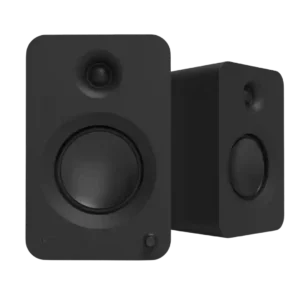
Choose Kanto REN Speakers. It scores 4.9 vs 4.3 for HDMI ARC), with a 4.5 overall score.
If you want better Loudness / maximum volume
Choose Focal Theva N.1 Speakers. It scores 4.5 vs 4.1 for Loudness / maximum volume, with a 4.2 overall score.
If you want better Home theater integration
Choose Sony SS-CS5M2 Bookshelf Speakers. It scores 4.6 vs 4.2 for Home theater integration, with a 4.2 overall score.
Overall Top Bookshelf Speakers Alternatives
Choose the REN if you want a stylish, plug-and-play stereo alternative to a soundbar with excellent inputs and imaging. Skip it if you need very high SPLs or...
Pros: Wired input availability, HDMI ARC), Home theater integration, Bluetooth connection stability, Cohesive presentation, Dialogue clarity (for TV/soundbar use), Stereo imaging accuracy
Cons: none
Choose the LSX II for compact wireless speakers with standout imaging and flexible streaming. Skip if you need deep bass or large-room volume without adding a sub.
Pros: Wired input availability, Latency with TV (lip sync), Setup simplicity, Design and aesthetics, Stereo imaging accuracy, Cohesive presentation, Audio format support
Cons: On-device controls, Remote control usability
Choose LS50 Wireless II for reference-level imaging in a sleek all-in-one streamer/TV setup; Skip if you want deep sub-bass without a sub or you’re allergic to app/firmware quirks.
Pros: AirPlay compatibility, Chromecast compatibility, Latency with TV (lip sync), Amplifier power requirements, Audio format support, Voice clarity, Stereo imaging accuracy
Cons: Smart assistant integration (Alexa, Privacy & data, Remote control usability
Choose LS50 Meta for pinpoint imaging and clean, refined vocals in a compact standmount; Skip if you want deep bass or party-level dynamics without investing in capable amplification.
Pros: Stereo imaging accuracy, Dialogue clarity (for TV/soundbar use), Design & aesthetics, Detail retrieval, Low-volume performance, Cohesive presentation, Voice clarity
Cons: None